
Reflections by an Eminent Chemist: W. Lincoln Hawkins (master) Reel 1
- Before 1992

These captions and transcript were generated by a computer and may contain errors. If there are significant errors that should be corrected, please let us know by emailing digital@sciencehistory.org.
Transcript
00:00:00 I didn't realize all the technical nuances of each one of them, apropos of our manufacturing
00:00:14 things we were talking about.
00:00:15 I thought all you did in a thing like this is you sit down and people start snapping
00:00:20 pictures.
00:00:21 That's what the final product looks like, but a lot goes in before that.
00:00:25 Right.
00:00:26 Every area is an area of specialization.
00:00:28 You just can't throw a person in and expect them to do the job of that experience.
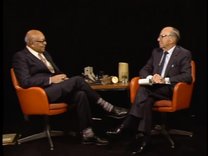
00:00:39 Link, why don't we just get a little background here, why don't you start telling us a little
00:00:45 about your background, where you were born, your family, their background in the sense
00:00:52 of education, just anything that you think has some sort of impact on your life and where
00:01:00 we're going to ultimately get in this discussion.
00:01:03 Okay.
00:01:04 Well, I was born in Washington, D.C., 1911.
00:01:08 I do probably relate to that date.
00:01:12 My mother was a schoolteacher for many years.
00:01:14 As a matter of fact, she taught general science in the public school systems in Washington.
00:01:20 My father had a law degree, but he didn't practice extensively.
00:01:24 He had come from Wisconsin and came into the District of Columbia and spent most of his
00:01:28 career in the Census Bureau, as a civil servant in the Census Bureau.
00:01:33 So both of my parents were educated.
00:01:35 We have a sister who's just passed away, and so we were both geared to go to college
00:01:42 sooner or later.
00:01:43 That was part of the family concept.
00:01:47 And in what way did you get started?
00:01:52 Anything that they talked to you about at school, how did you happen to become a chemist
00:01:57 or a chemical engineer?
00:01:59 I equate those things.
00:02:00 Yeah, somewhat, I guess, by accident in the sense that I didn't know much about chemistry
00:02:07 until I entered high school, who would, I guess.
00:02:09 But my mother teaching general science, I had seen some of the science experiments that
00:02:13 she did, and I found that interesting.
00:02:15 Now when I got into high school, there was quite a bit of science there.
00:02:18 I went to Dunbar High in Washington.
00:02:20 It was a fascinating school with just unbelievable faculty.
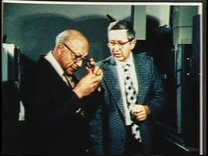
00:02:24 We still refer to them as faculty, not teachers, as faculty.
00:02:28 And I had some in chemistry and physics that I remember to this day.
00:02:32 And they presented their subjects in such an exciting way that you were turned on by
00:02:36 it.
00:02:37 And there's sort of casual things, too, that I remember and often speak about.
00:02:41 In physics, for example, the person I had in physics, his name was Weatherless, and
00:02:46 we called him Prof. Weatherless.
00:02:47 That was in high school, but we referred to him as Prof. Weatherless.
00:02:50 And he was pretty well known to our retirement at that time.
00:02:53 And we young men, boys, used to notice that he always had a brand new car.
00:02:59 It was a Rio car, which you will remember, and a lot of the younger people say, what
00:03:03 was a Rio car?
00:03:04 I never heard of it.
00:03:05 But you remember the old Rio.
00:03:06 It was a class car.
00:03:07 And he had one new one every year.
00:03:09 And of course, we were curious as to how could that be?
00:03:11 A high school teacher in those days could probably afford a Ford, and that's about it.
00:03:17 And not a new car every year.
00:03:19 We wanted it.
00:03:20 And then finally, someone told us that he had been involved in the self-starter for
00:03:23 the Rio car.
00:03:25 And he had invented a component of that starter.
00:03:29 And as a patent reward, among other things, they gave him a new Rio every year.
00:03:34 That was exciting to young people.
00:03:36 Well, during this period, though, were the kids starting to talk about going to college?
00:03:42 Or did anybody in the school, were there counselors or anything that influenced you?
00:03:48 Or at home, even?
00:03:49 Well, at home, of course, it was expected of you.
00:03:52 That you would be at college.
00:03:53 That was expected.
00:03:54 The middle class family in those days, everybody was trying to move upwards.
00:03:58 But then once you got into the high school, where I was at Dunbar High, it was an academic
00:04:02 high school.
00:04:04 And students were expected to be on the college track.
00:04:08 Almost all of them.
00:04:09 You would get to go into college.
00:04:11 And so there was just a common place there to talk about the school you wanted to go
00:04:15 to, what credentials you would need to get into that school, and so forth.
00:04:19 So it was a very lively environment for young people who thought they wanted to go into
00:04:24 college.
00:04:25 And what actually did, what were your choices, and how did you get there?
00:04:29 Where did you go to undergraduate school?
00:04:31 Let's get into that area.
00:04:34 Well, I was hung up between chemistry and chemical engineering.
00:04:38 Not really sure just which one I would want to do.
00:04:41 And the opportunity came to go to engineering school, to Rensselaer in Troy, New York.
00:04:46 I had a friend a year ahead of me in high school, a very dear friend, childhood friend,
00:04:51 who was interested and wanted to go there, and I more or less tracked after him.
00:04:55 And so I did my first work in engineering, chemical engineering, in Troy, New York.
00:05:02 I have a degree from there, which is actually a CHE degree, a chemical engineering degree,
00:05:07 not the bachelor's.
00:05:08 And that was one of the problems I had, because at that time they were giving that engineering
00:05:12 degree in four years, and in four years I didn't have any elective courses at all.
00:05:17 It was all outlined, precisely what you had to do.
00:05:19 It was all you could do to get all of this work in, in four years.
00:05:22 It was really a five-year program.
00:05:25 So it was very tiring, very tiring, and I didn't get to do some of the things, I guess,
00:05:29 that I wanted to do.
00:05:31 I wanted more chemistry, and I wanted to do research.
00:05:34 Of course, you can't do that in a crash course like that.
00:05:40 During the period, were you beginning to develop any bent?
00:05:46 Did you look forward or talk about graduate school?
00:05:49 I remember myself, nobody talked about graduate school in those days.
00:05:53 They do it regularly now.
00:05:55 No, not at all.
00:05:56 Not at all.
00:05:57 How did you make that transition then?
00:06:00 Well, the hard way, I guess, Milton.
00:06:03 When I got out of engineering school in the class of 32, for the whole class we had two
00:06:08 campus interviews, for the whole class.
00:06:11 That was just at the end of the Great Depression.
00:06:14 There was no jobs.
00:06:16 So in my instance, I looked about to see what I could do.
00:06:19 I was very frustrated and very upset after putting four years of this work in, my family
00:06:24 putting in their finances to try to get me through this thing.
00:06:27 Now I come out, and there's no job possibilities at all.
00:06:31 I was really at a loss, and what I did then was to go back to my home in Washington because
00:06:36 I could live there.
00:06:38 I knew I would not go hungry.
00:06:40 My mother and sister then, supporting the family, said, well, why don't you go to Howard
00:06:44 University and continue your studies there?
00:06:47 Well, I didn't really want to do it.
00:06:49 I wanted to work, but I couldn't.
00:06:52 So graduate school came as an alternative, since I couldn't work.
00:06:55 It was a wonderful thing that happened that way.
00:06:58 You lived at home during these days.
00:07:00 I worked what I could do.
00:07:04 When you got there, what were the real things in your mind?
00:07:09 Was it the fields?
00:07:10 Had you had enough background to say, oh, I want to work in this field or that field?
00:07:15 Or did you find some professor you like?
00:07:19 What were the moving forces?
00:07:20 Because those ultimately become very important in your life, I found.
00:07:24 I guess it was curiosity.
00:07:26 So much to the field of chemistry, and I didn't know it all.
00:07:29 I was learning more all the time.
00:07:31 You see, in engineering school, I only had maybe a semester, might have been a year,
00:07:36 of organic chemistry.
00:07:38 Never had any work in polymer chemistry, which ultimately came to be my field.
00:07:42 I was fascinated by organic chemistry, the building of new things, the synthetic aspect
00:07:47 of it, and the analytical part as well.
00:07:50 So it was a gradual process of learning the new fields and being excited by these new
00:07:55 things.
00:07:57 Always in the back of my mind, I wanted to be an explorer in the sense that I wanted
00:08:01 to do research.
00:08:02 The engineering was kind of shaky for me.
00:08:05 I'd much prefer to get in and try to develop things that hadn't been made before.
00:08:08 But of course, that immediately flows over to chemical engineering.
00:08:13 As you sit here today, though, can you look back and recall anybody, both in your undergraduate
00:08:19 and graduate school days, that in some particular way influenced your life, either by the ultimate
00:08:28 choice of jobs or work or...
00:08:33 I've often thought about this in my own career, and surprisingly, one or two people you didn't
00:08:43 think much of sometimes have profound effects on your ultimate life.
00:08:47 Who were these people?
00:08:48 Oh, there were certainly some, and it's usually a teacher that you think of who was the inspiration.
00:08:54 One who was a great inspiration to me and whom I studied for only a very short time
00:08:58 was Percy Julian, who had come back from the University of Vienna and took a position in
00:09:04 the faculty at Howard University just when I was going in for my master's degree.
00:09:08 Oh, he actually was at Howard, Julian.
00:09:10 Oh, yes.
00:09:11 I knew him well, as you know, but I didn't know that part of his life.
00:09:14 Yes, he was there for two or three months, and then he went out in the industry.
00:09:18 But I started to work with him as my thesis advisor on my master's program.
00:09:23 Not only did I have the great inspiration to work with a person like that, but when
00:09:26 he came in from Vienna, he brought two young men with him, and the university hired them
00:09:31 as research associates, these Viennese, and I worked right beside them.
00:09:36 And several fascinating things that I saw, and I got very interested in how these people
00:09:40 were doing their chemistry.
00:09:42 One of the fellows brought his whole laboratory over in a small briefcase.
00:09:45 He was a microchemist, and I guess the largest beaker that he had was maybe 10 cc, and from
00:09:50 there it went downwards, you see, almost like a toy, it sat.
00:09:55 Fascinated by the way he could do things in that small, I think the other point about
00:09:58 it was both of them, both these Viennese people, were doing some things that I have learned
00:10:04 to do later, try to do.
00:10:05 They were conserving.
00:10:06 They would do syntheses in the solvent, have waste material, and immediately they had that
00:10:12 bottle set aside, and these waste materials would go in the bottles, they were all labeled.
00:10:17 And it was eventually they would fractionally distill these things, recover the solvent,
00:10:20 and use them over again.
00:10:22 Very soon they became Americanized, and their waste materials were going down the drain,
00:10:26 the way they were doing also, which now we're coming back more and more to the reclamation
00:10:30 of waste products, particularly in the plastics field, where I've done a good bit of my work.
00:10:35 So I was getting a little indoctrination there that I got very interested in.
00:10:38 Now how long were you in graduate school?
00:10:40 Do you know over the years, it used to take three years when I was there, sometimes it
00:10:45 takes five.
00:10:46 Now what happened in your day there?
00:10:48 I was there a long time, because again, it was economics.
00:10:51 I went to Howard because I could do that very inexpensively.
00:10:55 I stayed there for two years working on my master's degree, received that, and I was
00:10:59 working with Julian I, and then when I left him, well he left the university, then I became
00:11:04 associated with Professor Blatt, Harold Blatt, who eventually ended up at Queen's.
00:11:10 But he was a great inspiration to me in those days.
00:11:13 He took me under his wing, and he was determined that I would go as far in chemistry as I was
00:11:18 capable of going.
00:11:19 He was from the old Kohler School at Harvard, the organic chemist, and Professor Barnes
00:11:25 also was a Kohler student, and he was there at Howard, so I was associated with those
00:11:28 people.
00:11:30 And after two years getting my degree, there was still nothing to do.
00:11:34 So Professor Blatt, primarily, kept me there at Howard, as sort of a research associate.
00:11:39 And I was in the laboratory for one year almost completely, and I'd take jobs like substituting
00:11:45 in the public schools, and then I'd come back and work in the laboratory.
00:11:48 One year, the last year, I had a full-time job as a teacher in a junior high school,
00:11:54 but I was always in the laboratory at night and on weekends with Professor Blatt, staying
00:11:58 in the field of chemistry.
00:12:01 Well eventually he said, well, if you're going to proceed on to a doctoral, you better
00:12:07 hurry up and do it.
00:12:08 You just can't keep hanging in like this.
00:12:10 And then the decision was made.
00:12:12 I had saved a fair amount of money living at home, and I had enough money to go into
00:12:16 a Ph.D. program for a year, and that's all I could do.
00:12:21 And fellowships were very hard to come by then.
00:12:24 So Professor Blatt had wanted me to go to Harvard and to work with people he'd worked
00:12:28 with there.
00:12:30 But he said, you know, the pulp and paper industry in Canada is recovering from the
00:12:34 Depression much more rapidly, and were you to go to McGill, the chances of you getting
00:12:39 a fellowship were greater.
00:12:41 You have to make the decision.
00:12:42 Now my big decision was whether or not I should stop that time, go back into school with enough
00:12:48 money to support myself for only one year, and if I didn't earn a fellowship, that was
00:12:53 the end of it.
00:12:54 Or should I remain in Washington as a public school teacher for another four or five years
00:12:58 in order to get enough to go the full length?
00:13:01 And I made the decision to put it all on the table at one time.
00:13:04 And I gave up my job as a school teacher, went to Montreal, and enrolled in McGill as
00:13:08 a Ph.D. program.
00:13:11 But I guess...
00:13:12 So economics really was a very important part of your life here.
00:13:15 It didn't give you many choices, did it?
00:13:17 No, it didn't.
00:13:18 And it still, even beyond that, it still continued.
00:13:21 But during your subsequent graduate work at McGill University, Professor Hibbert perhaps
00:13:28 you worked with?
00:13:29 He was Matthew's advisor.
00:13:30 I knew him well.
00:13:31 Yes.
00:13:32 Wonderful fellow.
00:13:33 He was quite a person.
00:13:34 But did he begin preparing you for subsequent careers?
00:13:37 I've often wondered about those days.
00:13:39 We had so few choices.
00:13:40 I've been through that myself.
00:13:42 Or was I just going to school and...
00:13:45 Just to be going to school?
00:13:46 No, and just get your Ph.D. and then you'd wonder what you'd do.
00:13:50 Did you decide at any place along here, I'd like to teach, or perhaps I'd like to work
00:13:54 in industry or government?
00:13:56 Any of those thoughts cross your mind?
00:13:57 I always had an inclination to teach, have always had, and I enjoy teaching.
00:14:03 So that when I got my Ph.D., I was being geared then to go on to the staff at McGill, which
00:14:07 I did as what they call a sessional lecturer, sort of a low-level job in the graduate school.
00:14:14 And I was teaching courses in cellulose chemistry at that time.
00:14:18 So I was getting some teaching experience, and I stayed there for about three years as
00:14:24 a staff member at McGill.
00:14:27 And then the war broke out, and I had some very difficult times.
00:14:32 Did you have to stay in Canada, or did you come to the United States?
00:14:34 Well, you could go back and forth in those days, but you couldn't take any money, of
00:14:38 course.
00:14:39 There was a ban on carrying money over.
00:14:41 My wife and I both had roots in Washington, D.C. then, and we would like to come home
00:14:45 for a vacation.
00:14:46 It was very difficult.
00:14:47 It was tedious.
00:14:49 And I guess I'm a bit of a pacifist.
00:14:51 I just wasn't enthusiastic about war.
00:14:53 I had seen World War I, curiously enough.
00:14:55 I remember a fair amount of that.
00:14:57 I just had no enthusiasm for it.
00:14:59 And I wanted to come back to the States, because we were still at peace at that time.
00:15:03 And I didn't know quite how to do it.
00:15:05 I first of all tried to follow Percy Julian, and I had communicated with him and said,
00:15:11 well, why don't you do a post-doctoral program?
00:15:13 He says, go over to Vienna, where I was.
00:15:15 And my old professor, Professor Speth, I guess it was, would be happy to have you work with
00:15:21 him.
00:15:22 He made the communication.
00:15:23 I was accepted over there, and I was all set to go.
00:15:27 And then Hitler invaded Austria, and that was the end of that.
00:15:31 I didn't go.
00:15:32 But I still wanted to move out, and so then I turned to Columbia for post-doctoral work,
00:15:37 and I got a National Science Foundation fellowship.
00:15:42 Very lucrative sort of thing.
00:15:44 I was going to say, that was probably more money than you'd ever dreamt of, because those
00:15:48 were pretty good when they came out compared to the classical teaching fellowships.
00:15:54 Yes, that's true.
00:15:55 But then you compare it with what goes on now.
00:15:57 Well, you can't do that.
00:15:58 As a married fellow, I had a very high stipend.
00:16:01 It was $1,800 a year for two people to live in New York City, which was not very easy,
00:16:07 you see.
00:16:08 Nonetheless, it brought me back to the States.
00:16:09 I know those days, you know.
00:16:11 I was there, too.
00:16:13 And it gave me a fascinating thing.
00:16:14 You see, if you follow what I was doing, I started as a chemical engineer at Rensselaer.
00:16:19 And then when I couldn't proceed with that, I went to Howard and became a chemist, in
00:16:23 synthetic chemistry primarily.
00:16:25 And then I went from that into McGill, into materials engineering, because I was in pulp
00:16:30 and paper research.
00:16:31 And then when I left there to come back into the States again, the only thing I could do
00:16:35 was to move back to pure chemistry again.
00:16:37 So I went into antimalarial drugs with Professor Elderfield.
00:16:40 At Columbia?
00:16:41 Yeah.
00:16:43 With Nelson Leonard.
00:16:44 Sure.
00:16:45 Nelson Leonard and I, we were lab mates.
00:16:46 I actually continued on with this thing.
00:16:50 That's how I got to Bell Laboratories, through Nelson.
00:16:52 Well, that comes down to a very important part of your life.
00:16:56 Let's talk a little bit about that, just for a moment.
00:17:02 When you, at that time, probably Nelson Leonard probably influenced you there, I think.
00:17:11 Oh, he did.
00:17:12 Oh, yes.
00:17:13 I thought.
00:17:14 And did you realize at that time that in going into Bell, you were going to go into one of
00:17:20 the most prestigious laboratories in the entire world?
00:17:24 Or was it just some vague star out there?
00:17:27 It was very vague, Milton.
00:17:28 I didn't know that much about it, particularly having spent the five years in Canada.
00:17:32 I was not that well acquainted with it at all.
00:17:34 I knew some of the things they were doing, but I wanted to teach.
00:17:39 I wanted to go into academic career.
00:17:42 But my wife, we were married when the States moved into Canada, and having spent a year
00:17:47 on a very low-level faculty salary, she thought industrial work was going to be a little bit
00:17:53 more promising, and she preferred that I go into industry.
00:17:56 So when the opportunity came to go to Bell Labs, I was certainly influenced there, and
00:18:01 quite rightfully so.
00:18:02 Of course, in there, in the real sense, the Link Hawkins we all got to know really developed.
00:18:11 There is your, you start any place in here and tell us a bit how you got from where to
00:18:17 where and the various factors or people that influenced you, because this is when we all
00:18:23 got to know Link Hawkins.
00:18:25 I was always tracking role models.
00:18:28 And again, people like Julian and Professor Blatt that I mentioned to you, and I had one
00:18:35 more model I can remember in the industrial world.
00:18:38 His name was Harris, I guess, Milton Harris, that's who it was.
00:18:43 And I knew of your work at the Bureau.
00:18:44 You must have gotten that.
00:18:45 Well, I knew of your work at the Bureau, and I could see this side of the thing, too.
00:18:49 But most of my models were actually in academic work, because that's where I thought I was
00:18:53 going to go.
00:18:54 And when I came to Bell Labs, I figured, well, this will be sort of a period I'll stay here
00:18:58 for a while and then move on.
00:19:00 I stayed for 33 years before I was officially retired, and I still, of course, very much
00:19:07 associated with it.
00:19:08 And that has been a marvelous experience.
00:19:10 I was changing fields all the time, fields of research.
00:19:13 I was moving from engineering to chemistry and chemistry engineering, even here.
00:19:19 We all know that many of your things really had a great impact on the world and industry
00:19:26 and everything else.
00:19:27 But maybe a little more specifics here would be in order, because I, for one, don't know
00:19:33 all the details either.
00:19:35 I'd like to hear more about them.
00:19:38 Some of your more important things really influenced technology.
00:19:43 We call it high technology, but you were doing high technology in those days.
00:19:47 We didn't call it that.
00:19:48 It was sometimes very essential technology, because I joined Bell Laboratories in 1942
00:19:55 toward the end of the war and immediately began to do work which was associated with
00:20:00 the war effort.
00:20:01 Bell Laboratories did almost 100 percent war work when I was here for the first two or
00:20:05 three years before the war ended.
00:20:08 And I was into such things as, for example, trying to find substitutes for quartz, piezoelectric
00:20:14 materials that could be used for communication control.
00:20:16 I actually was vaguely involved with the development of the synthetic quartz crystal.
00:20:21 I worked very close with the people who were doing that.
00:20:25 So I was in a lot of war emergency work at the beginning.
00:20:30 And that was fascinating.
00:20:31 It certainly was challenging.
00:20:33 And then as the thing moved along, I saw this brand new field open up that I had been exposed
00:20:39 to without realizing it.
00:20:41 When I was at McGill, Professor Mark, Herman Mark, had come over from Vienna.
00:20:47 And he, as you know, went first to Canada.
00:20:49 A lot of people don't realize that, that they thought he started a paper company.
00:20:53 That's exactly right.
00:20:54 And he was a research director.
00:20:55 And he and Professor Hibbert had worked together in Europe.
00:20:59 And Hibbert knew that Mark was there and got in contact with him.
00:21:02 And Mark was so anxious to teach.
00:21:04 I mean, he was a teacher, as you know.
00:21:07 That's perfect teaching.
00:21:08 He wanted to get it back.
00:21:09 He was a teacher's teacher.
00:21:11 He wanted to get back into teaching.
00:21:12 And he couldn't do it.
00:21:14 So Hibbert said, why don't you come down in the evenings and teach my graduate students
00:21:18 some chemistry?
00:21:19 And it was polymer chemistry he was teaching us.
00:21:22 And so we had him as an adjunct professor for at least a year, I guess the first year
00:21:27 before he came to Brooklyn.
00:21:29 So I guess he had planted in my mind the seeds of polymer research.
00:21:34 We were doing it.
00:21:35 And when I came here to Bell and found the tremendous applications of polymer synthetic
00:21:41 and natural in the Bell system, it was just a fantastic opportunity to get into a blossoming
00:21:47 field scientifically and in this particular organization, a very important, useful new
00:21:55 class of materials.
00:21:56 And I got in right in the very beginning of it, and that was exciting and very useful
00:22:00 for me.
00:22:03 I remember so well the beginning of polyethylene, for example, as it came to us from the British
00:22:09 Research Producers Association in England through Professor Bateman, and you know him,
00:22:14 I'm sure, and the theories that he developed.
00:22:17 And he was showing us how these synthetic polymers degraded when they were exposed to
00:22:24 the environment.
00:22:26 The British were so sure at that time that it was a hopeless situation to try to preserve
00:22:31 their properties that they weren't using them.
00:22:34 Here in this country, we knew as the war ended, we were going to be expanding our communications
00:22:39 system.
00:22:40 And that meant the building of transmission systems at that time, cable, copper conductor
00:22:47 insulated cables.
00:22:49 And we were going to be expanding at a rate in which we could not afford to jacket those
00:22:53 cables with lead, which is what we had been using at that point.
00:22:58 And here comes out this new synthetic material, polyethylene, which looked like almost an
00:23:03 ideal material for us, except it wouldn't last more than a year, two years out of doors,
00:23:10 and couldn't stand much heat either.
00:23:11 Yet it had every other thing that we needed, lightweight, inexpensive, because it was made
00:23:17 from a waste product, strong, it could do about everything with it except make it last.
00:23:23 And so one of the early things that I got involved in, exciting things that I had to
00:23:27 do with others, of course, was to try to develop systems that would extend the useful life
00:23:35 of polyethylene.
00:23:36 And that turned out to be one of my big programs for years I worked at that.
00:23:41 We had some successes.
00:23:45 While we're on this subject, I don't think most people really, really understand the
00:23:51 workings and the happenings in chemistry.
00:23:56 In modern times, the media has made chemistry a dirty word, as you well know.
00:24:01 And here you were working for one of the most important laboratories in the world on things
00:24:06 that completely influenced our communications and things with which we couldn't live today.
00:24:15 I would like to see you elaborate a little bit on chemistry for just a moment on two
00:24:22 things, if you will.
00:24:24 One, polymers, because I don't have to tell you, not only are plastics polymers and rubber
00:24:32 tires, but hair and skin and all these biological things are all polymers.
00:24:38 Do two things for me.
00:24:41 Point out, if you can, so my grandchildren will understand, what this world of polymers
00:24:50 is really, number one, and how really important chemistry is, because I only have to remind
00:24:55 you that prior to the present head of laboratories here at Bell, the previous two heads of the
00:25:04 entire organizations were both chemists, Bruce Hannay and before him Bill Baker, two of our
00:25:10 more famous chemists in the world.
00:25:12 I think this is an opportunity.
00:25:13 I'm a little bit chauvinistic here as a chemist, and you're a chemist, about this, and let's
00:25:19 not be modest about it.
00:25:20 Really let us have that.
00:25:21 Well, I saw fantastic growth.
00:25:24 For example, when I first took a job here and spoke to my associates in universities,
00:25:28 I'm working at Bell Telephone Laboratories, that's what we were known as.
00:25:31 What does a chemist do there?
00:25:33 Why would you be there?
00:25:34 That's an electrical organization.
00:25:35 Well, that's true, but even in the short time I've been there, I've come to realize the
00:25:39 number of different materials that go into the telephone system, and materials are the
00:25:43 job of the chemist, and so obviously you've got to have chemical support, but when I started
00:25:48 out in the days when Bill Baker was still working the bench, very close to me, chemists
00:25:53 were not really important to the laboratories.
00:25:57 They were just sort of a backup service sort of a thing.
00:26:01 I wasn't recognized for what we could do in extending the materials, developing materials,
00:26:06 so that you would get the maximum usage out of them.
00:26:09 The polyethylene storage is just one case at point where here was a new material, looked
00:26:14 to be perfectly ideal for what we would use, yet we couldn't make it last, and now here's
00:26:20 a chance for the chemist to really get in, and Bill Baker certainly led a lot of this
00:26:24 development of the chemist, and the chemist's role as a research person to really build
00:26:29 and make a contribution equivalent to what anyone else was doing, and so we did.
00:26:33 We developed these materials so that we now could get tremendous use out of them, and
00:26:39 make a lot of money out of them, and improve the system all at the same time.
00:26:45 I have a number of patents on stabilization systems for polyethylene, some of which are
00:26:50 still quite valid, and they have earned a fair amount of money for the company, but
00:26:58 those were the exciting things.
00:26:59 This was the research that I had dreamt about from the very beginning, getting into something
00:27:04 new, developing something new, making something work that other people had not yet found a
00:27:09 way to make it work.
00:27:11 Let me give you a figure here, and I've heard Bill Baker quote this too.
00:27:17 We gave up lead jacketing, lead sheath for cable, and went to polyethylene, and we hadn't
00:27:23 been doing this for over 25 years, when one of our department heads decided to make a
00:27:28 calculation, and he calculated in the 25-year period, how much money would we have spent
00:27:35 for lead if all the cable made in that period were jacketed in lead.
00:27:40 He got a number.
00:27:41 He was a metallurgist.
00:27:42 It was very easy for him to get those numbers.
00:27:44 Then he got the hard numbers of how much we had actually paid for the synthetic substitute
00:27:49 material, if you wish.
00:27:50 I don't like that, aerosols, not at all.
00:27:53 But how much did we spend for this polyethylene over the 25-year period?
00:27:57 And there was a saving, substantial saving, and the 25 years amounted to $1.8 billion.
00:28:04 $1.8 billion, not million billion dollars.
00:28:06 So you see, that's exciting to an engineer.
00:28:10 It's exciting to a scientist who has the opportunity to develop a system which will give you this
00:28:14 sort of a product.
00:28:16 That was what I would have been after all my life, and here at last I was doing things
00:28:21 like that.
00:28:22 All these big numbers, while you're on this, how about just giving us a two-minute course
00:28:28 in polymer chemistry?
00:28:29 I'm particularly involved, but most people don't understand and think about it, not only
00:28:35 in the materials, all the polymers you've made, or the rubber tire, or nylon, or all
00:28:40 these things.
00:28:41 But actually, every part of our body, these are all polymers.
00:28:45 They're proteins, cellulosic material, trees are all polymers.
00:28:51 Take a two-minute lecture on polymers.
00:28:53 Well, I do a lecture on this to students, and I start off by telling them about the
00:28:59 natural polymers.
00:29:00 And you have gone through part of that exercise.
00:29:03 We had rubber, natural rubber, it's a natural polymer.
00:29:06 We had not cellulose, but celluloses, because it's a broad variety, as you well know, of
00:29:12 celluloses.
00:29:13 And we also have the proteins.
00:29:14 Now, those are the three major classes of naturally occurring polymers, and it was up
00:29:18 to men, mankind, chemists then, to find out what these materials were, because we didn't
00:29:23 understand them.
00:29:24 People didn't want to work on them.
00:29:25 They were difficult to handle.
00:29:27 Finally they found out that polymers were nothing more than giant molecules in which
00:29:33 building units, which we call the monomers, are held together by normal chemical forces.
00:29:38 Once that was known, that was established, and the challenge was there to the chemists.
00:29:43 Why depend on nature totally?
00:29:45 Why can't we do the same things?
00:29:47 Why can't we make our own building units, monomers, and make polymers that nature never
00:29:51 developed?
00:29:52 And indeed, some of those things happened deliberately.
00:29:55 Some happened by accident.
00:29:56 We stumbled into them.
00:29:57 Polyethylene was an accidental discovery, but we have made a number of them where we
00:30:01 deliberately set out to make a monomer and then build it into a giant polymer molecule.
00:30:06 And so the synthetic polymer industry has taken off at a fantastic rate.
00:30:11 I like to say that there are now three major classes of materials which we have available
00:30:15 to do things we want to do for a better life.
00:30:18 The metals, ceramics, and the polymers.
00:30:21 And the polymers are by far, by far, the most versatile of all.
00:30:27 And we haven't found them all either yet.
00:30:29 No, but not by any means.
00:30:31 Actually we can, you can, polymer people can really tailor make them, can't you?
00:30:36 Up to a point.
00:30:37 Up to a point, Milton, yes.
00:30:38 Up to a point.
00:30:39 You can almost decide that you want to make a rubber-like material or an extremely long
00:30:44 pair.
00:30:45 This is being done by major companies today.
00:30:47 That's no great difficulty.
00:30:49 The fine-tuning of it.
00:30:51 You want a fiber, but you want that fiber to have a certain area of strength, diabolite
00:30:57 and all that sort of thing.
00:30:58 It's hard to get those second-order refinements in exactly as you want them.
00:31:03 But say, am I going to make a material to be strong and tough?
00:31:06 One to be flexible?
00:31:08 One to have adhesive properties?
00:31:10 One to be a dielectric material?
00:31:13 Those things are done very, very easily.
00:31:15 And so many of these things have been made intentionally.
00:31:19 Some of them.
00:31:20 By tailor-making them.
00:31:21 That's right.
00:31:22 And as I understand now, I worked in this field many years ago, we now have, for example,
00:31:28 in tire cord, which is the thing that really holds a tire together, organic fibers that
00:31:34 are stronger than steel.
00:31:37 No question about it.
00:31:39 The pyramids.
00:31:40 Yes.
00:31:41 But going back a step further than that, the little silkworm, humbly built, spins out a
00:31:46 thread and that thread is higher than, stronger in tensile than steel of the same diameter.
00:31:54 Because all the molecules in the silk are oriented and they reinforce each other.
00:31:59 And that's something else we're learning to do.
00:32:01 And that's the fiber that you're talking about, uses a filler, a reinforcing filler of orientation
00:32:08 and gives fantastic strength so that you do have an operation now, automobiles which
00:32:13 are running with a drive shaft, which isn't metal at all.
00:32:17 It's a synthetic polymer.
00:32:20 And the word is about, we should have a synthetic, at least a polymer engine block.
00:32:26 Now, of course, that'll have inserts.
00:32:28 Yes.
00:32:29 But it'll be better than the old aluminum blocks, where aluminum was wearing on aluminum,
00:32:33 which was a disaster.
00:32:35 The weight saving on that, the cost saving on it, is phenomenal.
00:32:40 Well, as you now are moving into what might be your third or fourth career, as you look
00:32:49 back in Bell at the moment, let me just return here, because to me this is a miracle place.
00:32:56 I've had the privilege of visiting friends here and an awful lot of them are chemists
00:33:01 and still the Bell Laboratories.
00:33:03 Are there any names, any people who had any special, if you've had a wonderful career
00:33:12 and a wonderful life in this wonderful place, who stands out here?
00:33:16 Here.
00:33:17 I'm not trying to play favorites, but yeah.
00:33:19 It's got to be Bill Baker.
00:33:21 He was an inspiration to all the chemists, because again, we didn't have the stature
00:33:25 we have today until Bill Baker came into this organization and showed what the chemists
00:33:30 can contribute.
00:33:31 It was as simple as that.
00:33:32 It was an obvious thing.
00:33:33 The chemists can do more than just analyze your piece of metal.
00:33:36 The chemists can develop a product for you, which is superior to what you now have.
00:33:40 Let the chemists go into the research part of this thing and do that, and so that has
00:33:45 to have been a very strong one.
00:33:47 Stretch Winslow and I worked together very closely and still do.
00:33:53 Bernie Biggs is retired now.
00:33:55 Well, there are a number of names that I can remember.
00:33:57 Al Fuller, some people that you know, would know, were colleagues and we were working
00:34:03 and more or less growing into the field together, but to me, the opportunity to get into the
00:34:10 polymer work right at its inception, right when it was brand new and we were just starting
00:34:15 using the system, that was just exciting.
00:34:23 Let's talk about the post-Bell, if I may create a name, career, because without even
00:34:30 talking to you about what you're going to do in the world, I've known a lot of people
00:34:34 and you're not one that's going to sit.
00:34:38 Is this a good pose?
00:34:39 Yeah, okay, because I, yeah, my name's Dickson.
00:34:43 So I think, yeah, when we get things out of order.
00:34:46 I'm very comfortable.
00:34:47 I spend a lot of time.
00:34:48 You know, one of the wonderful dreams that I have is just salvaging enough time to go
00:34:56 back to school and study a subject, which has nothing whatsoever to do with the work
00:35:02 that I've done, even with chemistry.
00:35:04 Have you done it?
00:35:05 No.
00:35:06 I'll give you some examples that we're talking about.
00:35:15 Going back to the high school days, which is very fascinating, I found that Dunbar High
00:35:19 was one of the strongest academic influences in my life.
00:35:24 The structure, the type of people who were teaching there, their inspiration, their dedication
00:35:30 were invaluable to me in my career.
00:35:32 There are also some very wonderful people that I knew there as a student.
00:35:37 One that I remember so well because he turned out to be a very dear friend to my family
00:35:41 and me as well was Dr. Drew, Charles Drew, who was one of the three doctors who had developed
00:35:49 blood plasma for use in World War II.
00:35:52 He and Dr. Rhodes was, I think, at Memorial Hospital in New York, and there was an English
00:35:57 collaborator.
00:35:58 I don't remember his name, but the three of them developed the blood plasma.
00:36:01 Just at the time, we were getting deep into World War II, and you couldn't transfer the
00:36:05 whole blood and so forth, and you knew what blood plasma has meant.
00:36:08 He was there, and of course, we were going to school with him.
00:36:12 There were others also that I remember who were inspirational because they were doing
00:36:17 things right along beside you.
00:36:19 Their careers, they were developing, and their ambitions were there before you as an inspiration.
00:36:25 It was a very wonderful environment in which to develop.
00:36:29 My four years there were absolutely magnificent.
00:36:32 Did you have any specific ideas you were getting at this stage, that I'd like to be a chemist
00:36:38 or an engineer, or did you just like to do something important?
00:36:42 Do something.
00:36:43 I guess I always had the inventor sort of concept in my mind because we would spend
00:36:47 so much time as children before even getting into high school and building all kinds of
00:36:52 gadgets.
00:36:53 I guess an engineer is a gadget person.
00:36:56 He wants to make a gadget just for the fun of making the gadget, and then he makes it
00:37:00 work.
00:37:01 But then overshadowing that was also my very intense interest in fundamentals as well.
00:37:06 So I wanted to develop the research.
00:37:08 I wanted to see, I guess, the science behind the engineering development.
00:37:12 So I was very actively involved in both phases of that.
00:37:16 And much of that seed was planted, actually, in my high school days.
00:37:22 Going back to college days, my contacts at Howard University were also very exciting
00:37:32 and very stimulating to me.
00:37:36 I didn't know at that time George Washington Carver, who was a famous black chemist that
00:37:42 did so much for the peanut industry and so forth.
00:37:46 And I heard him speak there at Howard on one occasion.
00:37:49 And I found he was just one of the most fascinating people that I have ever known.
00:37:54 I know the man's life history and the things that he went through.
00:37:58 But he was a man just dedicated to humanity.
00:38:00 He gave everything in him to community.
00:38:04 All the abuse that he had had as a child, all of his inventions were given right back
00:38:08 with no worldly, he wouldn't accept anything for them.
00:38:11 Just a delightful, wonderful human being.
00:38:14 I was very much impressed by him.
00:38:17 Some of the others that I had contact with besides Professor Julian, I remember Professor
00:38:21 Just, who was a biologist who was internationally known for his work.
00:38:27 And to be with those people and have association with them was a very big part of my development
00:38:33 in science.
00:38:34 So I didn't work some of those fields at all.
00:38:36 But just knowing those people were there and they were going ahead with their wonderful
00:38:40 careers, it helped me as sort of an inspiration.
00:38:44 Let's talk a bit about, we've been talking about Carver and inventions.
00:38:50 Let's talk about Link Hawking and inventions.
00:38:53 You had a lot of them at Bell.
00:38:56 Some things that had incredible, made incredible contributions.
00:39:02 Let's get a little more specific about some of your various things, and I don't want you
00:39:05 to be modest here.
00:39:06 I'll be practical.
00:39:07 Is that all right?
00:39:08 Right.
00:39:09 Well, I have a piece of cable here.
00:39:13 This is a typical cable.
00:39:14 We could have it strung along the air, or it could be underground.
00:39:19 This one actually was an underground installation where the cable is brought up out of the ground
00:39:23 into a structure, and the jacketing, this black jacketing is taken off, and the individual
00:39:28 wires are flared out so that an installer can pick a pair of colors to match a certain
00:39:34 phone in someone's household.
00:39:36 Well, one of the things in which I was very much involved was in this jacket at the very
00:39:39 beginning of it.
00:39:41 It is made of polyethylene.
00:39:42 Polyethylene has very little useful life out of doors, unless it is protected.
00:39:48 Now, I wish you could see this has been pigmented black, and the carbon back here is a tremendous
00:39:55 absorber or screen for ultraviolet radiation.
00:39:59 So the fact you have two or three percent in this, which is the work of Vic Wall and
00:40:03 his colleagues, Johnny Howard did much of this work, that screens out the ultraviolet
00:40:08 radiation.
00:40:09 It's the ultraviolet radiation which carries the degradation process, the oxidation forward.
00:40:15 That's one form of energy.
00:40:17 But heat energy will do the same thing.
00:40:18 So the minute you put the carbon black in here to screen out the ultraviolet radiation,
00:40:24 you are immediately making the thing higher, the temperature higher, and the thermal breakdown
00:40:29 now is accentuated.
00:40:31 So you've gotten out of one thing, you're right back into another.
00:40:34 So now it is required, and modern technology has gone in that direction, to use additives
00:40:39 which are called antioxidants, which will protect against the thermal breakdown of this
00:40:44 polyethylene.
00:40:45 Now, the problem that came up, and where I had a very exciting contribution to make there,
00:40:51 most of the antioxidants, those things which would inhibit the thermal reaction, we picked
00:40:55 up originally from the rubber business, because people had been protecting rubber for years.
00:41:00 And we tried to use, excuse me, I don't know how we cut that.
00:41:06 We tried to use those rubber antioxidants, but they were not compatible with the carbon
00:41:10 black.
00:41:11 They lost most of their effectiveness when mixed into a black formulation.
00:41:16 So we had to discover and learn things which, instead of being antagonistic with the carbon
00:41:20 black, would actually be complemented, synergistic with the carbon black.
00:41:24 And so we worked out a lot of materials.
00:41:27 We did some of the chemistry as to how they worked and why they worked.
00:41:31 Because one of the things that I found at Bell, which really fascinated me, and just
00:41:36 made me want to stay and continue to work more and more, if you have an engineering
00:41:39 type of problem, I need something to protect this plastic, because we've got to get 40
00:41:44 years' life out of it, and it won't last for two years unless you do something.
00:41:48 And you could very easily stumble into something and get a success.
00:41:53 But no one was ever satisfied with that.
00:41:56 The question was always asked, why did it work?
00:41:59 And so you would go back and do your fundamental work to find out why you had been successful
00:42:03 in this process.
00:42:05 That then helps you to build new material and carry the project further.
00:42:09 To me, that was one of the very exciting things about working here in this area with Bell
00:42:13 Laboratories.
00:42:14 You were almost forced, if you didn't have that desire on your own to go back and unravel
00:42:19 the thing and see what the mechanisms were, you were expected to do that.
00:42:23 And that turned out to be very, very exciting to me.
00:42:26 So we have a number of these stabilizers now, and I guess they're used pretty well around
00:42:30 the world.
00:42:32 I suspect that these are applicable for many, many uses, because atmospheric degradation
00:42:39 is something that goes on in a lot of areas.
00:42:42 All the polymers that we know of degraded eventually on exposure.
00:42:48 They vary in the degree, the rate at which they break down.
00:42:51 Some of those that we like to use, because they have other good properties like mechanical
00:42:55 strength or are easily available, are very vulnerable.
00:42:59 And so we have to pay great pains to protect them against the stabilization.
00:43:04 So one of the things that I was required to do was not only to try to get systems which
00:43:08 would protect these materials, but also to try to find ways to show, to estimate how
00:43:13 long will this last.
00:43:14 Here's a formulation.
00:43:16 We'll make this up.
00:43:17 We think it's going to be good.
00:43:19 In the laboratory, it shows up as being good on an accelerated test.
00:43:23 By that, I simply mean that this jacket is meant to last now 40 years.
00:43:27 Well, you can't use 40 years to make the test.
00:43:30 You've got to speed it up, so you do this.
00:43:32 And then you want to know how long will this actually last under normal conditions.
00:43:36 And so you try to extrapolate your accelerated data down to the actual use temperature, which
00:43:41 is very difficult to do.
00:43:43 And the test procedure becomes extremely important.
00:43:47 We have laboratory tests for measuring, estimating the expected life.
00:43:52 And some of these wires in this cable, you can see, have been twisted around little mandrels
00:43:57 to see whether or not they are at the point of cracking.
00:44:01 Some have cracked in some of these.
00:44:03 You can see cracked off of the insulation.
00:44:05 We have to be able to anticipate when that's going to happen.
00:44:08 Let me give you a case at point.
00:44:10 I was involved in this work when the first submarine cable was laid.
00:44:15 We lay a submarine cable from North America to Europe, England first.
00:44:20 That has to be under the water for a certain period of time without repairs if it's going
00:44:26 to be economically feasible.
00:44:28 It's like buying your car, and that car's got to go five years without ever going in
00:44:31 the garage if it's going to be a good buy.
00:44:34 That's what we like to think.
00:44:35 We don't find that so often.
00:44:36 But with the cable, it had to be there without any major flaws.
00:44:42 And that meant putting a plastic material at the base of the ocean, electronic components
00:44:46 for amplifying the repeater units about every 40 or 50 miles.
00:44:50 The first ones had vacuum tubes in them.
00:44:52 Imagine putting a vacuum tube in, and it's got to last 20 years without failure if you're
00:44:57 going to make money off of the thing.
00:44:59 So these are very exacting procedures.
00:45:02 And you had to be sure that the material that you were using was going to last for the design
00:45:07 life.
00:45:08 And we were successful in that.
00:45:10 My work was primarily in the bird cable and in the aerial cable.
00:45:15 But the same sort of principles applied.
00:45:17 It costs a lot of money to install one of these cables.
00:45:19 And if you've got to take it down and repair it, you cannot afford too much of that.
00:45:25 It's going to be a very significant loss.
00:45:26 You've got to know how long it'll last.
00:45:28 Do the same things that stand up well, let's say, in heat and light, or if you put them
00:45:40 underwater, do you need a new formulation?
00:45:45 I am an advocate of the principle, which I fully believe, that every time you want to
00:45:49 protect a polymer, a new polymer, in any environment, you have to design a system to protect that
00:45:56 polymer in that environment.
00:45:59 And you cannot extrapolate these things.
00:46:00 One may use them as a guide to see which way to go, but always the polymer should have
00:46:05 its own stabilization system fitted and suited to that polymer under the conditions under
00:46:11 which you would expect it to fail.
00:46:14 That's very important.
00:46:20 What would you like to move now?
00:46:24 Talk about Link Hawkins, career number X.
00:46:27 Well, I must lead into that.
00:46:29 I think with you, we're going to go through the whole alphabet.
00:46:33 We're still in my career at Bell Labs, and I have to add something to that, because most
00:46:36 of my work was on polymer degradation and stabilization.
00:46:39 Toward the end, the last three or four years when I was serving as assistant chemical director
00:46:43 here, we came to the early 70s when the oil embargo was on, and the plastics we've been
00:46:52 talking about originate from fossil fuel, oil, or gas.
00:46:57 So the minute the valve was cut off and we were having trouble with the gas stations,
00:47:01 you could not buy the polymers either.
00:47:03 Despite the huge commitment that the communications system had for these materials, people simply
00:47:08 couldn't produce it.
00:47:10 So we came to another very exciting part of my activities here.
00:47:15 We looked at our scrap pile, which normally had been thrown away, discarded, and said,
00:47:20 can we recover some of that scrap and put it to work?
00:47:24 One of the very important ones to see was in wire and cable, which of course then copper
00:47:31 conductors, everything was copper conductors at that time, and you had a lot of polymer
00:47:35 insulation on it.
00:47:37 I'm thinking primarily of polyvinyl chloride, which is our inside wiring material, and that's
00:47:42 the material which is thrown through all the switching machines in central offices, and
00:47:46 it's amazing the amount of scrap wire and cable that you pull out of one of those offices.
00:47:51 When you modernize it, for example, to put in an electronic switching system from the
00:47:56 old mechanical relays, you come up with hundreds and hundreds of pounds of scrap wire and cable,
00:48:04 and the copper in that scrap wire and cable is very, very valuable, and yet you've got
00:48:08 to get rid of the insulation, the polyvinyl chloride in this instance, and so I was very
00:48:13 much involved with the recycling of scrap, scrap materials.
00:48:17 We ran a program here at the laboratories.
00:48:20 We were working with the Atlanta Laboratory on processes for getting the copper away from
00:48:26 the scrap plastic.
00:48:28 First purpose was to get the copper, but once we got the copper, here was this polymer.
00:48:32 We were short on polymer because of the oil embargo.
00:48:35 Why can't we bring this back and regenerate it, reformulate it, and put it back into use?
00:48:39 And I had a really fascinating time with that.
00:48:44 For example, with the jacketing, jacketing for inside wiring cable, we could take that
00:48:50 scrap, clean it up, chop it up, get the copper out, and re-compound, re-fabricate the polyvinyl
00:48:57 chloride adequately to put it back onto new cable as a sheath that would meet all the
00:49:03 specifications.
00:49:04 It was pretty rigid specifications.
00:49:06 So we had a process.
00:49:08 We have it right now.
00:49:09 For recovering the copper, and if we wish to, we can also recover polyvinyl chloride,
00:49:14 this is an example here, and put it back into the system.
00:49:18 But now that the oil prices are going down, I guess we all know about that, and anticipating
00:49:22 things like gasoline for less than a dollar a gallon, I remember it was 20 cents a gallon.
00:49:27 But we're looking back to those days, and that means that the plastic prices are falling
00:49:33 to the point where the recycling is not significant, you can get the new material.
00:49:37 Nonetheless, here is the scrap material, one should use it, maybe for some secondary process.
00:49:42 But we have our technology all set aside, so if there is a shortage again, we can recover
00:49:48 and recycle much of our plastics.
00:49:50 The handset material, for example, I was involved in recycling of that.
00:49:54 That's ABS resin, it's a molding resin.
00:49:57 Very complicated structures.
00:49:58 As a matter of fact, one of the exciting things that I did here was getting a young PhD from
00:50:03 Iowa, Gessner, Bruce Gessner, and giving him the job of determining what this molding material
00:50:09 was, because nobody was telling us.
00:50:11 It's an impact-resistant material.
00:50:15 He unraveled that, told us why it was good sometimes and not good other times.
00:50:21 It's what we call a terpolymer.
00:50:23 But that structure was unraveled here, and I was involved certainly in the supervision
00:50:27 of that sort of work.
00:50:29 And so we found out what this molding resin was.
00:50:31 Now again came the oil shortage, we couldn't buy a new resin.
00:50:34 Here sat these telephone handsets that had been discarded, because they were scratched
00:50:38 and discarded, and they were just simply thrown out in the dump somewhere.
00:50:42 We'll grab those things, we'll take the electronic components out, we'll grind up the plaster,
00:50:48 and find out whether or not we can refabricate this, reformulate it in such a way that we
00:50:52 can make new materials out of it.
00:50:54 And indeed we have.
00:50:55 Now that's a standard process, and that ABS resin is very readily recycled.
00:51:01 So I got into recycling here toward the very end of my career.
00:51:06 And then leaving here, you asked me about some post-Bell Labs activities.
00:51:10 I left here on retirement, which was a fantastic experience.
00:51:15 It lasted three days, Saturday to Sunday, and I took Monday off.
00:51:19 And then was back in the same office.
00:51:21 But I was very quickly transferred out to another activity.
00:51:25 I became a research director for the Plaster Institute of America, which is a professional
00:51:31 organization.
00:51:32 And again, the experiences were so different and fascinating.
00:51:35 Here at Bell Labs, if I wanted a piece of equipment, and I guess you could almost say
00:51:39 the sky is the limit, if I can show my supervision that from that thing I have an excellent opportunity
00:51:45 to develop into something worthwhile, the money comes.
00:51:48 There's no way I have to fight it.
00:51:49 It's not a case of trying to negotiate for money.
00:51:52 When I went to the small professional society, they were not funded.
00:51:58 They wanted to do research.
00:51:59 They had no laboratory facilities.
00:52:01 I worked up the idea of having a coordinated research effort, which would bring universities
00:52:06 in, do this professional organization to serve the industry.
00:52:09 Now that's not too common even today.
00:52:14 But we as a professional society overviewed the work done at the universities, selected
00:52:19 the programs on which we would work, and sought to coordinate this thing up to a point of
00:52:24 value to the industry.
00:52:25 It was the Plaster Institute on which we were working.
00:52:28 So I was research director of that organization for a while, and immediately that came into
00:52:32 recycling.
00:52:33 And my recycling experience at Bell Labs came right back to me.
00:52:36 I was able to show the Department of Energy that we could recycle some plastic scrap and
00:52:43 put it back at least into a secondary application, one that's not quite as demanding as a sales
00:52:47 telephone application.
00:52:49 Get it back into use.
00:52:50 And if we did that, that would save a lot of fossil fuel, which would have been consumed
00:52:54 to make new materials.
00:52:55 So let's hold all these materials and recycle them.
00:52:59 We were audacious enough in that application to look at the scrap automobile.
00:53:05 We scrap our automobiles now, of course.
00:53:06 The automobile shred is about 220 of them in the country.
00:53:11 And once the gas tank is removed, and I think the radiator is removed, maybe the tires are
00:53:16 taken off and so on, that whole automobile goes into a grinding device.
00:53:20 And if you haven't seen one of these things, they're fascinating.
00:53:23 Even the engine block is just chewed up.
00:53:25 And out comes this pile of shredded stuff.
00:53:28 Now, it takes a chemical engineer to look at that and not want to turn and run off and
00:53:32 hide somewhere.
00:53:33 To look at the same thing, you've got to do something with it.
00:53:36 But you can get out of it very readily a metallic component, which are the ferrous metals, basically
00:53:41 the iron and steel.
00:53:42 That's easily separated.
00:53:44 And it's useful.
00:53:45 You can recycle the steel, of course.
00:53:47 Then you get a non-ferrous metal fraction, which is the various other metals other than
00:53:51 iron and the copper, which you've gotten out.
00:53:54 And then this steric fraction comes out of that, which is inorganic, which is an organic
00:54:00 fraction.
00:54:01 It is not metallic.
00:54:03 And it consists of all the plastic or polymeric materials that go into the modern car, a lot
00:54:07 of cellulose, fibrous materials, and a fantastic quantity of dirt, which gets stuck on a car
00:54:13 which is seven or eight years old.
00:54:14 We don't realize that we put it through the shredder.
00:54:17 So here's a fraction coming out of the shredder.
00:54:19 It's in huge volume.
00:54:21 The volume is about as big as any other fraction coming out of the shredder.
00:54:25 Certainly not so with volume.
00:54:26 And what can you do with this thing?
00:54:29 Well, that was one of the jobs I took on with the Plastics Institute.
00:54:33 I just knew instinctively you get, again, an engineer gets a sort of a gut feeling.
00:54:37 I knew you couldn't take this awful mess of all these different things and separate it
00:54:41 out.
00:54:42 Because if you did, you'd spend more money than you'd start with new material.
00:54:45 You just couldn't do it.
00:54:46 It was impossible.
00:54:48 So we devoted ourselves to taking the mixture, all this crude material as we had it, simply
00:54:53 cleaning it up, getting some of the dirt and mess out of it, putting in compatibilizing
00:54:57 agents so that the mixture of polymers had some mechanical consistency to it, and then
00:55:03 using this to make secondary products.
00:55:05 And we succeeded in doing a bit of that.
00:55:08 There is now the hope, I think, that a large amount of the scrap automobile, the non-metallic
00:55:12 material, can be put into some sort of secondary use.
00:55:16 We would make little trays out of it, hadn't done over in Germany.
00:55:21 And the material, molded up, and made us a nice little tray.
00:55:24 It wasn't as pretty as a brand new one, but all you can do is put nuts and bolts in it
00:55:28 and store it somewhere.
00:55:29 It worked just as well.
00:55:31 So that was the beginning of some of my post-Bell experiences.
00:55:36 I spent about eight years there as a researcher.
00:55:38 Are you going to pass this on now to a hungry young generation of people who are excited
00:55:45 about doing things?
00:55:48 I have lots of ways to do that.
00:55:49 That would be the natural for you.
00:55:51 It is.
00:55:52 And it excites me, because I like to work with young people.
00:55:55 One of the things that I will do, and I suddenly got involved in this with a high school dropout.
00:56:01 And you get into a group, and these kids are about the age where they want to start to
00:56:04 drop out of school.
00:56:05 And I used to have a lot of fun by getting an average age for them.
00:56:10 And then I would figure out how many years were you in school so far, this terrible place
00:56:15 that you don't like.
00:56:16 And then you work that down with the summer vacation, Christmas, all that.
00:56:21 Get it down to the number of days that they had actually been sitting in a classroom to
00:56:25 get to this stage of their life.
00:56:27 And they thought that was terrible.
00:56:28 All these years.
00:56:29 And they would say, all right, now suppose you leave now.
00:56:32 You're going to work.
00:56:33 You're going to work until you reach stage 65.
00:56:35 If you want to live, you're going to work.
00:56:38 Now let's count up with only two weeks vacation, for example, working in industry.
00:56:42 How many days are you going to go out after you leave here simply because you have to
00:56:47 eat?
00:56:48 If you think you didn't like this, my point is you better jolly well stay in school, whether
00:56:53 it's chemistry or whatever it is, until you can prepare yourselves, hopefully, to do a
00:56:57 job that you really want to do.
00:57:00 So you go out in the morning, you're enthusiastic.
00:57:03 You want to do it.
00:57:04 You want to get in and get this thing going.
00:57:06 If you can achieve that, you'll have a much happier life than if you simply go out to
00:57:10 work.
00:57:11 Simply because if you don't work, you won't eat.
00:57:14 So that's the beginning of the overall general thing that I would have.
00:57:17 But when you get into the sciences, of course, it becomes much more specific.
00:57:22 And I talk to a lot of students, and my message here is stay in school as long as you can
00:57:29 within reason.
00:57:30 Let's put it this way.
00:57:31 My experience at Bell Laboratories taught me.
00:57:33 I came here with a PhD and went into research.
00:57:36 I couldn't have survived if I didn't have the PhD.
00:57:38 I know that.
00:57:39 But it wasn't just letters behind you.
00:57:40 It's the type of discipline training that you get.
00:57:42 You see how to investigate something.
00:57:44 My engineering instincts added to that were ideal to get me started in the program.
00:57:51 And if I had been competing without that sort of training, I wouldn't have made the grade.
00:57:55 I would have been at the bottom of the pile all the time.
00:57:58 So students think, well, I spent four years in college, maybe in chemistry, chemical engineering,
00:58:03 whatever.
00:58:04 And it was just so long, I'm tired of this school, and I can't see myself going back
00:58:08 to graduate school.
00:58:09 Well, you're much better off if you do your graduate study right after you get out, because
00:58:15 then you're young, you're fresh, and if you've done good work, you have a chance of getting
00:58:19 some kind of support.
00:58:20 When you drop out and say, I'll go back after three or four years, very difficult to do.
00:58:25 You'll find statistically most people will not ever get back into it again.
00:58:29 Yet you need these tools if you're going to go out and compete in the real high-tech.
00:58:32 Now, look what's going on today.
00:58:35 I guess the term high-tech is proper.
00:58:37 Everything is high-tech.
00:58:38 And if you don't have the background training to do that, you are not going to be able to
00:58:43 compete.
00:58:44 And competition is the name of the game.
00:58:47 And you want to compete to develop as far as you as an individual can go.
00:58:51 Now, I don't mean to become the professional student, but to get all the training in your
00:58:56 discipline, which you need to go into the type of work you want to do and be competitive
00:59:02 with your peers.
00:59:05 It's a great message you're going to leave for these young stars that are coming along
00:59:10 because they're awfully well-trained early.
00:59:12 I see people in high school now who have things I didn't even have in university.
00:59:16 Oh, of course.
00:59:17 Of course.
00:59:18 And they think they know it all, but they don't really know it all.
00:59:21 It's a lot to be learned.
00:59:22 I'm still learning now.
00:59:23 I'm still a student, but I can't take formal classes.
00:59:29 People always play games.
00:59:31 We all do.
00:59:33 Ask ourselves, what would we do if we were doing it all over again?
00:59:36 I strongly suspect you'd do exactly what you've just done.
00:59:39 Very close to it.
00:59:40 Because it's a pretty broad spectrum of things you've covered.
00:59:43 Fascinating.
00:59:44 And it's been interesting all the way.
00:59:45 And yet I have a dedication, and it comes, again, from my knowledge of Charlie Drew and
00:59:51 what he did with Bud Platt.
00:59:53 If I could start from scratch, and funds were not restricted...
00:59:56 Excuse me.
00:59:57 They'd like to take another break.
00:59:58 They're about to run out of tape.
00:59:59 Oh, okay.
01:00:01 All right.
01:00:02 Good.
01:00:03 I think we're getting pretty close to...
| Property | Value |
|---|---|
| Creator of work | |
| Format | |
| Genre | |
| Medium | |
| Extent |
|
| Language | |
| Subject | |
| Rights | In Copyright |
| Rights holder |
|
| Credit line |
|
Institutional location
| Department | |
|---|---|
| Collection |
Related Items
Cite as
American Chemical Society. “Reflections by an Eminent Chemist: W. Lincoln Hawkins (Master) Reel 1.” Open reel videotapes, n.d. American Chemical Society Audiovisual Collection. Science History Institute. Philadelphia. https://digital.sciencehistory.org/works/fd1dzlt.
This citation is automatically generated and may contain errors.