
Polymer Recycling : The Key Issues
- 1989-Sep-11

These captions and transcript were generated by a computer and may contain errors. If there are significant errors that should be corrected, please let us know by emailing digital@sciencehistory.org.
Transcript
00:00:30 Good morning.
00:00:55 I am E.J. Vandenberg, coordinator of the Industrial Sponsors Group of the Division of Polymer Chemistry.
00:01:03 I will make a few comments before we begin what promises to be an outstanding panel discussion
00:01:11 on polymer recycling, the key issues, a very important current topic.
00:01:20 I, in cooperation with Mike Jaffe, have assembled an expert panel from industry, government, and university.
00:01:31 As you can see, we are videotaping the program.
00:01:37 The videotape will be given free to all the industrial sponsors.
00:01:43 You can obtain a copy by having your company join the industrial sponsors
00:01:49 or, alternatively, by paying $50 per tape.
00:01:56 Our moderator for today's program is Dr. Eric Baer of Case Western Reserve University.
00:02:06 He has a very strong interest in this general area of activity.
00:02:13 He will introduce the panel member to you.
00:02:15 Eric?
00:02:24 Thank you very much, Ed.
00:02:26 I'd like to first thank you and Mike Jaffe for the opportunity to moderate this distinguished panel this morning.
00:02:36 We will spend 10 minutes.
00:02:40 Each panelist will talk 10 minutes to you, and then we will have five minutes for your questions.
00:02:48 And if there's any time remaining at the end, we will open your questions to the panel at large,
00:02:57 and then I'll have just a very couple of concluding remarks.
00:03:03 Our first speaker is Wayne Pearson, who is director of the Plastics Recycling Foundation,
00:03:15 and he's going to talk to us on plastics recycling from vision to reality.
00:03:22 Dr. Pearson?
00:03:24 We sponsor research at a number of universities.
00:03:27 Major pilot plant scale research is at Rutgers University in New Brunswick.
00:03:33 First, a little perspective.
00:03:34 You're going to hear more and more about this hierarchy,
00:03:37 and I want to simply focus your mind on the idea that recycling is very near the top.
00:03:42 Recycling is an old word, but basically what it boils down to is you're going to sell somebody your garbage.
00:03:51 Historically, we paid somebody to haul our garbage away from our houses and dump it in a hole in the ground,
00:03:56 and now we have a new idea.
00:03:57 We're going to recycle it by, quote, selling it.
00:04:00 And I'm going to share with you today some of the issues with regard to that.
00:04:06 Very briefly, we're talking about 25% in four years, EPA's goal for our nation,
00:04:14 which is about a two-and-a-half-fold increase from what we've been doing, and that's an enormous job.
00:04:20 And it means separation of the saleable components, aluminum or glass or whatever,
00:04:27 and it means manufacturing those products into something,
00:04:30 and it means selling those products to somebody and selling them over and over and over again.
00:04:37 A manufacturing and marketing business is going to be taking the place of a service business,
00:04:42 and those of you who know anything about business can imagine that's about a two or three orders of magnitude more complex issue.
00:04:50 What I want to do is share with you the highlights of the research on this issue.
00:04:57 Basically, we'll dig down through the garbage pile, and the first thing you see here is that plastics is about 7% of that,
00:05:05 22 billion pounds of that 160 million tons, and about 14 billion of that is packaging.
00:05:12 Packaging is 30% of the total garbage, and all the focus of concern is on it.
00:05:18 And as you can see, plastics is a piece of that, but not the major piece, paper and glass dominate it.
00:05:25 And in the plastic side, about half is rigid containers and about half is film.
00:05:33 And in the rigid, it simply boils down to beverage bottles dominating the containers,
00:05:38 soft drink bottles, milk bottles, water bottles, and so forth, and detergent, bleach, and the rest of it making up the rest of that,
00:05:45 principally two polymers, PET and HDPE.
00:05:49 We do research in four areas, and all four areas have to be in place for recycling to occur.
00:05:56 What this says from our research is that the ordinary drop-offs and buybacks which we've historically used for recycling just won't cut it.
00:06:05 If you want to get major portions of recyclables, you have to go to the curb, make it easy for the consumer, and then you get a lot.
00:06:12 Our research at Rutgers, we've done this in a couple of towns,
00:06:15 given them 20-gallon containers for the recyclables and told them to dump the rest of the trash in the rest.
00:06:21 We haul the recyclables, and if you can see that, it's just what you'd expect, aluminum cans, glass bottles, plastic drink bottles, and so forth, and newspapers.
00:06:31 And then it's hauled off in a truck to a place where it's sorted either manually by hand or with machinery.
00:06:40 A magnet will pull the steel out, a netty current will pull the aluminum out,
00:06:44 and then you sort the glass by color and the plastic by polymer type, at this point by hand.
00:06:50 I might point out that the research at Rutgers is showing that we can automate the separation of the plastic beverage bottles
00:06:56 so that we can do it without the intervention of a human hand.
00:07:01 And I want you to only look at one number on this chart, and that's the plastic price, six cents per pound.
00:07:06 It's the second highest value material in a garbage pile, next to aluminum, very significant.
00:07:12 Today, paper is not a penny a pound, it's minus a penny a pound,
00:07:16 and so plastic is going to be more and more asked for by the cities and communities who are trying to do it.
00:07:22 Now, once you have the generic plastic in your hand, you want to recover it and clean it up.
00:07:28 And this is a picture of the pilot plant at Rutgers, which is an 8 million pound per year plant, and it's basically a washing machine.
00:07:34 We chop up the bottles, wash them in a detergent, rinse them, spin dry them, flash dry them,
00:07:40 and if you then go on to melt it into a pellet, it looks very, very much like virgin pellet.
00:07:48 And so we look at end-use markets, and the generic end-use markets are exactly where everybody is manufacturing plastic products from virgin today.
00:07:58 And those are the same buyers, by the way, who are buying this stuff.
00:08:02 So polyester can be made into the face yarn of carpet and a whole variety of products,
00:08:07 which I'll flash through here because you'll get the idea, and that's all I want.
00:08:20 Now, before we take a big look at this, I can mention to you that we've done some research,
00:08:25 and industry's done a lot of work on foam polystyrene and non-foam polystyrene.
00:08:31 Those are recyclable, and there's infrastructure being built to take care of that.
00:08:36 PVC bottles have been captured and recycled, and we don't know how far down into the garbage pile we can literally mine generic products.
00:08:45 But what if you had a pile of crap like this, real garbage, mixed plastics, dirty, unwashed, unclean, metal caps on, and all that?
00:08:54 Well, using this kind of a simple-minded extruder molder, which we have at Rutgers,
00:08:59 and which there are several in the nation already in commercial operation,
00:09:03 it's possible to take that material, chop it up, melt it down, and extrude it into a wide variety of shapes and forms,
00:09:10 which I'm going to show you here very quickly.
00:09:14 Plastic lumber replacing concrete, replacing steel.
00:09:19 Somebody said, well, who wants plastic lumber that lasts 500 years?
00:09:24 Well, to make lumber last 500 years, you'd have to douse it with an awful lot of creosote or copper arsenate, and it won't do it.
00:09:32 I don't know if plastic will last 500 years or not, but its main feature is it doesn't rot, and it doesn't spall, and it doesn't rust,
00:09:40 and it can be made into very valuable things.
00:09:44 Well, that, in a very, very brief, very, very brief overview, looking here only at stars,
00:09:51 which indicates some of the infrastructure that's already out there, commercialization of this stuff.
00:09:57 And this isn't complete, because it doesn't include all of the latest things that have been announced since this chart was made just a few months ago.
00:10:04 But those stars superimposed on the markets is what's happening.
00:10:09 And it is going to become substantial in direct proportion to how much of the plastic component of the garbage we decide to separate out
00:10:20 and make available to private enterprise who is eager and willing to put in these relatively low-cost, by the way,
00:10:28 and neighborhood-friendly plastic reclamation and processing plants.
00:10:33 Thank you very much.
00:10:34 I look forward to questions you'll have on this.
00:10:40 My name is Norbert Michalos.
00:10:42 I'm from the National Science Foundation.
00:10:45 As you know, we are funding some of the work that is going on in this recycling operation through our industrial programs at the Foundation.
00:10:52 Correct.
00:10:52 What I'm interested in asking of you, and perhaps of some of the other panelists,
00:10:57 would be what role the basic science component of the National Science Foundation can play in this recycling operation,
00:11:07 as contrasted to technology, which is what you've just shown, sorting, shredding, and remolding.
00:11:15 Well, I don't think we know that answer yet, but we're working with Alex Schwarzkopf, as you know,
00:11:20 and several of the NAS centers are involved with us.
00:11:25 Rutgers, of course, is a center, Case Western, and we just had Washington and Lee working with Alex.
00:11:32 But I don't know.
00:11:32 When you go into very fundamental work, we may get to that level.
00:11:39 I don't think we're right there yet.
00:11:41 I'm not sure we won't get there, but right now we've got other problems to solve that are more, sort of like you say,
00:11:47 sorting and reclaiming, washing, and that sort of thing.
00:11:51 Richard Gross, University of Lowell.
00:11:53 For what products, for disposable plastics, do you see the cost of the recycling process to be prohibitive?
00:12:07 The question, did everybody hear the question, what products where we feel the cost of recycling will be prohibitive?
00:12:15 First of all, I don't know the answer to your question.
00:12:18 It's too early.
00:12:18 How about disposable diapers?
00:12:22 I don't know.
00:12:24 Pre-consumer diapers are being used right now and recovered,
00:12:29 and there are companies out there that are actually sterilizing those diapers and recovering the plastic.
00:12:35 It all depends on what we are going to use as a nation to drive this.
00:12:42 Now, right now, what's driving it is there is no landfill.
00:12:45 We've decided to shut down our landfills, and so recycling, we've just automatically said.
00:12:50 And if you pay for it as an alternative to expensive or unlimited landfill, you can do it.
00:13:01 I don't think you can draw any line.
00:13:03 I don't even think we should consider drawing any line based on economics on this recycling
00:13:07 because the driving forces are very big and very deep.
00:13:12 Ed Vandenberg, Arizona State University.
00:13:16 As you alluded to in your talk, the cost of waste, the value of waste paper is nil today.
00:13:22 And the Wall Street Journal had a big article about two weeks ago
00:13:26 on the fact that a lot of people were going out of the recycling business
00:13:29 because they were counting on the waste paper to pay for a good part of the operations.
00:13:35 Is this going to be a drastic blow to this recycling thing,
00:13:39 or is there some way we can accommodate that
00:13:43 by getting the paper producers to use more waste paper, obviously?
00:13:48 Well, there was another article in the New York Times yesterday,
00:13:51 which is excellent on the paper issue. I encourage you to read it.
00:13:54 But basically, I think what went out of business is the broker, the middleman.
00:14:01 And I don't know that the plastics, and certainly aluminum and glass,
00:14:06 does not require the middleman to be there.
00:14:08 The paper industry has used that broker extensively,
00:14:12 and I think that the key to your question is the paper industry is going to have to find
00:14:16 a new way to deal with this problem, which they have not yet addressed.
00:14:21 Thank you.
00:14:21 Dr. Julie Gissendanner,
00:14:25 who is an engineer with the Florida Department of Environmental Regulation.
00:14:31 And she will talk to us on Florida legislation and government role.
00:14:35 Ms. Gissendanner.
00:14:39 Each person in Florida generates seven pounds of solid waste a day,
00:14:44 or over one ton of solid waste every year.
00:14:48 If the current growth rate continues,
00:14:51 each person will generate nearly 11 pounds of solid waste a day by the year 2000.
00:14:58 The growth in packaging waste is responsible for much of the increase.
00:15:04 The state's population is increasing at the rate of over 900 people per day,
00:15:09 or the equivalent of a new Tampa every year.
00:15:13 The total amount of solid waste generated is currently 15 million tons.
00:15:18 This rate could double by the year 2000 if nothing is done.
00:15:24 Solid waste is disposed of in three ways, landfilling, combustion, and recycling.
00:15:30 65% is buried in landfills, 25% is burned in waste-to-energy plants, and 10% is recycled.
00:15:41 Siding a landfill is especially difficult in Florida due to groundwater concerns.
00:15:46 Over 90% of the state's drinking water comes from groundwater.
00:15:51 Landfills are all high rise to prevent groundwater intrusion and save space.
00:15:57 The highest point in most coastal counties is now a landfill.
00:16:02 Day County has a landfill that rises 190 feet above sea level.
00:16:08 The costs of solid waste disposal are climbing rapidly,
00:16:11 largely because of new environmental standards and rising land costs.
00:16:16 Landfill construction costs now range from $75,000 to $400,000 per acre.
00:16:23 Closure costs are $150,000 per acre, and landfill tipping fees average $15 to $30 per ton.
00:16:31 Waste-to-energy plant construction costs an average of $100,000 per design ton.
00:16:37 Tipping fees average $50 to $75 per ton.
00:16:43 The state's strategy for dealing with this growing solid waste problem
00:16:48 is encompassed in the 1988 Solid Waste Act.
00:16:52 The Act strongly promotes recycling in a number of ways.
00:16:57 The Act contains recycling goals.
00:17:00 All counties must have initiated a recycling program by July 1, 1989.
00:17:06 The recycling program must separate a majority of the aluminum, glass, newspaper, and plastic bottles.
00:17:14 An advanced disposal fee of one cent per container will be imposed
00:17:18 if a 50% recycling rate is not achieved by 1992.
00:17:24 If the 50% rate is not achieved by 1995, the fee increases to two cents per container.
00:17:31 The advanced disposal fee will be redeemable at recycling centers.
00:17:37 By 1994, counties must also achieve an overall recycling goal of 30%.
00:17:44 This means that 30% of the solid waste generated in 1994 must be recycled,
00:17:50 and no more than half of the goal can be attained by recycling construction and demolition debris,
00:17:56 yard trash, tires, and white goods.
00:18:00 The Act contains recycling incentives.
00:18:03 Equipment integral to recycling is eligible for a refund of sales tax paid for the equipment.
00:18:10 State government is directed to establish price preferences of up to 10%
00:18:15 for products containing recycled materials.
00:18:19 Guidelines on the procurement of materials with recycled content are now being written.
00:18:25 State government is directed to set an example by setting up statewide agency recycling programs.
00:18:31 A highly successful DER in-house program has been in operation for over a year.
00:18:37 An annual survey and directory of the recycling industry is required.
00:18:43 DER has already conducted three such surveys, the most recent of which was published in 1988.
00:18:51 The Department of Commerce is conducting market research and development,
00:18:54 working with over a dozen firms to locate plants in Florida.
00:18:59 Plastics recycling is a key area of interest, with firms looking into recycling of PET and HDPE bottles,
00:19:07 pesticide containers, and agricultural mulches.
00:19:12 The Act provides grants and awards to local governments,
00:19:15 including $25,000 a year base grants for counties with populations less than 30,000
00:19:22 for general solid waste management needs,
00:19:25 $25 million for recycling and education grants to counties and cities with populations greater than 50,000,
00:19:33 $3.75 million for waste tire recycling and management grants to counties,
00:19:38 $1 million for used oil grants,
00:19:41 and $750,000 for awards to local governments which already had recycling programs in place
00:19:48 when the law took effect October 1st, 1988.
00:19:52 The Act also provides grants to the private sector.
00:19:56 DER has $750,000 in grants to be given directly to the private sector for innovative recycling projects
00:20:04 which will demonstrate applications and products from recyclable materials.
00:20:09 The request for proposals should be released this month.
00:20:15 The Act provides for research development and demonstration projects.
00:20:20 The Center for Solid and Hazardous Waste Management was formed in the State University system
00:20:25 to coordinate applied research.
00:20:28 DER is working with the Center to prioritize research needs.
00:20:33 Plastics recycling is targeted as a top research priority.
00:20:38 A comprehensive packaging study is called for in the Act,
00:20:42 including an evaluation of packaging which contains large concentrations of chloride,
00:20:47 such as that made from PVC, and an evaluation of polystyrene packaging.
00:20:54 Specific demonstration projects are funded for seafood waste disposal, yard trash composting,
00:21:00 and anaerobic digestion of solid waste.
00:21:04 The Department of Transportation is evaluating use of crumb rubber from tires
00:21:09 and ash from the combustion of solid waste in road material
00:21:14 and the feasibility of posts made from recycled plastic.
00:21:19 The Act contains packaging requirements which will directly or indirectly affect recycling.
00:21:26 Beverage containers with detachable metal rings cannot be sold in the state.
00:21:31 Plastic six-pack ring connectors and similar devices must degrade in 120 days.
00:21:37 Plastic bags provided at retail outlets to customers for the purpose of carrying items
00:21:42 purchased by the customer must degrade in 120 days.
00:21:47 This law goes into effect January 1, 1990.
00:21:52 Products packaged in a container made with fully halogenated chlorofluorocarbons
00:21:57 may not be sold in the state after October 1, 1990.
00:22:01 Polystyrene foam and plastic-coated paper products used in conjunction with food
00:22:07 must degrade within 12 months beginning one year after certain conditions are met.
00:22:12 DER believes that the intent of this and the other degradable requirements
00:22:16 is to reduce the amount of litter on the highways and beaches
00:22:20 and to help prevent wildlife entanglement and harm from litter.
00:22:24 At this time, the potential impact on efforts to recycle plastics are not clear.
00:22:31 After July 1, 1990, plastic containers must have molded labels
00:22:36 indicating the plastic resin used to make the container.
00:22:40 The label consists of a number placed inside a triangle and letters placed below the triangle.
00:22:50 In summary, the 1988 Solid Waste Act promotes recycling by establishing recycling goals,
00:22:57 providing incentives and requiring state government to set an example,
00:23:02 providing grants and awards to local governments,
00:23:06 providing grants to the private sector,
00:23:09 providing for research development and demonstration products,
00:23:13 and requiring a content label on plastic containers.
00:23:17 Thank you.
00:23:20 My name is Jim Burrington from BP America.
00:23:23 You mentioned the restrictions on the length of time
00:23:28 for degradation of polyethylene products and the plastic rings.
00:23:31 Are there any stipulations as to what the products of that degradation is?
00:23:37 Yes, we're writing a rule right now that will require the products to degrade to a certain point in 120 days.
00:23:45 They'll have to degrade to a certain point in that 120-day period.
00:23:48 But it's conversion, not what the toxicity of the products may be or classes of products.
00:23:55 The law requires that it not degrade into heavy metals or other toxic compounds.
00:24:02 I'm Bill Daly from LSU.
00:24:05 Associated with this degradation question, have you established the conditions for degradation,
00:24:09 some sort of a criteria that are necessary to affect the degradation?
00:24:12 Yes, we're doing that.
00:24:14 We're basically following ASTM proposed guidelines on that.
00:24:23 Would composting be considered a viable condition for that?
00:24:27 Not really, because we're really interpreting it as a litter problem,
00:24:33 so we're really setting standards for photodegradable plastics.
00:24:41 Duane Priddy, Dow Chemical.
00:24:43 Why are you giving polystyrene 12 months while you gave polyethylene only 120 days?
00:24:49 I don't know why they made it 12 months.
00:24:52 That's in the law. The legislators made that decision.
00:25:01 Ellen C. Polisaw. I just have a question concerning degradation product.
00:25:06 What's the target of the size of the degradation product?
00:25:09 Because, say, if it's a very large piece, it degrades to 10 smaller pieces, but is it going to help?
00:25:17 It's still sitting on the ground.
00:25:19 The end point that we have right now is that the material has to degrade to the point that
00:25:25 it exhibits no more than 0% to 5% elongation, the so-called brittle point.
00:25:30 At that point, the plastic will basically fall apart or crumble in your hand.
00:25:36 You are pretty much left with plastic pieces, that's right.
00:25:41 Our next speaker is Don Jensen, who is business director of Solid Waste Solutions of Dow Plastics.
00:25:52 Dr. Jensen.
00:25:54 I certainly want to thank you for the opportunity to be here to address the question,
00:26:00 polymer recycling, the key issue.
00:26:03 Well, I'm going to take umbrage with that title a little bit.
00:26:08 I will agree that polymer recycling is the key issue for the plastics industry,
00:26:16 at least the key issue as part of the municipal solid waste crisis.
00:26:21 However, it's also clear to me that it's not the key issue in the broader context of the problem.
00:26:29 Success on polymer recycling will not make the municipal solid waste crisis go away.
00:26:41 If I'm a county official looking at a landfill that's going to close in three years,
00:26:51 if I could snap my finger and overnight have a program in which all of the volume
00:26:58 due to plastics disposed in my landfill went away,
00:27:04 I would gain approximately six months of additional life.
00:27:08 Progress could be important progress, it's work we have to do,
00:27:14 but it will not make the problem go away.
00:27:20 The key issue for United States society is to develop more capacity to handle municipal solid waste
00:27:31 relative to that which we're generating.
00:27:34 We're going to need to figure out how to make less of it, how to recycle some of what we do make,
00:27:42 how to recover energy and reduce the volume,
00:27:45 as well as how to site and build landfills that can be sited.
00:27:52 Polymer recycling is a key issue to the plastics industry, as I said.
00:27:59 At last count, Dow Chemical makes more pounds of plastic resins than anybody in the world,
00:28:09 and therefore it is very important to us.
00:28:14 I want to take the time with you today to briefly share the vision we have of the issue,
00:28:20 the one that drives our efforts to be a part of the equation of polymer recycling.
00:28:28 It's an issue that has two components like typical in our business.
00:28:35 There's a supply side problem and a demand side of the problem.
00:28:41 The supply side, even though it's difficult to believe,
00:28:46 with a manufacturer of 50 billion pounds a year or so of plastic articles,
00:28:53 roughly 25% of which ends up in short live applications,
00:28:58 we could possibly have a supply side problem.
00:29:02 But it is going to take work, work by the industry, as individual companies and collectively,
00:29:08 to ensure that enough material of suitable composition is available
00:29:14 to generate the kind of commercial successes necessary to have an impact
00:29:20 on the amount of material we throw away.
00:29:24 The first stage of that, and highlighted already in Wayne's comments, is the collection.
00:29:31 A key component of that is going to be the establishment of curbside recycling programs.
00:29:37 The haulers that have to implement those programs,
00:29:40 whether they're government officials or private industry,
00:29:45 have a concern about the light weight of plastic articles
00:29:48 that end up in their trailers or in their trucks.
00:29:51 Clearly, the densification of those articles,
00:29:54 to be able to give them economics of transportation and collection,
00:29:58 is going to have to happen.
00:30:00 Densification on a collection vehicle is a technology that is not there right now.
00:30:06 It needs to be done.
00:30:07 Helping build the infrastructure to make curbside recycling a reality,
00:30:12 to give them places to go with material,
00:30:15 is something the plastics industry must do.
00:30:18 Individually at companies, probably not a big deal.
00:30:22 But as an industry, we have to begin to approach that.
00:30:25 And there are industry attempts.
00:30:27 You've seen the Plastics Recycling Foundation's presentation.
00:30:32 There's a lot of work being done.
00:30:34 On behalf of the plastics industry, by the Council for Solid Waste Solutions.
00:30:38 Those are the kind of resources that are going to have to be made available
00:30:42 to be successful.
00:30:44 The next stage, after you've collected it, is the sorting of it.
00:30:48 Currently, separation is predominantly manual.
00:30:51 Again, Plastics Recycling Foundation mentioned some of the work they're doing.
00:30:54 There's going to have to be more.
00:30:56 There's going to have to be more technology developed there.
00:31:00 We saw an opportunity for a special relationship to be forged
00:31:05 between a waste processing company and a plastics producer.
00:31:09 And Dow and WTE Corporation developed the two-year demonstration project
00:31:15 in Akron, Ohio,
00:31:17 where 11,000 homes are putting out mixed recyclables every week.
00:31:23 In that mixed recyclable bag or container
00:31:27 are aluminum, glass, paper, metals,
00:31:30 as well as rigid plastic containers.
00:31:34 We are currently processing that, recovering those materials,
00:31:38 selling them, and at the same time,
00:31:41 doing research development on the West Coast with WTE
00:31:45 to be able to automate that separation
00:31:48 for both the plastic and non-plastic articles.
00:31:52 We think that's important work to be done.
00:31:54 The industry and individual companies can be a part of developing that technology
00:31:58 to be successful,
00:31:59 to address the question of can the economics work.
00:32:03 But it is more important,
00:32:05 I think more important for us in industry and for you sitting there,
00:32:09 to begin to work on a demand side of the equation.
00:32:13 To develop the markets for collected, sorted, and cleaned plastic articles
00:32:19 is probably the single largest component we can contribute to
00:32:23 and must contribute to.
00:32:26 There will be co-mingled plastic waste that has to find a home.
00:32:31 It will either be intimately mixed in the fabrication
00:32:34 and can't be separated,
00:32:36 or separations will prove too costly because of low volume.
00:32:40 In any event, the industry needs to sponsor
00:32:43 and is sponsoring work to develop those markets
00:32:46 to begin to understand how it can be processed,
00:32:48 what the economics are, and therefore what markets are potential.
00:32:52 We are starting from a very limited background base
00:32:55 and need to be involved in a hurry.
00:32:59 Generic resins that can be recovered out of the waste stream
00:33:03 as recycled high-density polyethylene,
00:33:06 or polyethylene terephthalate, or polystyrene,
00:33:12 are going to need work also.
00:33:14 But by and large, that burden is going to be carried by the companies in the business already.
00:33:18 They have a knowledge base that is vastly superior to anybody else
00:33:23 and ought to be involved with that work,
00:33:25 and to my measure are being involved with that work.
00:33:28 And what does that mean they need to do?
00:33:31 First, we need to answer the question of how to give
00:33:34 a consistent quality of material.
00:33:37 Not necessarily highest quality material,
00:33:39 but consistent quality of material.
00:33:41 Will there be blending required?
00:33:43 Additives that need to be done?
00:33:45 Whatever it's going to take, we need to develop from that waste stream,
00:33:49 from that sorted and collected material,
00:33:51 a way of making a consistent product.
00:33:54 It needs to be consistent city to city.
00:33:56 That material we receive out of New York can't be any different
00:33:59 than what comes out of Atlanta or Miami.
00:34:03 It needs to be consistent season to season.
00:34:05 Waste disposal patterns change.
00:34:08 The impact on the waste stream and the quality of the product coming out will change.
00:34:12 We need to be able to handle that also.
00:34:17 After developing a consistent quality of material,
00:34:19 we also need to develop, see to a development takes place
00:34:22 of fabrication techniques.
00:34:25 Techniques that can take less than a perfect material,
00:34:28 one that can come at us in different colors,
00:34:31 from different manufacturers,
00:34:33 and from originally different applications,
00:34:35 and move those into a material that's useful,
00:34:39 into a technique that can fabricate and be used for articles,
00:34:42 and finally, to the customer itself.
00:34:46 Obviously, Dow is committing resources to do that.
00:34:48 We're working with customers to do it also.
00:34:51 I think that step of the equation is coming nicely and will be successful.
00:34:56 And the last thing that has to be done is development of whole new applications,
00:35:00 not just extensions of where we are right now.
00:35:03 And from my point of view, that's the fun part of this equation.
00:35:07 If I can put my hands on material that looks basically like high-density polyethylene,
00:35:12 at roughly half the price of original fabrication costs,
00:35:16 available to me in hundreds of millions of pounds,
00:35:20 I think I can develop applications that are going to be lower utility
00:35:25 than the original article can bear.
00:35:29 If it's half price, we have many more applications
00:35:32 that we can move material into.
00:35:35 In addition to the positive marketing advantage of being able to say
00:35:39 it has happened from converted waste from that particular community,
00:35:43 lots of things that can happen.
00:35:45 I think we're excited about that opportunity.
00:35:47 Let me summarize, since I have run out of time.
00:35:51 Plastics recycling has to be viewed as an answer,
00:35:56 not the answer, to municipal solid waste crisis.
00:36:02 The plastics industry must be involved individually and collectively
00:36:07 to make it happen.
00:36:09 It is very important to us to do so.
00:36:12 We are involved, we'll be more so.
00:36:15 There can be developed and will be developed viable, profitable businesses
00:36:21 in which the community participates on the supply side
00:36:24 by generating the material.
00:36:26 The plastics industry has created the demand
00:36:29 and will move that material into the marketplace to be reused.
00:36:34 I hasten to add, however, it will not happen overnight.
00:36:37 It will require technological progress for which we'll all be involved.
00:36:42 I thank you for your attention.
00:36:44 I'm Joseph Kulig.
00:36:46 I'm a student at Case Western Reserve University in Cleveland, Ohio.
00:36:49 My question is, do you comment on what I would term scapegoating
00:36:54 of plastic materials in the larger picture of the solid waste disposal problem?
00:37:03 I'm thinking of countries like Italy, which are imposing in three years' time
00:37:09 all plastic commodities must be biodegradable and recyclable.
00:37:16 You're asking for a comment about that?
00:37:20 Clearly the problem will not be solved by that technology either.
00:37:25 I think there's a lot of work for those of us in the plastics industry to do.
00:37:30 There's work we probably should have been involved in earlier,
00:37:34 and it's going to be done.
00:37:36 I think there are probably less than totally informed legislative attempts
00:37:42 to solve the problem, and far as we can tell from an evaluation of those,
00:37:48 they are non-solutions rather than solutions.
00:37:52 We contend it is still very important for us to put our resources
00:37:57 in the direction of real solutions,
00:38:00 and therefore we'll continue to drive towards making viable businesses
00:38:06 available for polymer recycling.
00:38:12 My name is Craig Perman from 3M Company.
00:38:15 If recycling is successful, then at some point a substantial portion
00:38:18 of recycled materials will be recycled materials.
00:38:21 How often can polymers be recycled into useful products,
00:38:24 and are we looking at a new science of waste polymer recycling?
00:38:29 How many times can polymers be reused?
00:38:32 There is obviously some thermal degradation upon the process of recycling,
00:38:38 remelting, re-extruding, reformulating into a fabricated product.
00:38:44 That probably is somewhere between the mechanical breakdown of paper fiber
00:38:51 when it's recycled and aluminum and glass as it gets recycled.
00:38:56 We clearly will be concerned about that.
00:39:00 However, the bulk of the articles that the material gets moved into the first time
00:39:04 will probably be durable and long life,
00:39:07 which will minimize the impact of that problem.
00:39:11 That is, if you convert them, as Wayne pointed out earlier,
00:39:14 from soft drink bottles to fence posts,
00:39:17 there will be a long time before that fence post needs to be recycled.
00:39:22 That will be a key component to addressing the question
00:39:25 of minimizing the amount of waste discarded.
00:39:29 To convert from a short-lived article into durable goods
00:39:32 is clearly a positive move from that regard,
00:39:35 and it will minimize the impact.
00:39:39 Have you considered any separation as far as the product usage
00:39:44 for what should be recycled and what should be considered
00:39:48 for degradable applications, degradable plastic materials?
00:39:52 I mean, is there any specific products for the different sides?
00:39:58 From our perspective, the view is based upon the probability of being able to recycle.
00:40:04 If there is the application and we'll have the infrastructure
00:40:08 that one could expect recycling to take place,
00:40:11 we will move to develop that application in that manner
00:40:14 rather than try to make it a degradable article.
00:40:17 The key point is that.
00:40:19 However, we are investigating and have on the market
00:40:22 photodegradable polyethylene used in the six-pack carrier,
00:40:27 the required degradability application,
00:40:29 and continue to investigate the potential there.
00:40:32 At this point in time, we believe recycling is a higher choice
00:40:38 of use of our resources than degradability,
00:40:40 but are playing both of those areas.
00:40:43 Our next speaker is Dr. Lee Starr,
00:40:46 who is vice president of technology of Hercestal and Neese Corporation,
00:40:50 who is going to talk to us on technical challenges of plastics recycling.
00:40:54 Dr. Starr.
00:40:56 Thank you, Eric.
00:40:58 As Eric said, I'm going to try and speak a little bit about the technical challenges
00:41:02 in this area of recycling,
00:41:04 but I'll also talk about some of the issues in the solid waste problem,
00:41:09 and plastics are a part of the problem,
00:41:12 and as you heard, we as an industry need and are doing something
00:41:15 about the issue of recycling.
00:41:18 Let me give you some background on the solid waste issue again.
00:41:21 In 1986, 160 million tons of municipal solid waste
00:41:27 were generated in the United States.
00:41:29 It was projected to grow at 1% a year,
00:41:32 and in fact, some of the later figures showing that it's growing at a higher rate.
00:41:37 The number of landfills in the United States is decreasing for a number of reasons.
00:41:41 Many are being closed, and very few are being opened.
00:41:45 This obviously exacerbates the problem,
00:41:47 since at this point in time, 80% of all municipal waste is landfilled,
00:41:52 10% is recycled, and 10% goes to incineration.
00:41:57 Furthermore, the cost of landfilling municipal solid waste is going up.
00:42:02 In my area of New Jersey,
00:42:04 the cost is now $100 to $150 a ton to get rid of this waste.
00:42:10 Now, it's less in other parts of the country,
00:42:13 and the Northeast is heavily impacted,
00:42:16 but this is a trend that will continue across the United States.
00:42:20 So obviously, there's a major economic driver to do recycling.
00:42:26 In the landfill, as you've heard, plastics make up 7% of the weight,
00:42:31 and only 1% of that plastic is currently being recycled.
00:42:35 So obviously, starting from that low base,
00:42:37 we have a real opportunity to increase the amount of plastics
00:42:41 being used in recycling applications.
00:42:44 However, as we've seen somewhat before,
00:42:48 paper and paperboard make up 36% of what goes into a municipal landfill.
00:42:53 Glass is still 8%, and other metals are 9%,
00:42:57 and yard waste is still about 20% of what goes into a municipal landfill.
00:43:03 So there are many other sources and other issues
00:43:06 that have to be addressed to solve that municipal waste and landfill problem.
00:43:11 For education, I think it's important for people to understand
00:43:14 the broad scope of the problem,
00:43:16 not focus on any one thing, and I mean plastics,
00:43:19 and not look for simplistic answers to a very complex problem.
00:43:24 Also, within our industry, in ourselves, and with the general public,
00:43:29 we've got to get them to understand
00:43:31 that plastics are a valuable and recyclable material.
00:43:35 And I'll get to this.
00:43:37 The current management concepts for municipal solid waste
00:43:40 as promulgated by the EPA and other government agencies
00:43:44 and various trade associations and industry groups
00:43:47 are four hierarchical levels.
00:43:49 The first is source reduction, followed by recycle and reuse,
00:43:53 then incineration, and wherever possible, waste-to-energy incineration,
00:43:58 and then finally, landfilling.
00:44:00 And there are technical issues that have to be addressed in all of these areas.
00:44:05 In the source reduction area,
00:44:07 and this is being highlighted by a number of industry groups,
00:44:11 by the Office of Technology Assessment and its report to Congress
00:44:14 and within the EPA,
00:44:16 is can you design products in plastic materials or other materials
00:44:21 that reduce the burden on the municipal solid waste load?
00:44:24 Obviously, one of the concepts here is light-weighting.
00:44:28 I think many of you recognize that aluminum cans and other metal cans
00:44:31 have been significantly light-weighted over the years.
00:44:35 What do you have to do for this?
00:44:37 You've got to look at different products, different polymers,
00:44:40 different product design and engineering designs,
00:44:43 or in reinforcing the container
00:44:45 so that you can still have the strength for it to contain what it has to
00:44:50 and go through the transportation and handling and then be recycled.
00:44:55 Also, we've got to consider building in recyclability
00:45:00 when you design a package or develop a product for packaging.
00:45:05 Composite structures have to be looked at a little bit differently.
00:45:09 Can we, through new polymer and product design and reinforcing
00:45:13 and new types of construction,
00:45:15 reduce the amount of composite materials used for composites and plastics
00:45:20 and therefore make those packages more facile for recycling?
00:45:25 I'll give you one example, although you may not think of it as a composite,
00:45:28 but it is a composite package, and that's the soda bottle.
00:45:32 Right now you have aluminum caps, a polyester bottle,
00:45:35 and a high-density base cap.
00:45:38 It would be much simpler to recycle polyester containers
00:45:41 to a very valuable polyethylene terephthalate polymer
00:45:45 if you can have everything in polyester, and this is being done.
00:45:50 There are new engineering designs in the bottle itself
00:45:53 so that you can remove the base cap
00:45:55 and still have the strength of the bottle to contain the pressure
00:45:59 and also contain the number of trips it has to take in handling.
00:46:03 And also there are many people now using only polyester
00:46:08 and removing the aluminum and the polypropylene,
00:46:11 so now you have a full polyester bottle.
00:46:14 This is very important at this point in time too
00:46:17 because in terms of the time it takes to build an infrastructure
00:46:21 and to get plastics recycled,
00:46:23 the polyester bottle is a prime, prime source for recycled plastic.
00:46:29 Besides recycling, there's a concept that's gaining much favor in Europe
00:46:33 and especially in Germany now that's reuse,
00:46:36 and this is with bottles,
00:46:39 where you can have these soda bottles refilled at a local bottler.
00:46:45 In this instance, there's new product design,
00:46:48 new engineering-type designs
00:46:51 so that these bottles can make 10 to 20 trips
00:46:54 before they can be recycled.
00:46:56 And I think we're going to look at more of that in the United States also.
00:47:02 When you look at recycle centers
00:47:04 and the concept of curbside collection of plastic containers,
00:47:08 you can easily recognize there's a significant problem
00:47:11 in one, identifying the plastics that's used in a container,
00:47:14 and I think you've heard about some of the coding
00:47:17 and labeling techniques that will be used,
00:47:20 and you're looking at things like polystyrene, polyethylene,
00:47:23 high-density, low-density, polyester,
00:47:25 and then you want to separate and sort them
00:47:28 because separated plastics in their own components
00:47:32 have much higher value.
00:47:34 Right now, most recycling centers all use hand sorting,
00:47:38 and that's to separate the plastic materials
00:47:41 out of the mixed stream along the conveyor belt.
00:47:44 I think there's a real need to be able to sort and separate
00:47:47 this mixed plastic stream or the mixed garbage stream
00:47:50 that contains plastics as it moves along the conveyor belt.
00:47:54 There's no commercial technology,
00:47:56 although there's a lot of things being looked at,
00:47:58 that can do this at an economical rate
00:48:01 compared to hand sorting, and that's a real challenge,
00:48:04 both an engineering, technical, and scientific challenge
00:48:07 because you're dealing with crushed, dirty containers
00:48:11 that are moving rapidly along the stream.
00:48:14 So if you look at laser-type of readers or IR or UV
00:48:18 or visible or something like that,
00:48:20 you've got to think about how you can do that.
00:48:22 To give you an example, in the post office,
00:48:25 they used hand sorting on mail.
00:48:28 Their analysis as hand sorting gives them 6 to 10 per second,
00:48:34 and that's the kind of magnitude you're looking at
00:48:36 when you've got a lot of these containers moving along the belt.
00:48:39 So that's your real technical challenge.
00:48:42 Also, in a mixed plastic stream,
00:48:44 we looked at a number of ways to compatibilize the material
00:48:47 in extrusion operations to make composite structures
00:48:51 if you can separate this.
00:48:53 I think there's a lot more work that has to be done
00:48:55 in terms of new ways of alloying and blending plastics
00:49:00 so that the final product doesn't have voids,
00:49:04 major grain boundaries,
00:49:06 that reduces the strength of that final product
00:49:09 so it can be used in engineering-type applications
00:49:12 and not in one-way-type packaging.
00:49:15 It's easy to see how you can do this with polyester.
00:49:19 The polyester we get back now for recycling
00:49:21 goes into a number of fiber applications
00:49:24 and also into engineering plastic applications
00:49:27 because it's a much cleaner material.
00:49:30 When you talk about polyolefins and polystyrenes,
00:49:33 these materials are also being recycled
00:49:36 in a number of applications such as roofing,
00:49:38 soil stabilization, agricultural markets,
00:49:41 and a number of injection molding applications.
00:49:44 However, with those, I think there are a number of issues
00:49:47 we need to address with the polyolefins,
00:49:50 and one is product design, product quality,
00:49:53 and I think a fair amount of new product research
00:49:56 and development for new applications and for new markets.
00:50:00 You have a source of that raw material,
00:50:01 what can we use it for?
00:50:03 Let me talk a little bit about incineration.
00:50:05 In the United States, as I said,
00:50:07 only 10% of the municipal solid waste is incinerated.
00:50:13 It's 30 to 40% in Europe, and it's much higher in Japan.
00:50:17 And we believe that there is currently technology available
00:50:21 for safe and environmentally safe incineration.
00:50:25 What must be overcome is a public perception issue
00:50:29 and things like, yes, I'd like it,
00:50:31 but not in my backyard or not in my term of office
00:50:34 will I approve something like that.
00:50:36 I think it's a viable and a useful technology.
00:50:39 Yes, there may be some more work that's needed
00:50:42 to look at the refractories that are used in incinerators
00:50:46 to make sure it will stand up to the increased use
00:50:49 of plastic materials in the municipal solid waste load
00:50:52 because in there you will have a much higher BTU content.
00:50:56 But I still think it's a viable technology
00:50:59 and it's up to us to prove and demonstrate
00:51:02 that it can be used.
00:51:04 There are only 160 municipal solid waste incinerators now.
00:51:09 120 of them are waste to energy,
00:51:11 and there are 45 more under construction.
00:51:15 Incineration along with recycling,
00:51:17 when we're looking at the economics,
00:51:19 you cannot look at an economic driver of waste to energy
00:51:24 or reducing the cost of energy alone.
00:51:27 I think what's really going to drive this activity
00:51:29 is the cost avoidance of going to landfill
00:51:32 that must be put into the economics equation.
00:51:36 Let me summarize.
00:51:38 The point I'd like to leave you with
00:51:40 is that plastics are recyclable.
00:51:42 The industry, working with local communities,
00:51:44 the government has a long way to go.
00:51:47 I think we have a number of public education
00:51:49 as well as technological and market challenges
00:51:52 to increase the recycled percentage of plastics.
00:51:55 Plastics we use because of low cost,
00:51:58 they're lightweight, their strength, their convenience,
00:52:00 and their ability to be a material of choice
00:52:03 in many of the applications in which they're currently used.
00:52:06 We need to develop improved separations,
00:52:08 sorting technologies, new markets,
00:52:11 and economically separate materials
00:52:14 that can be used for these markets.
00:52:16 I'll hit again on the public education issue
00:52:18 and the issue that has to be addressed
00:52:20 with the public and with ourselves,
00:52:22 that plastics are recyclable,
00:52:24 and to let us in the industry have the time
00:52:27 to demonstrate what we can do in this area.
00:52:30 I think we have a real challenge
00:52:33 to short-circuit what I believe are the wrong approaches
00:52:37 in terms of legislation on banning plastic materials and package.
00:52:41 I just don't think that'll work,
00:52:43 and I don't think that will solve the problem.
00:52:45 And again, we need to look at incineration more in this country
00:52:48 and to demonstrate it's a viable technology
00:52:51 and does not cause an unreasonable risk
00:52:53 to the surrounding community.
00:52:55 Thank you.
00:52:57 Thank you.
00:53:20 The last presentation will be by Professor Bill Bailey
00:53:24 of the University of Maryland
00:53:26 who's going to talk to us about opportunities
00:53:28 with biodegradable polymers.
00:53:30 Professor Bailey.
00:53:32 My role is to put the biodegradable materials in perspective
00:53:39 and see how it fits into this total picture.
00:53:44 Now, the definition that I like for biodegradable polymers
00:53:49 is a polymer in which an organism,
00:53:54 microorganism or something else,
00:53:58 can utilize as food.
00:54:01 And the products of the degradation
00:54:05 are carbon dioxide and water.
00:54:08 So there is no toxic residue remaining.
00:54:15 Now, first of all, we have to say that we have at present
00:54:21 a large number of biodegradable polymers.
00:54:25 All the natural polymers are biodegradable.
00:54:29 Starch, cellulose, proteins, nucleic acids, etc.
00:54:34 are all biodegradable.
00:54:38 And the reason is that they've been on this earth
00:54:41 for millions and millions of years,
00:54:45 and that's plenty of time for the microorganisms
00:54:49 that can utilize them as food to evolve.
00:54:53 Now, unfortunately, these natural polymers
00:54:57 evolved in an aqueous system,
00:54:59 so they're all loaded with polar groups.
00:55:03 And as a consequence,
00:55:05 it is hard to fabricate these materials
00:55:08 because practically all of them decompose before they melt.
00:55:12 And so we can't use the injection molding
00:55:18 and melt extrusion to fabricate them.
00:55:22 On the other hand,
00:55:24 all the synthetic polymers, or most of them,
00:55:29 do have good melting points or softening points,
00:55:34 and they are easy to fabricate
00:55:38 by these normal cheap techniques.
00:55:43 Unfortunately, they've only been around a short time,
00:55:47 and that's not enough time to have microorganisms evolve.
00:55:53 It was just a couple of years ago
00:55:55 that we celebrated the 50th anniversary
00:55:57 of the invention of polyethylene,
00:55:59 and last year it was the 50th anniversary
00:56:02 of the discovery of nylon.
00:56:04 Well, that 50 years is a very short time
00:56:09 in our ecological history.
00:56:14 So we have these two classes.
00:56:18 We have the natural ones that are hard to fabricate,
00:56:23 that are biodegradable,
00:56:25 and we have the synthetic ones that are easy to fabricate
00:56:29 that are not biodegradable.
00:56:32 Well, we wanted to see if we could have a crossover
00:56:38 and find some materials that were biodegradable.
00:56:44 So on the first slide I sketched in what was known,
00:56:52 and it was known that there,
00:56:55 by some work done by Potts about 20-some years ago,
00:57:01 that of all the commercial synthetic polymers
00:57:05 that were known as a class,
00:57:08 only the polyesters were biodegradable.
00:57:12 And these were the polymers that had low glass transitions.
00:57:20 So something like PET,
00:57:22 which has a glass transition up around 100 degrees,
00:57:27 is not biodegradable.
00:57:30 But all the aliphatic ones that had lower TGs,
00:57:34 at least in water, were biodegradable.
00:57:39 And the reason for that is that there is a natural occurring polyester,
00:57:44 which I've sketched on here,
00:57:46 poly-beta-hydroxybutyric acid.
00:57:50 And practically all organisms,
00:57:52 fungi and bacteria,
00:57:54 use this polymer to store energy
00:57:57 in the same way the human body uses fat.
00:58:00 And so they all have extracellular,
00:58:04 non-specific enzymes
00:58:06 that will break down polyesters
00:58:10 into small enough particles
00:58:13 that the microorganism can take in internally
00:58:16 and then use it as food.
00:58:19 Now, the typical polyester that has been
00:58:24 commercialized for a lot of uses
00:58:28 is the polycaprolactone that I've listed here,
00:58:33 and that's the one that Potts was particularly interested in.
00:58:37 And there are other uses.
00:58:39 I've given another example here,
00:58:41 and this is the polyglycolic acid.
00:58:44 American cyanamide has a product,
00:58:48 an absorbable suture called dexon.
00:58:51 And this material in the body
00:58:55 breaks down in about three months.
00:58:58 So that's a typical example of this.
00:59:03 Well, our solution to one of these problems
00:59:08 was to see if we could
00:59:11 make some of the ordinary commercial plastic materials
00:59:16 biodegradable by making them polyesters.
00:59:21 So here, our chemistry was
00:59:24 illustrated on this slide with ethylene.
00:59:27 That is, we used a cyclic ketene acetal
00:59:33 which undergoes free radical ring opening.
00:59:36 And so when we mix that with ethylene,
00:59:40 carry out a copolymerization,
00:59:42 we get a copolymer of the polyethylene
00:59:47 with an ester group in the backbone.
00:59:50 So what we have done is we've converted polyethylene
00:59:53 to a polyester.
00:59:55 And we can vary the amount of ester group
01:00:00 from about 2 to 10 percent or broader.
01:00:03 That's what we've studied.
01:00:05 And we can then therefore regulate the rate
01:00:09 at which the new polyethylene here degrades.
01:00:14 And so if we put in, say, 6 to 10 percent,
01:00:19 it degrades faster than polycaprolactone,
01:00:22 which has been shown that if you bury it in the ground,
01:00:26 will disappear in about one year.
01:00:29 If we put 2 to 4 percent in,
01:00:32 the material degrades at a much slower rate
01:00:36 than polycaprolactone.
01:00:39 So you can pick off any rate that you want
01:00:44 for a particular use.
01:00:46 Now I would say, of course,
01:00:49 that we now have done this with quite a few other polymers.
01:00:54 In the Dallas ACS meeting,
01:00:56 we showed our data on how we made polystyrene biodegradable.
01:01:02 And so we think that we can make
01:01:04 almost any of the common plastics biodegradable.
01:01:08 Now, this doesn't solve all our problems.
01:01:13 Certainly it doesn't solve our landfill problem
01:01:17 because the way we use our landfills
01:01:22 is that we mummify our garbage.
01:01:25 You put a plastic sheet down,
01:01:29 and you put in your garbage,
01:01:31 and then you put a plastic sheet over it,
01:01:33 and then you cover it up,
01:01:35 and there's no water or anything to get in there.
01:01:39 And so even if something is biodegradable,
01:01:42 like the newspapers,
01:01:43 there is no degradation under these conditions.
01:01:49 In order to get something to degrade,
01:01:52 because the microorganisms have to excrete
01:01:55 an extracellular enzyme,
01:01:56 you have to have enough water around to handle it.
01:02:00 So this podium here is biodegradable,
01:02:03 but if I keep it dry, it lasts forever.
01:02:08 And so that's the situation.
01:02:12 In the landfills that people have dug into,
01:02:14 landfills that have been, say, 30 years old,
01:02:17 you can still read the newspapers.
01:02:19 You can still eat,
01:02:21 it looks like you can still eat some of the vegetables
01:02:24 and the chicken bones that are in there.
01:02:26 So it doesn't make sense to put any biodegradable polymer
01:02:31 in one of those landfills,
01:02:32 because it would just stay there again forever.
01:02:37 So we either have to change our method of handling landfills,
01:02:44 or forget about ever decreasing the amount of material in there.
01:02:52 I think right away the biodegradable materials here
01:03:00 will have a big effect on the litter problem.
01:03:04 I, of course, was disturbed that even these six-pack rings
01:03:09 that are photodegradable,
01:03:12 because it doesn't solve the problem.
01:03:15 So what we've been doing is taking our cyclic ketene acetal
01:03:22 and carbon monoxide and ethylene
01:03:25 and making materials that are both biodegradable and photodegradable,
01:03:30 so that when you put a six-pack ring out
01:03:34 and it breaks down in the sunlight,
01:03:38 the residue is biodegradable and disappears.
01:03:41 Or if you throw the six-pack ring under a bush,
01:03:45 it can biodegrade.
01:03:46 Or if you throw it in the ocean,
01:03:50 where these things won't photodegrade
01:03:52 because the water screens it out,
01:03:55 we will have then something that will biodegrade.
01:04:00 So thank you very much.
01:04:01 Bill Daly again from LSU.
01:04:03 Bill, I think the nice part about your polymers
01:04:06 is that they will fit into the composting areas,
01:04:08 and when you really look at the solid waste management,
01:04:11 you have much more materials to compost than not.
01:04:13 Do you want to comment on that?
01:04:15 Well, yes, I think that that's certainly right.
01:04:18 Now, most people are just composting, say,
01:04:23 grass clippings and leaves and things like that.
01:04:27 But I think that many of these other things can be composted.
01:04:32 I think also a very good alternative to this incineration problem
01:04:38 is the biodegradation of the degradable materials anaerobically
01:04:45 to produce methane,
01:04:47 and then collect the methane to produce heat.
01:04:55 So both of those composting to produce residues
01:05:02 and collecting the methane
01:05:04 are certainly compatible with having biodegradable materials.
01:05:09 Now, obviously we only want things that are degradable
01:05:16 are things that have a very short life,
01:05:20 things that you use once and then throw away.
01:05:24 And, of course, that's what we see is the litter problem
01:05:29 because people do tend to throw things away.
01:05:32 So we aren't going to solve all the problems,
01:05:38 and certainly recycling is preferable,
01:05:43 but for these things that are litter,
01:05:48 we don't have a good solution by recycling.
01:05:53 Duane Priddy, Dow Chemical.
01:05:55 Professor Bailey, would you give us your opinion
01:05:57 of putting starch in polymers to make them biodegradable?
01:06:01 Well, I think that that's to a large extent a fake.
01:06:10 If you put a little bit of starch in,
01:06:16 of course the starch is biodegradable,
01:06:20 but if you put it in polyethylene,
01:06:22 that doesn't render the polyethylene degradable,
01:06:26 and so you end up with polyethylene that has holes in it.
01:06:30 If you put enough starch in,
01:06:33 then you will get some degradation
01:06:38 and it will probably break up again,
01:06:41 so it's analogous to the photodegradable materials.
01:06:48 Of course, there are these things
01:06:51 where you use the copolymer of ethylene acrylic acid starch complex,
01:06:59 where, again, the starch is part of the continuous phase
01:07:02 and that falls apart,
01:07:05 and the ethylene acrylic acid is, of course, not degraded,
01:07:11 but apparently can be washed away,
01:07:14 so there are some obvious uses for that,
01:07:18 but you're still left with the non-biodegradable part of the polymer.
01:07:26 And they have been combining starch
01:07:30 with something that will promote oxidation of the residue,
01:07:36 and so obviously the material,
01:07:42 if it oxidizes enough, will fall apart,
01:07:46 but again, the residue is not biodegradable again.
01:07:50 Thank you very much, Phil.
01:07:52 And I'd like to, if Dr. Picales, is he still here?
01:07:56 His question was to distill some of the long-range challenges
01:08:01 in polymer science for this particular area,
01:08:06 and would the panel like to,
01:08:09 now that they've heard each other and heard our questions,
01:08:12 would you like to try that?
01:08:16 Well, I think one of the areas is,
01:08:23 if you really can't separate the plastic stream
01:08:26 and you want to compatibilize a mixed plastic stream
01:08:30 to make it into a useful product for engineering applications,
01:08:35 I think more work has to be done on the kind of blending aids
01:08:39 or alloying aids that are going to be necessary,
01:08:42 and especially if you're going to reinforce that plastic
01:08:44 with long-chain fibers in some way,
01:08:47 you're going to have to have new techniques
01:08:50 for wetting the fiber to make the plastic matrix tight together,
01:08:56 and that's an area that's complicated right now,
01:08:59 with the things we're doing in plastic composite matrices,
01:09:02 and I think it'll be even more complicated
01:09:05 when you have a mixed plastic stream.
01:09:10 Any other comments from the panel?
01:09:13 Well, can we have some more of your questions
01:09:16 and direct it to all of the panel people,
01:09:20 or identify an individual if you choose to?
01:09:24 Yes, please.
01:09:25 Hi, Cindy Simon, Princeton University.
01:09:27 Nobody talked very much about tertiary recycling,
01:09:30 which is pyrolysis of plastics to form fuels
01:09:35 and kind of like anaerobic methods,
01:09:38 and I was wondering about the feasibility and economics of this,
01:09:42 if anyone knows, and especially with respect to thermosets
01:09:46 and cross-linked rubbers and stuff like that.
01:09:50 Who's going to try and handle that?
01:09:53 Okay. We already have the first pan.
01:09:57 We're going to take a crack at it.
01:10:02 The economics are not favorable for pyrolysis at this time.
01:10:07 However, we need to keep this whole issue in perspective
01:10:13 vis-à-vis the price of oil and or coal,
01:10:18 and right now at $15 or $18 a barrel,
01:10:24 the price of new feedstock is too low.
01:10:29 And maybe this is part of the answer to,
01:10:32 or kind of an answer to that earlier question,
01:10:35 what kind of long-range research.
01:10:37 We need to start thinking about the fact
01:10:40 that this product we're dealing with is something that came from oil.
01:10:45 You know, people say,
01:10:47 well, this stuff's going to be in the landfill a million years from now.
01:10:50 Well, if it is, and oil is $100 a barrel a million years from now,
01:10:55 I can guarantee you it will be pyrolyzed,
01:10:58 not incinerated, but it will be mined.
01:11:02 One of the pieces of research that we haven't done,
01:11:05 we don't really have it funded even,
01:11:07 would be to say, why don't we take the plastics,
01:11:09 instead of biodegrading them and scattering them to the four winds,
01:11:13 why don't we consolidate them and landfill them in a storage bin?
01:11:19 And 15 years from now, when the Arabs have us again,
01:11:23 all of a sudden we'll be amazed at how valuable this stuff will be.
01:11:28 And pyrolysis, in my opinion, will fit that very, very nicely.
01:11:32 The technology exists, by the way.
01:11:36 Thank you.
01:11:37 Eric, if I can add to that.
01:11:39 There are examples currently of specialized tertiary recycling that makes sense already.
01:11:44 That is, plastics unzipping back to a monomer.
01:11:49 PET can go through a degradation process that now gives you a polyol.
01:11:55 It is, in fact, a useful product.
01:11:57 There are examples of specialized instances that will, in fact,
01:12:00 create economics that make sense well before pyrolysis as a replacement for incineration,
01:12:07 as a mass waste treatment technology makes economic sense.
01:12:12 Let me add something to that, too.
01:12:15 It really is going to be where the crossover point is,
01:12:18 on the economics of oil and other raw materials versus pyrolysis.
01:12:22 But Herx, Europe, our parent, and ourselves have done some work.
01:12:27 Herx has demonstrated a process to take polyethylene back to ethylene and ethylene oils,
01:12:33 that if the economics ever demonstrate that we can do and are needed, we can do that.
01:12:39 But I don't see that happening short term.
01:12:41 On polyester, Eastman has done it and we've done it.
01:12:45 We can take polyester materials and, through methanolysis,
01:12:50 take it back to dimethyl terephthalate and ethylene glycol
01:12:56 and then make bottles out of it or make anything else out of it again.
01:12:59 But, again, that's going to be an economic consideration.
01:13:02 So those are two things I think we know already how to do,
01:13:05 and the economics are going to drive it.
01:13:12 Has anybody ever done anything...
01:13:14 A little closer to the mic, please.
01:13:16 Has anybody ever done anything with pyrolysis of thermostats,
01:13:18 or is that just not a big enough market for...
01:13:24 I'm not aware of any current data available on that question.
01:13:29 Yeah, the answer is there is a company that has done this,
01:13:33 and, as a matter of fact, they've taken car parts, the SCM,
01:13:37 and they've recovered not only the polymer,
01:13:40 but they've recovered the fiberglass and the filler itself,
01:13:44 making both suitable for reuse.
01:13:47 Again, it's an economic issue.
01:13:49 The technology would be brought to bear very quickly, I think,
01:13:53 if we could find an economic way to drive it.
01:14:00 Ray Odenbright, Virginia Commonwealth University.
01:14:03 ICI in England is developing a new technology
01:14:07 with beta-hydroxybutyrates that are obtainable through bacteriology,
01:14:14 and since there are sources from that,
01:14:18 they're easily biodegraded by a similar microbe.
01:14:21 What do you see as the future of these materials in this country?
01:14:27 Let me...
01:14:29 I worked on that process 23 years ago,
01:14:32 and I was at Mobile Chemical.
01:14:34 Any C4 chain in a fermenter with this particular product
01:14:38 would make the polymer,
01:14:40 and then we'd clean it up and try and do something with it,
01:14:43 and ICI's picked up the technology, too.
01:14:45 There may be some very niche applications for something like that,
01:14:49 but when we looked at the performance of that material
01:14:52 and its properties, we really couldn't find...
01:14:55 And this was not just 23 years ago.
01:14:57 We've looked at it again.
01:14:59 There were just not very many applications
01:15:01 that it was a useful material for.
01:15:06 Yeah, I think they project a price of $15 a pound
01:15:12 when they get going,
01:15:14 and they're not really going yet,
01:15:16 but that's their long-range prediction,
01:15:19 which means that it's going to have some medical uses
01:15:23 and things of this type,
01:15:26 very high-cost items,
01:15:30 and so it's some very interesting polymers and copolymers in that area,
01:15:40 but any time you do it by fermentation
01:15:44 and then have to clean it up,
01:15:46 it will be a high-cost polymer.
01:15:54 There really are two issues that are raised there.
01:15:57 I think we do disservice if we don't address both of them.
01:16:00 First question is how much it's going to cost to make the article,
01:16:04 and obviously the higher-cost material,
01:16:06 the fewer applications are available to it.
01:16:09 That's straightforward economics.
01:16:11 However, there's a secondary part of that question, too,
01:16:13 is what are the properties of the polymer that you make?
01:16:16 What can you do with it?
01:16:18 What will those articles then do?
01:16:21 You don't have infinite flexibility of what you can do with it.
01:16:24 The polymers that come as they're manufactured
01:16:26 have a series of performances.
01:16:28 That's why so many different polymers exist.
01:16:30 I don't need to be explaining this to you, probably,
01:16:32 but we've got to be careful of assuming
01:16:34 that if you make a polymer and make it cheaply,
01:16:36 it'll do everything.
01:16:37 The point of Dr. Bailey's research is clearly
01:16:39 you adjust the percentage of ester linkages
01:16:42 in a polyethylene backbone, and guess what?
01:16:46 You increase more ester linkages,
01:16:48 it forms less like polyethylene.
01:16:50 Those are the kind of trade-offs that have to be made
01:16:52 as you manufacture polymers of this sort.
01:16:55 You don't have, with each of the polymers you make,
01:16:58 because it's biodegradable,
01:16:59 you don't have infinite selection of the things you can do with it,
01:17:02 even if you can make it cheaply.
01:17:10 Are there any other questions?
01:17:13 Well, I would like to try and summarize
01:17:21 a subject that is extraordinarily complex
01:17:25 and terribly difficult
01:17:29 and has many, many viewpoints,
01:17:31 all of which are correct or partially correct.
01:17:34 I wrote down five areas
01:17:40 that we've dialogued with you today,
01:17:43 and I think you will agree that there's something
01:17:46 to these five areas,
01:17:47 and then perhaps we could add a few more areas
01:17:50 if I've left some out.
01:17:53 First of all, I think we'll all agree in this room
01:17:56 that challenges exist,
01:17:58 and these challenges will grow
01:18:01 as we approach the 21st century
01:18:04 throughout the globe, not just in this country.
01:18:08 As the quality of life goes up,
01:18:10 so does the amount of polymers that are being consumed go up,
01:18:14 and subsequently the problems will increase
01:18:18 because there's a direct correlation
01:18:20 between the quality of life in the free world
01:18:23 and the consumption of plastics.
01:18:25 It's a one-to-one correlation.
01:18:27 If you want a good life, you've got to use plastics.
01:18:32 And subsequently, you have the issue
01:18:35 that we're discussing.
01:18:38 I also think that we have a sophisticated database,
01:18:42 but it is not always readily available
01:18:45 to the public at large.
01:18:48 I think we need to develop a broader
01:18:52 and sophisticated database
01:18:54 so that educators,
01:18:58 legislators, scientists,
01:19:00 and the sophisticated commercial establishments
01:19:05 understand plastic materials,
01:19:09 since plastic materials are recyclable.
01:19:12 We've heard that today.
01:19:14 We've heard many examples of that.
01:19:16 And plastic materials are the most flexible materials
01:19:21 and do deliver to the quality of our lives
01:19:27 and many facets of our lives.
01:19:29 And subsequently, the image that the polymer industry has
01:19:33 can be, in my opinion, improved
01:19:36 if this database is available to all parties of our society.
01:19:41 In other words, I think the database
01:19:44 that distills the truth and is legitimate
01:19:47 is the one that I would believe all of us can endorse.
01:19:53 The third area is, of course, the area
01:19:57 where, if you have a database,
01:20:00 you then can educate at all levels,
01:20:03 from your junior high schools or kindergartens
01:20:07 all the way to your senior citizens.
01:20:10 It's a process of education
01:20:12 that emerges from an intelligent database.
01:20:15 And I think, to some extent,
01:20:17 this was discussed not in great depth today.
01:20:22 We also heard a great deal about the driver,
01:20:25 which is economics.
01:20:28 Economics is, of course, a very complex subject,
01:20:31 and it's a system that is in place.
01:20:34 And good ideas must be done in a free society
01:20:39 within a sound economic structure.
01:20:42 And there's a great deal of opportunity
01:20:44 for looking at some of the economic systems
01:20:47 that are here,
01:20:51 and there's going to be some economic opportunities
01:20:54 if we understand the economic driver of some of the issues.
01:20:57 We just discussed this a couple of minutes ago,
01:20:59 some of the economic issues.
01:21:02 I think we also heard today
01:21:04 that we should look at polymers
01:21:06 not only from a recycle point of view.
01:21:09 We should look at polymers' lifecycle point of view.
01:21:13 That's a little different.
01:21:15 In other words, we should look at a material,
01:21:17 or a polymeric material, from birth to grave.
01:21:21 And we heard some discussion,
01:21:24 particularly Starr mentioned the area of reuse
01:21:27 rather than recycle.
01:21:29 Obviously, recycle is from birth to grave also.
01:21:32 However, I think the subject is much broader than recycle,
01:21:36 and I prefer to mention the polymer lifecycle
01:21:40 in which the area of reuse is a large issue
01:21:44 where the designer of the part or the use
01:21:48 has to think about the reuse and the reuse again
01:21:51 of that particular object.
01:21:53 I think that's a coming art, if not a coming science,
01:21:57 and I think that this has been borne out by the panelists.
01:22:03 And last, but certainly not least,
01:22:05 I think I was sitting here hearing
01:22:07 a whole bunch of long-range scientific challenges
01:22:11 and opportunities that I'm sure our colleagues
01:22:15 in the polymer division of the American Chemical Society
01:22:19 will figure out.
01:22:21 And I think maybe we should have in a year or two
01:22:25 at another national meeting
01:22:27 a session on the long-range scientific opportunities
01:22:33 and some of the progress that we're making
01:22:35 in this area with polymers.
01:22:36 I think it would be a very nice technical session
01:22:39 that we could talk about,
01:22:41 where we could go into depth in biodegradation,
01:22:44 photodegradation, recyclability, blends.
01:22:50 The thermosets, how do you make them recyclable
01:22:53 if we make thermoset cars and so on?
01:22:55 And I think that the American Chemical Society
01:22:57 will take that challenge and teach us where we are
01:23:01 and where we have to go.
01:23:03 I think, gentlemen, those were the six issues
01:23:06 that I gathered, and lady, of course,
01:23:09 the six issues that I gathered,
01:23:12 and perhaps you would like to have the last word
01:23:14 and add in some of them,
01:23:16 if there's anything that I left out.
01:23:19 Please.
01:23:24 Well, are there any final comments
01:23:26 from the participants, the conferees?
01:23:32 May we thank you for your patience
01:23:34 and coming to listen to us,
01:23:36 and let's thank our panelists again.
01:23:38 Thank you very much.
A recorded series of presentations and panel discussion about polymer and plastic recycling, including an overview of the process and its costs, state governments' roles in recycling, how the polymer industry is involved in the recycling process, and technical challenges with recycling.
Moderated by Eric Baer (Case Western University), with panelists Wayne Pearson (Director of the Plastics Recycling Foundation), Donald Genson (Director of Solid Waste Programs at Dow Chemical), Leon Starr (Vice President of Hoechst Celanese), Julie Gissendanner (Florida Department of Environmental Regulation), and William Bailey (University of Maryland Department of Chemistry and Biochemistry).
| Property | Value |
|---|---|
| Creator of work | |
| Place of creation | |
| Format | |
| Genre | |
| Medium | |
| Extent |
|
| Language | |
| Subject | |
| Rights | In Copyright |
| Rights holder |
|
| Credit line |
|
Institutional location
| Department | |
|---|---|
| Collection | |
| Physical container |
|
Related Items

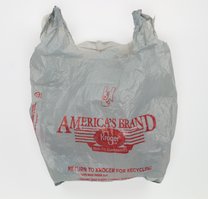

Cite as
American Chemical Society, and American Chemical Society. Division of Polymer Chemistry. “Polymer Recycling : The Key Issues.” Vhs, September 11, 1989. TP 156 .R38 P68 1989. Science History Institute. Philadelphia. https://digital.sciencehistory.org/works/wezy2vp.
This citation is automatically generated and may contain errors.