
Interviews with Distinguished British Chemists: Sir Ewart Jones
- 1991

These captions and transcript were generated by a computer and may contain errors. If there are significant errors that should be corrected, please let us know by emailing digital@sciencehistory.org.
Transcript
00:00:58 born in nineteen hundred eleven
00:01:00 and educated at the grove park school in rexham
00:01:03 professor sir you worked are h jones
00:01:06 is known internationally
00:01:07 for his work on the structure synthesis and biogenesis
00:01:11 of natural products
00:01:13 sir you were attended university college of north wales at banger
00:01:18 and the university of manchester
00:01:20 he began as a lecturer
00:01:22 at imperial college in nineteen thirty eight
00:01:25 and rose to reader and later assistant professor in organic chemistry
00:01:30 at imperial college
00:01:32 his research on steroids and a settling's led to synthesis of vitamin a
00:01:38 his service as advisor and participant to numerous oversight committees has
00:01:43 earned him pure recognition as the
00:01:46 diplomat of science
00:01:48 in nineteen fifty five
00:01:50 he became wainfleet professor of chemistry
00:01:53 at oxford
00:01:54 receiving his knighthood
00:01:56 the same year
00:01:58 sir you were is widely regarded for his inspirational teaching methods
00:02:02 as many of the students have gone on to become major contributors to both
00:02:06 industry
00:02:07 and academia
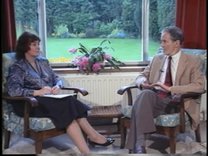
00:02:09 joining us for this interview at Sir Ewart's home
00:02:12 is Ms Moira Donnelly
00:02:14 public affairs officer for the royal society of chemistry
00:02:22 your early life
00:02:23 what your parents did for a living
00:02:26 well my early life i first saw the light of day in uh...
00:02:30 the front room of a semi-detached house in a
00:02:33 little village called christophen
00:02:35 which is near rexham on the
00:02:37 wales england
00:02:39 england border
00:02:41 my father was a solicitous clerk
00:02:43 my mother was the daughter of two well-known evangelists
00:02:47 who spent most of their life preaching up and down the country
00:02:51 uh... she was actually born in stockport while my grandmother was on her way
00:02:54 from north of england down to south wales and had to get off the train and
00:02:58 give birth to a child in stockport
00:03:01 so she wasn't really welsh she was born in england my father was born in
00:03:06 wales uh... a welsh village
00:03:09 life in
00:03:10 a little village population of about a thousand
00:03:14 was uh... dominated by
00:03:17 the colliery
00:03:20 mining for coal
00:03:21 which was half a mile away from our house that was the main view from the
00:03:25 front window
00:03:26 along with the great western railway line to to london from birkenhead
00:03:33 the colliery was a fascinating place to a youngster
00:03:37 because uh...
00:03:38 one went around and there was steam hissing here there and everywhere
00:03:43 things turning
00:03:45 and all the
00:03:46 technology was really very
00:03:48 very fascinating
00:03:50 my father used to work in the town
00:03:52 rexham
00:03:53 just a few miles two miles away
00:03:56 and uh...
00:03:58 this was served by an electric tramway from rexham to rose
00:04:02 uh... open deck at the top
00:04:04 great fun of course to climb up the top and sit on the on the open deck
00:04:09 and as a boy i went to school in rexham at the age of
00:04:12 five and a half
00:04:14 on the tram every morning i didn't have to bother with the fare
00:04:18 because my father used to travel on the tram later on and i merely had to say
00:04:21 to the conductor my dad will pay the fare
00:04:24 and uh... this is uh... this is what happened
00:04:26 it was a very
00:04:27 personal service
00:04:29 father used to catch the tram at about
00:04:31 ten to nine every morning
00:04:33 and uh...
00:04:34 the tram
00:04:35 if he wasn't obvious
00:04:36 the tram would stop
00:04:38 and the bell and the
00:04:39 driver would ring the bell and we'd have to go out my dad's not coming today he's
00:04:43 not well
00:04:45 this was uh...
00:04:46 the sort of life we
00:04:48 we led and i think my
00:04:50 interest in technology was
00:04:54 really fostered by
00:04:56 the buses the
00:04:57 those of the old buses with solid tires of course the the first buses i saw
00:05:02 and the
00:05:03 trams and the
00:05:04 the mine
00:05:05 incidentally versham colliery which is what it was called
00:05:09 was the place where
00:05:11 wilkinson got his coal
00:05:13 uh... from for his ironworks which was at versham
00:05:17 it was a famous ironworks and
00:05:19 produced a lot of the cannons used in the uh...
00:05:22 the peninsula peninsula war and the battle of waterloo and so on
00:05:26 these were produced by wilkinson's
00:05:28 wilkinson's ironworks he made his own money there were
00:05:31 penny coins that uh... wilkinson's ironworks produced
00:05:35 life was
00:05:37 uh... such that one had to win scholarships and so on unfortunately i
00:05:41 did manage to
00:05:43 accumulate enough in the way of scholarships and exhibitions together
00:05:46 with uh...
00:05:48 a teacher's training grant
00:05:49 this was the
00:05:51 the key to it
00:05:52 accepting a grant from the board of education
00:05:55 uh...
00:05:57 to be trained as a teacher three years of university education followed by a
00:06:01 year's diploma
00:06:02 and this i undertook to to do and it guaranteed me
00:06:06 a fair amount of support for my university
00:06:09 days together with i won the top scholarship in vangar
00:06:14 which was quite a help and a county exhibition on top of that
00:06:18 so that all together i was uh...
00:06:20 not badly not badly offered at university
00:06:24 i did manage to supplement it uh...
00:06:27 for
00:06:28 one of the
00:06:29 quite a period six years actually as a correspondent for the guardian
00:06:33 manchester guardian as it was known in those days
00:06:35 i used to write up the uh...
00:06:38 weekend sporting activities for their tuesday feature they had a feature in
00:06:42 the guardian sport in the universities
00:06:45 and uh... i used to do the vangar section
00:06:48 so you finished uh... your undergraduate degree and then you did go off and do
00:06:52 this teaching diploma right away
00:06:54 that's right and uh... that was a very useful
00:06:57 thing for me in that it
00:06:59 broadened my
00:07:01 uh... experience i found the history of education
00:07:05 fascinating because it introduced me to a whole lot of history that somehow or
00:07:09 other i'd missed out on in school
00:07:12 the disadvantage of our school
00:07:14 history education was that you never got a complete view i think i did the tutor
00:07:17 period three times i was very knowledgeable about henry the seventh
00:07:21 onwards
00:07:22 but uh... i had some big gaps otherwise
00:07:25 well you completed your phd and it was at that time that you had a couple of
00:07:29 options
00:07:33 you had the option of going to oxford or to manchester
00:07:38 yes and i chose the manchester one because i had been so
00:07:43 inviting and the work that was being done there
00:07:47 was so inviting it so happened that
00:07:49 even at the undergraduate stage i had
00:07:52 been asked by simonson i'm not sure if i was asked or told
00:07:56 uh... to give a
00:07:58 a talk to the uh...
00:08:00 chemical society the local chemical society
00:08:03 and uh...
00:08:05 i chose as my subject vitamin A and the carotenoids
00:08:10 which i found very fascinating
00:08:13 i didn't realize of course when i chose this subject that i would have to do so
00:08:16 much reading in
00:08:17 in german but most of the work by carer in switzerland and kuhn in germany was
00:08:22 published in
00:08:23 the brichter or the helvetica
00:08:26 these are published in german
00:08:28 but uh... i enjoyed doing this and then of course found that had one was doing
00:08:32 this kind of work in manchester and also working in the steroid
00:08:36 steroid series which
00:08:38 proved to be extremely
00:08:41 fashionable at a later stage
00:08:43 and indeed there were so many activities going on in the natural
00:08:48 natural product field
00:08:49 that i found it quite uh... quite exciting
00:08:53 and i got introduced
00:08:54 by him there
00:08:56 into work on the synthesis of vitamin A
00:09:00 uh... did a bit of work on vitamin E
00:09:02 uh... and
00:09:04 into the particularly into the steroid steroid steroid field
00:09:09 that was my
00:09:10 real apprenticeship in manchester for
00:09:13 two two and a half
00:09:14 two and a half years
00:09:15 the first few months at imperial college i was supervising eighteen
00:09:19 eighteen research people i'd supervise one in manchester
00:09:23 so one was really thrown in at the deep end and one of them uh... portuguese so
00:09:27 we had to do the supervision in french which was not so
00:09:31 not so easy
00:09:32 but uh...
00:09:33 this was the way it worked and i gradually found myself
00:09:36 due to the involvement of harvard and
00:09:39 government and changes of one kind or another
00:09:43 in a couple of years i was largely running the organic
00:09:46 the organic department
00:09:48 which of course for a twenty
00:09:50 something year old
00:09:52 was a tremendous tremendous opportunity
00:09:56 and although the
00:09:57 the war
00:09:59 began in in thirty nine
00:10:01 and we had
00:10:03 all sorts of restrictions one of the great mercies of course was that we
00:10:06 should have gone to edinburgh
00:10:08 but happily because uh...
00:10:10 the administration was so lax in making their arrangements
00:10:15 by the time
00:10:16 december thirty nine came uh... thirty
00:10:19 nine came that's right
00:10:21 we decided it was decided we should stay in london and we were the only
00:10:25 academic establishment to stay in london
00:10:28 uh... i often say like the windmill theater we never closed
00:10:32 and uh...
00:10:33 it was a tremendous opportunity and advantage because
00:10:37 being the only academic
00:10:38 place
00:10:39 anything that went on in whitehall or anywhere else well you better go up to imperial
00:10:43 college there's sure to be somebody who knows something about it there
00:10:46 and so we were constantly being
00:10:48 used
00:10:49 by government and the forces for this and that and the other the other thing
00:10:53 which was all very
00:10:55 all very exciting
00:10:57 of course it was made
00:10:58 a good bit more hectic in
00:11:00 september of
00:11:02 nineteen forty when uh...
00:11:04 the action moved to london and uh... from there on of course right up until
00:11:09 the spring of nineteen forty five we were never without the threat
00:11:13 uh... of some sort of action
00:11:15 and i don't think people realize just quite
00:11:18 what uh...
00:11:19 it was like in
00:11:21 the early days of nineteen forty one for example when on
00:11:25 several occasions more than a thousand people were killed overnight
00:11:29 in the in the bombing bombing raids
00:11:32 and this went on not on that scale i mean these were individual individual
00:11:36 nights
00:11:37 spaced
00:11:38 by perhaps a week or
00:11:40 two weeks or
00:11:41 ten days
00:11:42 uh... in the raids so often at weekends which was uh...
00:11:48 very unpleasant
00:11:51 for me at that stage being
00:11:53 young and ambitious
00:11:57 the work was more of a worry than uh...
00:11:59 than the uh... the enemy action
00:12:02 but you were involved in civil defense
00:12:04 I was involved in civil defense of course at home one had to do a certain amount in the
00:12:08 way of trying to protect oneself and uh...
00:12:11 i wasn't fit for the the forces i'd been turned down in a medical in thirty
00:12:15 eight
00:12:16 and in any case i was in a deferred
00:12:19 occupation as a university science uh...
00:12:22 worker and teacher
00:12:24 but uh...
00:12:26 the
00:12:27 civil defense activity began just before the war when
00:12:31 it was realized it would be very helpful if all our people in civil defense all
00:12:36 through the country had a
00:12:37 a much better acquaintance with war gases and an ability to
00:12:42 uh... detect and identify them
00:12:44 and so
00:12:45 Harry MLS who
00:12:47 was one of my colleagues in uh...
00:12:50 London at the time and I we
00:12:52 went down to Porton and we did a course there on war gases and their identification
00:12:57 and then we set up uh...
00:12:59 an organization at
00:13:01 Imperial College in which we trained people in a four day
00:13:05 a four day course we gave them
00:13:08 uh... experimental work and we used the grounds of Imperial College for
00:13:12 simulated uh... mustard gas incidents and things of that sort
00:13:16 throughout this time of course my wife was
00:13:19 with me in London uh...
00:13:20 occasionally
00:13:22 she would be moved out
00:13:24 my persuasion or my
00:13:26 in-laws persuasion
00:13:27 and our first child was born up north
00:13:31 in October
00:13:32 forty one and then came back but our second child uh...
00:13:36 he was born during the flying bomb period and she had him in a nursing home
00:13:40 in Putney
00:13:41 flying bombs going around at the time
00:13:44 he was quite unperturbed by
00:13:46 the V1s or the V2s it didn't seem to
00:13:49 disturb his
00:13:50 wish to sleep most of the time
00:13:53 so you began at Manchester in 1948
00:13:56 yes and uh... I was very fortunate in being able to take
00:14:01 with me from Imperial College two of my
00:14:04 very bright
00:14:04 young men Bernard Henmist and Mark Whiting
00:14:08 and
00:14:09 in Manchester there was already
00:14:11 T.G. Halsall
00:14:13 who had
00:14:14 received an offer
00:14:16 of a job with Hearst up in Edinburgh when Hearst went there but he decided to
00:14:20 throw in his lot with me and stay in Manchester so with the aid of these
00:14:23 three
00:14:26 skilled and enthusiastic lieutenants our work in Manchester got off to a
00:14:30 an excellent start
00:14:32 we carried on with the
00:14:35 settling work
00:14:36 Mark Whiting was looking after that
00:14:38 particularly
00:14:39 and developed
00:14:41 all the
00:14:42 reactions that we had discovered at Imperial College and added several
00:14:47 several more
00:14:48 well Manchester was a wonderful time for me I
00:14:52 had all I wanted we had all the equipment we needed we were doing very
00:14:55 well I had lots of collaborators
00:14:58 and it came as quite a surprise in
00:15:01 1954
00:15:03 to get a letter from the registrar at Oxford
00:15:06 telling me not that I was to come for an interview but telling me that I had
00:15:10 been elected to the Wainfleet professorship at Oxford
00:15:14 and that he would
00:15:15 like to hear from me that I was prepared to accept this this election
00:15:21 well of course I wasn't there were lots and lots of things that I had
00:15:26 doubts doubts about everything was going very well for me in in Manchester
00:15:33 both work and domestically
00:15:35 I didn't relish the prospect of going down to Oxford where I knew
00:15:40 by repute there was a great deal to be done building wise equipment wise
00:15:46 and it would almost certainly result in a
00:15:49 a break in my research activities
00:15:53 well to cut a very long story short all sorts of negotiations went on and
00:15:58 eventually
00:16:00 I did
00:16:01 I did make the decision to
00:16:03 to move to Oxford and we did that in 19
00:16:07 1950
00:16:08 55
00:16:09 As you look at natural product chemistry now how do you see the field developing further?
00:16:17 developing as far as
00:16:20 learning about
00:16:22 natural products I don't think we're going to go
00:16:25 an awful long way in isolating more natural products because
00:16:31 you get the law of diminishing returns if you work in the composity family
00:16:35 you look at a new
00:16:37 species and you find well
00:16:39 ninety nine percent of what you find is what you found before there's only one
00:16:43 percent that's different
00:16:45 but the advances are going to take place undoubtedly and these are going to be
00:16:49 very helpful in learning how nature manages to to make its natural products
00:16:54 you see
00:16:55 I'm well satisfied to understand
00:16:58 what goes on in the millions of chemical reactions in our bodies
00:17:02 or in this plant or that microorganism
00:17:06 and there are millions of chemical reactions going on all the time
00:17:10 and it's going to take us a very very long time to understand
00:17:14 how these work and
00:17:16 to gain control as I hope eventually man will
00:17:20 over his environment really understanding exactly what
00:17:24 what goes on
00:17:25 and this should help enormously so
00:17:28 I see a very big future on that side
00:17:31 What sort of advice do you give to young scientists you come across now who are starting out
00:17:36 say in organic chemistry or any other field of chemistry?
00:17:39 Well the advice I give of course is to look around and find
00:17:43 interesting fields in which to work but don't
00:17:46 look for these too early make sure you've got
00:17:49 command of the basic science
00:17:52 it's very essential that you should have a good
00:17:54 coverage of
00:17:56 basic chemistry and basic physics
00:17:58 it's then you can build on these I'm sorry I don't believe biochemistry is a
00:18:03 science that stands on its own
00:18:05 I think it's very much dependent upon chemistry and chemistry and physics and
00:18:10 upon biology which of course is
00:18:12 very much easier to understand if you understand the chemistry and physics
00:18:16 behind it
00:18:17 so I believe there is a very great future in these
00:18:21 in these subjects but it's got to be based on a firm understanding of the
00:18:25 fundamental principles of chemistry and physics
00:18:28 so that
00:18:29 I see them
00:18:30 I know some people will say that
00:18:32 chemistry as we've known it hasn't got a future well I don't think that is a
00:18:37 proper assessment I think it's always got to have a future
00:18:41 you've got to build on it
00:18:42 in order to be able to advance
00:18:44 Well Professor Stewart-Jones I'd like to thank you very much for talking to us today
00:18:49 and I'd like to thank you for your patience and tolerance I feel I've
00:18:54 exceeded the
00:18:56 almost the right of someone to dominate the scene in this way for an hour or two
00:19:03 I've certainly enjoyed it
| Property | Value |
|---|---|
| Creator of work | |
| Format | |
| Genre | |
| Medium | |
| Extent |
|
| Language | |
| Subject | |
| Rights | In Copyright |
| Rights holder |
|
| Credit line |
|
Institutional location
| Department | |
|---|---|
| Collection |
Related Items
Cite as
Royal Society of Chemistry (Great Britain), and American Chemical Society. “Interviews with Distinguished British Chemists: Sir Ewart Jones.” U-matic (tm), 1991. American Chemical Society Audiovisual Collection. Science History Institute. Philadelphia. https://digital.sciencehistory.org/works/y6w1tfd.
This citation is automatically generated and may contain errors.