
"Lab Tape 1"
- 1990s

These captions and transcript were generated by a computer and may contain errors. If there are significant errors that should be corrected, please let us know by emailing digital@sciencehistory.org.
Transcript
00:00:01 When we met last Wednesday night,
00:00:04 it has to do with trying to induce an EV to jump up toward a positive electrode,
00:00:09 or at least to sweep the surface of the dielectric free of electrons.
00:00:14 The various parts to the gadget are shown here,
00:00:18 the cathode, just a little mercury-wetted piece of copper wire on the extreme left side.
00:00:24 We have a little vertical plate here that's thin, it's ten thousandths of an inch thick,
00:00:29 and runs the length over to here.
00:00:32 It's a piece of aluminum that's supposed to be the double anode.
00:00:37 It has twice the voltage on it, or some high voltage, compared to the cathode.
00:00:42 In other words, the cathode is high negative, pulsed,
00:00:45 and we have the grounding system, which is just anything on this block and underneath the dielectric.
00:00:50 And we have this double anode, which is fed in in a variety of ways that we can tilt the thing.
00:00:57 At the present, it's set for about a ten thousandth of an inch parallel operation.
00:01:02 It has a slight entry radius so that the fields are not very square out the tip end.
00:01:10 And the aim of this thing, of course, was to put a negative voltage here,
00:01:14 launch an EV on the dielectric that would run to this region over here,
00:01:18 be able to clear the secondary electrons by the application of this positive voltage to the double anode, we'll call it.
00:01:26 Didn't work that way.
00:01:28 At least at this phase, we have some interesting evidence that a negative voltage applied to this double anode,
00:01:36 which I guess is a double cathode, causes more interesting results than applying a positive one to it.
00:01:44 Of course, at this point, everything is very unknown.
00:01:48 It seems like we can't make any really good predictions in this business.
00:01:52 So all we've been able to do is to make the first probe in the exploration.
00:01:56 On the next scene, we'll be showing the thing mounted in a vacuum system.
00:02:01 And then we'll proceed to fire it off, show you synchronized pictures,
00:02:06 that is, overlapped pictures of the telescope waveform.
00:02:09 Here we are again in the vacuum system with the probe that's to pick up whatever voltage changes occur
00:02:18 as a result of picking EVs up for electrons on this double anode.
00:02:21 This probe is a thousand-to-one divider.
00:02:25 Here's our cathode.
00:02:28 And if you zoom in on that, you can see a little more detail.
00:02:32 It's nothing but a piece of mercury-wetted copper at this point.
00:02:35 And the ceramic substrate outlined here is where the action goes on.
00:02:43 The electrode from here down to here is our double anode again.
00:02:48 And so all we're showing here is the basic setup in the color of sorts that's natural to this thing.
00:02:56 The next shot will be...
00:02:59 What we're looking at here is a screw-up.
00:03:04 We have hooked the black-and-white camera to the little setup that we were showing
00:03:10 and have just now noticed that the black-and-white camera can't be mixed with the color camera
00:03:17 in the way that we thought it could.
00:03:20 This is a function of how those lines are fed into this mixer box we got.
00:03:24 We'll have to straighten that out one day, but I'll show you a couple of things anyway.
00:03:28 The flashing you see from the hooked gadget on the left is the cathode.
00:03:33 The flashing is the EV-type thing being generated and going toward the double anode
00:03:38 or the back of the ceramic block, wherever it happens to be headed.
00:03:42 In this particular case, we have no voltage applied yet to the double anode.
00:03:48 I'm going to raise the voltage on the double anode to see what happens.
00:03:57 And I have no idea yet really what's going to go on.
00:04:00 Looks like we killed off the triggering.
00:04:03 I'll raise the triggering a notch.
00:04:05 Now we're getting splashes and flashes all over the place.
00:04:08 I don't know what's going on, but this view.
00:04:19 The quietness on my part is my amazement.
00:04:21 I'm watching for things I've never seen before, so this is an unrehearsed arrangement entirely.
00:04:27 I think we're seeing mostly the dadgum emission
00:04:31 due to the negative electrode direction that we still have hooked up
00:04:34 and didn't turn around on the anode, so it is no longer a double anode.
00:04:38 It's a negative anode.
00:04:39 We're looking sideways at it.
00:04:41 We're going to have to shut down for a minute and reverse the voltage on the darn thing.
00:04:45 All right, we're back on the air again,
00:04:47 this time supposedly with positive voltage applied to the double anode.
00:04:50 We'll see what that does to this particular display.
00:04:54 Raising the voltage slightly.
00:04:58 Probably at this point it's about 3,000 volts.
00:05:00 I don't see any big thing.
00:05:03 Unless EVs are going someplace I can't tell.
00:05:07 This view doesn't allow you to see everything,
00:05:09 and the screen is very covered up inside and it's quite dark.
00:05:12 The camera sees almost as good as the eye does under these conditions, it seems.
00:05:17 I'm going to take a peep inside and see if I can see any EV generation.
00:05:23 My eyepiece.
00:05:37 The answer to that question is basically these look like glares.
00:05:41 There don't seem to be any EVs of any interesting sort.
00:05:44 There's a feeble little attempt to,
00:05:46 but something either with the cathode or with the configuration
00:05:52 is preventing EV generation.
00:05:55 Again, I'll cover everything back up.
00:05:58 It's just a flare running back up underneath things.
00:06:02 So the things we were attempting to do on that are shot down.
00:06:08 I'll run it to a higher voltage just to be a menacing little nasty kid
00:06:12 and see what happens.
00:06:15 This will be about 15,000 volts now.
00:06:19 And we're getting what look like strikes on the anode.
00:06:22 I saw some plumes that were pretty nasty.
00:06:28 Yes, those are honest-to-goodness EVs.
00:06:31 They're striking.
00:06:34 They're popping here, there, and yon all over the place as well as in a current.
00:06:37 So the positive anode voltage did turn them into a running EV that's short,
00:06:42 won't go under the anode, and that's the thing that we were trying to show.
00:06:46 I'm going to show you a picture of a clock in case you've never seen a clock before.
00:06:51 Actually, the color camera is the supervisory camera,
00:06:54 and it's the one that is showing at the moment.
00:06:57 If I switch to the black-and-white camera, which is looking at the scope,
00:07:01 you get this kind of a thing.
00:07:04 It's looking at the pulses from a scintillation detector,
00:07:07 and you can see that the downward-going things at the beginning
00:07:10 are the pulses that are showing from cosmic pickup primarily.
00:07:16 I can combine these two, but nothing is really optimized here,
00:07:20 but I'll combine them and show you kind of the thing we're aimed at in the long run.
00:07:25 For example, here we have the clock running.
00:07:28 We have the scintillator showing.
00:07:31 It happens to be showing green.
00:07:33 I can change the color to any other kind of color I want.
00:07:36 If you want red electrons, we've got those.
00:07:38 Magenta.
00:07:39 We just have all kinds of different electron colors around here.
00:07:43 Now, what is not good at the moment
00:07:45 is that the light setup and the adjustment of the various knobs
00:07:49 is such that you miss the main pulse that's going negative.
00:07:53 I can't do too much about that with the setup that I have at this moment.
00:07:59 If I increase the contrast, I knock out that particular pulse.
00:08:05 If I go the other direction and clip higher,
00:08:07 it brings in all kinds of other noises.
00:08:09 So it's just a simple matter of getting a darn optics set right on this thing,
00:08:14 maybe to get this overlay the way I want it.
00:08:18 Just wanted to throw this little two-bits worth in
00:08:20 to show what we can do eventually.
00:08:23 Eventually, the EVs will be shown in whatever picture form they take,
00:08:27 be they running on the surface or it's a hydrogen discharge
00:08:30 or it's on a variety of other things,
00:08:34 like the output of the channel multiplier detector.
00:08:37 That will be the main image,
00:08:38 and then superimposed on that will be the scope image.
00:08:43 Of course, the normal functions of the scope still work.
00:08:45 You can change the position of the thing.
00:08:49 For example, down like that is the way to hiccup.
00:08:52 What we've got here is the same gizmo that we showed before
00:08:58 mounted up closer to the bell jar
00:09:00 and sort of square onto the ceramic plate that the EVs are supposed to run on.
00:09:05 We have a setup such that the cathode is on the left.
00:09:10 We're looking straight down on the plate,
00:09:11 and the double anode starts just slightly after the cathode,
00:09:15 more or less near the center of the white piece of ceramic,
00:09:18 and runs to the right.
00:09:21 We'll begin firing EVs, but in order to do that,
00:09:24 we need to cover up and black out some of the incident light.
00:09:28 This is just normal room ambient lighting with this camera.
00:09:31 Now we're going to pull back the black cover,
00:09:35 obscure a reasonable amount of light,
00:09:36 trying to leave just a tiny amount of it for reference
00:09:39 so you can see what's what.
00:09:42 Now we begin the firing
00:09:45 by raising the voltage on the pulse generator.
00:09:52 See a tiny amount of something going on in the center.
00:09:54 It's not very strong,
00:09:55 but I'm afraid that's what we've got with this particular setup.
00:09:59 I'm not sure what the electrical characteristics of this surface is.
00:10:03 It doesn't seem too receptive right now to generating EVs,
00:10:06 although some pulses are occurring.
00:10:10 I want to hold back on this trigger voltage.
00:10:14 I'll raise the high voltage DC now,
00:10:17 the thing that's supplied to the double anode,
00:10:20 and try to get the EV structure to act as a normal positive firing.
00:10:25 And there I think I can see the thing going on now.
00:10:28 It's giving some kind of a kick.
00:10:32 No great thing.
00:10:33 I will raise the voltage until it's reasonably high.
00:10:39 Cut back on my trigger,
00:10:42 trying to get a more or less pure form of these things.
00:10:45 I don't want many pulses,
00:10:46 and that's what happens when you get too much pulse voltage applied.
00:10:50 You get several pulses instead of a stronger one.
00:10:53 So under this condition, we're getting approximately one pulse.
00:10:59 Then it might cycle to several others every now and then.
00:11:05 That's a very poor picture from what I see.
00:11:08 I guess it's recording just as poorly as I see it.
00:11:11 I can't do much about it right now.
00:11:13 We just don't have the intensity to see that particular little gizmo.
00:11:18 What we're going to do next will be to switch voltages to the negative direction
00:11:26 and try to get some top view of these things going in all directions
00:11:30 if it'll do what it did for us once before.
00:11:34 All right, here we go again.
00:11:36 This time it's the same experiment
00:11:38 with a negative voltage applied to the double anode,
00:11:42 which is now the double cathode.
00:11:44 By raising that voltage, you can say field emission occurs from the tip of it
00:11:48 to various places on the ceramic.
00:11:50 Those are the little points of light sort of in the upper left-hand quadrant of the screen.
00:11:55 I'm not pulsing successfully yet.
00:11:57 Although I'm pulsing, I'm not getting any EV.
00:12:01 The last time we did this, the darn EV started going out 90 degrees
00:12:05 to the direction they normally travel.
00:12:07 So we had a lot more field emission interest at that point.
00:12:11 So here we go.
00:12:12 I saw an EV, I thought, so clear over the edge on the top side of the double cathode.
00:12:19 Fortunately, we are recording.
00:12:21 We may get some picture of that later.
00:12:24 The pulse does seem to be working.
00:12:26 It's just that we don't have enough double negative
00:12:28 to cause this condition we were seeing before,
00:12:30 so I'll raise that voltage slightly.
00:12:33 All right, here comes up the emission with it.
00:12:35 You can see the streamers just come out further as the total current rises on those.
00:12:40 I'm now at approximately 10 kV on the double cathode, if you'll call it that.
00:12:49 Even though I'm getting pulses from the main cathode,
00:12:52 I'm going to have to raise it further to get some more action of something interesting to occur,
00:12:59 if indeed it will repeat what it did before.
00:13:02 That switched cameras on us.
00:13:03 The pulse of interference was so great it switched to the other camera for a moment.
00:13:11 Some kind of darn thing that gets directly into the apparatus.
00:13:16 They were EVs.
00:13:17 Yeah.
00:13:19 I see nothing but now waves of electrons, if you will,
00:13:22 moving out across from the field emission thing.
00:13:24 That was not an EV in the upper side.
00:13:27 That's an emission thing that's being pushed back.
00:13:33 The scope is showing all kinds of funny waveforms.
00:13:35 Too bad it's not superimposed on this.
00:13:37 It would be very pretty.
00:13:39 We are getting EVs all over the place, apparently,
00:13:41 or at least a lot of interference is developing.
00:13:46 Now, since I knocked all the emission sites off,
00:13:48 I'm going to go up in voltage on the negative high voltage again.
00:13:53 Some kind of streamer occurred then.
00:13:55 I don't know what from.
00:13:56 We'll see later on the recording.
00:14:01 I hear that in the audio system.
00:14:03 It's blasting through the electronics,
00:14:05 and it's really bad news to the poor video system here.
00:14:12 We need a little more shielding in this system if we're going to play this game.
00:14:18 All right.
00:14:19 Now we're just having pretty bad luck.
00:14:21 What we have here is one of our resistive stripes of titania
00:14:28 that's been reduced in vacuum.
00:14:31 It goes down the center of a piece of ceramic.
00:14:33 That's the white thing in the middle.
00:14:36 The cathode on the left is the usual mercury-wetted copper.
00:14:39 The thing on the right is a brass stripe
00:14:42 or a piece of brass spring that's used to contact this piece of titania.
00:14:48 We'll be launching EVs from the cathode to that little brass piece.
00:14:52 It acts as the anode.
00:14:54 You can see the flare on it.
00:14:55 You can probably see the EV on the way.
00:14:58 Now this is an intermediate step that we're doing
00:15:02 since we've found that we can see the time constant
00:15:06 on these pieces of resistive material by the way that the beam or EV deflects.
00:15:12 We're going to try to get a particular firing rate,
00:15:16 a certain instability or charging showing.
00:15:18 Then we'll put the anode 2 on the top of this thing that you're looking at here
00:15:23 and see if we can affect the time constant.
00:15:25 In other words, is it picking up electrons?
00:15:27 That's the question we have to ask, and this is one way of getting at it
00:15:30 that's easier than pure ceramic.
00:15:34 Now we've cut the light level way down.
00:15:39 The voltage will be brought up now on the cathode.
00:15:46 We're going to get to the point that we can fire off something or other
00:15:49 between the cathode and this little anode,
00:15:51 which is really running at ground potential.
00:15:54 I'm not sure what we're going to see.
00:15:57 There they are. Oh yeah, they're very good.
00:15:59 They're doing the counting trick, left, right, left, right,
00:16:01 or at least it did two until it got to where it wouldn't do any more.
00:16:05 We're at too high a rep rate even for this resistive material, I would say.
00:16:09 So I'm cutting the firing, weight the thing out,
00:16:13 maintaining our firing rate at about that one per second.
00:16:16 Now I'll come up again and see if we can see this effect of counting,
00:16:19 left, right, left, right.
00:16:22 It depends on the resistance of the material,
00:16:25 and I don't really know what this stuff is.
00:16:27 Nope, those are flares. They don't count.
00:16:30 I don't think I can go to a higher level and do any good.
00:16:33 At this point, I'll switch to the other camera
00:16:35 just to show or see if there's anything showing on the scope.
00:16:38 Yep.
00:16:40 That's the color camera looking at the pulses that are being generated.
00:16:45 I'm turning them down, and I'm turning them back up.
00:16:48 It's on a 10 microsecond per centimeter sweep.
00:16:51 I'm sure we're not seeing the real whole pulse.
00:16:54 They're usually very narrow things, quite long.
00:16:56 They're not in this case, however, because these are not EVs.
00:16:59 We are seeing the whole pulse.
00:17:01 So when you start seeing EVs, they narrow up like the devil.
00:17:05 This is a good indication that there is nothing really happening on the surface
00:17:09 after those first two shots.
00:17:11 Sure enough, that's a flare. It produces this long pulse in general.
00:17:16 I'm not sure quite how we're going to get them back.
00:17:20 It's always a problem because we don't have any parameters to play with here
00:17:23 like another triode voltage to apply.
00:17:26 So one thing I'll do is just to shut off and wait for a while
00:17:29 until they come back like the first few strikes.
00:17:31 Thank goodness we're recording.
00:17:33 You can see what the heck happened in the first two.
00:17:35 We're back on the air again after a wait of about a half of a minute.
00:17:39 Going to gradually raise the voltage and see if we can get another EV firing
00:17:43 on this particular ceramic if it's discharged.
00:17:46 We may, we may not.
00:17:49 We're coming up. Oh, they're flares again.
00:17:51 It looks like we've lost the game.
00:17:53 We're going to higher voltage just for fun, just to see if anything else happens.
00:17:57 The answer is no, no EVs.
00:18:00 So we saw them the first few and something happened.
00:18:04 This is a very crude setup and it's not unlikely.
00:18:09 In an attempt to get the surface discharged,
00:18:12 we lent the vacuum up to near atmospheric pressure just for a moment,
00:18:16 pumped back down, and now we're going to raise the voltage again
00:18:19 to see if we can see some firing.
00:18:23 It's always a toss-up as to what you're going to get.
00:18:30 There we are, one EV and then they started flaring.
00:18:33 So the surface is definitely charged.
00:18:35 We're going to have to take the thing apart and find out what in the heck it is
00:18:38 that's not grounding it out, but it's not being charged.
00:18:41 All right, this time we're going to, we have opened the system,
00:18:45 regrounded the gadget.
00:18:48 We're going to try the same old trick coming up on the pulse voltage
00:18:51 and see if the EVs follow the nice pattern that they have been.
00:18:57 However, I'd better get my pulse on.
00:19:01 All right, that's my triggering.
00:19:04 Back to the black and white camera.
00:19:07 Raise my voltage slowly.
00:19:09 Maybe I ought to cut the repetition rate down or something like that,
00:19:12 but I'll leave it alone here for a while and see how it starts out.
00:19:18 Gradually raising the voltage on the pulse.
00:19:21 I thought I saw a wee tiny thing, but I'm not sure.
00:19:25 Oh, nothing else has happened, so it probably wasn't.
00:19:28 There it is, one, and then flares.
00:19:30 That son of a gun.
00:19:32 Same old pattern.
00:19:33 Well, well, it's very definitely a charge effect.
00:19:37 Now, we did measure the thing while it was out,
00:19:39 and it was, oh, around 80 Siemens or something like that, or nano-Siemens.
00:19:46 We'll cut the rep rate way down,
00:19:48 and I'm going to fire again, coming up slowly in voltage.
00:19:52 And we waited a minute and 15 or a minute and a half
00:19:55 by the time we get to that firing point.
00:19:58 I'm gradually raising the voltage to where it should trigger off an EV,
00:20:02 and we're going to try to see if we can hit another one instead of a flare.
00:20:07 It's only a, oh, flaring.
00:20:10 Here's our rep rate, quite low.
00:20:14 Well, since this dirty thing is doing rotten tricks to us,
00:20:17 we're going to do something to it.
00:20:19 We've shut the main valve in the high vacuum system,
00:20:23 and we're just letting the pressure rise gradually in the bell jar.
00:20:27 We'll get a little discharging from ions, maybe.
00:20:29 That has happened a lot, especially in the presence of hydrogen.
00:20:32 We'll take our shot at whatever we get here.
00:20:37 So there we go, flaring.
00:20:40 We're running at a low enough rep rate.
00:20:42 We'll just let the darn thing fire away.
00:20:46 Look at the firing waveform here for a minute.
00:20:49 Not too interesting.
00:20:52 Not at all really interesting.
00:20:54 No sharp rises downward, which is a real indication of an EV.
00:21:01 So either the pressure hasn't come up enough in the bell jar,
00:21:04 or the process is never going to work.
00:21:07 We'll just watch here out a while, see what happens.
00:21:16 I don't know whether that came through the recording.
00:21:18 I had my microphone sitting over the camera instead of clipped onto me.
00:21:24 Anyhow, we're letting the pressure rise in the bell jar,
00:21:26 trying to see what's going to happen,
00:21:30 see if there's a way to get ions to discharge this freaky surface.
00:21:35 I can see the shape of the flare very slightly in the ceramic,
00:21:38 the way the adjacent ceramic is charging.
00:21:43 There are more intense areas of not going across,
00:21:46 kind of a banded structure.
00:21:59 Pretty rotten device.
00:22:00 Let's kick the rep rate up a little bit.
00:22:14 Just get more events this way.
00:22:18 Particularly I'm watching those bands in the dielectric white area
00:22:25 sort of show where the electrons go from the flare.
00:22:31 Yeah, this makes me mad.
00:22:33 I think what I'll do is to shut the pulse for a minute,
00:22:35 raise the gas pressure, recycle the whole darn thing.
00:22:39 So, hey, the pulse is supposed to be off.
00:22:42 It takes its time going down, that's all.
00:22:45 Okay, we're going again.
00:22:47 This time we cycle to a higher pressure.
00:22:50 I'm going to raise the voltage kind of prematurely when the pressure's poor,
00:22:54 just to see what's going to happen here.
00:22:57 The pulse is up practically to the firing point.
00:23:00 It fired, there was an EV, and then it flared again.
00:23:03 So, it's not a little.
00:23:05 On the assumption that part of our problem on the other one was charging
00:23:08 was due to the resistive material itself,
00:23:11 we've changed the substrate to a strange little crow's foot-like thing
00:23:15 we made some time back.
00:23:16 Don't know a lot about it, but it has resisted titanium strikes again.
00:23:21 These are using the same double anode, or grounded anode, rather.
00:23:26 Grounded double anode.
00:23:27 Same cathode. Approximately the same spacings.
00:23:31 So, we'll close up now.
00:23:33 Cut the light down to some level that still shows the piece, just barely.
00:23:42 We have reasonable vacuum.
00:23:46 And we'll start to fire and see what the heck happens.
00:23:51 Coming up in voltage.
00:23:54 Coming up in voltage.
00:23:58 Bang! Gosh, they went in all directions.
00:24:00 I think they're flares now, but the first few may have been something else.
00:24:04 I don't know what this is, really.
00:24:07 It's a lousy bunch of things that are happening.
00:24:09 I'm beginning to think maybe it's this cathode position or something like it.
00:24:13 Unless those are strikes, I'm not sure what's going on.
00:24:19 This is almost going to take a replay to see what the heck is happening.
00:24:22 I see light in strange ways.
00:24:25 Basically, it looks like a flare.
00:24:27 So, let's switch to the scope a minute.
00:24:30 Trigger it on.
00:24:32 It's not triggering yet.
00:24:35 There it is.
00:24:36 Well, I'd say from that waveform, it's got to be a flare.
00:24:38 No EV can come out of it.
00:24:39 Here we go again with the setup that's shortened.
00:24:42 The path that the EV has to travel between the cathode and the brass strip
00:24:47 that's sort of located on the center.
00:24:49 It's quite dark here.
00:24:50 You can't see much, but you will when the flashes start maybe.
00:24:54 We have seen EVs on this one just before the filming began.
00:24:57 So, let's see what our luck is on this one.
00:25:00 Here we go.
00:25:01 Got one, two.
00:25:02 I'm not sure what's going on now.
00:25:05 Might have to turn down the intensity.
00:25:10 We'll take a look at the scope and see what it's saying.
00:25:17 It says not such good things happening.
00:25:22 Yeah, this is a typical rotten display.
00:25:24 I don't know whether we got one and I just missed it visually or what.
00:25:27 We could check that on the recorder later.
00:25:30 Those are basically just flares.
00:25:37 What I'm getting looks like EVs when you visually look at it.
00:25:42 I'm going to cut down the f-stop a little bit and see if that helps the camera.
00:25:46 Might be too much light for the thing.
00:25:51 So, here we go down.
00:25:58 I wouldn't swear all these are EVs, but there are some streaks showing now.
00:26:01 They're bowed way out.
00:26:03 Typical of a charged pattern that has not had time to discharge.
00:26:10 There's another one that went around the back door.
00:26:14 Went a lot of light in and cut the intensity way down.
00:26:23 Pretty robust little devils.
00:26:25 They show themselves pretty well with a lot of incident light.
00:26:44 I'm going to play with the voltage a little bit, kick it up and down.
00:26:48 First going down.
00:26:54 Now coming up.
00:27:02 I think the problem really is we just can't see with enough magnification with this optical setup.
00:27:06 There are EVs there.
00:27:08 They look pretty good.
00:27:09 I'll get in and sort of announce them with my head inside this cover.
00:27:14 That was a beauty.
00:27:15 An absolute perfect EV bowed out in the downward direction.
00:27:18 That went straight.
00:27:19 That went straight.
00:27:20 That went straight.
00:27:21 That was a flare.
00:27:22 That went straight.
00:27:23 That went straight.
00:27:25 These are perfectly fine EVs.
00:27:36 And just to see what some of that looks like on the scope.
00:27:41 Well, not too good.
00:27:43 I cannot see that that's an EV type waveform, but it must be because it's producing them.
00:27:51 I think what's happening is I'm missing the main first pulse.
00:27:54 It's so short that it shoots down and the camera doesn't catch it.
00:27:58 Normally they don't get all those extra secondaries, though.
00:28:09 There are definite cathode signs and then there's a flare in the end of it.
00:28:13 So the EV is running just where it should, but bowing each way.
00:28:21 Again, with too much light you can't see much.
00:28:24 With a little covering you can't see much either.
00:28:27 This thing needs magnification as much as anything else.
00:28:30 Although there is a definite tendency to show the bowing here.
00:28:41 I'm going to cut the f-stop to a lower number.
00:28:51 It's hard to shield the light out from this thing when it gets down that low.
00:28:56 I'm going to gradually work back to see if I can't find some setting that gives a little better picture of these things.
00:29:10 Now that's raising the f-number.
00:29:14 Once in a while I see one that looks like a legitimate strike.
00:29:19 But it's sure hard to see with the TV camera instead of using the magnifier on my headpiece here.
00:29:33 Just a lot of light confuses the whole issue.
00:29:35 It's kind of a flare.
00:29:37 It needs some magnification.
00:29:39 That would really help.
00:29:42 Okay, at least now I'm ready to run the rep rate up.
00:29:47 I'm going to really start firing along and see if we can get a more erratic position.
00:30:02 I'm not sure where they're going right now, but I'll get in and announce that.
00:30:08 Mostly, well, they are scattering all over the darn place.
00:30:11 They're crooked, very small, and the camera cannot resolve that size, I don't think, with the lens that I have in it right now.
00:30:20 Again, I'll play with the f-number thing just a little bit to help visualize or help see.
00:30:29 Oops.
00:30:36 That's full sensitivity.
00:30:40 Move it back to the center.
00:30:43 That's lower sensitivity.
00:30:46 I still can't resolve the little guys.
00:30:48 By George, they're there by eye, and they occasionally show on the recorder.
00:30:53 This time we have added the double anode.
00:30:57 It's the thin line that extends to the right just above the center.
00:31:02 It couldn't be put on directly above this metallic grounding electrode.
00:31:08 I wonder if that shaking is my voice or what.
00:31:13 Under this configuration, we gave a pretest and found out that there's some emission of some sort from the darn line that we're using to control the resistivity up to the double anode.
00:31:24 That'll show up as a lot of bright light.
00:31:28 This camera is intending to go out of sync, and I think it's doing it again.
00:31:32 It's that little black box we got.
00:31:35 Somebody, I think, might need a little attending, but we'll play with it as best we can.
00:31:41 Here we go up from the EV voltage.
00:31:44 We're going to feed the cathode more negative stuff, and pretty soon it should fire off.
00:31:48 There she goes.
00:31:50 The first one was very pretty.
00:31:53 We're out of sync.
00:31:56 There's some more going.
00:31:58 Those are nice little fellows.
00:32:01 Some look like flares, but I found from before those are the ones that run straight down or hidden, essentially, by the black stripe for some darn reason.
00:32:09 Anyhow, there they are, swinging around, sometimes to the south, almost always to the south.
00:32:15 The camera's tearing very badly now.
00:32:18 It's out of sync vertically and horizontally.
00:32:21 We'll just live with it.
00:32:23 I'll raise the voltage.
00:32:25 This is the high voltage applied to the double anode now.
00:32:28 We'll see if we can see anything significantly different.
00:32:31 On the knob, that's 30.
00:32:36 Probably missing all the good stuff now while the camera has its spit.
00:32:42 No, the pretties were still to come.
00:32:46 There's a condition we're looking for in particular in which the emission occurs.
00:32:56 We're trying to see if there's any change in the deflection.
00:33:00 Have to wait for the camera to get back into sync.
00:33:04 Seems to hate something.
00:33:08 We're trying to see if raising the voltage changes the deflection of those EVs.
00:33:12 Here goes up to the next notch of voltage.
00:33:15 Raising it all the time, slowly, up to now 30 on the Variac.
00:33:25 It was 20 before.
00:33:29 No significant change by eye here.
00:33:31 Maybe by checking back later we can see it.
00:33:35 I'm up to 40 on the Variac.
00:33:39 Camera fits.
00:33:43 Out horizontally, out vertically.
00:33:46 Maybe it'll settle down.
00:33:47 We'll just wait it out.
00:33:48 That's all I can do for now.
00:33:51 Turn the darn thing off, let it cool.
00:33:52 It seems to sync better later.
00:33:55 Doesn't seem to like running very long.
00:34:00 Now we're getting our money's worth.
00:34:01 We're getting twice as many pictures as we would normally.
00:34:04 The other black and white camera crapped out.
00:34:06 We're trying to show that there's an EV firing in here with the color camera,
00:34:10 but it doesn't show worth a darn.
00:34:12 It's basically the region in the center.
00:34:14 I can't point at it because we're right jammed up to the bell jar.
00:34:18 But the flashes are not very visible.
00:34:20 All you can see is when it fires, it kicks off the background.
00:34:23 Electromagnetic interference to form little blue spikes.
00:34:28 We're unable really to resolve much this way, and we can't get closer.
00:34:34 Now that flash, the one that just occurred, was from the double anode,
00:34:37 or rather from the cathode using a resistive material up to the double anode.
00:34:43 We've seen several of those.
00:34:45 The voltage is reasonably high.
00:34:47 And just to make the trip worth your money, I'm going to raise the voltage some more,
00:34:51 get some fireworks, if nothing else.
00:34:54 I think I have some fireworks.
00:34:57 I don't see enough fireworks.
00:34:58 There are a few little things flashing around.
00:35:00 That's the emission from the titania up to the double anode.
00:35:10 That's about it for this series since we lost one of the cameras.
00:35:13 I think what it is is simply not enough sink coming from that little box
00:35:16 that fell off Jim's back for us because the camera itself went.
00:35:43 We've got a recording going on here
00:35:45 of a channel multiplier showing something.
00:35:50 I don't know what yet.
00:35:51 I haven't optimized anything, but I wanted to turn it on as early as I could
00:35:54 to see whatever I could see.
00:35:56 The camera is looking at the channel multiplier,
00:36:00 which is looking at the surface an EV is running on
00:36:05 that is triggered by a mercury-wetted copper cathode running on a dielectric
00:36:13 that's coated with that tannin dioxide to a brass anode.
00:36:16 It's kind of a messy thing, but nevertheless,
00:36:19 with this pinhole camera effect, I'm seeing something.
00:36:23 I assume they're electrons.
00:36:25 The gain is down low, and in general, things aren't too pretty.
00:36:30 First thing I'm going to play with is to hold the channel multiplier gain where it is
00:36:34 and cut the triggering down a ways to see if I can get into a pure mode of that.
00:36:39 Well, I was just right on the edge of triggering ability.
00:36:42 I'll bring the trigger up a tad again.
00:36:45 That's the pulse to the EV source.
00:36:48 There they go.
00:36:50 What I don't understand is some of the things that appear to be reflections.
00:36:53 There are two little arms that stick out to the right
00:36:58 of what's more or less the central region.
00:37:03 But anyhow, that's what I'm seeing.
00:37:05 I'm going to crank up the multiplier, channel multiplier,
00:37:11 main phosphor voltage first.
00:37:13 That just gets a little more light output.
00:37:16 It's practically to the top now.
00:37:18 It's about 5,000 volts, I think, somewhere in that category.
00:37:23 I'm going to start trying to raise the gain of the device.
00:37:26 I haven't been up past this level before.
00:37:29 I'm going to see what other funny things I can see.
00:37:36 I'm about to conclude that there is sort of a central image.
00:37:39 It just comes straight right down.
00:37:41 It's not pinholed hardly at all.
00:37:43 I don't really know what to make out of this thing I'm seeing.
00:37:47 I'm raising the voltage still very slightly, very slowly
00:37:53 on the channel multiplier gain.
00:37:58 Lots of flaring going on.
00:37:59 I don't know what that flare means.
00:38:02 Each shot is although similar, it's kind of different in a way.
00:38:06 Remember now we're looking at an electron pattern.
00:38:09 And I'm not intentionally picking up any electrons.
00:38:12 This is just what scatters out from the source.
00:38:15 There must be some fairly high-velocity things in there.
00:38:18 That was a long strike at something.
00:38:20 Now I'm going back down again in the multiplier
00:38:25 to try to get rid of some of the flaring stuff.
00:38:29 Got rid of everything.
00:38:31 Everything goes down at once.
00:38:33 So it's not a saturation problem.
00:38:35 It's just an honest-to-goodness large amount of junk being thrown at me here.
00:38:42 I don't know whether that big flare is X-ray or electron.
00:38:48 I'm coming up on the gain, as you can probably tell
00:38:51 by the way that that flare is getting larger and larger.
00:38:54 I'll just keep on coming.
00:38:58 Until something screams at me.
00:39:07 It's not exactly screaming, but I think I'll quit.
00:39:11 I'm going to run the ref rate up to see what I can do there.
00:39:14 I might have to re-trigger, of course.
00:39:17 There are certainly two, perhaps three, predominant points in this darn thing.
00:39:22 I don't know how to call these shots.
00:39:24 I don't know what they are.
00:39:26 I might call the one that's very near the center of the screen,
00:39:29 I might call that the cathode, because it's a very consistent spot.
00:39:32 I might call the one on the right the anode, where the strike occurs.
00:39:36 But the one in the lower center, or the cathode,
00:39:39 is the one that's very near the center of the screen.
00:39:42 Where the strike occurs.
00:39:44 But the one in the lower center, or lower right,
00:39:47 I don't know what that is.
00:39:49 My God, they're going all over the dang place.
00:39:52 It's quite interesting to me.
00:39:54 It's the first time I've ever seen this kind of a presentation.
00:39:57 They're watching the top view of EVs running.
00:40:01 They are running wild.
00:40:03 I don't see as much in the sense of a run
00:40:06 as I do a point on each of the two places.
00:40:09 Although there is a little bit of information
00:40:12 that says they're connected with some kind of a smear or streak.
00:40:16 Higher ref rate yet.
00:40:19 Just to get more vents.
00:40:25 The main characters are sure holding their role fairly well.
00:40:31 Looks like I got a doublet of some kind that formed
00:40:34 and moved out away from the persistent source.
00:40:38 I know that the cathode is to the left, but
00:40:41 that's in the real image, and actually through the pinhole image
00:40:44 it would reverse, that the cathode would then appear to the right.
00:40:48 I'd have to do something to verify that,
00:40:50 but I'm pretty sure that's the case.
00:40:52 The cathode is probably on the right, and the flare that we see on the left
00:40:55 is the blow-up on the anode.
00:40:57 If that's the case, all the radiation or x-rays
00:41:00 all are coming from that source.
00:41:03 I think I'll check to see if I've...
00:41:05 I found on the last go-around, though,
00:41:07 that I only had the lens opening to f4,
00:41:10 so I was having to run the channel multiplier way higher
00:41:13 instead of the 1.4 that I've got available in the lens.
00:41:18 Now I've wound the multiplier up and cut down on the...
00:41:21 or down on the multiplier gain a little bit,
00:41:24 having increased the optical gain.
00:41:27 Resolution is not too good.
00:41:29 There's some fundamental mechanism
00:41:32 that's making things look pretty rotten.
00:41:36 I don't think it's the optics because it's...
00:41:41 focuses on sharp little pieces of junk on the surface,
00:41:44 so all I can say is it's...
00:41:47 due to the peculiar sensitivity characteristics of the tube here
00:41:52 on the pickup device, might be a part of it.
00:41:55 I want to look inside just for a tad, for a second,
00:41:58 and see if I can see things better optically
00:42:00 than I can in terms of...
00:42:02 for the camera.
00:42:09 I get the impression that the resolution on the optics is pretty good.
00:42:13 It's lots of little sharp things on the sides,
00:42:15 and the camera doesn't seem to see quite that same way.
00:42:21 Well, the camera really washes them out.
00:42:24 I'm going to go down on f number for one thing
00:42:26 and see if I can...
00:42:29 or go up on f number.
00:42:33 See if that can help any.
00:42:41 Not a whole lot.
00:42:43 But that does wash out there, comparatively.
00:42:45 It looks like it's a amplitude blooming effect
00:42:49 on the blooming camera,
00:42:50 because it looks pretty good on the screen.
00:42:54 I'm just going to look at the screen for a minute
00:42:56 while this thing is splashing
00:42:57 and make some comments about what I see.
00:43:00 And all the principal features are there.
00:43:02 They're just fairly sharp in the optical view of this,
00:43:05 and the camera's not seeing them quite so sharp.
00:43:12 I might take a look at this speed
00:43:14 just to acquaint your eye with what you see in here.
00:43:18 It's reasonably sharp,
00:43:20 but it's not quite as sharp as I'd like it to be.
00:43:23 Just to acquaint your eye with what you see in here.
00:43:28 You see reasonably sharp detail in that, right?
00:43:31 Compared to what the camera sees.
00:43:33 It hits the camera blurring out things.
00:43:37 That's kind of bad.
00:43:38 I don't think it should,
00:43:39 because it's picking up some of these other details pretty well
00:43:42 and the little specks of dust are focused.
00:43:50 I'm not sure really yet
00:43:51 which is cathode and which is anode.
00:43:57 I think we'll cut the recorder off for a minute,
00:43:59 because it's seeing the main thing.
00:44:01 Going for very high gain on the whole system.
00:44:04 I've got the lens down to 1.4.
00:44:10 I've got the multiplier up a ways.
00:44:12 The reason is I can see some little satellites off to the side,
00:44:16 which are more or less permanent features.
00:44:18 Trouble is, they're so permanent,
00:44:20 I kind of begin to believe they're some form of reflection
00:44:24 instead of a thing that's being struck
00:44:26 or causing electrons to emit.
00:44:29 I go down on the multiplier gain now,
00:44:31 and you can see that the lower portion
00:44:34 of the permanent structure disappears
00:44:36 on the lower part of the screen.
00:44:39 Now coming up,
00:44:40 I'm just going to saturate the heck out of the center probably,
00:44:42 but I do want to see what's happening
00:44:44 to some of these satellite-like things.
00:44:46 There are some beautiful little bunnies.
00:44:48 I don't know what the heck they are.
00:44:51 Certainly, if they're firing process,
00:44:53 there's a problem in it.
00:45:01 I think I'll leave the gain about here.
00:45:04 Well, that was a blow-up and a half.
00:45:05 Electrons went in all directions.
00:45:07 This is an indication of electrons.
00:45:10 I don't think it'll hurt to just record on here a little ways because
00:45:13 I'm seeing things I've never seen before and I can just go back and review what the heck is happening.
00:45:18 I'm going to play with the voltage again on the cathode.
00:45:21 I'm cutting it.
00:45:23 I was right on the edge.
00:45:25 It needed every bit I had.
00:45:28 Now I'm going to raise it.
00:45:30 First one came in, was real strong, as my usual pattern.
00:45:34 Raising it some more, and this should develop multiple shots usually is what happens.
00:45:39 And I don't see that there's a whole lot of difference showing here.
00:45:43 I am up quite a bit higher.
00:45:46 Now back down.
00:45:51 And up to just trigger point.
00:45:55 That's more or less the characteristic thing that's happening at this high gain level.
00:45:58 If I cut the gain down, we're thing to normal.
00:46:01 That is where you don't see all the nonsense.
00:46:06 You get some light on the subject.
00:46:08 It's very marginally triggering at this point.
00:46:11 And I don't know what in that case I would call the central point, the cathode now.
00:46:18 I don't know what the EV looks like.
00:46:20 They were very pretty before.
00:46:23 This thing is just sort of a little beam of electrons going out.
00:46:27 I'll raise the trigger just a little more and see when we get back to our usual pattern.
00:46:32 I've got the gains up pretty high, and I was just looking at this little thing, whatever it is,
00:46:36 trying to identify a cathode from anode.
00:46:39 Back down on trigger level.
00:46:42 Almost ready to say that's the cathode in the middle.
00:46:47 Ah, now I see another little story.
00:46:51 I don't know which is which at this point, but I'm going to cut the voltage further,
00:46:56 cutting it down to where it won't trigger at all.
00:46:58 I'm going to raise the gain of the multiplier another notch
00:47:02 to help resolve the question of where the cathode is.
00:47:07 I would say that's pretty definitely not an anode at this point.
00:47:11 We've got the pulse way down below firing level.
00:47:15 I don't know what I'm hitting, but I can see a directional characteristic
00:47:18 that might help me figure out what's what.
00:47:20 Coming up on pulse again.
00:47:22 Something's scattering out to the lower left.
00:47:26 Higher and higher.
00:47:27 Of course, I've got my gain way up, so the thing just blows the kingdom come when it goes.
00:47:33 Who's the cathode?
00:47:36 Who's the anode?
00:47:39 Can't move anything.
00:47:40 I'd sure like to be able to reach in there and tweak something, but that's not too easy.
00:47:49 There's a little horn sticking out.
00:47:52 A field emission spot.
00:47:53 It's more or less permanent now in one particular position.
00:47:57 It might be part of the cathode.
00:47:59 That wouldn't be pulsing, though.
00:48:00 I don't know what it is.
00:48:04 Back down on the voltage.
00:48:06 Back up on the voltage.
00:48:08 Thing's fairly repeatable, but I can't tell yet who's what.
00:48:13 Blowing the heck out of it when it does hit it finally.
00:48:16 I'll turn the multiplier gain back down and let some of those big firings reoccur.
00:48:26 Those are ordinary type explosions with low gain conditions.
00:48:31 Coming up on the gain again.
00:48:38 Well, I'm about out of playability here.
00:48:40 I can't figure out really what the best gain in town is.
00:48:45 Low voltage on the cathode and very high gain.
00:48:48 Multiplier is fairly sizzling now at this point.
00:48:53 I'll raise the voltage on the cathode to where I begin to see some inkling of something,
00:48:57 and I'll call that the cathode, whatever comes on first.
00:49:02 It probably is because there's some nice streaks coming from it.
00:49:04 Very long, very pretty.
00:49:08 The apex of those streaks has a very good probability of being a cathode of some sort
00:49:14 because that's just pure field emission, I think, pulsing out there at such a low level you can't see it.
00:49:19 You probably can't see it visually.
00:49:21 I will check that in a second.
00:49:23 Just higher gain yet going up to about the top of the multiplier gain scale.
00:49:28 Some DC emission occurred or something that looked like DC.
00:49:32 It gets repeated each time.
00:49:34 Lower voltage yet on the pulse.
00:49:40 So what do you want to call a cathode at this point?
00:49:42 Wham! Right there in the center.
00:49:45 A whole new one has formed at lower voltage, it seems like.
00:49:48 Now I'll come up again.
00:49:51 Yeah, the formation process coaxed one to come out of hiding.
00:49:59 We have the same experiment as before set up,
00:50:02 but with a deflector now applied to the region between the pinhole and the channel multiplier.
00:50:11 What I'm doing now is raising the voltage in a positive direction on the deflector.
00:50:18 I don't know the magnitude of the voltage yet. We'll read that later.
00:50:22 And what apparently happens is the plume from the anode, the larger area, gets deflected off,
00:50:30 whereas the cathode doesn't move as fast,
00:50:33 which means now the energy coming from the electrons out of the plume is less
00:50:39 than the ones coming from the cathode.
00:50:41 That's kind of surprising, but there it is.
00:50:44 All right, whatever voltage I've got, I'd say it's about 25% of my knob setting at this point.
00:50:50 And I've gotten rid of most of the anode flare.
00:50:53 I'm going up some more.
00:50:55 It went through a, there's a spot where it went through a minimum.
00:50:58 I don't know why, but it must have hit the deflection plate or something.
00:51:04 I saw evidence that it was striking the plate a minute ago.
00:51:08 Now I'm about 30% of the setting.
00:51:13 I'm getting some really wild explosions on the flare.
00:51:16 I'm not sure what that's all due to on the anode.
00:51:20 I just keep raising the voltage on this deflector until either everything goes away or it doesn't.
00:51:26 Cathode's still firing.
00:51:29 Approximately 40% of this knob on that particular power supply.
00:51:33 That's a 3 kilovolt maximum power supply.
00:51:39 Or 2, I've forgotten which. We'll check later.
00:51:43 All right, I'm approaching the 50% point now on the knob.
00:51:47 That's halfway up on it, just about.
00:51:50 There it is.
00:51:51 Still getting stuff off the cathode, but the anode stuff is gone.
00:51:56 So that was for a positive polarity.
00:51:58 Now just for kicks, I'll quickly explore the top voltage range.
00:52:03 So there is 60%.
00:52:07 70%.
00:52:13 75-ish.
00:52:20 About 75 now.
00:52:23 80.
00:52:25 And from what I see now, what's happening is the cathode is moving down.
00:52:31 The anode spot was therefore ions coming off and wasn't electrons.
00:52:37 So here I go back. I'm going to go to 50%.
00:52:42 50% it is.
00:52:45 If the power supply comes down that fast, I'm not dead sure it does.
00:52:50 Here's back to 25%.
00:52:56 Something like 20%.
00:52:58 Thing seems to have cured itself of ions forever,
00:53:01 unless it has a very slow power supply change on the way down.
00:53:07 It could be that's what's going on.
00:53:08 I don't really have a load resistor on it, so it could be just sitting there.
00:53:12 I'm pretty sure that is the case.
00:53:14 So I'm at 0 volts and it's just gradually drifting down.
00:53:17 I don't actually know the value of it.
00:53:20 We'll have to stick a voltmeter on it to find out what's going on,
00:53:22 but I wanted to see this initial effect.
00:53:28 We'll just let her drift down.
00:53:31 Except that's an extremely slow drift,
00:53:33 considering it doesn't have any real load on it.
00:53:36 So, Stephen, could you take that same shorting resistor
00:53:39 that was used in the other thing, everything should be dead back there,
00:53:43 and apply it to that little lead that's sticking out?
00:53:47 Be careful of which one.
00:53:48 It's the one that goes up to this line up here.
00:53:52 You got it?
00:53:54 Right here.
00:53:57 Okay.
00:54:00 Would you do that again?
00:54:03 Would you make sure it's grounded by hitting it again?
00:54:05 Yes.
00:54:07 Well, we didn't get our flare back.
00:54:08 Either the EVs are not forming.
00:54:10 We could be just flaring now, not getting EVs.
00:54:13 That would be something.
00:54:16 Let me kick up the pulse voltage.
00:54:22 First down on the pulse.
00:54:23 That's off.
00:54:25 Pulse going up.
00:54:27 Well, we're back on the air.
00:54:28 We had failed to short the right wire,
00:54:30 so when we shorted it, we got our anode strike back,
00:54:33 which is now suspected to be an ion flare.
00:54:36 So what we have to look for is,
00:54:38 do they travel more or less that big, large anode strike to the left?
00:54:43 Do they travel more or less toward the top side as I raise the voltage?
00:54:48 Now I'm coming up slowly on voltage.
00:54:51 You can't say where they're going really,
00:54:53 but that's about 10% of that scale.
00:55:02 I'm at about 25% of that scale.
00:55:07 They have seemingly gone down.
00:55:09 What I'm going to do is to raise the multiplier gain a little bit
00:55:14 and try to find them if I can.
00:55:19 Got the gain up a way.
00:55:21 Boy, they're hiding.
00:55:23 I see evidence of the deflection plate cutting off the things that are being deflected.
00:55:31 What I'm going to do is raise the voltage some more.
00:55:37 Got it up at about 30% or so.
00:55:41 Mostly what you see is cathodes.
00:55:44 Those are very low energy electrons that couldn't tell which way they were being deflected.
00:55:49 Or they were ions.
00:55:50 My bet is they were being deflected vertically toward the top.
00:55:54 I'm not sure.
00:55:56 Anyhow, I'll raise the deflection voltage some more.
00:56:01 Get up to 50% right now.
00:56:04 That's where it sparked, the 50%.
00:56:06 Watch carefully to see where the cathode spot moves to on the average from all these things.
00:56:11 I'll go to 75% rather quickly.
00:56:14 Very definitely, the cathode spot moves down,
00:56:17 and that's the direction the positive electrode should push an electron.
00:56:21 That's some learning.
00:56:23 I think I see some signs of ions at the very top,
00:56:25 but that could be scatters and stuff.
00:56:28 Now I'm going down to zero on the deflector voltage.
00:56:32 We should get back to our original condition.
00:56:36 I should be prepared to raise or lower the gain of the multiplier real quickly.
00:56:40 It's going to come in like gangbusters.
00:56:42 There it is, gangbusters.
00:56:44 I'll spot and ride back up to the center.
00:56:46 The deflection scheme is working fine.
00:56:50 Okay, well, that's essentially it for that one test.
00:56:55 Now I have another test.
00:56:57 At this time, we have a negative potential applied to the deflector plate.
00:57:02 We're checking to see what we can see as usual about which polarity these various things are.
00:57:07 It's still a mystery as to why that big, large flare moves the way it moves.
00:57:12 So I'm now raising the deflector plate potential, which is negative.
00:57:19 It's at 25% now.
00:57:21 By golly, it's gone.
00:57:22 I don't know which way it went, but it went.
00:57:25 Now I'll kick it up kind of quickly to 50%.
00:57:27 And sure enough, the so-called cathode spot has moved up vertically.
00:57:32 Now I'll go to about 75% on that one.
00:57:35 It's really moved up vertically.
00:57:37 So very clearly, the deflection polarities are working the right way.
00:57:42 Now I'll shut it down and turn off a few other things and short that electrode real quick, Steve, will you?
00:57:48 So we can get back to the original condition and see our flare.
00:57:55 Electrode shorted now.
00:57:56 And sure enough, big, big bang.
00:57:59 Again, you can see the cutoff from the deflector plate a little bit.
00:58:03 Now one notion I have is why that's so diffuse and why it's so low-energy electrons
00:58:09 is they could be photoelectrons coming from the X-ray blast that the anode is emitting.
00:58:15 Now here we go on a retarding.
00:58:17 We're doing a retarding potential test.
00:58:19 This one's being done over.
00:58:21 It's still in the system.
00:58:24 And you can see some of the peculiarities caused by it.
00:58:28 And I'm going to gradually raise the voltage in a negative direction on the collector,
00:58:34 which is really the entire collector input to the channel multiplier thing.
00:58:40 Let's see.
00:58:43 Coming up.
00:58:44 Coming up very slowly.
00:58:45 Let's see how slowly the voltage is.
00:58:52 Let's check the scale I'm on.
00:58:54 Let's see.
00:58:55 I've got a divider in there, so I'm on 2000 volts full scale.
00:59:01 Whoops, I just lost all of the stuff, and it left when this scale reads 29 or 28.
00:59:07 It's got a 1001 divider in it, and it's on the 2-volt scale.
00:59:10 Now back down slowly.
00:59:13 So it's reading 08 now, 008 rather, 009.
00:59:22 I barely begin to pop in a 002,
00:59:25 so this is really low-energy electron stuff on the things flaring out of that so-called anode strike area.
00:59:32 I really don't know what it is.
00:59:34 002 times 1,000 is essentially 2 volts.
00:59:45 At 2 volts, this thing is ready to wipe out.
00:59:48 I'm going to have to change the voltmeter set up so that I can get something to work lower scale.
00:59:54 I think it better want to come on at 2 volts.
00:59:58 Okay, we're on again.
00:59:59 This time I have the voltmeter set on a little more sensitive scale so I can see what the heck is happening.
01:00:04 We're getting our big flare, and as I raise the voltage, here it comes now.
01:00:10 That's 8 tenths of a volt.
01:00:11 It's very noisy, very jittery.
01:00:13 6 tenths of a volt, full of hum and everything.
01:00:20 3 tenths of a volt.
01:00:22 It's just scattering all over and reading, so it's probably got a lot of hum on it.
01:00:31 I'll try to extinguish the spot, just barely get rid of it.
01:00:36 The place that I just get rid of it, I'll note what it requires in the way of voltage to do it.
01:00:46 Kind of got the wrong power supply for the job.
01:01:04 Well, I overdid it.
01:01:05 I've got to go back maybe.
01:01:06 Maybe I didn't overdo it entirely, but that's a 3.7 volt reading.
01:01:11 Most of the shots don't come through.
01:01:13 They're pretty quiet and pretty gone.
01:01:15 3.7 volts on the retarding direction for the channel multiplier knocks it out.
01:01:23 I'll cut it down to some other lower voltage, like 2.8.
01:01:27 Now, 2.9 or 2.8, very full of hum and junk.
01:01:33 Can't get two readings the same on the voltmeter at this range.
01:01:36 It's using a 2 kilovolt power supply to supply 2 volts.
01:01:40 It doesn't work.
01:01:43 Anyway, the voltage is around 9 pence or so for that,
01:01:46 so it looks like we really do truthfully have one heck of a low voltage to cut this thing out.
01:01:52 Now, I'm going on up a little bit just to play around with the higher levels
01:01:56 to see if there's any other strange effects.
01:02:01 That's 8 volts, 10 volts, 30 volts.
01:02:10 Maybe the cathode flare looks bigger.
01:02:15 That's 63 volts.
01:02:19 A lot of crazy things happening.
01:02:24 104 volts.
01:02:27 Really cleaned it out.
01:02:34 157 volts.
01:02:37 So basically, we got rid of the gizmo we were looking at.
01:02:41 Now, I'm going suddenly down, and there it is, back to normal on our flare.
01:02:45 So that flare is strictly low-energy electrons.
01:02:48 It could be thermionic emission from the plume itself,
01:02:52 but I'm very surprised it's even that low energy spread.
01:02:56 That makes a very fine thermal cathode.
01:03:00 I'm surprised how low that is.
01:03:02 I'm surprised I can even measure it with this setup.
01:03:10 I'm going to go to high multiplier gain just for a second
01:03:12 to see if there's anything hiding in the background.
01:03:19 At that point, I'm going to turn up the bias voltage to cut out some of the stuff coming in.
01:03:27 That's 14 volts there.
01:03:33 A lot of junk hanging around, but for the most part, that's 8 volts, 8 to 9.
01:03:44 Going up again, that's 18, 33.
01:03:56 What I'll do is put it on about 100 volts and turn the multiplier gain up fairly high.
01:04:01 That's 106 volts.
01:04:05 I'll come up with the multiplier gain another notch or two,
01:04:07 see what kind of stray things are hanging around.
01:04:14 Can't make much sense out of it.
01:04:16 Just one crazy explosion after another.
01:04:20 Go back down the multiplier gain and back down on the bias
01:04:27 so that we can see the original plume pattern.
01:04:30 In this setup, we have a positive extracting voltage in the direction of the channel multiplier,
01:04:36 so we're going to try to see what it takes to pull that low energy plume thing our direction.
01:04:43 See what does happen to it.
01:04:46 Signal nothing until the first happening.
01:04:48 Oh, boy, does that love to come toward us now.
01:04:51 That's 33 volts on it.
01:04:54 Those electrons are really in there ready to be lured out.
01:04:58 I'm going down in voltage just to see where the threshold might be,
01:05:01 but the power supply doesn't like thresholds.
01:05:04 It's very touchy.
01:05:06 There's 4.5 volts.
01:05:08 You can see a little bit of effect on it in a positive sense.
01:05:15 Definitely getting its attention now.
01:05:20 Really beginning to blow in good at 60 volts.
01:05:22 I'm going to cut the multiplier gain because I'm losing all the detail.
01:05:26 I see focusing action occurring there.
01:05:28 There's something happening to pinch those guys together.
01:05:31 They're no longer as diffused as they were.
01:05:34 This is fairly low gain, as you can tell by the cathode brightness.
01:05:37 It's not too big a spot.
01:05:39 Coming up some more.
01:05:40 150 volts will be the next stop.
01:05:43 Correction.
01:05:44 Yeah, 150 there.
01:05:47 There is focusing action going on,
01:05:48 but the deflection plates are giving it a very strong astigmatism,
01:05:52 so it's not fair to consider this as a focusing system.
01:05:57 Again, the cathode spot is fairly weak.
01:05:59 Now I'm going to turn down the more on the multiplier.
01:06:02 It's practically dead.
01:06:03 It's very low gain.
01:06:06 Those electrons are coming from a thermionic source probably, the plume itself.
01:06:12 I'm going up to see if I can see any fine structure in anything.
01:06:16 I doubt there's anything of value.
01:06:20 Not too valuable.
01:06:21 Nope.
01:06:22 Okay, down on the voltage.
01:06:24 I'm back to zero now for all practical purposes,
01:06:27 bringing up the multiplier to a more normal condition.
01:06:33 We're trying for a recharging potential thing in the same way that we did before,
01:06:38 only this time we're going to go to very high negative biases
01:06:43 to see if we can get rid of the cathode thing or modify it.
01:06:47 An earlier try was modified in a way that wasn't easily understood,
01:06:50 so now we're going to see if we can explore that.
01:06:53 Here it comes.
01:06:54 Now that's 440 volts negative.
01:06:58 We're getting a streak to the left, very slight.
01:07:02 Remember the deflection plates are still in,
01:07:04 although they're nominally at zero potential.
01:07:06 I don't really know that.
01:07:08 I don't know that the EV isn't sweeping this thing some way,
01:07:11 but frankly the sweep is going in the wrong direction for the deflector.
01:07:15 It's going to be a kilovolt coming up soon.
01:07:18 That's 1 kV light right there.
01:07:21 Retarding direction again.
01:07:24 Going some more.
01:07:30 I think I'll bring up the gain of the multiplier a little bit.
01:07:32 Things can be seen in more detail, I think.
01:07:35 Yep, that's there.
01:07:38 That's 1.2 kV.
01:07:42 Going up further.
01:07:44 I might add these things are happening,
01:07:45 the streaking in the direction that the deflection plates are open,
01:07:48 so it might be deflector plate related in some way through a straight pickup.
01:07:55 Beginning to make the multiplier mad, I think.
01:07:58 There's something happening that's hard to figure.
01:08:01 It's 1.7 kV.
01:08:05 It's counting in some strange way.
01:08:07 I don't understand either.
01:08:10 Down the gain of the multiplier just a little bit.
01:08:14 Definitely a streak.
01:08:17 Up the gain of the multiplier back to the knob.
01:08:20 It's just about vertical now.
01:08:24 I'm going to cut the pulser just a little bit
01:08:26 so it's really just at its threshold.
01:08:30 Right, that's off.
01:08:32 Now it's just barely firing.
01:08:33 Cathode feels very good, very happy.
01:08:38 Going on up in bias voltage to cut off further,
01:08:41 see if I can ever cut the emission clear out of this thing.
01:08:48 3.4 kV.
01:08:57 Some pulses are clean of it and don't have that streak on it.
01:09:00 I don't understand what that's about.
01:09:03 That's 3 kilovolts.
01:09:04 That's as high as I ought to go on this power supply.
01:09:08 3 kilovolts negative.
01:09:10 I'm cutting the multiplier gain a little.
01:09:14 Same basic characteristic, negative streak.
01:09:18 So we know that whatever electrons are coming from the emitter
01:09:21 are at least 3 kV electrons if interference
01:09:24 hasn't got the best of us somehow.
01:09:28 And we'll go on from here.
01:09:30 Back down in bias.
01:09:34 Virtually zero volts now.
01:09:36 That's our normal emission pattern.
01:09:39 Raising the gain slightly so we can see our flare come in.
01:09:41 There she is.
01:09:43 Power supply just took a little while to go down.
01:09:46 And that's for now.
01:09:47 We've got a setup for measuring the sensitivity of the deflection system.
01:09:53 This is a power supply that's running about negative 5 kV
01:09:59 on the emitting filament.
01:10:01 It's putting a little spot on this,
01:10:03 which will show you something about our resolution,
01:10:05 namely not very high.
01:10:07 I'm going to raise the deflector voltage to about 2500 volts fairly quickly.
01:10:13 That is 2200, 2250, 23, 24, 24.9.
01:10:23 Now I'm going to quickly go back to zero
01:10:26 and watch for the deflection.
01:10:29 I'd say it's about 3 quarters of an inch on the screen,
01:10:31 which is the way it was before.
01:10:34 The applied voltage to the cathode is negative 5000 in that category.
01:10:39 It's not far, but I'm going to measure it with the present load on
01:10:42 to verify it.
01:10:44 Now one more time just to see what's what.
01:10:50 24.6.
01:10:52 I'm doing a recording on the channel multiplier
01:10:57 with an aperture in front of it
01:10:59 and an emitter that comprises a copper cathode that's mercury-wetted.
01:11:05 What I'm seeing here on the screen is essentially an image of the pinhole.
01:11:09 That's the brightest region in the center.
01:11:12 The things that are flaring out around the sides
01:11:15 are some kind of angular emission coming from the tip.
01:11:20 When they align squarely in the center, you only see the center.
01:11:23 There's a whole lot of amazing things on this kind of shot,
01:11:26 so I'm going to start to show them one by one.
01:11:32 For example, the first thing,
01:11:33 if I bias off the input to the channel multiplier
01:11:37 to some voltage that's negative so as to remove the electrons,
01:11:46 then that cleans up the tails a little bit, if you will.
01:11:52 Now that's the same image as before.
01:11:54 I'll cut down on that one.
01:11:55 It'll take a moment for it to go down,
01:11:57 but we'll get there eventually.
01:12:00 Now I'm going to raise the deflection voltage to a few hundred volts.
01:12:05 This one is first a 100-volt deflection,
01:12:09 which shows the low-energy electrons now
01:12:12 would be mostly to the right of that center point.
01:12:15 This happens to be deflecting in a negative direction
01:12:18 so that the electrode that has the voltage applied is on the left.
01:12:23 I'm going up another notch.
01:12:24 That's 200 volts negative,
01:12:28 and there's some bar structure showing in the right side.
01:12:31 I've seen this in great detail, and I'm not sure what it is.
01:12:36 It looks like it could be ringing in the TV set,
01:12:39 something sympathetic.
01:12:40 I don't really know.
01:12:42 It could be an absorption spectrum of the electrons from the light,
01:12:45 but it's too regular for that.
01:12:48 The deflections vertically have to do with the flares.
01:12:51 Whenever a flare is imaged in a vertical or a horizontal
01:12:54 or an up or down direction vertically,
01:12:57 then it essentially becomes an energy selector
01:12:59 and shows you at what energy that deflection occurred.
01:13:03 Now I'm going up to 300 volts,
01:13:09 and now 400 volts.
01:13:12 Now that's the voltage applied to the deflection plate
01:13:14 that's on the backside of an aperture.
01:13:17 I think it's rather amazing the kind of things we're seeing
01:13:20 even here, but the detail doesn't show at all
01:13:24 compared to a direct observation optically.
01:13:27 The camera is losing something for us, I'm afraid.
01:13:32 I'll keep the referee down to this level
01:13:34 while I demonstrate the next thing,
01:13:36 and this is what I did at first.
01:13:37 I raised the bias voltage to cut off the channel multiplier's input,
01:13:41 so here I'll go up again the same way,
01:13:43 but now it is a distinctly different phenomena,
01:13:46 or shown differently.
01:13:48 You'll see the tail being clipped progressively.
01:13:51 That's very directly measurable.
01:13:54 Here I'm coming up to essentially 50% on this knob setting.
01:13:58 You can see the tail has gone quite shorter.
01:14:01 Now I'll go up to higher yet,
01:14:03 to essentially three-quarter knob setting.
01:14:06 Now the tail is clipped off even further.
01:14:09 It doesn't remove the information in the beginning.
01:14:12 It doesn't modify it hardly at all,
01:14:15 but here it does get rid of the low-energy stuff
01:14:17 out to the extreme right.
01:14:20 Now I'll go to virtually full scale on that one.
01:14:23 I'm afraid to go too high on it.
01:14:25 It might pop something,
01:14:27 but that effect is just shortening the tail of the comet.
01:14:31 Now what doesn't show good on this picture
01:14:33 is there's a very neat halo around the aperture,
01:14:36 a very, very pretty little thing.
01:14:39 I'm now going down to just about off.
01:14:42 This will be off on this retarding potential power supply.
01:14:46 We can see those ringing-like structures.
01:14:50 I'm going to take a close look inside
01:14:52 and see what I can see optically
01:14:53 and report on that while it's firing.
01:14:58 But I'll need a little more magnification
01:15:00 to make it a good look.
01:15:04 All right, I can see the very cleanly defined aperture hole.
01:15:09 It's got a nice little appearance to it.
01:15:12 The ringing structure or whatever that banding is
01:15:15 is definitely there, looking directly.
01:15:19 All kinds of pulsing and tail shifting.
01:15:22 I'm going to change multiplier gain
01:15:25 just a little bit both ways,
01:15:26 see if I can optimize the picture.
01:15:28 I'm going to prove that.
01:15:30 Let's see, first of all,
01:15:32 I'll go up in brightness on the cathode correction,
01:15:37 down in gain to see if we're losing anything in resolution
01:15:41 from too much brightness.
01:15:42 The answer is no, we're not.
01:15:44 The loss of resolution is due to some optical effect.
01:15:48 Here's coming up in brightness,
01:15:49 and we'll try to raise this quite high now
01:15:52 to see if we're losing anything.
01:15:55 Here's coming up in brightness,
01:15:56 and we'll try to raise this quite high now
01:15:59 to see the detail under the tail.
01:16:02 If there is anything out there to see
01:16:04 that's any better than what we've been seeing.
01:16:07 Bands, things that are seemingly intense and dark.
01:16:12 I don't know whether we have a constant intensity
01:16:16 by brightening and darkening, wherever it is,
01:16:18 or whether it's just a total absorption
01:16:20 and loss of electrons.
01:16:22 There's a distinct tail there.
01:16:25 Just for a moment, I'm going back down on the gain.
01:16:28 The multiplier gain knob is essentially
01:16:30 straight up and down now.
01:16:35 I'm going to fire at a higher repetition rate.
01:16:37 This may entail raising the voltage a little,
01:16:41 but I'll try to just raise it straight away.
01:16:48 Keeping this thing busy seems to
01:16:51 keep some of the flares down, but
01:16:53 whatever it is, the repetition rate's moving right along now.
01:16:57 Very constant compared to what it was.
01:17:00 Now I'm going to cut the voltage on the cathode.
01:17:03 That was a pretty one, a tube straight down the tube.
01:17:06 This is just barely firing the cathode once in a while.
01:17:12 This is coming on up to a little higher level of firing,
01:17:16 about where I was before.
01:17:19 Now this is cutting the ref rate back
01:17:21 to where we can see individual shots a lot clearer.
01:17:25 Give the brightness time to clear out each time.
01:17:27 That's the only way we can use the recorder to best advantage.
01:17:34 Now I'll cut back on the amplitude of the pulse, too.
01:17:41 Make sure we have just one cleanly.
01:17:46 That looks about par for the course.
01:17:53 Right now things are pretty well cleaned up.
01:17:56 There's very few of the flares going sideways.
01:17:59 So at this point I'll show the original image
01:18:02 in terms of no deflection voltage.
01:18:04 So that's 200, 100, 0.
01:18:07 Now as you can see, most of the stuff is coming straight down the bore.
01:18:10 A little offside stuff, but that's not too bad.
01:18:15 Now this is with zero repelling or retarding potential.
01:18:20 If I raise the retarding potential a little bit
01:18:22 just to clean up the low energy tails
01:18:25 and some of the scatters in the aperture, we get this.
01:18:30 Now I'll go up another notch,
01:18:31 or I'll go back up in voltage on the deflector.
01:18:37 That's 100, 200, 300, 400 on the deflector,
01:18:45 500 on the deflector.
01:18:49 It's essentially the same, I think, as before,
01:18:52 just that each shot has a different energy spread.
01:18:56 There's fewer of those side shots
01:18:58 than there was in the very beginning.
01:19:02 Now I'll try to cut the pulse again
01:19:04 and see if there's anything there of value.
01:19:08 It's just barely firing now.
01:19:16 Seems to be less of that banding structure showing now than there was,
01:19:19 and that's probably due to the bias voltage.
01:19:21 So I'm going to cut back on the retarding potential voltage.
01:19:26 When it gets finally down, it might show the banding better,
01:19:30 whatever that is.
01:19:34 Again, the optical resolution is fairly poor.
01:19:38 Now I'm going to take the camera out of the mount
01:19:44 in an attempt to show the scope waveform.
01:19:49 This is going to require a lot of diddling and fiddling.
01:19:51 I don't know whether I can really do it or not,
01:19:53 but I'm going to give it a whirl.
01:20:04 If I could quit moving all over the place,
01:20:09 you can see that is the pulse.
01:20:10 It's basically a positive-going pulse.
01:20:13 Kind of hard to see,
01:20:16 but it's the guy that's doing the generation of the cathode pulse.
01:20:22 I can't pull this lens back too far and still stay in focus, I don't think.
01:20:27 No, it takes a rear-end adjustment to get that back.
01:20:31 What I want to show is that the main negative waveform is being formed.
01:20:37 The general shape of that pulse is the applied negative pulse
01:20:41 as I move along through the whole length of it here.
01:20:44 And then that sharp positive-going thing is the one that's happening
01:20:52 as a result of current being drawn from the flare or the emission process.
01:20:59 So that's a low-amplitude version of it.
01:21:03 Lower yet.
01:21:06 The timescale at this point is 10 microseconds per division.
01:21:10 The flat top on this thing is essential in it
01:21:13 to see if I could hook up the microscope.
01:21:16 The answer to that is no.
01:21:18 There's just not enough illumination for the microscope to work at all.
01:21:23 It's not anywhere near what it ought to be.
01:21:26 So what I'm going to do now is to run up the deflector voltage some more
01:21:33 in order to calibrate the movement of the center spot.
01:21:37 So here is a normal rate of firing
01:21:40 so that we can analyze later pretty well what's happening.
01:21:45 I might add, the electron multiplier is set at 50% of the knob position,
01:21:50 and that corresponds to 460 volts.
01:21:52 And I'll get a calibration later as far as the amplitude or gain goes.
01:21:58 That's 500 volts now applied.
01:22:03 And the main thing is to watch is the center spot deflection
01:22:06 between these various high-voltage settings.
01:22:08 So here is 1,000 volts applied to the deflector,
01:22:14 1,500 volts applied to the deflector,
01:22:18 and 2,000 volts applied to the deflector.
01:22:22 So this is the main bang and the deflection of the principal portion of the energy,
01:22:27 which lies primarily in the start of the trace.
01:22:31 The tail is lower, and it corresponds somewhat to the pulse shape.
01:22:35 So the 50 nanosecond real pulse is probably within that first 1 eighth inch of deflection.
01:22:42 We go back down rather rapidly on voltage to zero
01:22:48 so that you can get some feel for the total deflection.
01:22:53 Now back up again to 2 kV.
01:22:57 That setup that I was testing before,
01:22:59 it's the 35 millimeter lens out of the camera.
01:23:05 It shows some things but loses some things.
01:23:08 I've identified the spot, and within reason it's in focus now.
01:23:13 It shows the tails a little bit with some of their banding.
01:23:20 I think it's slightly out of focus now.
01:23:22 I'll try to pull it in.
01:23:24 One thing it misses, of course, is that the total view is not as good as it was before.
01:23:33 Probably a little better focus there.
01:23:35 It's just a matter of shoving it back and forth on the telephone books.
01:23:39 Kind of crude.
01:23:42 I think you can see the pinhole pretty well on the left.
01:23:46 The banding is quite clear.
01:23:50 A little more focus, or attempt that.
01:23:54 I think that's the best that I'll get for a while.
01:23:57 The halo shows that I was talking about earlier, that I could see visually,
01:24:03 around the pinhole.
01:24:05 I'll try to push in a little bit more.
01:24:08 I think that's about the limit of focus that I'm going to get on this setup.
01:24:14 The pulsing is steady.
01:24:16 That is, the pulse looks good and normal on the scope.
01:24:20 But I can't raise either the brightness or the gain
01:24:24 without doing an injustice to this thing,
01:24:27 like this is a gain going up here.
01:24:32 It tends to smear out the detail around the source.
01:24:35 It may give a little bit more information in the banding,
01:24:38 but it does not help the source.
01:24:40 Under the present conditions, I have 200 volts on.
01:24:46 That's lower gain, back up in higher gain.
01:24:52 One of the problems, of course, is that the entire picture doesn't show.
01:24:58 Going to zero volts just for a moment.
01:25:01 That's zero volts.
01:25:06 This lens magnifies sufficiently to give me one-half inch
01:25:11 for the full scale on the monitor.
01:25:16 But unfortunately, that's 100 volts now.
01:25:19 Oh boy, is the banding pretty, whatever that is.
01:25:23 This is 200 volts.
01:25:28 300.
01:25:30 400.
01:25:32 500.
01:25:35 Just for our kicks, I'm going to go up to a high voltage
01:25:38 and look at this local region.
01:25:39 That's 500 volts.
01:25:41 This is the voltage on the deflector.
01:25:46 That's 1,000 volts.
01:25:50 That's 1,500.
01:25:54 You see more detail around the source now.
01:25:57 And 2,000.
01:25:59 That's 2,500 volts.
01:26:02 Banding is becoming visible in the source region now.
01:26:06 I didn't know it was there before this.
01:26:09 Something is really giving me some big things.
01:26:12 All right, back to low voltage.
01:26:17 Zero volts.
01:26:19 Up to the 100 scale.
01:26:22 That's quite a pretty tail on that, banding-wise.
01:26:28 My gosh, there's a lot of strange things going on here.
01:26:33 Those bands are very uniform at this point, so it seems to me
01:26:38 they don't have any structure other than that
01:26:41 of a ringing system of some sort.
01:26:47 No absorption spectrum.
01:26:49 In fact, it looks like it may be logarithmic,
01:26:51 or it's tapering in very abruptly toward the,
01:26:55 or getting very high frequency toward the source.
01:26:59 I'm going to shut this off now.
01:27:01 No, I think maybe first I'll pan out to the tail
01:27:04 and try to find a picture or get a picture
01:27:07 of what the tail of this thing looks like.
01:27:10 There it is.
01:27:12 God darn if I know what it is.
01:27:16 There's the furthest part of the tail that I can see here.
01:27:20 Pretty soon we'll be coming up to the edge of the screen.
01:27:23 I'm going to lift my light in.
01:27:27 As you can see, that's the edge of the entire screen.
01:27:32 Visually, just looking at this thing,
01:27:34 I can see very, very prettily what that banding is like.
01:27:39 My goodness, it is something else.
01:27:42 Here it is back on camera.
01:27:45 I've never seen that, that clear.
01:27:47 I don't know what's going on that made it so clear all of a sudden.
01:27:52 Except this low voltage condition.
01:27:54 I'll go up to higher voltage.
01:28:00 I get further out to the edge.
01:28:11 That's a lot of kinky stuff.
01:28:14 That's 400 volts.
01:28:17 I'll cut it to the 100 condition again.
01:28:19 This is a gang of little parts I'd like to show you
01:28:22 that comprises the channel multiplier
01:28:27 and liquid metal cathode that we've been working on
01:28:30 and showing some of the results of in the last few episodes.
01:28:35 The main structure here is the place that you plug in the cathode.
01:28:42 The cathode is this little tip sticking here
01:28:44 that plugs through a hole in this glass plate
01:28:49 that fits into this structure over here
01:28:55 that aims at the little aperture that's showing in this plate.
01:29:00 It doesn't show very well right now.
01:29:02 I'll tip it up in a minute.
01:29:04 All of that plugs on to the main front of the channel multiplier housing
01:29:11 and there's a pair of deflection plates inside.
01:29:13 These are the leads on the outside for the deflection plates.
01:29:18 The channel multiplier proper is back inside of all this big thing.
01:29:22 We'll turn it around in a second and take a look at it.
01:29:25 First I'd like to tip up to see if we can see the deflection plates in a little more detail.
01:29:31 The lighting is very difficult to get just right in all these shots.
01:29:36 But there is some inside structure.
01:29:38 Approximately the little trapezoid is about an eighth inch by a quarter inch
01:29:43 and being an eighth inch at the smaller end
01:29:46 connected to the outside through these ceramic tubings.
01:29:51 A little cathode.
01:29:56 The reverse side of the thing is an optical outlet.
01:30:00 The output end of the channel multiplier proper, and I'm not going to take it apart, but it's
01:30:05 a thing made by Vero Corporation. This is the phosphor end of it. It's a piece of transparent
01:30:15 or fiberglass structure that's transparent that has phosphor on the inside. And there's
01:30:21 several other gizmos buried away in here. I'm not going to open up right now, but they
01:30:25 show the, or they would be the electron multiplier proper. And we have some mounting structures
01:30:33 and harnesses inside, insulators and so forth, as well as the connections that go to this
01:30:37 thing to bring out the lead wires. So let's set that aside for just a second. See if we
01:30:45 can get a look at the cathode itself. It doesn't show too well, but this is a mercury-wetted
01:30:53 piece of copper. The mercury is on the very tip end, and the shape of it is to allow the
01:30:59 capillary forces of the mercury to flow to the tip. And under the action of the high
01:31:04 field and the voltage that we apply, the tip is drawn out into a small cone. The cone end
01:31:12 is responsible for the emission. Now that mounts inside of this glass plate. Very difficult
01:31:20 to pull all this off right here, but for the most part it goes down the hole inside.
01:31:26 Kind of a tight fit, supposed to be a tight fit. That thing mounts on the back of this.
01:31:40 We have had it cemented on. We're putting on a, in fact the noises in the background
01:31:45 are the gizmos being made up to fit on a movable electrode. The reason is we've gone to a double
01:31:53 aperture system where we have to be very careful about the motion of our alignment of our cathode
01:31:59 with the apertures. That's to get some cleanup on some of the structures that we have here.
01:32:06 Now why the glass in the back like this is that we wanted to have a phosphor screen on
01:32:11 the inside of this aperture region, which is shown here. The phosphor screen allows
01:32:19 us to see what emission pattern might be coming out. Now this particular cathode, or correction,
01:32:26 this particular aperture is a pointed anode one. We haven't tested it yet. We've used
01:32:30 a plain one up to this point. A plain one usually starts flush. It's a four mil diameter
01:32:35 one. It starts flush with the bottom of this thing. You can't see too much detail at this
01:32:42 magnification, but it will do for now probably. The other side essentially adjusts the aperture.
01:32:52 This particular one, the one to run next, is a hole of two thousandths of an inch diameter
01:32:59 in the center of that brassy like piece, the center of the whole thing. And the far end
01:33:04 of it, as you can see in the other shot, is a cone tapered down to a fair point. The
01:33:12 cone is the first part of the aperture. It's 13 thousandths of an inch in diameter. And
01:33:18 at the bottom it has a two thousandths inch hole. So these two apertures are what require
01:33:23 very careful alignment with the cathode. We're trying to get rid of some of the side flaring
01:33:28 effect as well as focus some of the structure to the anode, some of the emission to the
01:33:34 anode. What we're trying for here, or seeing, is a mercury wetted cathode looking through an
01:33:41 extended anode. It's a thing that sticks out toward the cathode. It's a 13 mil hole in the
01:33:47 end of this long thing. But it's got, at the end of a distance of maybe three sixteenths of an
01:33:53 inch, it's got a two mil aperture. It's running away pretty nicely. We've got a little halo
01:33:59 around the main spot. It's kind of put there on purpose so that we can see the focus
01:34:03 characteristics. It's all running reasonably well. If I put my hundred volts on to the
01:34:09 deflector, you can see it streak out to the right. That's 200, 300, 400. Now this is the
01:34:19 energy analyzing condition. You realize from the last time we looked we have a very greatly
01:34:24 improved spot size. This is due to the smaller aperture, partly. But also we got rid of a lot
01:34:30 of garbage of other sorts. That terrible noise in the background is Kevin chewing out something.
01:34:36 Rather than stop Kevin, we'll just talk louder, see if we can get over it. Going to the lower gain,
01:34:42 just on the multiplier, just to see if we have saturation effects. Negative, no saturation
01:34:48 showing. So there the multiplier is up to about 55% of full scale. I am going down now
01:34:57 on very low voltage to zero on the first dynode or the effective bias voltage off of the multiplier.
01:35:07 That doesn't change anything remarkably. I'm going back to zero volts on the deflector
01:35:15 and now I'm going to raise a whole lot of voltage. I'm going up to several kilovolts.
01:35:20 There's 500 volts. There's 1,000, 1,500, 2,000, 2,500. Something very irritable. What we had
01:35:34 gotten rid of we thought on the last go around was we got rid of some of the bars that were
01:35:40 showing in the tail. I notice they're back now under this condition. What we did was
01:35:44 to bypass the deflector plates very close to their electrodes and put in 100 ohm damping
01:35:52 resistors. So I think we had some capacitor leakage effects getting at us there from those
01:35:57 capacitors. I'll now go back to 2kV. Yeah, it's something like leakage. 1,500 volts,
01:36:05 1,000 volts, 500 volts, zero volts. I'm going to cut the pulse down in amplitude. Sure enough
01:36:19 it fades out. It's got a neat little single spot characteristic at times. Now I'm going
01:36:24 to much lower rep rate so we can get a clear picture between each of these shots. That
01:36:32 little spot is kind of cute. Again up on deflector voltage. That's 1,500, 2,000, 2,500. I can
01:36:45 now begin to see structure that I couldn't see before. I'm not sure what it's due to.
01:36:51 Deflection plate coupling has been it. I don't know what now. Whatever it is, it's intermittent.
01:37:02 500, zero volts. Now I'll go to the 100 volt position so we can get some of the conditions
01:37:14 that were optimum before for producing bands. You can see the bands were just virtually
01:37:19 wiped out. At 100 volts of deflector, I'm going to raise the bias voltage on the multiplier
01:37:27 to as high as it will go. This should cut the tail too. Right now it's about 60%, 75%.
01:37:36 That's full up. I know that to be about 2.5 kV. That's back to zero now. This system is
01:37:47 running pretty good. Take a look and see what I've recorded now. This is a view of the gadget
01:37:54 that we've been using in the last few shots. They've modified aperture kind of device.
01:38:03 The thing shown here is the cathode. One of the major modifications to the whole rig was
01:38:10 this cathode mount that we're allowed to move the glass plate in. We essentially loosen
01:38:15 these screws, move the thing over to whichever direction we need to align with this very
01:38:21 fussy aperture that we have inside. It paid off though because we got some very nice alignment
01:38:27 and things acting in a very predictable good fashion. See, a little different view here.
01:38:34 I'll show you the gas inlet partly. The thing was used in an experiment to find out if putting
01:38:40 gas inside of the cathode to anode region would do anything of value in the way of focusing.
01:38:47 It did, but it didn't focus it down the bore. It put it out way into the side of the system
01:38:52 where we don't need it. This is just another view of the mounting ring. There's a ring
01:39:05 here that's used to drive the screws into. This entire region from here over to here
01:39:12 is removable. That carries the cathode, and inside of that is the rig that carries the
01:39:18 anode. And again, here are the deflectors at the extreme outside of the system.
01:39:26 That's about all there is for this rig, just to show the rest of it for
01:39:32 completeness. This is the output end where the channel multiplier delivers its picture.
01:39:38 We've got a little gadget running here that triggers a mercury-wetted cathode off of an
01:39:48 EV source. The thing is essentially an EV comes in here, or rather the power supply,
01:39:55 the negative. There's a ceramic plate showing here. There's a funny little collector that's
01:40:00 a positive electrode in this region. Over here is a fluorescent screen, very crude,
01:40:05 and the cathode that we're talking about triggering is right there. So running an EV
01:40:11 to this positive electrode then capacitively couples into this negative thing, which is biased
01:40:16 off somewhat there. You can see the whole gizmo a little bit better there, plus the probe on the
01:40:21 other side. Now, this all is mounted in vacuum already. We're getting a lot of optical reflections
01:40:27 and strange things that we don't need. But I'll try to get the whole view from here
01:40:35 without too much change in light level. I'm not sure it'll work right at this point, but I'll
01:40:41 bring up the pulse on the EV source and see if it triggers off everything according to oil.
01:40:47 There it goes. The fluorescent screen is not triggering. What I'll do is to lower the total
01:40:54 light by just shielding things a little bit, get down to where we can get a
01:41:01 little more f-stop opening to see the fluorescent screen image. It's basically an unspecified image.
01:41:12 That is, it's the thing that is pretty darn uniform. It doesn't have any details in it
01:41:19 worth having. I probably am not focused for this particular thing, but it shows the point.
01:41:27 In principle, we're recording a cathode that we've just recently done. It looks like a
01:41:36 stationary picture. It's not really. It's a ceramic nozzle with a copper braid inside,
01:41:44 with a mercury wetting inside of all of that. The thing is a furious pulse source of electrons.
01:41:50 Right now it's running at 100 hertz repetition rate, so it doesn't look like a pulse source.
01:41:55 I'll cut the voltage or the pulse rate down and show you what that does. If I cut it further
01:42:03 to where you can really get into the record mode and see what happens, you can see further what's
01:42:09 going on. The emission is from the little tip that's almost in the center, and the two little
01:42:15 lights on the right are the phosphor tiny little dots that were accidentally on an anode.
01:42:21 So this thing has now been through several openings and closing cycles. It's been through
01:42:28 quite a bit of little handling, and it's hardly any different from where it was initially made.
01:42:34 It's just really a peachy, peachy cathode at this point. The use is intended is that this
01:42:41 is the cathode for the emitter for the picoscope, and here it goes back up and rep right now.
01:42:50 A moderate value, and now to a very, very nice value. The flare shows some things.
01:42:59 We're going to black out now a little bit so you can see more details of the flare.
01:43:06 We'll try to set the f-stop to optimize the optics a little bit too.
01:43:10 We're looking through an awful lot of windows here. There's a bell jar.
01:43:15 There's the f-stop going way down. Now the f-stop coming up to see more of the flare. That's the
01:43:22 full sensitivity of the camera at this point. I'll run through focus just roughly to see if
01:43:27 there's anything of value. No, it's all fuzzed up by this rotten
01:43:34 bell jar optics. Now down one decade on sweep rate, something of the sort, and no basic difference there.
01:43:48 So this little nozzle is 1 16th of an inch diameter, the ceramic piece, at the place that
01:43:55 I'm going to try to show. I can't show, I can't get it in focus, but the maximum diameter on the nozzle
01:44:02 shank on the left is 1 6th inch. It tapers down to just a few mils inside. At this point, I'd be
01:44:09 willing to bet this is going to be a real winner. I'm cutting the pulse voltage. I'm off, on,
01:44:16 off. It's just a real cute little thing right on the edge of triggering. A little try on focus
01:44:25 again, but I doubt if I can really make any difference because we've seen with the microscope
01:44:29 that the optics of the bell jar is terrible. Now if we bang this into a fluorescent screen
01:44:37 of willamite, it lights up things so green and so big because there's hundreds of amperes
01:44:41 going on this beastie. I'm going to try to get a shot of the pulse waveform.
01:44:50 This is trying to get a shot of the pulse waveform that thing's putting out. That's 10
01:44:55 microseconds per centimeter and that's one centimeter filling the screen practically there.
01:45:01 I'm hand-holding the scope so of course it's really rotten business, but the waveform is about,
01:45:10 oh it has a rise time of about 10 nanoseconds showing on the scope which is right near the
01:45:14 scope's limit. You can see the jitter here, that's what I'm trying to show. Basically,
01:45:18 it's a flat top waveform driving it so it's very sensitive to amplitude. I'm not really trying to
01:45:25 make anything big about this, it's just that's the kind of a kick that we see on the probe at
01:45:31 some distance. We have a setup here that's running with a Faraday cup behind a 50 mil hole from the
01:45:41 emitter, that's the ceramic nozzle type emitter that was shown just before.
01:45:48 The scales on the scope are one volt per centimeter, we're running into a 50 ohm load
01:45:55 and we have a sweep range
01:46:01 of 50 nanoseconds per division at the moment. I'll try to increase the speed of the thing so
01:46:08 you can see the vertical rise a little better. That's 20 nanoseconds per division
01:46:16 and the vertical drop is pretty darn short. It's certainly equal to the best the scope can do
01:46:22 and there's a little notch in it. I'll try to pan over and shut off some of the other
01:46:30 background lights if I can. Things are extremely difficult to work with because I can't get
01:46:35 underneath the covers and the hoods and all the other things here and that's about as much as I
01:46:43 think I can show and what I'm on now is the 10 nanosecond per centimeter sweep range and what
01:46:51 I'm trying to show the most is that little notch that's to the just slightly right. There's about
01:46:58 a three nanosecond total rise time in a negative direction for the waveform that's there. I'll
01:47:04 move it vertically a little bit so you can bring the notch out slightly better and then back down
01:47:12 leave it vertically there. That's pretty darn poor contrast but then we're pushing everything right
01:47:17 to the limit. Let's see, I'm going to cut the rep rate way down and then I'll raise it too.
01:47:25 This is very, whoops, going up in rep rate. I may have to change the power supply at this point
01:47:32 because it tends to lower the voltage in the power supply so I'll go up quite a
01:47:36 ways and then re-fire, re-trigger the power supply.
01:47:41 We're probably running near 100 hertz rep rate at this point. Let me check it and see.
01:47:48 Again, it's very hard to do but it is
01:47:53 like 100 hertz. It's sailing along fairly well for this kind of thing. We ran this particular
01:48:00 cathode yesterday at eight kilohertz with the DC power supply. We just ran straight into it and it
01:48:05 really did mobile and it probably would go higher but we burnt out the resistor in series with the
01:48:12 thing. So back to 20 nanoseconds. That one now is 50 nanoseconds per division and I see some
01:48:21 peculiarity on that that I want to take a little time and look at. I'm cutting the amplitude
01:48:27 so there's some ion cloud or something catching up with it, don't know what it is, some instability.
01:48:33 Fairly well built into the system. I'll lower rep rate and see how it responds to that.
01:48:40 At lower rep rate it does something entirely different. So that's going to go to very,
01:48:46 very low rep rate and see if I can see anything.
01:48:48 I can see that it's pretty similar, well sort of similar each shot,
01:48:58 but plenty good for what we're going to do because all the things that we're up to are
01:49:02 going to happen in the first whole few nanoseconds and that part seems to be very dependable.
01:49:09 Again, I'll play up and down a little bit on the amplitude of the triggering voltage
01:49:13 or the pulse voltage. And just for kicks I'm going to lower the scope gain. This is presently
01:49:20 one volt per centimeter, going to two volts per centimeter
01:49:25 just to give a little more brightness on that thing.
01:49:29 Now back up and rep rate to see what the heck is going on.
01:49:35 There's sure a lot of structure in that that I can't quite identify, but I don't really have to.
01:49:42 And then I'll go to very long time constants.
01:49:47 Very long is relative number. That's 200 nanoseconds per centimeter now.
01:49:55 And back to 50 nanoseconds per centimeter.
01:50:03 That's about what I wanted to show on this. It looks pretty good for an emitter. We might make
01:50:08 another run just to reposition it, see if there's any new structure or anything shows.
01:50:15 On this run we have a DC power supply feeding the thing. It's so many volts, about
01:50:23 4 kV middling on a series resistor of 5 megohms outside the bell jar and 150k inside the bell jar.
01:50:31 Presently the sweep scale is 20 nanoseconds per division
01:50:36 and we're running half a volt per division vertically. So we have lost amplitude for
01:50:42 some reason. That's probably because we removed the emitter and it doesn't line
01:50:46 up with the hole quite so well. As I mentioned before, the emitter is about,
01:50:53 or I didn't mention, the emitter is a quarter inch or so from the plate.
01:50:57 The plate hole is a 50 mil aperture. Now what I'll do is to raise and lower
01:51:05 the voltage, which will really only vary the rep rate. The rep rate is at the highest yesterday,
01:51:12 as I said, was about 8 kHz. It was really roaring along at that point. It smoked our external
01:51:16 resistor. Now I'm lowering the voltage and getting down to where it'll fire just occasionally.
01:51:23 It really does. Now even lower, lower, lower, barely does fire. But it's very dependable
01:51:31 on that. I'm going to 10 nanoseconds per centimeter so that we can see a little more
01:51:37 of the good stuff. I'll recenter the camera. We've certainly passed the scope's limits
01:51:46 to ability to measure anything. I'm turning up the gain now. That's a quarter volt per centimeter,
01:51:51 I think. I'm going to change scope trigger, just triggering method to see what I can do.
01:51:58 Not that it's going to change much, but I just want a good strong trigger.
01:52:04 There it is. Pretty darn good trigger for that low level. Now I'll run the rep rate up so we can see
01:52:10 the detail a little better by raising the high voltage. To me, that's just an excellent display
01:52:17 considering the time base that we're operating on here. We're absolutely pushing the scope right
01:52:23 out to it is limit. Wouldn't do any good to expand the trace or anything at this point.
01:52:29 So the region within the first three nanoseconds or so is either faster rise than we see or is
01:52:40 Stephen smelling for resistors burning, which may be happening at this point, or is
01:52:48 actually as shown, we don't know, it's something faster than three nanoseconds. That's the length
01:52:52 of time that we'll be using on the PicoScope. It's all in that first rise and that part is
01:52:57 extremely dependable with this DC power supply. Now go to longer reps or longer sweeps.
01:53:06 That is a hundred nanoseconds per centimeter or a recenter. The rate's so high it's kind of
01:53:14 too much light for the particular f-stop, so I'll cut the rate a tad.
01:53:17 What I'll try to show here in a minute is the rep rate, but I don't think I
01:53:25 I wouldn't guarantee I'm going to get that.
01:53:29 Not doing too bad.
01:53:35 Terrible. Well the camera's not going to tolerate that and I'm just now at a tenth of a microsecond
01:53:41 per centimeter, so it's very difficult to get the wide range of light that we have into this thing.
01:53:49 I'd have to measure the rep rate by some other scheme I guess,
01:53:55 which I could do later. Now that to me is just a beauty.
01:54:00 Just for kicks at this point I'll cut the rep rate way down.
01:54:05 I can see it triggering almost now, now, now, now, now, now, now. It's just puttering along.
01:54:12 God, awful reproducible. I am for it. So a lot of the noise we were seeing before
01:54:18 seemed to have to do with the pulsing of the
01:54:24 the pulse unit itself, but I sure can't complain about this waveform.
01:54:32 This is DC again, but we slightly realigned the emitter. We have an asymmetry apparently
01:54:39 in the way the power supply lines are brought in. We're getting some deflection. So with the same
01:54:44 vertical sensitivity setting, namely two-tenths of a volt per centimeter,
01:54:48 we have more signal, approximately a third more I think than last time,
01:54:52 and that would just do this slight horizontal alignment. So there's no real new information
01:54:58 here. It's just a matter of seeing the same thing after the bell jar had been opened and closed.
01:55:03 That's 10 nanoseconds per centimeter again. This thing is galloping along beautifully,
01:55:08 fine repetition rate, fine everything, lovely device. Another run with direct current still
01:55:17 supplying the cathode. I've changed the vertical scale setting to a half
01:55:23 volt per centimeter. We moved in from cathode to anode distance is about an eighth of an inch now.
01:55:31 The thing is virtually the same. We seem to have excited some
01:55:35 LC circuit somewhere to make this ring, but the leading edge is the limit of the scope rise time.
01:55:41 We're on the 10 nanoseconds per centimeter sweep rate. So nothing new. It's working very well again.
01:55:52 All I could possibly play with here is a little change in repetition rate.
01:55:56 Light goes to the low end, just occasionally firing, and then up to the high end.
01:56:01 I might go high enough just for the moment to do some dirty things to it, but no.
01:56:10 I don't see anything really bad happening, but I'm going to go back down. I don't want to tear
01:56:13 anything up because I can't tell what the ref rate is easily without hooking a scope to the counter
01:56:20 or something like that. Well, that's a little beauty. So it's off again with it.
01:56:26 Well, here's a run that determines something of interest about the external circuit.
01:56:33 The present setup is to a volt per centimeter vertically with 10 nanoseconds
01:56:42 on the horizontal time scale per division or centimeter. You can see that the rise
01:56:47 is approximately the same. That is, we got our three nanosecond drop. Time is similar,
01:56:54 shape similar, all that, but the pulse is going out very long now. So let me switch time scale
01:57:02 and take a look at this thing. That was now 50 nanoseconds per centimeter. Got a lot of
01:57:09 nonsense going on way out. So there's noises generated. If you limp this thing, stay on.
01:57:15 The capacitor we're using is a 40 picofarad ceramic type fed with 150k series resistor.
01:57:24 Locally, and then a five meg external one. So we have a very distinct tail now that's produced by
01:57:31 this. That was me turning the ref rate down. I'm going way down now to see if this playing around
01:57:37 changes. Not a whole lot coming up in ref rate. So our peak current did increase at the first,
01:57:46 but the tail increased a whole lot. So local capacity is where our tail is coming from, it seems.
01:57:53 And this says to me the optimum driving circuit now should be a little transmission line.
01:57:59 And the transmission line optimized for high frequency components for our purpose so that we
01:58:05 get the sharp drop from a low impedance line followed by a sharp tail. It cuts right off.
01:58:11 I'm glad to see this. This is a very good indication of where that long
01:58:15 tail end was coming from. I had no idea. This is contrary to the direction that we want to go.
01:58:21 No capacity. We also have a little funny series inductance. It's a small wire a couple inches
01:58:28 length which is quite deadly to really good rise times but helps preserve the device. I'm going to
01:58:35 shut down now again and then show a picture of the thing to give some idea of what the inductive
01:58:43 components are like. What we've got in view here is the gadget we were just testing for the last
01:58:50 few runs. This is the ceramic nozzle with the little tiny tip sticking out at the end of it
01:58:55 of mercury-wetted copper. The aperture is here, that 50 mil hole. Big anode plate is this guy here.
01:59:05 The feed line is over here. It's this dumb clip lead. The storage capacitor is this big
01:59:09 fellow back in the back. Big. It's about an inch. And the wire that feeds it, this little guy here.
01:59:18 You can see the inductance is quite large for the frequencies that we're working with. There's a
01:59:22 Faraday collector box back in the back here. I'll try to pan around with some of these things so
01:59:28 that you can see them a little bit better. Panning is a bit jerky operation. I can't help too much.
01:59:34 There is the Faraday collector showing a little bit. Now I'll try to show the other gizmos but
01:59:43 first maybe change the f-stop to see if we can focus in on the... whoops. I got about all the
01:59:49 focus we're going to get. And the light was not too ridiculous. Everything's in the Faraday box
01:59:55 anyway. You can't see it very well. We'll move up to see the lead wire and its inductance problems.
02:00:01 You can see that pretty well from here. A long way over there. A lot of inductance.
02:00:06 A big black thing to the right now sort of centered as the resistor.
02:00:10 That's feeding. It's 150k. That's a fairly interesting resistor. Low inductance. You
02:00:17 had its wire wound very heavily damped. Okey-doke. That's it for this little bitty run. New setup.
02:00:26 This one is to find out what the effect of a transmission line is. We have a little piece of
02:00:34 rotten old transmission line in here that's fiberglass with copper on each side and I
02:00:40 would just have to estimate the impedance to be something like maybe 15 ohms. It's fed by the
02:00:46 150,000 ohm charging resistor. And the emitter is the same although we found that the ceramic
02:00:55 had run off the end and we had to push it back in but it survived that with no problem at all.
02:01:01 The vertical scale is a volt per centimeter now so we're getting two volts total swing.
02:01:06 This horizontal scale is presently 10 nanoseconds per centimeter. And of course this length
02:01:13 transmission line would be expected to have everything done within the first three nanoseconds
02:01:18 or something like that so we're not going to be able to see it too well. I don't know why
02:01:24 the long pulse except maybe that's a total capacity problem coming in. We have a noise
02:01:30 at the end of it. Gosh knows what maybe that's where our quote EB's are being formed. Ions playing
02:01:37 ring around the rosies don't know what. Presently it's point is 50 nanoseconds per centimeter scale.
02:01:45 This is the entire pulse showing. Rep rate's relatively high. In fact I found an interesting
02:01:51 way to tell sort of what the rep rate is. What I'm going to do for a moment is to unscrew the
02:01:56 microphone so it gets stray pickup. And when it gets that stray pickup you can hear the basic
02:02:02 repetition.
02:02:26 Back on the air. There's a lot of other ways to develop pickup but that one will do.
02:02:38 That was just a matter of unhooking the microphone for a moment and
02:02:42 getting some stray into the thing we could hear in the audio channel.
02:02:48 It's a beauty. Still what we're after is the removal of the tail. We want that nice vertical
02:02:53 rise to stay there and get the peak on it up. But I think we're obscuring a lot of our peak
02:02:58 current by a narrow bandwidth in the scope. This thing could be just integrating out a long tail
02:03:03 from a very sharp fault. I don't know. Anyhow that's it for that one. Here we go again. This
02:03:12 time through we have put a two meg resistor in place of the 200k or the 150k that was there before
02:03:22 trying to chop the tail. It doesn't seem to be chopping too well. The scope scale is still one
02:03:28 volt per centimeter and this is the 50 nanoseconds per centimeter scale so it shows a long tail.
02:03:34 I don't know where it comes from. 10 nanoseconds per centimeter and I'm trying to keep the rep rate
02:03:40 down in order to preserve that two meg resistor we've got in there. I'm going to have to bring
02:03:45 it up to get a little better picture here. There we are. The leading edge is still good and I guess
02:03:50 our wriggles and winkles are the same as they were but we've sure got a bad thing on the tail
02:03:57 that I don't need. I've got to go find some other scheme to limit the energy to that
02:04:05 doggone thing. This is a 20 meg series resistor run.
02:04:13 This run is a 20 meg series resistor with a very high impedance transmission line feeding it. It's
02:04:19 a coil of umpty umpturns, god knows how many, about a foot long running about three quarters
02:04:25 of an inch above the plate that's the grounded plane and I think it has some of the right
02:04:33 characteristics. The leading edge looks good. Vertical scale with this particular aiming is a
02:04:38 half volt per centimeter so we've changed that a little bit and there's the basic timing on
02:04:45 now 20 nanoseconds per centimeter so it's different from the other one on the tail.
02:04:54 This is a 50 nanoseconds per centimeter and I've got to really be cautious of smoking that 20 meg
02:05:01 resistor inside the system. Stephen's visual observation is that the thing doesn't have the
02:05:06 brightness on the plume like the other one did, much quieter, lower net energy.
02:05:15 I still don't know where that tail comes from except it's probably very low energy electrons.
02:05:20 I don't know how that you can get that many out of the plume like this but the things are there.
02:05:26 I want the leading edge, leading edge looks good, looks better in this setup but we're not seeing it
02:05:33 yet I can tell because every waveform we've got comes out to be the same leading edge shape so
02:05:40 that means we're scope limited somewhere.
02:05:47 The setup this time is a EV type of generator which is a capacity coupled thing from an
02:05:56 EV source but we're only running the negative voltage at this particular point.
02:06:00 What we're seeing on the scope is a 50 nanosecond horizontal time and a
02:06:05 one volt per centimeter vertical sensitivity. We're backed off quite a way with the cathode.
02:06:10 It's over a, oh somewhere in the order of quarter inch away. I'm going to cut the
02:06:16 threshold on the triggering even at this low rate to make sure that we can see only the very high
02:06:24 kicks. There are some things coming in that I am not sure how high they are but they look like
02:06:30 several volts worth on an irregular basis. This whole waveform is quite irregular.
02:06:36 I don't really care much for what I see here but it's telling me something I better pay attention
02:06:41 to. I'm going to switch to the 10 nanosecond per centimeter range.
02:06:47 It's on it now. I'll have to move centering a little bit.
02:06:50 It doesn't see it too well at this low rep rate. I want it to be a low rep rate though
02:07:02 because you can catch a few of these really negative going things.
02:07:05 We'll want to see the characteristics of the leading edge
02:07:10 primarily on these although the noise will show too. I don't really know what I'm looking at.
02:07:17 I'm going to turn the rep rate up by raising the voltage just a tiny bit.
02:07:26 Gets the brightness up a little. Now I'm going to cut down again on the triggering so that the
02:07:32 most negative ones only show. There's a really long guy. I see one fellow down at one, two,
02:07:38 three, four, or five volts worth. That's quite a bit down so now I'm going to a
02:07:44 a two volt per centimeter scale try to catch that guy again.
02:07:54 I'm interested in some of these high peaks. I'm wondering what the differences are between
02:08:02 one setting and another on this cathode and other structures near it. I'm going to have
02:08:07 to turn up the firing rate a little bit higher if I don't blow things up.
02:08:12 All right that's with the firing rate running at whatever it's running at and the trigger cut way
02:08:17 back. Now with the trigger cut back I see about two, four, six, eight volts or so at the extreme
02:08:25 of the peak. Leading edge characteristics are virtually always the same which means we are
02:08:30 scope limited as usual. Trailing edge is a rotten bunch of long pulses. This is a 20 nanosecond
02:08:39 per centimeter sweep now. You can see all the activity on the trailing edge. Part of it is
02:08:45 ringing, part of it is ionic or something. I don't know what the heck it is. Busy business.
02:08:51 Again that's still two volts per centimeter backed off at a quarter of an inch spacing from
02:08:56 the cathode. Negative power supply only and I see some leakage or noise coming in on the side. I
02:09:02 don't know what it's due to. Okay it's time to go to external pulse conditions or at least I'll
02:09:10 try for it. I've got to get there by raising a positive voltage which cross-couples to the bias
02:09:17 negative voltage via a leaky capacitor. I don't like it but I've got to live with it for a while.
02:09:24 I've got to raise the negative again to get back my triggering.
02:09:28 There it goes. Back there it goes bonkers.
02:09:34 Okay I'm going to go slightly below this point right about there
02:09:40 and try now to raise the pulse voltage to trigger this thing off on T with EVs.
02:09:49 I don't know what I'm going to get on this because I've got a lot of tuning up to do
02:09:53 and maybe there's no EVs available anyway.
02:09:56 Are there EVs showing? Okay I'm going to run the ref rate up on this thing.
02:10:07 I'm getting up to a few per second but they're sure not coming in very good. I'm going to flip
02:10:12 the triggering sink to the external scope see if I can, no I wouldn't see anything they're
02:10:17 going to think about it so I'm back to the original internal scope triggering.
02:10:23 10, 20, 50 nanoseconds. It's easier to see on 50 even though we're missing a lot of detail
02:10:30 and that's with very low ref rate there you can count them.
02:10:36 Steven are those synchronized to the EV or not? They're not. Okay so these are just random
02:10:42 firings that are happening for some other darn reason. Are the EVs looking or not? No.
02:10:51 Okay I'll give you more. I'm going to cut the ref rate way back on it too and say it's far
02:10:56 too high it looks like. I like to set it by watching this knob here let's see.
02:11:06 Okay it's going a few per second.
02:11:14 Get a little more positive voltage on this scheme.
02:11:21 I think the output is counting in some way if it's even connected to the ref rate. I would
02:11:32 have to change scope scales which is inconvenient because I have to change brightness scales
02:11:37 but I'm really just trying for one thing seeing if we get enough amplitude
02:11:42 or a different amplitude on the EV triggered ones and they might show on this scale here.
02:11:52 I sure don't get many.
02:11:57 I'm going to go to the 10 nanosecond scale. Not a darn thing showing there.
02:12:05 It's just too hard at that low ref rate to get anything to show on the scope.
02:12:10 50 nanoseconds, 2 volt per centimeter. They don't look any higher than they did before.
02:12:18 I'm going more positive with the voltage on the EV generator side.
02:12:26 I might have to compensate with more negative. Are those EVs or not Steve? No EV.
02:12:33 Well no EV, no trigger. I'm going to raise the negative just to see what the heck is going on on
02:12:39 the output side. The previous work was cut off because we couldn't get the EV generator in its
02:12:47 crude form to do anything of great value so we proceeded to run the channel multiplier with a 2
02:12:54 mil aperture into this mercury wetted copper cathode, the stranded type in ceramic. The
02:13:01 things that are showing here is at a low pulse rate and also jittering. We have an
02:13:09 image of what looks like the beginning phase, the plummeted phase of EVs coming out of this thing.
02:13:14 We have a lot of background light coming into the system sort of to enhance the contrast for
02:13:20 some strange reason but that's what makes all the mottled appearance on the screen.
02:13:25 We'll play with that one in a minute and cut it down. I'm going to get the repetition rate a
02:13:30 little more dependable. Cut it slower so we can get a better recording
02:13:40 so we can analyze it better. What we think we're seeing are the beginning phase of an EV,
02:13:47 something that comes streaking out of that center spot out toward the screen directly in front of us
02:13:53 and has a possibility of fading out into oblivion or wherever these things go or
02:14:02 striking the screen. We don't know which it is but they all seem to have an angularity to them.
02:14:08 Now I have a power supply on the deflector that I have not yet turned on. I'm about to turn it on.
02:14:15 This will be an energy analyzer but first I want to comment on the optical sensitivity of this
02:14:21 system. It's such that one half inch covers the entire monitor screen so we have fairly high gain.
02:14:30 Now here's 100 volts negative being applied, 200 volts negative to the
02:14:38 one of the deflection plates, obviously the one on the right, 300 volts, 400 volts, 500
02:14:48 volts, and that's the energy streak that we have seen before.
02:14:56 I'm going to move this thing slightly to the
02:15:00 off-center position so you can see the tail better.
02:15:07 And cover it up just a little bit to see what our background light does to the optical image.
02:15:16 And then cut down on the f-stop or multiplier output, one or the other, I don't know which,
02:15:20 but we've got to optimize this optical image a little bit.
02:15:25 For some reason it seems to like background light.
02:15:29 I'm going to cut down on the image intensifier output and see if that does it.
02:15:35 Nope.
02:15:37 Come up on the gain of it. That's not it either.
02:15:40 It just likes background light. There's some biasing action going on there.
02:15:45 This is coming up on the brightness of the output intensifier.
02:15:52 I had the gain slightly higher than before.
02:15:55 So this condition seems to be pretty fair.
02:16:00 Now we'll put the light back in and see if it seems to sharpen up anymore or not.
02:16:06 Not a whole lot of difference now.
02:16:08 I think that there's enough light from the main blunt bang to get the bias the thing needs.
02:16:15 So we'll proceed from here now.
02:16:17 First by chopping the high voltage to zero.
02:16:22 That's a zero point.
02:16:24 I'm going to put it back in the center.
02:16:25 Just watch the general characteristics of these flares.
02:16:30 Because that's what we came for, to see what the heck these things are doing.
02:16:36 And the reason for it is there is a hope that I can watch these things from the side
02:16:43 with a similar piece of apparatus and get some feeling for what it takes to control the deflection
02:16:51 and therefore the entire storage and other properties of these things.
02:16:59 I'm going to cut the gain further and further.
02:17:03 No saturation.
02:17:05 Coming up on the gain, going to come quite high.
02:17:14 Actually the gain is still only in the order of probably about 200 at the most.
02:17:19 Some very complicated little fellows in there.
02:17:22 They all seem to have a bulge in the middle growing out from this initial point to a bulge
02:17:29 and then maybe tapering off to a tail.
02:17:32 Or the bulge is blowing up.
02:17:34 I don't know what it is.
02:17:36 I'm going to raise the bias voltage on the electron multiplier
02:17:40 and see if I can cut off some of the really low energy things.
02:17:44 If I can cut them out, that flare on the left should disappear.
02:17:47 It seems like that's what happened.
02:17:48 So we got rid of a little background scatter from an aperture it looked like.
02:17:55 I'm going to also run the bias up to 500 volts now to get a tail.
02:18:01 Re-center.
02:18:09 I'll try to focus if that will be permitted here.
02:18:12 I'm not sure exactly where it's optimum.
02:18:17 And now I'm going to chop the tail with the bias
02:18:20 so we can get some sort of a calibration here.
02:18:22 This is the input bias voltage on the multiplier.
02:18:30 It's not chopping too fast.
02:18:32 I'm up to about maybe 1,500 to 2,000 volts, but here it finally comes.
02:18:37 Now the tail is getting chopped back
02:18:39 and we'll soon be at the top voltage of the device.
02:18:44 And there it is.
02:18:45 I've reached the limit.
02:18:48 Now I'll go back to zero on that one.
02:18:53 Go to zero volts just so we can see again what the image is doing.
02:19:04 Raise the bias voltage a little to get rid of some of that flare,
02:19:07 but not enough to cut the tail.
02:19:09 There we are.
02:19:12 And try to view these monsters coming out of there.
02:19:16 And I kick the ref rate up pretty high
02:19:18 just to see what's going to happen to the image in general.
02:19:25 Oh my goodness, there are some funny things.
02:19:31 The noise is Kevin, not me.
02:19:34 It seems like there's more interest in activity at high energy
02:19:37 or at high ref rates, so I'll go down low again
02:19:40 and see if there's anything of value.
02:19:46 They're still interesting, but they sure don't occur as often
02:19:48 and maybe not quite as interesting.
02:19:52 Lots more at high ref rates or higher.
02:20:01 These are sufficiently fast, I won't be able to stop them.
02:20:03 I've got to turn the voltage up on the energizer.
02:20:07 It seems like they're going further.
02:20:09 If I had to guess whether they're running at a longer distance or not,
02:20:12 I would say yes.
02:20:14 In fact, some of them seem to expand right into the camera.
02:20:17 And that might be just a matter of holding the,
02:20:20 and that's Kevin finally shut up, thank goodness.
02:20:24 It might be just a matter of keeping the net pressure in the system a little higher.
02:20:27 I wouldn't be a bit surprised if right now I had a gas pressure.
02:20:32 I would see some of these things coming right at me
02:20:36 for an apparent longer distance.
02:20:39 Those are beautiful.
02:20:40 I'm really glad that that's that wild
02:20:42 because this gives me some hope that from the side
02:20:44 we can get everything we're looking for.
02:20:46 I'm going up to 100 volts bias.
02:20:50 Wild.
02:20:52 200 volts bias, 300, 400, 500 bias.
02:20:56 I'm going to move the camera to show a little more of the tail.
02:21:05 That is really wild stuff.
02:21:08 Again, a fairly high rep rate.
02:21:11 Now I'll cut the rep rate way down
02:21:16 to where we can put them on a very careful scan on the recorder
02:21:19 and see what we're doing.
02:21:22 They're all pretty much alike.
02:21:23 This thing kind of likes high pressure maybe.
02:21:26 Never mind, those are also kooky.
02:21:30 Multiples and everything.
02:21:34 Once in a while I do get a double firing on the pulse
02:21:36 so it could be that within one of these scans
02:21:38 that we do see two pulses like that case and that case.
02:21:44 But most of them are singles according to the scope trace.
02:21:50 We're getting a nice little trace out of the multiplier.
02:21:55 I'm going to turn its brightness down just a little bit
02:21:57 to see if we're saturated.
02:21:59 We aren't.
02:22:03 The direct image is very pretty.
02:22:09 So back off on bias.
02:22:13 Re-center on the camera
02:22:16 to look for the main thing we're after
02:22:18 and that is the trajectories of these things
02:22:23 and what the tails look like.
02:22:25 They're all flared out pretty wide.
02:22:30 Those are somewhere straight at us.
02:22:33 They seem to get fuzzy on the ends.
02:22:35 This is just totally nice as far as I'm concerned.
02:22:37 It gives us a very good chance to see
02:22:39 what these things are going to look like from the side.
02:22:42 So I guess we've just about had it for this end on view.
02:22:45 It's working beautifully with this 1.9 mil aperture.
02:22:50 We could make it a whole lot better probably
02:22:52 if we cut down the size of it,
02:22:55 which we will do in the next step.
02:23:01 The setup here is essentially the same as before.
02:23:07 That is a mercury-wetted cathode of copper
02:23:12 looking in the normal pinhole structure
02:23:14 with a 2 mil pinhole.
02:23:16 Repetition rate's going along kind of slowly.
02:23:19 Voltage is a little higher than usual on the cathode,
02:23:22 the pulse voltage on the cathode.
02:23:25 The thing we have changed
02:23:27 is we've put an electrode in on the side
02:23:30 that's essentially grounded
02:23:31 except for all the inductance it sees.
02:23:34 We're going to try to fire EVs off sideways.
02:23:36 Now the spacing of this particular one
02:23:38 is nearly a hundred thousandths of an inch
02:23:40 and it's not going to be too attractive,
02:23:41 but we did see something in an earlier try.
02:23:44 We're going to try to record that
02:23:45 and see what the heck it tells us on camera.
02:23:49 Most of the things that are happening now
02:23:51 are very stable and orderly.
02:23:52 There's not much crazy stuff out to the side.
02:23:54 Now they were very crazy earlier
02:23:57 and so we expect to see some really wild stuff.
02:24:02 So I'm going to go to higher rep rate to promote that.
02:24:05 I may have to raise the voltage at the same time.
02:24:15 Keep it centered until we get through the rep rate sequence.
02:24:20 Rep rate seems to raise the pressure,
02:24:22 making things a bit wilder inside, like that.
02:24:27 That was a good wild shot.
02:24:29 Some more really wild shots.
02:24:31 We don't know what those things are,
02:24:33 but they're still what they were before.
02:24:36 Some kinds of EV-like structures
02:24:39 propagating toward the pinhole to a first approximation.
02:24:43 Most of the stuff in this run is focused very well,
02:24:46 for some reason.
02:24:47 Almost all of it was coming forward.
02:24:49 Although there are some high angle things here now showing.
02:24:53 I think that's heating of the mercury
02:24:55 as I'm running the rep rate up
02:24:57 and it's getting wilder and wilder.
02:24:59 I accept these just as more information
02:25:02 as what these kind of EVs do.
02:25:06 Most of the pulses are single pulses.
02:25:08 It's jittering a bit, but it's an occasional double.
02:25:13 I'm going to go to low rep rate
02:25:16 just to see if we can document some of these
02:25:18 a little better for recording
02:25:21 while the cathode is still very anxious
02:25:23 to do whatever it's doing.
02:25:33 Okay, now we're going to raise gain
02:25:35 and move off center a little bit
02:25:37 to optimize a thing that we have found
02:25:40 that seems to have to do with the
02:25:45 anode or grounded electrode that we stuck in on the side.
02:25:50 So we'll push the target or the EV source way over here
02:25:58 and wind up on that multiplier gain a little bit
02:26:04 to see that pattern, whatever it is.
02:26:06 I don't know what the heck this thing is yet.
02:26:08 It's something to do with the direction
02:26:12 that the electrode will be found in.
02:26:16 We're not sure we're getting strikes
02:26:18 over to that electrode either.
02:26:21 I'll change the biases for the multiplier.
02:26:24 I'm cutting it back to more background
02:26:26 should show now more low energy stuff.
02:26:29 So that's maximum garbage coming through.
02:26:33 We're seeing the full left side of the screen.
02:26:36 That's as far as I can go.
02:26:37 Our magnification won't allow us to get
02:26:40 anything else in the picture.
02:26:44 In fact, I want to pull that back a little bit more now
02:26:49 to where we're just barely cutting off
02:26:51 the left side of the screen.
02:26:56 I'm going to run the rep rate up,
02:26:57 see if it enhances that thing we're trying to look at.
02:27:03 Because we've seen some evidence that something
02:27:05 is coming from the left side.
02:27:07 I don't know whether that's just a streaking mistake
02:27:09 of some sort, some kind of an interference or what.
02:27:12 But whatever it is, it's worth looking at here for a moment.
02:27:21 We're going to have to take it apart a little bit
02:27:23 and find out what the heck that
02:27:28 moved the electrode in on that side.
02:27:32 Okay, so much for that.
02:27:34 I'm going to turn on the deflector voltage.
02:27:40 It's, whoops, now it's 100 volts.
02:27:43 My God, is that effective.
02:27:46 200, 300, 400, 500.
02:27:52 500 volts DC deflection.
02:27:54 Now that's 1,000 DC deflection.
02:27:58 2,000 DC deflection.
02:28:02 Back to near zero.
02:28:08 And whatever that tells us.
02:28:13 I think it's nothing to do particularly now
02:28:15 but open up and take a look at what it is
02:28:17 that's causing that tangle.
02:28:18 I'm going to cut the gain on the multiplier down
02:28:21 to see if we've saturated too badly.
02:28:25 Not too badly.
02:28:27 Most of the shots in this particular setup,
02:28:29 which is running at higher voltage,
02:28:30 are coming straight down the bore.
02:28:32 There's not much really wild stuff off to the side.
02:28:37 That's off on the multiplier, or rather off on the pulse,
02:28:40 and then back up on the pulse.
02:28:44 So I think I'll kill it for now
02:28:46 and get in and move that electrode in closer.
02:28:50 We're vying for the world's wildest thing here.
02:28:53 We have lots of pulses coming in.
02:28:55 The cathode is not feeling very well really.
02:28:57 It's lost its mercury apparently
02:28:59 from sitting around too long or what.
02:29:02 I'm trying to run at lower rep rates,
02:29:05 or correction, lower voltage,
02:29:06 holding the rep rate up in order to keep the heating going
02:29:09 to get the mercury to flow.
02:29:12 That's the things happening without the deflection.
02:29:16 Could you recenter the camera and make sure it's focused?
02:29:19 Or I guess we have to trust the focus.
02:29:24 Okay, whatever.
02:29:29 I'm going to run the voltage up.
02:29:31 Whoops, we lost our doodad.
02:29:33 This is just pure field emission, I think, pulsing now.
02:29:36 It's not a real pulse.
02:29:37 Now at slightly higher voltage it does kick off and go,
02:29:40 so that's an interesting point in itself
02:29:42 as a threshold for these things.
02:29:45 I'm going to raise the voltage on that side electrode
02:29:48 that's been moved in to maybe 50 mils.
02:29:50 It's now zero volts.
02:29:52 Now it's 500,
02:29:55 1,000,
02:29:57 1,500,
02:29:59 2,000, and I don't dare go much higher.
02:30:03 I'm going to hang on to this setting
02:30:05 and raise the gain of the multiplier
02:30:06 to see if there's something squirrelly hiding in the background
02:30:09 that you can't see here.
02:30:12 There's certainly a deflection effect.
02:30:16 I don't believe we're striking any target that's nearby.
02:30:20 I can't tell for sure.
02:30:23 But we'll just look at it for a minute and play with the voltage.
02:30:27 Steven might try to take a look in the back
02:30:29 and see if there is any optical effects that's...
02:30:32 Also, I can move the camera a little bit.
02:30:35 ...to get a better view of the full extreme,
02:30:37 if that's the way they insist I'm going.
02:30:40 Well, that's kind of a streak,
02:30:42 but I don't think it's striking anything.
02:30:50 We're losing our firing rate,
02:30:52 raising the voltage again to get it to fire again.
02:30:56 Steven's about to peep in the back, I think,
02:30:58 to see if there's any EVs on that localized anode.
02:31:01 Remember, there's 2 kilovolts on that little lead
02:31:03 right by your nose there, Steven.
02:31:07 Anything showing on it?
02:31:12 Okay, well, you've cut me off or I've cut you off.
02:31:16 Somebody cut things off. What happened?
02:31:19 Will you shut the back door so that I can see the camera again?
02:31:23 I don't know what happened. It quit.
02:31:25 Huh, a light effect.
02:31:27 We must have blottoed the camera, but it doesn't look like it could.
02:31:30 Totally picked the image off the screen.
02:31:33 Didn't seem that it could have that much light.
02:31:38 Going to low, low, low pulse voltage again,
02:31:40 and now it's definitely down in the low pulse voltage range.
02:31:43 I guess we drove the mercury out.
02:31:46 Now I can cut the rep rate
02:31:49 down to where we can get some sensible recordings
02:31:51 in some of these things, maybe.
02:31:55 And get the voltage down even lower
02:31:57 to where we get individual pulses,
02:31:59 and that's not too terribly bad there.
02:32:03 Now from this position, I'm going to cut the voltage
02:32:05 on that positive deflector electrode.
02:32:09 Going to cut to, this is,
02:32:11 1500,
02:32:13 1000,
02:32:15 500,
02:32:16 0.
02:32:18 Acts like it's not even hooked up now.
02:32:23 Could be a blast or something, but I don't think so.
02:32:26 I don't think so.
02:32:27 Check that electrode, see if it's still hanging on that back thing.
02:32:30 The one with the resistor and the red line.
02:32:34 Still there, huh?
02:32:37 Well, let me go up in voltage.
02:32:39 There we are.
02:32:40 500,
02:32:41 1000,
02:32:42 1500,
02:32:44 2000.
02:32:45 It's still hitched, but it isn't very great.
02:32:48 2500.
02:32:49 That's about as high as that electrode ought to take,
02:32:51 so I'm going to leave it off at that.
02:32:55 Back to zero volts, get the pulse back up.
02:32:58 Keeps fading out on me.
02:33:04 Re-center the camera a little bit,
02:33:07 and try for
02:33:12 a higher gain.
02:33:13 This is running the multiplier gain way up.
02:33:15 We're going to look at the same things again,
02:33:17 more centered, to see if there's anything off to the left side,
02:33:20 which we assumed was there in the beginning.
02:33:24 So, there is 500,
02:33:28 1000,
02:33:30 1500,
02:33:32 2000.
02:33:35 I really can't say that it's doing anything but deflecting
02:33:39 the gizmos, so I'm going to cut the voltage to zero,
02:33:44 reverse to a negative polarity
02:33:47 instead of positive,
02:33:49 and raise the thing again.
02:33:52 In this case, it's just a pure deflection process, I guess,
02:33:55 that we're looking at.
02:33:57 2500 volts there, negative this trip.
02:34:00 So, we're not drawing EVs to this electrode for some reason,
02:34:04 or we're not drawing these things to it.
02:34:08 Just normal deflection is all we're getting.
02:34:16 Kappa is very jittery.
02:34:18 Cut the gain down, just to see
02:34:22 if there's saturation. There's not any.
02:34:28 I'm going to raise the pulse voltage.
02:34:32 I'm going to run the ref rate up high just to
02:34:35 irritate the cathode a little bit, since it's been irritating me plenty.
02:34:43 There's not anything spectacular showing.
02:34:49 Now, something's wrong with the setup.
02:34:52 Just not a good enough electrode arrangement for some reason.
02:34:56 I do not know why.
02:34:58 It's a deflector, not a collector at this point.
02:35:01 I'm going to shut down a minute and really take a careful look at the cathode,
02:35:05 see if there is anything showing visually.
02:35:12 We could not see anything showing
02:35:15 in the way of an EV on the anode internally.
02:35:18 We're back on the air again with a slightly closer spacing.
02:35:22 But we have seen something that's troublesome as all heck,
02:35:26 like we're going to apply a positive voltage.
02:35:29 Now, in our actual deflector, it's on our right side
02:35:33 from where the camera's facing, but we've got a pinhole in between.
02:35:37 So, applying a positive voltage should deflect it to the right,
02:35:40 which should show up here on this screen as a left deflection.
02:35:44 So, this is 500, 1000, 1500, 2500,
02:35:52 and it's a right deflection, very clear.
02:35:55 So, something is very funny about that.
02:35:58 Now, reverse the polarity on this power supply to negative.
02:36:02 We check that it actually is negative.
02:36:05 So, here's 500, 1000, 1500, 2500 negative,
02:36:12 or 2000 negative, rather.
02:36:15 We're getting some while-long streak.
02:36:17 It seems more inhibited in this direction,
02:36:19 but the deflection is definitely peculiar.
02:36:23 So, it's acting almost as if it's deflecting as a positive entity
02:36:28 and emitting these electrons,
02:36:31 which, after they get through the aperture, act normally.
02:36:34 We've checked that before.
02:36:37 So, this is back to zero volts
02:36:40 applied to this local electrode internal deflector thing.
02:36:46 I'm going to play with the gain a little bit,
02:36:48 slightly higher gain.
02:36:51 We could be pounding an electrode that's slightly to the left of us.
02:36:54 That's where it would appear to be, of the center.
02:36:59 And all the action that we're getting is really coming from it.
02:37:04 Put a positive on, run it up slightly positive,
02:37:10 and see if any of those can be traced back
02:37:12 to something on the left of the center.
02:37:14 I don't think so.
02:37:17 Although, now, there is something.
02:37:18 It does appear to be coming from the left of center at the 1000 volts.
02:37:24 A minute ago, we had a real blow-up.
02:37:25 It cut the power supply down.
02:37:28 So, I won't go above 2000 volts.
02:37:30 It might even do it there.
02:37:33 But that's 2000 now.
02:37:36 And where these things originate from is not dead clear.
02:37:39 I think some of them might be now construed to be to the left of center,
02:37:43 which would be the electrode that we stuck in.
02:37:46 To the left of what looks like the cathode.
02:37:49 We'll have to go back over the recording very carefully
02:37:52 and see if we can develop that theme or not.
02:37:56 The voltage on the emitter is down to a nice normal low voltage.
02:37:59 And now I'm going to run the repetition rate up
02:38:01 to see how much squirrely stuff we can get.
02:38:06 There's a source that's developed over to the left now, it looks like.
02:38:11 It sure does.
02:38:14 We're marching along with a lot of double pulses right now, incidentally, too.
02:38:18 Now it's single pulse.
02:38:23 That deflection is streaking out the low energy stuff
02:38:25 before it ever gets to the aperture, it looks like.
02:38:29 I'm cutting the voltage back to zero.
02:38:33 Now you notice that cut the firing tendency.
02:38:37 So this means I've got to raise the voltage to fire again.
02:38:40 But first I'm just going to raise that bias.
02:38:42 Yes, sir.
02:38:43 So positive bias, DC, does make the firing easier.
02:38:46 That proves it's positive of sorts.
02:38:49 I'm going to switch to negative, raise that and see what happens.
02:38:52 Now that's negative 1000, negative 1500, negative 2000.
02:38:56 Does not fire.
02:38:58 Again, back to positive.
02:39:00 It's marginally firing.
02:39:02 Even 500 volts of bias kicks it off.
02:39:04 So positive is positive, negative is negative.
02:39:07 Thank goodness for that.
02:39:09 And the two shall meet.
02:39:13 Well, I don't know what we have,
02:39:15 but we've got to figure out this reversal thing.
02:39:19 I'm not sure what it's coming from.
02:39:23 I shorted out the small protective resistor.
02:39:27 It was a 600-something ohm.
02:39:30 And the line is feeding from the number one deflector.
02:39:35 That's the one that's in by the cathode.
02:39:38 And it didn't do any different from what it did before.
02:39:40 It's still reversing the deflection from the way I was thinking this thing should run.
02:39:44 For example, here's a minus voltage now applied, 500.
02:39:51 And it does a lot of very, very strange things, as you can see.
02:39:55 The filaments are really wild and long.
02:40:00 For only 500 volts, that's a lot of activity.
02:40:04 Here's 1000.
02:40:12 Cut the multiplier gain just a little bit to help see the middle.
02:40:18 Cut these again to see the little fringes way out.
02:40:23 Cut the rip rate.
02:40:29 Some very long, thin filaments going in this thing now.
02:40:33 Wow, some circles, good noise, knows what.
02:40:35 Now I'm cutting from 1000 to 0 volts.
02:40:38 That's 500, 0.
02:40:41 Seems to suppress the long, thin filaments.
02:40:43 Now I'm going the positive direction.
02:40:47 500, 1000.
02:40:56 Get rid of some of the stray light leaking in the bottom.
02:41:00 You can see a little bit better, maybe.
02:41:03 The negatives are more interesting coming from the source,
02:41:09 although there's kind of a double source showing there.
02:41:11 I'm running the rip rate up slightly, too.
02:41:14 I'm going to cut to 0 volts reverse potential,
02:41:18 go to negative, negative 500, negative 1000,
02:41:23 negative 1500, negative 2000.
02:41:30 Those are very, very complicated whatevers they are.
02:41:34 Very filamentry, though.
02:41:37 Going back to 500 at this point
02:41:39 and just accumulate a little data on these
02:41:41 so I can go through and analyze them more carefully.
02:41:44 I'm going to run the multiplier gain up a bit more
02:41:46 so we can see the outsides of these things.
02:41:49 Looks like something you'd see on Star Trek,
02:41:51 kind of an amoeba made of electronic material.
02:41:56 Going to go look at the edges further out
02:42:00 to take a look at the length or extent of these things.
02:42:06 Some of them are showing nearly a full half inch
02:42:08 on the screen here.
02:42:10 That's the full width of the screen.
02:42:12 Back in the other direction.
02:42:16 Hard to pan a particular spot.
02:42:21 Not as much activity there.
02:42:24 And up just to see what's what.
02:42:27 Not too much action there either.
02:42:31 So we're seeing what we're seeing.
02:42:33 And back down on gain.
02:42:36 And off for now.
02:42:46 Scream, screech.
02:42:50 Set up here is an EV generator,
02:42:56 a ceramic run,
02:42:59 an electrode that's running at anode potential,
02:43:01 positive voltage around 5 kilovolts.
02:43:05 Channel multiplier on in such a way that it gives me a lot of,
02:43:09 I have bias on the input.
02:43:12 And we're looking at a jump,
02:43:14 a gap of some unknown amount, approximately 50 mils,
02:43:17 and then this anode running at probably 5 kV,
02:43:21 something of that sort.
02:43:23 With the way the pinhole works,
02:43:25 the cathode is down below on the picture shown here.
02:43:28 And what we're seeing is some kind of crazy run
02:43:31 on ceramic or what, with or without a jump.
02:43:34 With those big blasts like that coming through.
02:43:37 So wherever the blasts are centered,
02:43:39 I would think that's the anode.
02:43:41 But I can't be sure of that.
02:43:43 With all the bias I have cutting off that blast,
02:43:48 you would think that only the high-energy electrons,
02:43:51 like above a kilovolt or more, could be coming in.
02:43:55 We're hitting quite a few shots.
02:43:58 And I'm paused right on the edge of the voltage
02:44:02 that this thing has been picking up on.
02:44:05 So now I'll have to run up in voltage
02:44:08 to get a little bit clearer or a little higher frequency,
02:44:11 maybe, of these things.
02:44:14 So I'm going up, up, up slightly.
02:44:17 Bang, bang.
02:44:20 Maybe the voltage is doing it, maybe something else.
02:44:23 But whatever it is, there it is.
02:44:26 I'm going to cut the multiplier gain down
02:44:28 so that we can see the structure
02:44:30 of those blowups a little better.
02:44:33 Multiplier gain now is quite low.
02:44:35 And there the bangs are.
02:44:37 You can see where they're centered quite easily now
02:44:40 relative to that trail going in, whatever it's due to.
02:44:44 And the structure of these things,
02:44:46 there's apparently some refocused electrons there,
02:44:49 probably refocused by that input bias.
02:44:53 Looks like I lost my pulse. Yep, I did.
02:44:55 I have to bring the pulse up a little bit now.
02:44:58 There she goes.
02:44:59 That's multiple firing there, though,
02:45:01 so I better back off a little bit.
02:45:04 Okay, that's ended it.
02:45:06 Oops, I got two of them.
02:45:09 Cathode's right on the edge of firing,
02:45:11 so it's, in fact, it's formed itself up
02:45:14 to the lowest voltage I've ever seen a cathode run
02:45:17 for some reason.
02:45:22 And I'm just going to try to keep the illumination
02:45:25 on those blowups with barely enough gain now,
02:45:28 gain going down, to see what their structure is like.
02:45:32 And then I'll cut the input bias on it
02:45:34 to see if that's focusing them in some way.
02:45:39 So that's one or two now with bias.
02:45:42 Now I'll shut the bias off.
02:45:44 It's now off.
02:45:46 Just get a look at what the stripe looks like
02:45:48 with the bias off.
02:45:50 And there was refocusing, I think,
02:45:52 because now they look completely symmetrical.
02:45:54 Yeah, they're very smooth without that tendency to refocus,
02:45:59 so that bias on the multiplier is not a good thing
02:46:02 for image quality.
02:46:06 I'll keep the gain down on the multiplier low
02:46:08 until we get another strike and see what their center is.
02:46:12 And it's very diffused.
02:46:14 So we know now that it's high energy,
02:46:17 diffused, maybe point source or not,
02:46:19 can't tell for sure,
02:46:21 that there's something leading to it.
02:46:23 So now I'll go to high multiplier gain
02:46:25 and take a look at what the more details are
02:46:29 of this awful thing leading up to it.
02:46:33 A real squiggly mess getting into it.
02:46:37 I'm going to run up on voltage a little bit more,
02:46:40 first down on the bias,
02:46:42 or rather gain of multiplier.
02:46:45 Now I'm going to run up the collector voltage
02:46:47 just a little bit more to try to see
02:46:49 if I can increase the rate or frequency of hits.
02:46:52 Yes, I am, definitely.
02:46:55 And now I'm going to shut it completely off,
02:46:57 but I have to go around back and short the thing
02:47:00 to really get it quiet,
02:47:02 so I'll be back in a minute.
02:47:05 We lost the picture.
02:47:07 Shouldn't have.
02:47:12 Okay, we're going to try to get a firing
02:47:14 going with zero volts.
02:47:17 Got a stripe and a half on that one.
02:47:21 So there's no voltage on that power supply
02:47:23 back there now, right?
02:47:25 Correct.
02:47:26 That's killed off.
02:47:28 That was you peeping in, I take it?
02:47:30 Me peeping in.
02:47:33 I don't understand.
02:47:34 It's an extremely straight line.
02:47:36 It just went away.
02:47:37 I saw it.
02:47:38 That's what I was looking at.
02:47:42 Might be a reflection from an aperture,
02:47:44 gosh knows what.
02:47:46 But now I'm going to try to raise the voltage.
02:47:49 That was a loop came sailing out of nowhere.
02:47:52 I'm going to raise the positive voltage
02:47:54 on the collector electrode,
02:47:57 and usually when it starts coming up,
02:47:58 things change around a bit.
02:48:01 Yep, that path that used to be a straight linear line
02:48:03 now is a zigzag kind of line
02:48:06 as this stuff is creeping out of there.
02:48:08 I can see from my pulse waveform
02:48:10 there is a reaction.
02:48:11 It is the potential of that big electrode
02:48:13 being yanked down
02:48:15 and making a little heel
02:48:18 on the main pulse that goes off.
02:48:22 I'll raise some more on that voltage
02:48:25 until we get into the direct strike category.
02:48:28 Usually those show up,
02:48:30 those big explosions we were seeing before.
02:48:32 I don't understand why,
02:48:33 if these things are in flight right now,
02:48:35 they stick in such a steady pattern.
02:48:38 It's the same place every time.
02:48:40 There's the blow-up.
02:48:41 Even though they're blowing up over here,
02:48:43 they're always over here.
02:48:44 I don't understand either,
02:48:46 but it's at least a dependable process,
02:48:48 whatever in the heck it is.
02:48:50 I don't really believe we know where we're at.
02:48:52 Oh, I don't doubt that.
02:48:55 This could be some sort of shit
02:48:57 that's on the ceramic.
02:48:59 Watch your language.
02:49:00 You're on the air.
02:49:01 Oh, we're on the air.
02:49:02 We're on the air.
02:49:03 We're going to have to take that off.
02:49:05 No.
02:49:06 We've got too many pulses firing for one thing.
02:49:09 Back up now to one.
02:49:13 Drag that power supply down
02:49:15 to something we didn't want.
02:49:20 Okay, I'm going to just run the voltage up some more
02:49:22 on the power supply.
02:49:23 Bluey.
02:49:24 Sure enough, that's what it takes at times.
02:49:26 Cut our pulser clear off.
02:49:27 That was such a big blast.
02:49:30 Back on the air.
02:49:31 Bluey.
02:49:32 Bluey.
02:49:34 Down on the multiplier again.
02:49:35 See if we can see bluey a little bit better.
02:49:38 Gain of multiplier at this point is about 10.
02:49:43 Not many things happening.
02:49:45 So, back up on the multiplier gain.
02:49:49 Bluey.
02:49:51 Well, they have the same characteristic.
02:49:53 We're going to move things around
02:49:57 on the imaging device inside.
02:50:03 One more try at high gain on the multiplier.
02:50:05 Really high gain.
02:50:06 See some of the details of the line,
02:50:10 whatever the line is.
02:50:12 We don't know yet quite where we're looking.
02:50:17 Now off.
02:50:27 That's the same setup as before,
02:50:30 but we have deflector voltages that we can apply now
02:50:33 to the screen side of the pinhole.
02:50:37 It's an extremely sensitive process.
02:50:39 The thing we're looking at is a little tiny straight line
02:50:42 that goes up through the center of things.
02:50:44 It turns out to be some very low energy electrons
02:50:47 because if I turn only up to one volt,
02:50:49 now I'm at a volt.
02:50:51 The thing deflects away.
02:50:54 And so that little line is extremely easy to get rid of.
02:50:59 For example, that's a half a volt
02:51:01 and it's already on its way.
02:51:03 Now, I'm going to put enough positive voltage on
02:51:09 to cause the normal EV path to occur.
02:51:14 We'll look at it and see how sensitive
02:51:17 or what energy it offers to us.
02:51:21 I'm going to work just below the blow-up point
02:51:23 or right at the place that it collects a full bang,
02:51:26 like that.
02:51:29 And put on 100 volts, 200 volts, 300 volts,
02:51:35 400 volts, 500 volts.
02:51:38 And I think you can see from that one blow-up
02:51:40 that occurred at about 200 volts
02:51:42 that it was in line with the main deflection stuff.
02:51:46 So back down to zero and then the full 500,
02:51:49 and now 1,000.
02:51:52 That's wiped it out pretty thoroughly.
02:51:54 Back to 500 volts.
02:51:57 A thing or two to see what their energy is by this method.
02:52:01 There they are way off to the side,
02:52:05 bluey, not so far to the side,
02:52:07 in line with the main streamer.
02:52:10 A little more.
02:52:12 We'll get another blow-up here in a minute.
02:52:18 Pow.
02:52:23 There's some.
02:52:24 So those are fairly high-energy things.
02:52:26 I'm going back down that power supply,
02:52:28 but it's going to float around for a while.
02:52:33 I'm going to cut my pulses down.
02:52:34 There are multiple pulsing on me.
02:52:41 That's sort of a single there.
02:52:44 Again, you can see the energies of them, fairly high.
02:52:47 Back to zero volts and the same kind of thing.
02:52:51 And off.
02:52:52 I'm going for a recording
02:52:55 of a slightly different position of the aperture.
02:52:59 It's sort of centered on the gap, supposedly.
02:53:02 Under this condition, everything now is turned on,
02:53:05 including the collecting anode.
02:53:07 I don't have the pulse on yet
02:53:09 because I want to see the first shot on the recording,
02:53:11 on the scope, if I could.
02:53:13 So whatever happens,
02:53:15 this is the first time around for the ceramic
02:53:16 since it's been to air.
02:53:18 And the voltage is coming up, up, up on the pulser.
02:53:21 Bang. There it is.
02:53:23 So we got one direct hit that seems to be in the center.
02:53:26 I turn the voltage off.
02:53:28 Another one.
02:53:29 Okay.
02:53:30 It looks like it's going to repeat itself.
02:53:32 So I can afford to now mess with some of the parameters.
02:53:38 I have a fairly low voltage applied
02:53:40 to the high-voltage collector output.
02:53:46 My cathode is emitting very, very well.
02:53:49 A little bit of double pulsing.
02:53:52 Holding that down, the ion collection is good.
02:53:56 I'm going to try now for an optical focus.
02:53:58 I'm going to run the rep rate up a bit higher
02:54:01 in order to get higher illumination on this thing.
02:54:10 It tends to multiple pulse on me at this point.
02:54:13 Higher multiplier gain.
02:54:14 I can read the, I can see this well enough to focus
02:54:19 a little better or worse.
02:54:20 Focusing is very difficult in these rotten shapes anyway.
02:54:29 I'd say that is as near focus as I'm going to get.
02:54:37 I think that spot sitting up in the top
02:54:39 that's now very feebly visible
02:54:42 is the...
02:54:46 I'm still trying to focus lightly here.
02:54:48 Hard at this rep rate.
02:54:51 I think that's the anode up there, possibly.
02:54:54 We'll see in a minute when I crank up the high voltage
02:54:59 a little more.
02:55:00 Here it comes up to 5 kV, something of the sort.
02:55:06 I don't know what.
02:55:07 On the knob it says 20.
02:55:11 I'm going to cut the rep rate
02:55:12 so that I can avoid surface charging a little bit.
02:55:18 That's a big guy.
02:55:20 First firing, some more ones.
02:55:23 What I'm looking for in particular is the big flash.
02:55:29 Doesn't seem to want to go over to that particular anode yet,
02:55:32 so I'll set the pulse up and hold it in that position.
02:55:36 Now raise the anode voltage to, say, 25.
02:55:40 Hallelujah.
02:55:41 I don't know what went then, but it sure did change things.
02:55:44 Kick my pulser off, bring the pulser back on.
02:55:51 I don't know where the center of that conclusion was,
02:55:54 but I'm going to cut my multiplier gain way back
02:55:57 and then raise the voltage again on the pulser.
02:56:01 I keep repeating that, cutting it on and turning it off.
02:56:06 That essentially simulates a very low rep rate,
02:56:08 but I think what I'll do is go to a fairly low rep rate.
02:56:19 I think the edge of the ceramic is really showing
02:56:22 where we think it is there, where these stop.
02:56:26 There seems to be a little filamentary-like trail
02:56:28 that goes beyond occasionally, but it's very hard to see.
02:56:32 I don't know where the EV goes, if that's an EV.
02:56:35 My gosh, it blew something when it hit the edge of that particular spot.
02:56:42 It seems to be a streak out in the middle.
02:56:44 That dot way up ahead could have been an anode.
02:56:47 That could be a blowup from striking it, but it's hard to say.
02:56:54 I'm going to run the rep rate up again.
02:57:00 Maybe I'd better go back to where I was with lower multiplier gain
02:57:03 and see if I can locate the center of that explosion.
02:57:08 Again, here's fairly low multiplier gain.
02:57:12 Firing off.
02:57:15 None now.
02:57:16 Gradually raising.
02:57:18 In amplitude, nothing.
02:57:20 Nothing, nothing.
02:57:22 Nothing, nothing.
02:57:29 The cathode is certainly willing to work.
02:57:31 Very, very low voltage on the pulser.
02:57:34 I think all that's missing now is for me to raise either the gain.
02:57:37 It is quite low.
02:57:38 It's about 10 on the multiplier.
02:57:42 Coming up with the multiplier gain.
02:57:45 In fact, I think I'll bring it up really high at once.
02:57:48 Crash, crash.
02:57:49 I've got two big ones, but I don't know where they were.
02:57:54 Much higher multiplier gain.
02:57:57 Bang, bang.
02:58:01 Again, I don't know what is the center of this activity.
02:58:05 The dot up at the top seems to be the thing that's collecting most of the emission.
02:58:12 There's a streamer to it.
02:58:15 But I can't tell where the center of the explosion is really.
02:58:19 And if that little thin filamentry line going across is an EV in flight,
02:58:23 that would be most interesting.
02:58:24 I'm putting up the gain now to about three quarters of the knob position, whatever that is.
02:58:30 Boy, when those explosions occur, they are sure big.
02:58:35 So what are we looking at?
02:58:36 Could the little dot at the top be the anode?
02:58:41 I'm going to turn that voltage down on the anode,
02:58:43 although it takes a long time for it to go down.
02:58:46 We'll just sit here and watch it gradually fade away.
02:58:50 If it doesn't do it, I'll go back in the back and turn it off and then come back,
02:58:55 which I think is a better idea than not.
02:58:57 So here I go.
02:59:00 All right.
02:59:16 Under this condition, we're about back to where we used to be a long time ago,
02:59:20 namely no high voltage.
02:59:21 And I can see it's really cleaned up the faults on these.
02:59:26 It's cleaned up the faults a whole lot from the emitter, having turned off the high voltage.
02:59:35 Of course, there's nothing showing but that funny little line that's easily defocused, we know,
02:59:39 or thrown out with the deflectors, which I haven't turned on yet.
02:59:43 I'm going to start to slowly raise the voltage.
02:59:46 We lost our pulse.
02:59:49 Pulse is back.
02:59:52 That line is sure neat in the middle, but we know it's not significant.
03:00:00 I'm going to raise the high voltage now to various numbers, like 10.
03:00:06 That dot is slightly visible.
03:00:09 It's still pretty high multiplier gain.
03:00:19 Not sure what that thing is.
03:00:21 I'm going to turn the multiplier gain up some more since it's fairly safe at this level.
03:00:26 It's very high multiplier gain. I'm up to about 80% of the knob.
03:00:32 Whatever it is out there is where things should go.
03:00:35 So, now back down to about 75% knob setting.
03:00:40 I'll raise the high voltage now to 15 on this particular position.
03:00:47 Try to cut my pulse, double pulsing effect a little bit.
03:00:52 That's a reasonable position there.
03:00:56 Not making it through, so I'll go to 20.
03:01:03 And there's the first strike, and that occurred at about 18 on the Variac knob.
03:01:08 Multiplier gain is about ¾ setting. You can see they're reaching out for it.
03:01:14 And I'm about to say that the gap that I see between the white thing
03:01:21 is where they jump at the bottom up to the anode at the top.
03:01:25 I'm going to raise the multiplier gain again to see what that filamentry-like thing looks like.
03:01:30 It could be some streamer or leader heading out between the two.
03:01:35 It's doing its darnedest to communicate.
03:01:39 We can see the characteristic filament's back of it at the bottom of the screen.
03:01:45 Those are the feeders to that particular jump region, I think.
03:01:49 And that was a blast.
03:01:52 I couldn't catch the details of that one before it happened.
03:01:56 I don't know what went on.
03:01:58 But I'm willing to say now that that anode, the anode, is that little fellow at the top.
03:02:04 I'm going to leave the gain fairly low, or lower, like this,
03:02:09 so we can at least see what's what.
03:02:12 Go to the next step on high voltage.
03:02:16 That's about 22.
03:02:20 Going up again.
03:02:23 That's 25.
03:02:27 Going to go up again.
03:02:29 30.
03:02:31 Nope, not 30. It's 27.
03:02:35 That's 30.
03:02:38 Now, I turned the multiplier gain way down, as you can see.
03:02:42 The surface charging is getting me here, keeps my repeatability down.
03:02:46 We need one of the resistive plates in.
03:02:49 If I had one the right size, I'd have had it now, but don't happen to have.
03:02:55 So where is the anode?
03:02:59 Boy, oh boy, I can't guarantee it.
03:03:05 More multiplier gain so we can see whatever we see here.
03:03:14 Now I'm going to go up in voltage again.
03:03:16 Presently it's 30.
03:03:18 I'm going to 35. We're getting very vicious.
03:03:22 And now the first pulse that comes on is probably going to do something.
03:03:25 It did.
03:03:27 In fact, dang near every one did something.
03:03:30 Now I'm cutting the multiplier gain.
03:03:39 Pulses are still firing pretty good.
03:03:45 Multiplier gain was about 55% now.
03:03:49 Pulse is off.
03:03:51 Try to keep it set right on the edge.
03:03:55 Quite an explosion, but I don't know the details of what's happening in that explosion.
03:03:59 I'm cutting the gain now to about 50%.
03:04:04 That's a gain of 10-like again.
03:04:07 At that setting, I'm going to attempt to raise the high voltage again.
03:04:16 Although I'm going to watch some of this just for a second.
03:04:19 Some really funny pulse shapes developing here.
03:04:21 I don't know why.
03:04:32 Okay, I'm back to raising the high voltage a little bit.
03:04:34 It's presently set on 35.
03:04:36 I'm going to 40, and that's about as high as it ought to ever go.
03:04:41 I am now at 40.
03:04:46 Pulse is off, so the first one coming on might be a doozer.
03:04:49 Nope, no doozer.
03:04:52 I give up.
03:04:53 I'm going down in voltage, and I kill that particular power supply.
03:04:59 We'll let it die slowly.
03:05:08 Let's see.
03:05:09 Pulse is fairly repeatable.
03:05:11 Once in a while, I get these super-big spikes,
03:05:14 which say that there is an EV generated somewhere,
03:05:18 but that it's not making it across this particular field of view maybe.
03:05:26 Just for kicks, I'm going to try a higher rep rate, see if I can discharge anything.
03:05:32 Turn the gain way up on the multiplier.
03:05:43 Galloping along pretty fast.
03:05:47 Now I've cut down to a single pulse again.
03:05:49 That was kind of a multiple pulse firing.
03:05:52 I don't know what my positive voltage is, but the surface is supercharged.
03:05:55 You can bet that.
03:06:00 That's the multiplier gain of about 80% on the knob.
03:06:06 Nothing of real value is showing.
03:06:08 I can see an X-ray picture of my deflector plates,
03:06:13 or some kind of picture.
03:06:14 Those plates off to the side are in the electron multiplier region
03:06:18 and are becoming a shadow of it, possibly an X-ray shadow,
03:06:23 because the magnification is probably about that big from an X-ray point source someplace.
03:06:29 I'm going to go kill the pulse.
03:06:32 Get that pulse back up.
03:06:34 I'm going to go back and kill the high voltage power supply
03:06:36 and see if I can get rid of that X-ray thing.
03:06:58 Back again, I knocked off that particular power supply,
03:07:01 and that was not the source of the trouble,
03:07:04 or at least that wasn't the source of the X-rays there.
03:07:07 If they're X-rays, they're from something else.
03:07:12 Now the gain of the multiplier is setting at about 75%.
03:07:16 It was tending to run away for a while.
03:07:20 I don't know what the heck is going on here.
03:07:22 I'm going down in pulse number.
03:07:25 This is zero pulsing.
03:07:28 One's firing very neatly.
03:07:31 Larger numbers are coming on.
03:07:33 I don't know what the heck except an instability in the multiplier.
03:07:39 I've cut the multiplier gain down to a 50% value.
03:07:46 The pulse generated is just beautiful,
03:07:48 whatever it is and whatever is producing this thing.
03:07:54 Rep rate's back down fairly low,
03:07:55 and I'm going to have to turn the gain up again
03:07:57 just to get something to show.
03:08:04 I'm going to turn the pulser clear off
03:08:06 after I get to this strange squiggle-like thing
03:08:10 because I think there's instability in the multiplier showing it.
03:08:14 Pulse off.
03:08:16 Now multiplier gain way up.
03:08:19 Full tilt, nothing.
03:08:21 So what details I'm seeing are a function of the pulse itself.
03:08:26 I'm going to leave fairly high gain, raise the pulse again,
03:08:31 and now raise the rep rate to beat the devil on it
03:08:35 so that I can get a better image of this thing, whatever it is.
03:08:38 Very high pulse rate.
03:08:43 Come on, fella, there it is.
03:08:48 I don't know whether that's an electron image or a pulse image,
03:08:51 but I'm going to be able to separate it in a second, maybe.
03:08:55 Or I'm in an electron image or a—
03:08:59 that's the multiplier acting badly there, I think.
03:09:01 It's just high gas loading I'm probably putting on it.
03:09:06 Okay, I'm coming on with some power supply voltage on the deflector.
03:09:11 Deflector is now on and grounded.
03:09:13 Here's a 100 volts.
03:09:16 I still have my image of my deflection plate, but not very strong.
03:09:20 200 volts. It's going away.
03:09:25 So whatever it was, it's electron-oriented.
03:09:28 I'm raising the gain on the multiplier.
03:09:30 That's at 200 volts, 300 volts, 400 volts.
03:09:33 So all this firing and so forth,
03:09:37 that's the noise from the multiplier probably there
03:09:39 because I'm fairly high, about 80 percent on the knob.
03:09:42 Now coming back down on the voltage on the deflector,
03:09:46 this is 100 volts and 0 volts.
03:09:52 Now I had to lower the gain. Now I'm back up on gain.
03:09:58 Hmm. Well, this is amazing.
03:10:01 Now 10 volts just to get rid of that nonsense.
03:10:04 I'm going to take this view again,
03:10:07 and now I'm going to raise the bias voltage on the input to the multiplier.
03:10:12 Now I'll raise the bias voltage. It does about the same thing.
03:10:15 It cuts off those electrons, so there.
03:10:18 And it's raising the gain here.
03:10:21 I'm raising the bias again.
03:10:26 And the gain.
03:10:28 And the pulse is firing beautifully.
03:10:30 Now they're off.
03:10:32 Now they're on, off, and so forth.
03:10:36 So at this high rep rate and a high bias,
03:10:40 I'd say a bias knob is set at about 45 percent.
03:10:44 We still can see that shadow.
03:10:46 Now I'm cutting down on the bias, quite low on the bias.
03:10:49 The gain is still up, obviously.
03:10:53 This is a direct measure of magnification to some degree
03:10:55 because we know the spacings of those plates.
03:10:59 Off on bias and down on gain.
03:11:06 Down on pulse.
03:11:08 And off for a while.
This video contains footage shot by Ken Shoulders of experiments he conducted with electron charge clusters, which he called “Electrum Validum” (EV) or "Exotic Vacuum Objects" (EVOs). Shoulders believed EVs/EVOs to be a potential source of untapped energy and spent the last decades of his career investigating them.
| Property | Value |
|---|---|
| Creator of work | |
| Format | |
| Genre | |
| Medium | |
| Extent |
|
| Language | |
| Inscription |
|
| Subject | |
| Rights | In Copyright |
| Rights holder |
|
| Credit line |
|
Institutional location
| Department | |
|---|---|
| Collection | |
| Series arrangement |
|
| Physical container |
|
Related Items
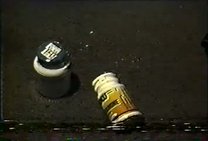


Cite as
Shoulders, Kenneth R. “‘Lab Tape 1.’” Vhs, 1990–1999. Kenneth R. Shoulders Papers, Box 16E. Science History Institute. Philadelphia. https://digital.sciencehistory.org/works/jw8ar78.
This citation is automatically generated and may contain errors.