
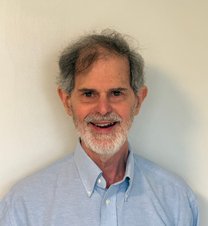
Oral history interview with Steven Sheriff
- 2024-May-17
- 2024-May-20
Oral history interview with Steven Sheriff
- 2024-May-17
- 2024-May-20

Steven Sheriff was born in Washington, DC and moved with his family to Bethesda, Maryland just before his fifth birthday. His father was a lawyer and his mother was trained as a teacher. Sheriff was raised in a Jewish family and attended religious school, though his family was not observant. He was the oldest child and had three younger sisters.
In school, Sheriff enjoyed learning about a variety of subjects, including science, and the textbook Biological Science: Molecules to Man made an impression on him. Sheriff had a subscription to Science News Letter and once grew algae for a school science project. He was a lab assistant in biology in eleventh grade and chemistry in the twelfth grade. He was also a member of his high school’s bridge club and an alternate on the It’s Academic quiz bowl team.
Seeking a liberal arts education, and wanting to go to California, Sheriff decided to attend Pomona College. At Pomona, he took liberal arts and science courses, including coursework towards a major in chemistry/biochemistry. He was a student during the Vietnam War and remembers and participated in student protests on campus. Sheriff learned some computer programming in PL/I and had some exposure to Fortran. For his undergraduate thesis, he conducted research about solid-phase peptide synthesis. Outside of class, he participated in folk dancing and volleyball on campus. Sheriff spent summers during college in summer school, including in Pau, France, in Cambridge, Massachusetts at the Harvard Summer School, and in Davis, California at the University of California, Davis.
Sheriff applied to graduate programs and decided to accept an offer from the University of Washington. During his first summer there, Sheriff studied bacterial photosynthesis in the lab of William “Bill” W. Parson. The next summer, Sheriff worked in Jon R. Herriott’s (1937- ) lab, learning about protein crystallography. He started off conducting research about ribosomal proteins, but his advisor encouraged him to join work on the protein ferredoxin-NADP+ oxidoreductase. Sheriff introduced the lab to the use of isoelectric focusing as a technique. When he eventually got data, he converted it into an electron density map and also collected anomalous scattering data, leading to a published paper on his findings. Sheriff was a Teaching Assistant (TA) as a graduate student and he also trained an undergraduate student in the lab.
After his graduate studies, Sheriff accepted a postdoctoral position at the University of California, Los Angeles (UCLA) to pursue his interest in ribosomes. He was a National Institutes of Health (NIH) Postdoctoral Fellow working in the lab of James A. Lake (1941- ). Sheriff used biochemistry techniques to prepare samples for use with negative stain electron microscopy in his research on attempting to localize where elongation factor G bound to the ribosome. As an offshoot of preparing samples for electron microscopy, Sheriff and a fellow postdoc, Jerome Langer, were involved in research demonstrating that larger pore gels could be used in a centrifuge to separate large molecules from small molecules, including with ribosomes.
Sheriff eventually decided to continue his NIH postdoctoral fellowship in the lab of Wayne A. Hendrickson (1941- ) at the Naval Research Laboratory. Soon after moving to Washington, DC for the position, Sheriff met his wife. In Hendrickson’s lab, Sheriff worked on refining the structure of myohemerythrin. Anisotropic scaling and anomalous scattering were useful techniques in his research. Sheriff continued his work in Hendrickson’s lab through funding from the National Research Council. While at the Naval Research Laboratory, Sheriff used computer graphics equipment for the first time. Based on the success of accounting for anisotropic diffraction for myohemerythrin and other proteins undergoing refinement in the Hendrickson lab, he became an advocate for correcting for anisotropic diffraction.
Looking for a more permanent position, Sheriff accepted a role at Genex, where he knew most of the crystallographers in the company. There, Sheriff was charged with getting the diffractometer working, and he then used it to collect data. Sheriff also used the program Define Secondary Structure of Proteins (DSSP) to analyze the regular secondary structure of proteins.
After his work at Genex, Sheriff was hired as a consultant for Hendrickson, who had moved to Columbia University. Sheriff remained in Washington, DC and worked as a consultant from an office on the NIH campus. He attended meetings in David Davies’s lab and was eventually hired by David Davies (1927-2016) to work at the NIH.
At the NIH, Sheriff was based in the Laboratory of Molecular Biology in the National Institute of Arthritis, Diabetes, and Digestive and Kidney Diseases (NIADDK), which became the National Institute of Diabetes and Digestive and Kidney Diseases (NIDDK). One of his projects was on the topic of diabetes in collaboration with Peter F. Kador in the National Eye Institute, though his overall work remained basic research using computational methods.
In the Davies lab, Sheriff worked on anti-lysozyme antibodies. He collaborated with Sandra J. Smith-Gill (1944- ), who mapped antibodies generated by immunizing mice with chicken egg lysozyme and ascertaining where they bound by using a panel of egg lysozymes from various bird species including bobwhite quail. Sheriff, Eduardo A. Padlan, who was a permanent staff member in David Davies’s lab, and a group at the Pasteur Institute led by Roberto Poljak (1932-2019) were each working on a different anti-lysozyme. Their findings allowed them to structurally define all three sites. Sheriff learned to use molecular replacement as a method for this project. Computational methods, including the program BRUTE, were helpful in getting the structure.
Eventually, Sheriff interviewed for a position at Squibb, which later merged with Bristol-Myers to become Bristol-Myers Squibb (BMS). Tasked with starting a protein crystallography group, Sheriff purchased equipment and hired staff. He served as a group leader at various points during his time at BMS, sometimes stepping back to take a break from the stress of the leadership role.
The group worked on a variety of projects over the years, including on thrombin, an anti-Lewis Y antibody, the protein MurB, the protein tyrosine phosphatase 1B, PTP γ (protein tyrosine phosphatase gamma), mannose-binding protein, cell surface receptor CD40, TGFβR-1 (transforming growth factor beta receptor one), polymerase HCV NS5B, and TNF-α (tumor necrosis factor-alpha). The work on mannose-binding protein and the anti-Lewis Y antibody were published in Nature Structural Biology articles. Sheriff also worked on factor XI, contributing to a drug that is in phase three trials and may make it to market. He worked on another drug, atazanavir, that made it to market and was in-licensed.
Sheriff discusses his approach to professional service, including serving on advisory and review panels and editing journal articles. He talks about the impact of the COVID-19 pandemic on his research and on the number of journal articles received for review. Sheriff reflects on changes over time in the kinds of drugs developed at BMS, stability in his crystallography group, and the use of patents in his work. He discusses the future use of crystallography in the pharmaceutical industry and changes in the industry. Sheriff reflects on the impact of his work. He shares his plans for retirement, including scientific involvement, spending time with family, and enjoying hobbies and traveling.
This interview was conducted remotely via Zoom.
| Property | Value |
|---|---|
| Interviewee | |
| Interviewer | |
| Format | |
| Genre | |
| Extent |
|
| Language | |
| Subject | |
| Rights | In Copyright |
| Rights holder |
|
| Credit line |
|
About the Interviewers
Sarah Schneider was a Program Associate in the Center for Oral History at the Science History Institute from 2021-2026. She had an interest in preserving and sharing immigration stories in the oral history collection. Schneider holds a BA in American Studies from Brandeis University and an MA in History (Public History track) from the University of Central Florida.
David J. Caruso earned a BA in the history of science, medicine, and technology from Johns Hopkins University in 2001 and a PhD in science and technology studies from Cornell University in 2008. Caruso is the director of the Center for Oral History at the Science History Institute, a former president of Oral History in the Mid-Atlantic Region (2012-2019), and served as co-editor for the Oral History Review from 2018-2023. In addition to overseeing all oral history research at the Science History Institute, he also holds several, in-depth oral history training workshops each year, consults on various oral history projects, and is adjunct faculty at the University of Pennsylvania, teaching courses on the history of military medicine and technology and on oral history.
Institutional location
| Department | |
|---|---|
| Collection | |
| Oral history number | 1154 |
Related Items


Interviewee biographical information
| Born |
|
|---|
Education
| Year | Institution | Degree | Discipline |
|---|---|---|---|
| 1973 | Pomona College (Claremont, Calif.) | BA | Chemistry/Biochemistry |
| 1979 | University of Washington | PhD | Biochemistry |
Professional Experience
University of California, Los Angeles. Molecular Biology Institute
- 1979 to 1981 National Institutes of Health (NIH) Postdoctoral Fellow
Naval Research Laboratory, Laboratory for the Structure of Matter
- 1981 to 1982 National Institutes of Health (NIH) Postdoctoral Fellow
- 1982 to 1984 National Research Council-Naval Research Laboratory Postdoctoral Associate [Fellow]
Genex Corporation
- 1984 Senior Research Scientist, Protein Engineering Division
Laboratory of Molecular Biology (NIADDK), National Institutes of Health and Department of Biochemistry and Molecular Biophysics, Columbia University
- 1985 Guest Researcher/Consultant
Laboratory of Molecular Biology (NIDDK), National Institutes of Health
- 1985 to 1988 Senior Staff Fellow
- 1988 Special Volunteer
Bristol-Myers Squibb Pharmaceutical Research Institute
- 1988 to 2015 Research Fellow, Macromolecular Crystallography
- 2015 to 2020 Senior Research Fellow, Macromolecular Crystallography
- 2021 to 2024 Scientific Senior Director, Macromolecular Crystallography
Honors
| Year(s) | Award |
|---|---|
| 1979 to 1980 | Invited participant at the National Resource for Computation in Chemistry Workshop on Portable Crystallographic Code: Multiple Isomorphous Replacement Phasing, Parts I and II |
| July 1991 | Session organizer. Antibodies and Their Complexes. American Crystallographic Association Annual Meeting, Toledo, Ohio. |
| 1995 to 2013 | Member, advisory committee for the Protein Crystallography Research Resource (PXRR) and predecessors at the National Synchrotron Light Source (NSLS) at Brookhaven National Laboratory (BNL), chair 2008-2010 |
| 2008 to 2013 | Member, United States National Committee for Crystallography (USNC/Cr) of the National Academy of Sciences (the adhering body to the International Union of Crystallography (IUCr)) |
| April 2010 | Co-chair, NIH Proposal Review panel for PSI:Biology High Throughput Centers |
| 2012 to 2013 | Co-chair, NIH Evaluation Team for PSI:Biology |
| 2017 to 2026 | Co-editor, Acta Crystallographica Section F, Structural Biology Communications |
Cite as
See our FAQ page to learn how to cite an oral history.
00:00:04 SCHNEIDER: Today is Friday, May 17, 2024. My name is Sarah Schneider and I am joined by David J. Caruso, and we are conducting the first session of an oral history interview with Dr. Steven Sheriff online via Zoom. So thank you, Dr. Sheriff, for joining us today. We’re looking forward to learning more about your life and your scientific work.
00:00:25 And to start us off, I was wondering if you could share a little bit about your childhood in Washington, DC. I know you were born there and lived in that area for a while, so I’m wondering if you could just share a little bit about, if you have any memories about maybe your parents or your childhood in DC.
00:00:47 SHERIFF: Well, I don’t have very many memories about my really young childhood, although I do have some memories of riding around. I guess—I think it was probably trolley cars still at that point, after I developed a scratched cornea when I was in nursery school [at the National Child Research Center], and my mother took me to the eye doctor and then to keep me entertained, because a scratched cornea is fairly painful, we rode around on the trolley cars. So that would have occurred before I was five. But beyond that, I don’t have a lot of memories. We lived at the apartment house called the Berkshire. A number of luminaries lived there, including Everett [McKinley] Dirksen. My mother claims she never saw him sober.
00:01:38 When I started school, I—well, it wasn’t so quickly discovered that I was dyslexic. Eventually, this was figured out when my parents [Seymour and Selene Sheriff] realized that I had—was memorizing things and not really reading. And I went to the—they got me help through the Kingsbury Center, and I did fairly intensive after-school tutoring for a couple of years. And after that, I managed to survive, and I don’t recognize that I have dyslexia today, although I’m not exactly the speediest of readers.
00:02:25 What else can I say? So I went—well, I went to private school [Green Acres School] for the first two years that I was—well, after kindergarten. And my parents were obviously unhappy that they weren’t catching my dyslexia. And so they transferred me to public school [Burning Tree Elementary School] and this was in the early—well, yeah, I guess this must have been the late fifties, or maybe early sixties. And the public schools in Montgomery County, Maryland were vastly overcrowded. So we started out going half-days for beginning of my, I guess, my third grade experience. But they were building additions on schools and so pretty quickly we had, we got back to full-day sessions.
00:03:26 When I was in, when I was going into sixth grade, again, there was still overcrowding, and one of the principals of the feeder elementary schools said, “You know, we’re opening a new junior high school and a high school in this area. They don’t populate the twelfth grade of the high school, and they’re going to move the ninth grade over to the high school,” which, at that point, high school was tenth to twelfth and junior high was seventh to ninth. She said, “Why don’t we move all the sixth graders from all the feeder schools into the junior high school, and that way we’ll create room in the elementary schools.” So I went to junior high school from sixth grade to ninth grade, and this was during the sixties. I don’t think the teachers were very happy with us by the time we got to ninth grade. We knew the school too well. We’d been there too long.
00:04:21 I’m not sure where to go from here. Yeah. So I had some—I did have some problems with math in eighth grade, I remember. I don’t remember a lot about it, but. Eventually, I did, more or less, get caught up in math and actually jump ahead, although I did not test well enough on the PSAT to get into one of the two calculus sections that there were in twelfth grade. I was behind—I was a little bit behind there.
00:05:18 SCHNEIDER: And what kinds of subjects did you like thinking about, you know, your early years through to—through high school? Were there certain subjects you really gravitated towards?
00:05:31 SHERIFF: Well, I certainly liked science a lot. But, you know, I never would style myself as a Renaissance person, but I would say I was a generalist. I really did like lots of different things from lots of different aspects. I mean, I wasn’t very good at physical art or music, but I still like those. And I, you know, I did like English, history. I’m not sure where to go from here.
00:06:16 SCHNEIDER: Well, one question I had also was, so as you were going through your school years, were there any teachers who really stand out to you when you think back on that time— who maybe you—made an impact in some way?
00:06:33 SHERIFF: I would have to say my eleventh grade math teacher [Mrs. Croft] did. But I can’t really at this point tell you how other than I—after sixty-some odd years, I have some warmth, warm memories of her. She was an older woman. Let’s see, any other teachers. Well, science teachers, by and large, weren’t all that good. I guess in high school, though, I—we only took five subjects in a six-period day. In eleventh and twelfth grades, I served as a lab assistant in biology and chemistry, in eleventh grade and twelfth grade, respectively.
00:07:36 SCHNEIDER: And what was that—what was that like as a lab assistant? Was that, sort of, a— was that like a class that you served in, or, sort of, an internship kind of experience?
00:07:49 SHERIFF: Well, you know, I don’t remember a lot, frankly, at this point, other than cutting up—I think it was lithium. It was either lithium or sodium under oil so that it didn’t catch fire by coming in contact with water, for the chemistry class. So, you know, I wouldn’t have said it was an internship. You know, you did some sort of preparation work for when they did have—kids did have laboratories.
00:08:29 You know, I think focusing on biology for a minute, we—this was a time of great experimentation in textbooks. And we got a new textbook that year that was really molecular biology in a way that I probably—
00:08:56 SCHNEIDER: I think your headphones just cut out. We can’t hear you.
00:09:11 SHERIFF: Can you hear me now?
00:09:13 SCHNEIDER: Yes.
00:09:14 SHERIFF: Okay. Sorry about this.
00:09:15 SCHNEIDER: That’s okay.
00:09:19 SHERIFF: So I was saying about my tenth grade biology textbook, you know, this was the sixties. This is after Sputnik had led people to rethink science education. We got a new book in tenth grade that was, I think, entitled something [Biological Science:] Molecules to Man. I think they had two other textbooks, one that was more ecology oriented, the same publisher, but I never saw those. And I don’t remember what the third one was. But I think that that was probably—played into whatever interest I had in chemistry. And I’m not sure where that interest in chemistry came from, because even though I did have a chemistry set, I don’t think I used it that much. So it was just, kind of, intrinsic. But it really appealed to me and it was really—it may have had influence on where I was—where I ended up.
00:10:24 CARUSO: Can you—so you mentioned before the interview start that you had lived in DC and then you moved out to the suburbs.
00:10:32 SHERIFF: Yes.
00:10:32 CARUSO: What precipitated the move? Do you know?
00:10:37 SHERIFF: [We moved to Bethesda, Maryland a week before my fifth birthday.] Other than my parents—well, they would have bought a house. Built a house. I’m going to guess—well, although they started me in private school, as they did my oldest—I’m the oldest of four children. I have three younger sisters [Susan, Ellen, and Carol Sheriff]. The oldest of my sisters was also started at the same school that I was at. And the last wasn’t born until I was eleven. Let’s see. I’m going to guess, well, you know, an apartment was probably crowded for two small children and adults. Plus . . . .
00:11:24 I—this is strictly hazarding a guess—because, at least at that point, the public schools I would have gone to in Washington, DC were still not particularly integrated and were considered pretty good schools. I don’t know that that’s the case, but possibly school systems. I think, you know, I think it was just a growing family and so on.
00:11:53 But I guess along those lines, my parents were unable to buy houses in certain places because we’re Jewish. And even though my parents were never particularly observant, I guess that was known. So, eventually, they ended up building their house because they couldn’t find one where they wanted to live.
00:12:15 CARUSO: And so—but did both of your parents work while they lived in DC?
00:12:21 SHERIFF: My mother basically didn’t work from the time she married my father until . . . .
00:12:26 CARUSO: And what did your father do?
00:12:28 SHERIFF: He was a lawyer in private practice.
00:12:31 CARUSO: And so moving out to the suburbs, he was then commuting into DC?
00:12:36 SHERIFF: He was commuting into DC.
00:12:38 CARUSO: So your family built a house. Does that mean that there weren’t many other homes near you when growing up?
00:12:48 SHERIFF: It was a relatively settled neighborhood, but with relatively large properties. I mean, not far away, there was what my parents would call the new development. There, the houses were on smaller lots. So my parents started out with an acre and a quarter and eventually bought a half an acre lot from one of their neighbors. So we had an acre and three quarters for much of my childhood. And the houses along the block were larger, but there were houses pretty much everywhere. Just larger—not necessarily larger houses, larger lots.
00:13:24 CARUSO: And the area that your family settled into, were there other couples with young children? Were you the only kids on the street?
00:13:36 SHERIFF: Our next-door neighbors had children, but they ended up moving to— [audio cuts out] That time, I could hear that I wasn’t hearing in my headphones.
00:14:00 CARUSO: You were starting to say that they had moved somewhere.
00:14:03 SHERIFF: Yeah. Right. So our next-door neighbors, I guess he was in oil and gas industry. He moved to—they moved to Houston, and I guess they were replaced by other people who had relatively young children, actually. He was the—was or became—while I was a child, the head of what was at that point called the National Bureau of Standards, now called National Institute of Standards and Technology. They blew it. They had a chance to call it the National Institute of Technology and Standards, or NITs, but.
00:14:45 And I guess, sort of, both our and the next-door neighbors, back-door neighbors. He became of the—I don’t know what he did in Washington, but he became head of the Hoover Institution for the study of war, peace, and revolution [The Hoover Institution on War, Revolution, and Peace] in Stanford, California. They had small—they had children at least the age of my sisters. And they also moved. But they were replaced by people who had children as well. I mean, there were people on—there were people around. Not every house had small children, or school-age children, but many did.
00:15:20 CARUSO: So part of my line of questioning is just to know whether or not, you know, I grew up in a neighborhood in Staten Island, New York. There were kids around, blocks away. It was a relatively safe neighborhood. After school, over the summers, we would go out and play with each other. I was, kind of, curious to know whether or not, when you were home, what it is that you were doing. Were you playing with your younger sisters, torturing them, maybe?
00:15:50 SHERIFF: Probably torturing them. You should ask them for sure. [laughter]
00:15:54 CARUSO: Were you out exploring the land around you? You mentioned that you had the chemistry set, but didn’t really use it. I was wondering what, sort of, your interests were as a young child, hobbies.
00:16:06 SHERIFF: That’s a good question. I do know that when I moved to public school, I would go back to what my parents called the new development and play with a couple kids there. We would play baseball, in season, obviously. I don’t have very many clear memories—I don’t have any clear memories—about what I did. Except when I came home—when I started going to junior high school in sixth grade, apparently I came home pretty exhausted. My mother would make time to play Scrabble with me every afternoon—or nearly every afternoon—it seemed like every afternoon—because that didn’t require a lot of energy.
00:16:59 While my sisters had people they were close to in the neighborhood, there wasn’t, there weren’t so many kids exactly my age. Although there was one, who was, I guess, a year older than I was, who I did hang out with some, too, now that I think about it. I wouldn’t say I didn’t use that chemistry set, I just—it wasn’t a—it was not used constantly. There’s a scale there.
00:17:36 CARUSO: You also mentioned Sputnik, and I know that you were only six years old, right? 1957.
00:17:42 SHERIFF: Well, probably, I was five years old because my birthday’s in December, so.
00:17:48 CARUSO: Okay. Yeah. So, yeah. So it was October, right? October.
00:17:52 SHERIFF: Right. So, well, I would have been nearly six.
00:17:53 CARUSO: Nearly six. Do you have any recollections of what it was like in that October? Did your—because I know the US response was pretty significant, right. Russians beat us to space. There’s something flying above us. This is also McCarthy era, worries about communism. I was just wondering on—
00:18:15 SHERIFF: Well, I think McCarthy era was over by that point.
00:18:18 CARUSO: True. Yeah.
00:18:19 SHERIFF: But that didn’t mean we weren’t still worried about communism, but we weren’t worried about it in the McCarthyite way. I do remember bomb drills in elementary school, now that you raised the subject. I remember visiting a Nike—what would you call it? Nike was a sort of missile, I guess an anti-aircraft missile or something like that. And there was a battery not too far from where we lived.
00:18:53 I do remember when we moved out to, well, to Bethesda, we weren’t far from Burning Tree Country Club, where President [Dwight D.] Eisenhower went to play golf and we would see helicopters flying overhead, moderately routinely, in summer, summer afternoons. Well, summer—probably, for me, probably more spring and fall afternoons. I had—you actually did catch a—by asking that question. I had pretty severe allergies as a child, and my pediatrician told my mother that he would not take responsibility for my health if I stayed in the Washington, DC area in the summer. I was sent to Maine starting at age eight, to a camp in Maine. So I spent eight weeks in Maine every summer from eight until I was seventeen.
00:19:48 CARUSO: What type of camp?
00:19:51 SHERIFF: A general, I don’t know.
00:19:58 CARUSO: Just like a general summer camp, nothing . . . .
00:20:00 SHERIFF: Yeah. Just like a general summer camp. It certainly wasn’t specialized. I mean, I’m not even aware that they had specialized camps. They probably had a drama camp or something like that, but I wasn’t aware of that at that time. There was only, sort of, generalized camps. You know, we’re still in—we’re—well, I guess it was 1960 was my first year there. The camp, perhaps as much because Jews still weren’t accepted everywhere, it was not observant, but had an essentially 100 percent Jewish clientele.
00:20:36 CARUSO: Okay. You know, you mentioned that your family wasn’t particularly observant. What—your parents, were they first-generation American? Had your family been here for a long time?
00:20:49 SHERIFF: Well, so my father’s parents [Michael Sheriff and Anna Rosenfeld] arrived when they were infants, around 1890. I don’t remember the exact dates. I could probably fish that out for you if you wanted to know. So my father’s father[’s family] came from Lithuania, and my father’s mother must have come from Ukraine, Kyiv. My mother’s family—well, her mother’s [Etta Henoch’s] family, came to this country after the [Russo]-Japanese War. Apparently, my great-grandfather [Boris Henoch] was a businessman, and the czar wouldn’t make good on his debts because he sold leather boots to the czarist army. So he was bankrupted after the Russo- Japanese War.
00:21:47 CARUSO: And did your grandparents live near you and did they settle in DC, or . . . ?
00:21:53 SHERIFF: No, they—everybody settled in New York.
00:21:55 CARUSO: Okay.
00:21:59 SHERIFF: Although my maternal grandfather [Gaston Wolf], who came later, I’m guessing in the late teens—but again, I don’t know that for sure—eventually became a chemist. But he was never in my life. He died in ’53, and he’d been separated from my grandmother for a very long time.
00:22:22 CARUSO: And were your father and mother only children, or were there . . . ?
00:22:25 SHERIFF: No, they were both the younger children of two-children families.
00:22:30 CARUSO: Okay. How did your parents decide to settle in DC?
00:22:35 SHERIFF: Well. My father was skipped a whole bunch of grades, and I guess my grandparents tried to get him into Columbia, but they said they don’t—he could only go to Columbia if they did something—I guess if he went to a boarding school or something for a year. So they decided to enroll him in CCNY [City College of New York] at thirteen or thirteen and a half, and he graduated from CCNY at seventeen and then went to Yale Law School. And he finished high in his—well, I think after his first year, he was number one in his class.
00:23:23 And because he was only twenty in the summer of—I guess this would’ve been ’37—he wasn’t old enough to take the New York bar. He had to get special permission to take the New York bar because he wasn’t twenty-one yet. I guess various law firms came, would come and visit the schools and a Washington firm at that point known as Gardner, Morrison and Rogers recruited him. But I don’t really have many details—or any details—about that. My guess is he wanted to get away from his—somewhat away from his mother. Being in Washington was a convenient distance so that he could—
00:24:04 CARUSO: Close enough that you could travel, but not close enough that you would travel frequently.
00:24:08 SHERIFF: Right.
00:24:10 CARUSO: Okay.
00:24:11 SHERIFF: So, but, you know, in my childhood, my paternal grandparents would visit us pretty regularly, I’d say three or four times a year. Maybe not in the winter months because they went to Florida, but maybe on either side of that and then maybe in the summer as well, although in the summer they actually tended to go to Maine, too, to get out of the sun, out of the heat of the city.
00:24:38 CARUSO: So what type of law did your father practice?
00:24:41 SHERIFF: He would consider himself a general practice lawyer, but he did argue what is reputed to be the most complicated tax case ever argued before the Supreme Court. That was his one Supreme Court appearance. And his comment on that was, “The only justice who understood it was Frankfurter, and he voted against me.” But he won the case.
00:25:07 CARUSO: So, you know, in the evenings when you and your family sat down to dinner—I’m, kind of, I guess I’m assuming that your—maybe your father was home in time for dinner, or . . . ?
00:25:17 SHERIFF: Not—when we had a regular maid, he was not home in time for dinner. So it wasn’t until around age eleven or so that we began to eat together as a family. Typically, my mother would feed the children first, and then they would eat separately. During the week. On the weekends, obviously, that didn’t happen.
00:25:40 CARUSO: Yeah. So I’m also curious to know, like when your family did gather together, sitting around the dinner table, weekends, maybe when family is visiting, what was your family talking about? Was it like, “Oh, what did the kids do today?” Were they talking about politics? Did they discuss religion? What were, sort of, the, you know, was there something that needed to be fixed and so your mother or your father was like, “Okay, I need to get the toolkit out and we’re going to go fix something together”? Like, what was the dynamic around . . . ?
00:26:11 SHERIFF: Yeah. All right. So my father was noticeably incompetent with tools. And fairly early on, my mother realized I had some competency with tools, so I did a lot of really minor things. My parents were wealthy enough that they could hire people to do anything—I mean— to do a variety of things. So they did.
00:26:38 So what did they talk—what did we talk about? I don’t really have a clue. What I remember in high school was, is that the television would be on at dinner, and this was the time of the Vietnam War, and I don’t remember that being a particularly happy time. But I don’t have any real clear memories of that either. Gee, that’s really unfortunate. And here I thought I had a really good memory, but I’ve claimed for years the disk has been full and overwriting it.
00:27:12 CARUSO: Did your mother receive an undergraduate degree? Did she . . . ?
00:27:16 SHERIFF: My mother had an undergraduate degree from State—well, at that point, it was called State Teachers College at Albany [New York State College for Teachers at Albany], now called SUNY at Albany, or maybe now even the University of Albany [University at Albany], I think is now what it’s called. And she got a master’s degree in teaching from Columbia.
00:27:33 CARUSO: Okay. But after she got married, she didn’t . . . ?
00:27:36 SHERIFF: But she didn’t—she talked about maybe going, doing work in the—going to work in a library. But my guess is, is that the dynamics of my parents’ relationship was such that my father wouldn’t hear of it, but I—that’s a—I’m hazarding a guess there. I don’t really know.
00:27:52 CARUSO: Sure. So then, when you were going through school, you’d mentioned the dyslexia early on, it not getting identified, really. I’m curious to know if maybe around those dinner tables, or on weekends, or some broader way, did your parents talk about your education? Did they talk about your grades, your sisters’ grades?
00:28:15 SHERIFF: My parents were very good about not comparing their children and so they would not ever talk about grades. And this was particularly important because my—if I had learning difficulties, my oldest sister had learning difficulties in spades. My younger two sisters seemed to have been moderately immune from that. They did well in school from the beginning and didn’t have any problems. I had problems. My oldest sister had even more problems. And to this day, still, she still has problems. But she did, eventually, you know, I think— [audio cuts out] [. . .] I have said that perhaps my parents’ proudest day was the day my sister—that sister— graduated from college because I don’t think they ever expected that.
00:29:16 CARUSO: So was college an expectation? Was it assumed that all the kids were going to be going to get some sort of undergraduate degree?
00:29:24 SHERIFF: Yes. And all of us, except for that sister, have graduate degrees.
00:29:29 CARUSO: Okay. All right. And, you know, I know this is, sort of, a very broad question, and we’re covering lots of different years, so please answer it in whatever way you see fit. I’m curious to know whether or not, you said that your parents didn’t talk about grades, but did they talk about those general expectations for the kids that you were going to go to a university, that—was there—was it actively discussed, or was it just, kind of, a known thing around the family that yes, you all were going to be going to college?
00:30:07 SHERIFF: I would have to fall into the latter. It would fall into the latter category. I mean, you know, as I got up into high school, what sort of college I might be going to was discussed. And my mother had a firm view that I should go to a small liberal arts college, which I ended up doing, following in my father’s footsteps, as far away from my mother as I could get.
00:30:32 CARUSO: And also during this time, you mentioned that your family wasn’t particularly religious. I would describe my family as, kind of, religious. They adhere to a religion. I grew up, I was raised Catholic, so I had to go through after-school education to get confirmed and things like that. Were you, was your family—did you go through any religious education as a child?
00:31:03 SHERIFF: I did. It didn’t start till I was in third grade. For me. It started earlier for my sisters because . . . . To a certain extent to this day, I’m still amazed that they decided to send us to religious school. But they did. Ironically, it was the synagogue, it was right next door to the apartment building that we—that I lived in when I was a child. So we were commuting into town, but, you know, there were carpools for that.
00:31:41 SCHNEIDER: And outside of going to religious school, would you ever go to synagogue on Shabbat, or would you have Shabbat dinner at home or do things like that?
00:31:52 SHERIFF: We would have dinner at home on Friday night, but it would not be Shabbat dinner by any stretch of the imagination. About the only thing we did religious at home was light Hanukkah candles, and that probably didn’t come about until I was sent home with them from religious school. In particular, among American Jews, the two most observed holidays are Hanukkah and Passover. My mother hated Passover. It is nominally called the Feast of Passover, but she would call it the Fast of Passover because she felt like she couldn’t eat the foods that she liked. We particularly ignored that. But we pretty much ignored everything except going to religious school, and my parents didn’t follow any dietary laws, for example.
00:32:54 SCHNEIDER: And when your grandparents came to visit, would—what were their religious backgrounds like, and would you do anything religious with them?
00:33:04 SHERIFF: About the only thing we did religious with them that I remember was when my youngest sister was born. They did come down to Washington and she was named in the synagogue. But that’s about the only religious thing we did with them. I am told by my mother that my father’s parents did keep Kosher, at least at home. They certainly didn’t in my parents’ house. But my parents may have adjusted their eating because we did eat shellfish and, occasionally, ham. They may have adjusted their menu so that it didn’t include such obviously non-Kosher items when they came. But I don’t remember, frankly, one way or the other.
00:33:57 SCHNEIDER: Yeah. And I’m also just wondering if, growing up either through going to camp in Maine or in your neighborhood or people you went to school with, were there other Jewish people, Jewish children that you interacted with? Were you more—in a more diverse community with people from a lot of different backgrounds? What was that like?
00:34:20 SHERIFF: Well, so relative to the standards of the United States, it was a very heavily Jewish school, area. I think at least in the, at least in my high school classes, a third of the class was Jewish and even more highly represented in the top classes. So, yes. I interacted with lots of Jewish children a lot of the time.
00:34:53 SCHNEIDER: Yeah. And so going back to your education, you had talked about your interest in science and being a lab assistant, I think, is what you called it. Did you—were there any, like, science clubs after school or any extracurricular ways that you were involved, either in science or in other things, in other areas of interest?
00:35:19 SHERIFF: About the only—certainly, I don’t remember any science clubs existing. I don’t know whether that’s my not paying attention or because things were a lot less organized in the fifties and sixties than they are today. Sometime around junior high school, my mother got me a subscription to what, at that point, was called Science News Letter and is now called Science News, and I’ve been a subscriber ever since. So I knew about the Science Talent Search, but didn’t ever do anything about that. Didn’t have the background.
00:35:55 Actually, I had—but along those lines, I had to do some sort of project. The question is, I can’t remember whether that was for industrial arts or for one of my science classes, but we managed to make contact with somebody at one of the national labs or national facilities around Washington, and I ended up growing algae for my, for some science experiment. I remember it being a disaster. I don’t remember anything more about it. I mean, it just wasn’t well controlled. The way that industrial arts may have figured into that is maybe what I did was I made a lamp stand there to hold lamps, light, lamps to shine on the container of algae.
00:37:03 Right. So in terms of—the only thing that I did after school was in high school, we had a pretty active bridge club. I was a member of that. And we would travel to other high schools in the Washington area for meets after school. Oh, and the one other thing that Walt Whitman High School, where I went, was noted for was the Washington, DC area had a high school quiz bowl called It’s Academic, kind of, like College Bowl. And we were, if not the top team, one of the top teams. We would practice regularly. I was an alternate on the team. So that meant I got to write a lot of questions. Yeah. So those are the two extracurricular things that I can think of that I did.
00:38:12 SCHNEIDER: And when you said write questions, do you mean writing questions for the— for other people to answer, like . . . ?
00:38:17 SHERIFF: Yeah. Right. Right. The sponsor of the team realized early on that the way you get good at answering questions on air in a studio is to be asked questions and, you know, to know when you’re ready to answer it. So yes, we would write questions and we’d have practice sessions.
00:38:43 SCHNEIDER: That makes sense. And at that time—oh, I think your headphones cut out again. Your headphones cut out.
00:38:57 SHERIFF: Are we here?
00:38:59 SCHNEIDER: Yes, we can hear you now.
00:39:00 SHERIFF: Yeah. So I went to no high school reunions until my fiftieth, but one of the—one of my classmates who was actually one of the members of—one of the regular members of the team—had gone on to write questions for It’s Academic as his career. And he was—he talked about how the advisor, early on, had realized that practicing was how you made a better team.
00:39:38 SCHNEIDER: And so you mentioned going—that you went to one of the reunions. Did you end up staying in touch with any of your high school classmates beyond high school?
00:39:48 SHERIFF: For a year or two, but really, no. Actually, a classmate I talked to a lot more at that reunion was at NIH [National Institutes of Health] at the same time I was at NIH, and I went over to chat with him one day, and either he was very busy or whatever, but he didn’t look very interested in seeing me then. But he was very chatty at the reunion. So I decided to ignore the previous experience.
00:40:19 SCHNEIDER: So I’m also wondering, during this period when you’re growing up, I know that there were a lot of historical events in the 1960s that were—a lot of change happening in the country, whether it was, for example, the March on Washington for Jobs and Freedom, which, you know, being in DC, I’m wondering if you—or in the DC area—I’m wondering if you have any memories of that event from when you—from 1963?
00:40:45 SHERIFF: Yeah. So my memory is, kind of, shamefaced. My parents decided it would be best to leave town. So we went to Ocean City, Maryland during that time. So I don’t have a lot of memories. I mean, I certainly, by high school I do remember the encampment on the Mall of— forgotten the name of that at this point. Was that—would that have been in ’68 after Martin Luther King was assassinated, or would that have been spring of ’69? [It was the Poor People’s Campaign in the spring of 1968.] I can’t remember now, but the . . . . I do remember that. I do remember the riots in Washington following Martin Luther King’s assassination.
00:41:41 SCHNEIDER: And do you remember what your perspective was as a child, or maybe teenager, of what was happening, or did you feel, sort of, removed from what was going on?
00:41:55 SHERIFF: Well, I mean, I was—I can’t say I was sympathetic to the rioters. I was sympathetic to their plight. I was certainly sympathetic to the—why can’t I remember the name of this event on the Mall [Poor People’s Campaign]? But I didn’t do very much to participate. Didn’t do anything to participate, quite frankly.
00:42:21 SCHNEIDER: Yeah. Did you have another thought about that?
00:42:24 SHERIFF: Not particularly, no.
00:42:25 SCHNEIDER: Okay. Okay. And then also in 1963, [John F.] Kennedy was assassinated. And so I’m wondering if you remember where you were when you heard the news.
00:42:34 SHERIFF: Yes, I was in algebra class. And one of my classmates who was Catholic had actually met President Kennedy, and she just broke down. I mean, we all felt really sad, but she just really broke down weeping. I remember that very clearly. So. You can still hear me?
00:43:02 SCHNEIDER: Yes, yes.
00:43:03 SHERIFF: Yeah, okay. Right. So yeah, I mean, that was certainly an event and certainly, you know, over the—the next few days were an event. I guess I got a tape recorder for my birthday that year, and a friend came over and we decided to reenact on our using our ping-pong table as some sort of prop, which we promptly broke, the assassination for sound effects. So, you know, it obviously had some influence.
00:43:41 SCHNEIDER: And one other thing from, sort of, that period that I was wondering about was the Space Race and specifically when people landed on the moon with Apollo 11. Do you remember tuning in to news about that or hearing people talk about it?
00:44:02 SHERIFF: Right. So that would have been in the summer of ’69—that was in the summer of ’69 after I’d graduated from [high school]. And actually, I was in—even though I was supposed to be working at camp, I had asked for a week off because I had gotten into Pomona College off their alternate list, to make a decision between Oberlin [College], which is where I was going to go, and Pomona, I ended up going to Pomona. And so I was actually out in California for the actual moon landing, which probably made it at a better hour of the day because as I remember, it was pretty late at night on the East Coast when they landed. So yeah, I have vivid memories of that.
00:44:45 I have pretty vivid memories of various launches, especially early on in the program, probably John Glenn’s launch, possibly Alan [B.] Shepard’s. I’m less certain about that one. But I do definitely remember John Glenn’s launch, which was the first orbital flight for an American. And, you know, I had a—either because of the Space Race or just a boy’s interest in whatever, I had a pretty big interest, I guess, in jets and rockets. I mean, I didn’t do anything hands-on, but I certainly read a lot about it.
00:45:23 SCHNEIDER: And were you reading about that in magazines or what kinds of things were you . . . ?
00:45:28 SHERIFF: Probably books. I remember a few books.
00:45:31 SCHNEIDER: Yeah. I think that does a good job of covering a lot of—oh, one other thing about your years growing up that I wanted to ask about was if there was anything else you wanted to mention about your sisters and your relationship with them or growing up with them as a child.
00:46:09 SHERIFF: I didn’t have a very cordial relationship with my oldest sister, who’s only, like, two years and three weeks younger than I am. I did have a pretty cordial relationship with my sister who was five years younger than I am. I was finishing up sixth grade when my youngest sister was born. So we really didn’t get to know each other until I moved east after twelve years on the West Coast in—I guess that would’ve been 1981, and she was graduating from high school.
00:46:41 My parents hated going to graduation ceremonies, so they cooked up this idea of sending her out to Tucson, Arizona, which is where I was stopping to visit my grandmother and she then drove east with me. And my parents got out of going to a graduation, which was their delight. So that’s when I really got to know my youngest sister.
00:47:12 I have a much more cordial relationship with my oldest sister now than I did when I was younger. And actually, interesting enough, a less cordial relationship with my middle sister. That’s about—yeah. I’m not sure what else I can say. I’m sure I can say something else, but I can’t think of anything else, either positive or negative, to say.
00:47:44 SCHNEIDER: Okay, sure. So I think—I’m curious what, you know, you had this interest in science. What did you know about science as a career when you were growing up? Was it something that you thought about or that you knew people who were scientists? What was, sort of, your sense of, you know, your career, your thoughts about your future for your career and what you knew of the field of science?
00:48:21 SHERIFF: Quite frankly, I really didn’t know a whole lot about it. I mean, to be truly honest. Another inspiration, perhaps, for some of my interest in science was my mother was particularly interested in what we today call—well, at that time was probably called natural history, too. So she had a lot of interest in plant identification, bird identification. Certainly, as she got older and before she became immobile, she would go birding quite often. [. . .] Sorry. My dog is—our dog has decided it’s time to be entertained. But with that comment to her, I lost my drift of where I was going with this.
00:49:24 SCHNEIDER: Oh, yeah, you were talking about . . . .
00:49:27 SHERIFF: Oh, you asked me about, did I know scientists. Well, at some point, I knew that our next-door neighbor was at the National Bureau of Standards. I don’t know when I became aware that he was head of it. Obviously, if you’re an administrator, you’re not doing much science.
00:49:52 There was somebody who lived up the block for a while who was a bigwig in the National Library of Medicine. He had started out as a medical student and said something to the effect he’d gotten seduced by physiology. So he ended up with a PhD in physiology rather than medicine, and he’d regretted it. And when I was finishing college, tried to persuade me that I needed an MD/PhD.
00:50:20 Because medical school, highly competitive and so on and so forth, I applied, I put all my application efforts into that, and by the time that I had time to work on graduate school applications, it was already late. And so the only graduate schools I really got applications in on time to were the two that required it as part of potentially being part of the Medical Scientist Training Program, which was the University of Washington, which is where I ended up doing my graduate—yeah, my graduate work. And the University of Pennsylvania, which, where I also got in.
00:51:02 But by that point, I had committed to the University of Washington, partially because they had gotten wind that [Richard M.] Nixon was going to impound funds, and they figured if they already had their graduate student class, they were going to be able to keep their training funds because NIH wasn’t going to be able to . . . .
00:51:19 SCHNEIDER: And so when you were finishing up—back to high school, did you think, “Oh, I’m going to go into science”? Or when you were applying to college, I know you were— mentioned an interest in liberal arts colleges. Were you curious about their science offerings or were you thinking more broadly about your education?
00:51:40 SHERIFF: I was certainly thinking more broadly about my education. But I certainly paid attention to sciences. And actually, quite frankly, if I remember correctly, I learned about Pomona originally because Harvey Mudd [College] is one of the five Claremont Colleges, the science and engineering school. And then I realized, my interests are broader than this. And so I did not apply to Harvey Mudd. I did apply to Pomona. Right.
00:52:16 Yeah, I mean, I can’t say in my adult life I’ve spent a whole lot of time doing other things, although most of my pleasure reading is—well, even that is maybe not. I’m not sure. I think I’ll retract that statement because I ended up reading a fair number of popular science books, too. Yeah. So I wanted a broad liberal arts education, whether I ended up getting one because I left the sciences for a year, for my sophomore year, and then I had to hurry up, catch up. So I had less time in my later years to do anything other than science.
00:53:10 SCHNEIDER: And how did you approach applying to colleges? I know you said it ended up being a decision between Oberlin and Pomona. How did you—did you do research? Did you talk with anybody at your school or your family as you considered where to go?
00:53:28 SHERIFF: Well, in that day, in those days, there was a book, the authors of whom were [James] Cass and [Max] Birnbaum, which is all I remember, but I guess it was something like the Comparative Guide to American Colleges. So I read through their capsule descriptions of a lot of the top schools and decided I was never going to get into Harvard [University] or Swarthmore [College], so I didn’t even bother applying. The only reason I applied to Yale [University] was because my father had gone to Yale Law School, and we thought there might be a slight advantage to that. I applied to generally liberal arts colleges other than that.
00:54:12 SCHNEIDER: And so when you made that decision about going to Pomona, what were some of the things that interested you about the school and what led you to go there?
00:54:27 SHERIFF: For unknown reasons, since about third grade, I had always dreamed I was going to go to California. Pomona’s in California. Pretty easy decision there.
00:54:41 SCHNEIDER: Did you have any relatives or friends or anybody you knew in California? Or you were just . . . ?
00:54:46 SHERIFF: Well, I had never been to California before I visited on a college tour, on a college tour that I went on by myself. My mother’s sister’s family moved out to California around—in the mid-sixties. I’m not sure of the exact date. He was in television, in Hollywood productions. And I guess sometime in the mid to early sixties the locus moved from New York to Los Angeles, and so they moved out to Los Angeles. But other than I would see them occasionally because I lived in California, my family didn’t see them, certainly after they moved out to California, hardly at all.
00:55:51 SCHNEIDER: And so do you remember how you got to school? How did you, you know, what did you take with you to get all the way out to California? And do you remember what that transition was like to those early days at school at Pomona College?
00:56:10 SHERIFF: Right. So because I had gone to camp, I had a trunk and a duffel bag and that’s— and two suitcases. So the trunk and the duffel bag were shipped. I went with two suitcases. Kids didn’t have as much stuff then as they do now by a long shot. What was the transition like? Well, because I’d been going away to summer camp for so long, I had much less of a transition problem, I think, than other people did, because I was somewhat used to being away from my family. What else can I say?
00:57:09 SCHNEIDER: Was the weather a big adjustment?
00:57:15 SHERIFF: What weather? They don’t have weather there. Well, I mean, they do. It does get hot in the summer inland from the coast, but. Yeah, I mean, the weather is pretty mild in the inland valley. They did have an artesian well. And I remember as a freshman one morning walking up, walking past it and saying, “There’s something wrong there.” So I went up to it. I guess I must have thought it was frozen, because I remember wrapping my knuckles on it and sure enough, it was frozen. But that’s like the one time I remember it getting below freezing there.
00:57:59 SCHNEIDER: Wow.
00:58:01 SHERIFF: You know, I don’t remember it doing that any other time.
00:58:08 SCHNEIDER: And were a lot of your classmates from California?
00:58:13 SHERIFF: Yeah, near—many of my classmates, most of my classmates from California, probably 40 to 50 percent from Southern California. There were a sprinkling of people from the East Coast, in fact, a sprinkling of people from the Washington, DC area. They were relatively few and far between.
00:58:38 SCHNEIDER: There wasn’t—was there anybody you knew from high school or from your— you had known before that also went to Pomona?
00:58:45 SHERIFF: No. There was nobody I knew before. In a class of 325, not so likely.
00:58:55 SCHNEIDER: Yeah, that makes sense. So when you started off at Pomona, it sounds like you were interested in a liberal arts education. What were some of the courses you started to take? And what was the education like there?
00:59:13 SHERIFF: Well, given that I was interested in a liberal arts education, I think Pomona was a little bit disappointing because I really, I think they were best in the sciences. I never found time to take a history course, but I did take a lot of economics and government courses. I took a music appreciation course. That was a yearlong course, two semesters. Did not take art appreciation. Might have, but I ran out of time.
00:59:50 SCHNEIDER: And then, if you could share a little bit about your science education, it sounded like you had said something about your sophomore year you didn’t take science courses. Is that what you were saying?
01:00:02 SHERIFF: Well, yeah, right. I did take linear algebra and differential equations, which was a class designed to weed out potential math majors and it weeded me out pretty quickly. Which is unfortunate. Not because I think I should have been a mathematician, but I could have—my future career would have been better had I taken a class that was more aimed to scientists rather than as proof-oriented as that class was. I also thought I was good at proofs until I got to that class.
01:00:51 Because both linear algebra and differential equations have played—or at some points have played—a role in computational work that I’ve done over the years. I mean, I guess I knew enough differential equations to do things, but linear algebra was much more iffy in that regard. So other than that, no, I was taking—I guess I took economics. Probably took a government or poli-sci [political science] course. Don’t really remember, quite frankly.
01:01:31 SCHNEIDER: And at some point, did you end up taking chemistry courses?
01:01:34 SHERIFF: Well, I took chemistry in my freshman year, and then I took organic chemistry in my junior year. And in my senior year, I took both physical chemistry and biochemistry simultaneously, and also a laboratory course and a thesis course.
01:01:50 SCHNEIDER: Okay, I see. And so it looks like you—was your major in chemistry/biochemistry or what was your major?
01:01:58 SHERIFF: Well, yeah. The registrar asked me what I wanted to put on my transcript, and I said chemistry/biochemistry. They didn’t really have a biochemistry degree, but I wanted it indicated since I was applying to biochemistry departments, that I was, you know, that’s where I was headed.
01:02:17 SCHNEIDER: Okay. As you were taking your courses, were there any professors or even other kinds of people on campus who served as mentors for you?
01:02:46 SHERIFF: I mean . . . . I would say the one disappointment in my life is I’m not sure I ever had a mentor, and I don’t know whether that’s me not being able to form a mentee-mentor relationship, or whatever. I mean, I certainly had reasonable relations with professors. One of the advantages of being in a small liberal arts college is you’re in small classes, you don’t have TAs, you do talk to people on a regular basis, and certainly, I had a reasonably close relationship with one of the economics professors. I had good relations with the chemistry professors, but I wouldn’t describe any of them as a mentor.
01:03:44 SCHNEIDER: And were you doing things at all related to your chemistry work, either, you know, helping as an assistant or outside of your coursework, was there anything, like, were you involved in a professional organization related to science at that time?
01:04:08 SHERIFF: No. Definitely—I don’t remember there being any professional associations, and I did not do anything, per se. And rightly or wrongly, I spent all my summers in summer school, so I didn’t have a chance for laboratory experience then either.
01:04:38 SCHNEIDER: Okay, yeah, and I was curious about those summer experiences because I saw that you’d noted them on your CV. And it looked like you were at the—were studying in France in 1970 over the summer?
01:04:51 SHERIFF: That’s correct. Yeah.
01:04:52 SCHNEIDER: So what was that experience like and what was your focus when you were there?
01:04:56 SHERIFF: Well, so I was studying French because I was trying to get my French to a higher level, which it may have been for a short period of time. I was in an international school [American Institute for Foreign Study (AIFS)], but I went with a bunch of Americans, many of whom were French majors. And they cared a lot more about grammar than I did. I cared about communicating. So they were jealous of me for being willing to talk to people.
01:05:26 And I do remember, for example, in particular on a weekend bus trip to some— [audio cuts out] [. . .] I was on a bus trip, on a weekend bus trip, and I was seated next to somebody from Japan who didn’t speak a word of English, so I had no choice but to communicate in French. People [that I was on the program with] were jealous that I was doing that, because I’m sure that they knew their grammar a lot better than I did, but that also stopped them from speaking because they wanted to be grammatically precise and I was more interested in just chatting.
01:06:21 SCHNEIDER: And was this your first time abroad, or had you traveled abroad before?
01:06:25 SHERIFF: No, I had [not]—that was my first time abroad.
01:06:27 SCHNEIDER: Okay. And did you do any traveling in the—to other countries while you were living in France?
01:06:34 SHERIFF: Right. So the program flew us to Rome, and then we spent a few days in Rome, took a train to Pau, France, which is where we were. And that was always—the summer school at Pau was always amusing because it was sponsored by three universities, I think the University of Bordeaux that was founded in the thirteenth century, the University of Toulouse was founded in the fifteenth century, or maybe vice versa [it is vice versa], and the University of Pau, which was founded in 1965 [the university was founded in several stages]. So, I mean, we were staying in dormitories at the University of Pau. And at the end, we went to Paris for a few days and London for a few days before returning. But I wasn’t next overseas until the eighties, I believe.
01:07:29 SCHNEIDER: And was there anything, you know, I’m sure you learned a lot of French. Learned a lot about French culture. Was there anything else that you feel like you took away from that experience of studying abroad?
01:07:50 SHERIFF: Well, for a while, I had a good friend who lived in Vancouver, British Columbia, [Canada] from that group, but eventually we lost touch with each other. I remember—well, I remember being in a park in Pau on a Sunday just seeing some small children who speak French so well and it just—it was so upsetting. And I think we had a conversation with their mother or their grandmother and that they’d actually been in the United States for—or maybe in England—they had spent some amount of time speaking English, but they picked up the French again just very quickly and that was very frustrating. And I also remember an older woman couldn’t understand why I, as a chemistry student, was studying French as opposed to German, but.
01:08:50 SCHNEIDER: Yeah. Can you say more about how you got into French, studying French originally?
01:08:56 SHERIFF: That was what was offered in seventh grade, first language. So that, you know, it was what was there. I mean, I suppose I could have switched in high school. Perhaps I should have, but I didn’t.
01:09:19 SCHNEIDER: So that was 1970. And then I know in 1971 you were at the Harvard Summer School. And so what brought you there and what was your experience like at Harvard?
01:09:35 SHERIFF: What brought me there was I wanted to get caught up in social science courses, so I took a course in macroeconomics, I believe, and one in government. That was a fun time, that summer. But I’m not sure that I have, that it had any long-term consequences for me other than I took a few courses.
01:10:17 SCHNEIDER: And while you were in the Boston area, did you end up going up to Maine, or did you ever keep any kind of connection to Maine from when you had gone to camp there in the past?
01:10:29 SHERIFF: Well, I did go to Maine one Saturday. But I wasn’t there for very long. And it was, kind of, spur of the moment there and back. You know, over the years I’ve been to Maine, but I didn’t have any further connection with that camp, really, after I left after my last year of high school. I have fond memories of the camp, but it ceased to exist sometime in the seventies, I guess when the owner at the time aged out and nobody was willing to pick it up.
01:11:25 I guess when my wife and I and our children were in Maine once we dropped by the location and found it had become a housing development, the area had become a housing development. Or, at least, I think that’s what it had become. I’m not sure I remembered for sure, because it was all very different than it had been twenty-five years before, at that point.
01:11:54 SCHNEIDER: And so one more question about participating in Harvard Summer School was, did you notice any big differences between being on Harvard’s campus and being, you know, your studies at Pomona? Did you see any big differences or even similarities? How did being at Harvard compare to your experience at Pomona, which is a smaller liberal arts school?
01:12:29 SHERIFF: I remember being housed in the law school dorms. So we were a little, you know, we were not in Harvard Yard, I guess, except for classes. There were a few Harvard students who were in the Harvard Summer School, and I guess in that sense, they treated me as one of them. I’m not sure they did that for everybody. I think it more—I think the differences were, kind of, more cultural. Cambridge is—was much more built up than Claremont, California at that point. Although, even by that, even by the late sixties, early seventies, it was pretty much sprawl all the way from the coast to ten miles east of Claremont and Pomona, out to Ontario, California. It wasn’t as densely populated.
01:13:39 There wasn’t—perhaps in Los Angeles there was more arts. There were certainly more arts and that sort of thing to do in the Boston area. And you could get around on the T [Massachusetts Bay Transportation Authority (MBTA)], didn’t have to drive everywhere. The classes in the summer were pretty small and relatively—certainly the classes I took, the two classes I took were small.
01:14:14 SCHNEIDER: And what was it like meeting students from—it sounds like they came from different schools then?
01:14:23 SHERIFF: Yeah, they did. Did make a good friend who was—for a while, anyway, she was at—where was she? I think she may have been at Smith [College]. I’m blanking on where she was now. It’s been a very long time, but I know I did meet her at Dulles Airport one year because she took, she spent a semester at a college in Virginia, I guess, studying to be a teacher. But we—like everybody else in my life, she got lost, too. I don’t remember for sure. Yeah, I’m not sure what else to say other than that.
01:15:31 It was an interesting time, although perhaps less interesting by 1971 than it had been in the 1960s. I do remember the economics professor I mentioned commented on the students who were even two years behind my class were just much more nose to the grindstone and less interested in the world and less interested in protesting and so on and so forth.
01:16:02 SCHNEIDER: And so when you were at Pomona, what was the campus environment like? And do you remember students protesting and that environment?
01:16:13 SHERIFF: I do, actually, remember in 1969 after Nixon—or the Nixon administration— decided to go into Cambodia. We protested for a while. And I think you could end up taking your classes pass/fail if you wanted to. But, yeah, I mean, there were a bunch of meetings and so on. People had meetings. People—I mean, certainly Pomona did not have the encampments that we have seen at various colleges now or any of the other Claremont Colleges, and I don’t remember how active any of the other schools were in that. But there was unrest. People were not happy with things, but they also weren’t demanding the school disinvest from whatever.
01:17:22 SCHNEIDER: And how, I guess, sort of, how did you feel about that time period and did you feel like, you know, you mentioned the professor commenting on some other students being more like, you know, focused on their work. Did you feel—
01:17:46 SHERIFF: Oh, they were younger students. You know, he said he’d seen a generational change or an attitude change in just a few years.
01:17:55 SCHNEIDER: Okay. And did you feel like—like what was your perspective of, sort of, balancing your work with thinking about these big world events and things that were happening around you? How did you navigate that?
01:18:10 SHERIFF: Wow. That’s a really good question and I really have a lousy answer or no answer for you. I mean, you know, I think partially because of my growing up in the Washington, DC area, I was reasonably well read in current events and maintained that even in California, although to a lesser extent because . . . . But. How did I navigate that? Probably . . . . I did try to keep up my work, but I did try to do other things as well that were related to protesting against the Vietnam War.
01:19:02 SCHNEIDER: And if you want to share, I’m curious if the draft impacted you at all.
01:19:09 SHERIFF: Well, eventually, it would have, but they ended the draft just in time so that it didn’t. Depending on how you think about it, I drew either a relatively high or relatively low number. That is to say, I would have been potentially drafted, but after college. But the draft ended right around ’74 and we went to a volunteer army.
01:19:35 I’m not sure that was a good thing to go to a volunteer army, certainly. Sixty years on, I think it has meant that certain classes of people who certainly we know could avoid doing things before just entirely took it off their plate so that even fewer people did that. I mean, for example, we did have John Kerry going into the military, even if we had [Donald] Trump and [George W.] Bush avoiding the military. Well, I guess Bush didn’t entirely avoid the military. He went into, what, Army National Guard or Air National Guard or something like that, but avoided going to Vietnam for sure.
01:20:21 So I’m not saying that that didn’t go on, but I think . . . I think in the long run that was a real mistake for American society to have done that. I know that’s away from what we’re, in principle, talking about in talking about me, but I was certainly relieved to avoid the draft and the thought of having to go to Vietnam, although I do remember having to check in with the post office on an annual basis, at least through 1979, in terms of [. . .] Selective Service.
01:21:01 SCHNEIDER: And also during this time, did you like to listen to music? I’m wondering if you were following any of the, you know, the Beatles or the rock music happening or otherwise, you know, culturally, if there’s anything going on that was impacting you.
01:21:19 SHERIFF: Well. I’m probably a bigger Beatles fan now than I was then, but I certainly listened to the Beatles. I certainly listened to other rock music such as Jethro Tull, Led Zeppelin, Iron Butterfly, Crosby, Stills and Nash, and eventually, Young [Crosby, Stills, Nash and Young]. But I think I favored a little softer rock, more folk music. Joni Mitchell, Judy Collins, Simon and Garfunkel.
01:22:09 SCHNEIDER: And I was just thinking, just out of my own curiosity.
01:22:14 SHERIFF: [pauses to convey message to family member] [. . .]
01:22:25 SCHNEIDER: So I was also curious if you did anything with Jewish life on campus. I don’t know if . . . .
01:22:31 SHERIFF: Yeah, there wasn’t a lot of Jewish life on campus. There is now a Hillel at the Claremont Colleges. At that point there wasn’t, but I did do some things with whatever there was. There wasn’t a lot. I may have done it all because there was so little of it. But, yeah. Yeah, I mean, I had found it strange that there was not a Hillel on the Claremont College campuses then. As I said, there is now.
01:23:13 SCHNEIDER: Yeah. And did you do anything else in terms of extracurricular activities? Were there any campus clubs or activities otherwise that you got involved in?
01:23:23 SHERIFF: I did folk dancing pretty much through my entire time there. Something I picked up just before I finished high school. What else did I do? I guess I played—I guess it was actually physical education, but I played a fair amount of volleyball. What other extracurricular activities did I do? Not much. I mean, one of the problems with Pomona College was with all those students in Southern California, the campus tended to empty out on the weekends. And so, I mean, not entirely, but there were many fewer students there many weekends than during the week.
01:24:23 SCHNEIDER: Did you ever visit friends’ families who were in the area? Or I think you said you sometimes saw your relatives. Did you ever go off of campus to do things like that?
01:24:33 SHERIFF: Well, I don’t ever remember visiting any of my friends’ families because my friends, by and large, were not from Southern California. My father also had a law school classmate who lived in Los—well lived in Pasadena, actually, and I saw them about as often, or perhaps even more often than I saw my mother’s sister’s family. My aunt’s family. Not frequently, but once or twice a year, maybe once or twice a semester, especially in the early years. I mean, certainly by my last two years I was pretty busy. Didn’t have a lot of time for anything.
01:25:15 SCHNEIDER: Sure. I don’t want to forget to ask about, you also did a summer school at the University of California, Davis in 1972.
01:25:25 SHERIFF: Yes.
01:25:27 SCHNEIDER: And so was that more science focused or what were you doing . . . ?
01:25:30 SHERIFF: That was entirely science focused, and this is where my neighbor, who was at the National Library of Medicine, and tried to persuade me I needed an MD/PhD. So as I said, I did apply, but the only way I was going to fit in the courses that I needed to do that, which would have been—which was really embryology, but I needed first-year biology to take embryology. So that’s what I did that summer. Although, in the first semester I audited a class in . . . . Yeah, I mean, they had two six-week semesters that summer, and I . . . . In Greek myth. Maybe—yeah. Greek myth. Right. So we read the Iliad and the Odyssey. And I enjoyed doing that and it was fun to do things that I didn’t have to take a test on.
01:26:28 SCHNEIDER: Very nice. So going back to, sort of, the end of your college years at Pomona, what kinds of, I think—did you say something about doing a thesis?
01:26:41 SHERIFF: Yes. Right. It’s a standard part of, I believe, every department’s program that you did a thesis.
01:26:52 SCHNEIDER: Okay. And so what did you focus on for your thesis? And also, did you have other opportunities to do research in your studies?
01:27:00 SHERIFF: Okay, so this was all library work for my thesis. And I studied solid-phase peptide synthesis. Which actually, for a variety of reasons, turned out to have a useful overlap with various things in my early graduate career, even though I wasn’t doing solid-phase peptide synthesis, but a number of the papers we read for—it wasn’t journal club. We did have journal clubs, but they had a—my graduate department had a class on reading the literature. I can’t remember what it was called now, but one or some of the papers we read overlapped with solid- phase peptide synthesis. I happen to know that something that they thought they had synthesized was not what they had synthesized, because I’d read enough papers about that at the time. But I remember none of the details at this point.
01:28:12 SCHNEIDER: And did you work in collaboration with a professor to do that, or was it more independent?
01:28:16 SHERIFF: It was pretty much totally independent.
01:28:19 SCHNEIDER: Okay. And were you doing any lab research during your studies in undergrad?
01:28:25 SHERIFF: No. Something that . . . . Yes, I was not doing that. I think that that was much more common then than it is now.
01:28:40 SCHNEIDER: And then I think towards—sort of, right around the end of your college education, there was the Watergate scandal and, eventually, Nixon resigned. Do you have memories of those events playing out?
01:29:00 SHERIFF: Yeah. So the Watergate scandal—well, the beginning of the Watergate scandal— took place in ’72. So that would have been while I was still in college, but Nixon resigned in ’74, which would have been the end of my first year of graduate school. Or during the summer of my first year of graduate school. I did not have a TV. I was not following things that closely, but I certainly was aware of it in Seattle, [Washington] where I was. The day that he resigned, people were pretty crazy in the streets. It was, kind of, amusing, resignation day. Yeah, so. Right. I’m not sure what more I can say about that than yes, I remember people being pretty excited in general.
01:29:49 SCHNEIDER: Sure. And when you were at Pomona College, would you—how would you keep in touch, if you kept in touch, with your family in the DC area? Would you write letters or talk with them on the phone? How would you stay in touch?
01:30:03 SHERIFF: Typically, talked on the phone once a week. I did write other people. Still have some of that correspondence, I think, or at least the part I received, not, obviously, the part I wrote. Right. So, obviously, email didn’t exist then. Phones were relatively expensive, I think, compared to the way we consider them now. So I certainly called my family once a week, but I think pretty much if I communicated with people elsewhere, it was by snail mail, what we call snail mail now, regular mail. You know, certainly in my freshman year, I wrote a lot of letters. I think it tailed off pretty significantly after that.
01:31:01 SCHNEIDER: And did your family ever come to California to visit you?
01:31:06 SHERIFF: When I had a mental crisis in my sophomore year, my father came out. But other than that, no.
01:31:15 SCHNEIDER: Okay. And so you had said that you had thought about doing the MD/PhD through the encouragement of—it was your former neighbor, correct?
01:31:31 SHERIFF: Yes.
01:31:32 SCHNEIDER: Okay. And so—
01:31:33 SHERIFF: I guess he was still my parents’ neighbor at that point, but.
01:31:36 SCHNEIDER: Okay. Yeah. Your neighbor back home. And so were you—if you could share a little bit more about that application process for thinking about what was next after college. And, sort of, what your goals were for your next steps.
01:31:56 SHERIFF: Right. All right. So depending on the medical school—well, every medical school that had an MD/PhD program, medical scientist training program, you had to apply to the medical school. Many, maybe all of them, you had to apply to the medical scientist training program, which would provide funding for you. And some of them, two of them, to be precise, out of the nine medical schools I applied to, you had to apply to the graduate, a graduate department, at the same time.
01:32:31 So that’s why I ended up getting applications in to the University of Washington and University of Pennsylvania on time and didn’t get applications in to Berkeley or Harvard on time at that point. So Berkeley, I was waitlisted. Harvard—because I did not understand that once you got out of undergraduate school, your parents were no longer fiscally responsible for you. So I figured it didn’t matter when I applied. I wasn’t going to get any money anyway.
01:33:05 So I think they had a—don’t quote me on the dates, although I’m going to use dates. I think January 10 was the date you had to apply to get funding, and January 20 was the last day, and I got my application in in between those two dates. Harvard seemed to have lost my application. Eventually, I got my application and check back in April, or something like that, and it said, “Because you didn’t apply early enough, we didn’t even consider you because we couldn’t give you a fellowship.”
01:33:39 You know, again, I hadn’t realized that . . . . I think my parents were generally pretty sophisticated about, at least, the college application process. I don’t think they—I know they, none of us understood very much about what happened in graduate school, as opposed to undergraduates, undergraduate school.
01:34:07 And I do remember my father commenting at some point years afterwards that people would ask him, after I got a fellowship, “How did he manage to get a scholarship?” And how could— again, it was—nobody in that set realized that graduate students were no longer considered to be supported by their parents and so that—or had the expectation to be supported by their parents.
01:34:48 SCHNEIDER: And so when you decided to go to the University of Washington, what—I guess, you know, you had the—you didn’t have a lot of schools that you’d applied to early, earlier in the process. But was there anything about University of Washington that particularly interested you or did you have an interest in, say, staying in that region, or was it more so—what factors affected your decision to go there?
01:35:19 SHERIFF: I think, basically, I had to make a decision because they wanted a decision. And I decided to take the hand that was offered to me. You know, I think the graduate school admissions process has changed enormously in the last fifty years. You would never not evince an interest today if you wanted to go to graduate school, at least in the sciences, in a particular area.
01:35:47 And that was not uncommon—but that was—I want to say that was—I don’t know whether that was common or not. I certainly didn’t do that. And certainly you did rotations in your first year with various professors to decide whether you wanted to work in their labs or not. And I imagine people still do that to a certain extent, but I think they, kind of, expect people to have more. I mean, certainly, at the University of [Washington]—I did go up to Seattle for an interview for the Medical Scientist Training Program. I was told pretty point blank there—so I’m not sure why they invited me in the first place—that I would not get this because I didn’t have any undergraduate research experience—any undergraduate laboratory research experience.
01:36:35 SCHNEIDER: Okay. And so you ended up doing the PhD, but not the Medical Science Training Program, is that right?
01:36:42 SHERIFF: Well, right. So I didn’t get into medical—well, I did get into one medical school, eventually. That’s another story. But that’s, kind of, a sidetrack, if you want to hear about that, we can talk about it. Yeah. So because all I got into was the graduate department at the University of Washington, I didn’t get into the medical school because they were taking—if I’d gotten into the Medical Scientist Training Program, I would have been offered a position in the medical school.
01:37:11 But without that, there was no chance for somebody who wasn’t from Washington state getting that. Or—I’m sorry, University of Washington runs a program called WAMI, which stands for Washington, Alaska, Montana, and Idaho because the latter three don’t have medical schools, or at least didn’t have medical schools then, and still, to my knowledge, don’t. So they would take a certain number of students from those states as medical students. And then they had in their medical school training that you could be sent out to various campuses around the area where they had some of the medical school training. So without getting into the Medical Scientist Training Program, there was no way I was getting into the medical school.
01:38:03 The only—I think, as I said, I think I applied to nine medical schools. I got into six of them. Not—sorry, I got into not six of them. I got interviewed by six of them. I got into only one of them. And that’s the only one that I felt like I managed to pull the wool over my interviewer’s eyes. But the way I found out that I got in was that I got a letter from them saying, “We’re taking you off the acceptance list because you didn’t respond to our offer.”
01:38:33 SCHNEIDER: So you hadn’t known that you had gotten in?
01:38:35 SHERIFF: That’s right.
01:38:36 SCHNEIDER: Oh, wow.
01:38:37 SHERIFF: The way I found out I’d gotten in was I got a letter saying, “We’re taking you off our acceptance list because you didn’t respond.” Even though they had sent it return receipt requested, and they did not have a return receipt.
01:38:48 SCHNEIDER: Oh, wow. Had you already accepted University of Washington?
01:38:53 SHERIFF: Yeah. I mean, this was probably April, or certainly March, and I’d already accepted the University of Washington. And by that point, it was clear to me that whatever my neighbor’s thoughts about medical school were, I didn’t want to do that, at least at that point in my life. Twenty years on, fifty years on, maybe going to medical school would have been a good thing to have done in addition. But at that point in my life, I didn’t think so.
01:39:20 So I didn’t object to that, but I was—what I found objectionable was, is they hadn’t received the return receipt, and they were taking me off the list rather then . . . . I guess they—I guess enough return receipts don’t make it back that . . . . And, of course, this was before email, so they didn’t, there weren’t other ways to reach out. And I think—I chatted with my father about it. I think he called up, this was at Albert Einstein College of Medicine. I think he called up the admissions department because he was pretty infuriated with them as well, even though by that point neither—both of us knew I wasn’t going to medical school. But it was just the high-handed tactics, or whatever.
01:40:13 SCHNEIDER: Okay, so I’m thinking now might be a good time to take a break if you’d like.
01:40:17 SHERIFF: I think it would be a great time to take a break. I was about to ask for it right before my wife came home so she could take the dog outside, because the dog was telling me she wanted to go out.
01:40:24 SCHNEIDER: Okay. Let me just pause the recording. [recording paused and restarted] Okay, so before we took a short break—we’re back now from the break—we were talking about applying to graduate schools and your decision to go to the University of Washington. And so, like we had talked about with your other school experiences, I’m wondering what it was like as you made that transition to the University of Washington and to living in Seattle.
01:40:54 SHERIFF: Also, my last two years of undergraduate school, I had a girlfriend [Katie Carne], and she’s a couple years behind me. But she did come up to Seattle for that summer before she went off to a program in the UK. And she helped me get settled. And my first year of graduate school, I learned the reason I went to graduate school is to learn how to cook.
01:41:31 So Seattle, as you are probably aware, is famously overcast and rainy, although let the record show that they only get about two-thirds of the amount of rain we get here on the East Coast. We get, in the New York area, we get about 48 inches of rain on average. They average about 32 or 33 inches of rain. It just falls slowly for six months of the year.
01:41:58 In any case, I arrived in June. It was overcast and cloudy. People would say, “If you stretch your”—when we were looking at apartments—“You stretch your neck out the window, you can see Mount Rainier.” No Mount Rainier. But one evening, just at sunset, I rounded a curve and there was Mount Rainier in all of its glory. And let me tell you, Mount Rainier is—pretty glorious peak because you’re basically at sea level and you can see all 14—pretty much all 14,000 feet of it because from Seattle there are not a lot of foothills in between. It’s really impressive. Big strawberry ice cream cone.
01:42:42 So, the first summer, I did work in a—somebody [William “Bill” W. Parson] was studying photosynthesis, which I thought was, kind of, a connection back to that algae experiment that I did back in sixth or—probably sixth grade, maybe seventh grade. But we were studying bacterial photosynthesis, and we were studying the early reactions of light, the light-activated reactions before you get into making carbohydrate and so on.
01:43:21 I would have gone to work in that lab, but that professor chose one of my other classmates over me, and so, beginning of the second summer, I started working in a protein crystallographer’s lab [Jon R. Herriott]. And that was—I never thought I would grow up to be a protein crystallographer for a decade or two after that, I’d say. And I still don’t think I’d grow up to be a protein crystallographer. But certainly after fifty years, I think most people would say, yeah, I’m a protein crystallographer. Or now that I also do some cryo-EM [cryogenic electron microscopy], a structural biologist is how I guess I’d term myself. I mean, I think it was a natural fit that I’m, I am interested in structure. I don’t think I knew what it meant, but in high school and maybe early college, I imagined I would—I wanted to be an atomic physicist from a chemical point of view. And maybe that’s what structural biology or structure studies are, at least to a certain extent. So maybe I did end up where I wanted to be, even if I didn’t know that at the time. So we leapt ahead there a little bit, sorry.
01:44:50 So the great thing about Seattle in the summer is, you know, the Cascades are somewhere between half an hour and two hours away, depending on how far away from Seattle you go. The Olympic Peninsula is an hour and a half to two—well, close part of the Olympic Peninsula is about an hour and a half away. Farthest part is maybe four hours away. But you can jump off from Seattle and go on weekend camping trips pretty easily, and we did that summer.
01:45:24 And at the end of the summer took a four-day hike on Mount Rainier called the Northern Loop, which I think has become undoable. Well, let me rephrase that slightly. It’s probably still doable. It’s not doable from the trailhead that we started from because a bridge washed out, which I don’t think has ever been built back. So you can’t reach the Carbon River. Whatever the jump-off point was on the Carbon River, you have to enter the loop somewhere else. But that was like 8,000 feet of up and down in four days. My knees really took a beating. I could barely walk at the end of that. So I started off graduate school fairly crippled.
01:46:16 SCHNEIDER: Did you start off your graduate school experience with doing some coursework and then—
01:46:22 SHERIFF: Yes.
01:46:23 SCHNEIDER: Okay. So what kinds of courses were you taking?
01:46:29 SHERIFF: I was taking the graduate level biochemistry series. I started out taking a graduate level genetics series, but decided that I was out of my league there pretty quickly and dropped out before I had to get a grade. But I think I was oversubscribed for courses in any case at that point.
01:46:58 What else did I take? I know I took a chemistry course in organic synthesis, I believe it was. I don’t remember what else I took, but maybe we had more than one biochemistry course. In any case, I took the general standard classes, whatever they were, except for—well, I’m not sure any of my classmates, in the end, stuck out genetics. It was really a different world, it turned out.
01:47:43 I know only one other person, I think, took the graduate level organic synthesis class. I do remember thinking I’d done really badly on the first exam because I couldn’t remember the Henderson-Hasselbalch equation. And the professor calling out names and handing papers out. My name wasn’t called. I figured I had to be at the bottom of the list. No, I was the person who got the top grade in the class on that exam and I thought, “What is wrong here?” Because I just did not feel like I had done—the rest of it I knew, but that, you know, that was a significant part of the exam and I hadn’t done very well on it. I was just thinking about, “Well, what were the other people having problems with?” In any case, I did get, I did very well in that course.
01:48:34 And actually, I was invited to join Sigma Xi, but I chose not to. I think I inherited my parents’ not joiner, joining mode of action, which perhaps is a mistake, I recognize at this point in my life. I didn’t join Sigma Xi. Right. So I’m not sure what else there is to say. I mean, I know at least one semester in addition to the [. . .] first-year level graduate courses, there was also a physical biochemistry course, which was required, which I took, did fine in.
01:49:29 In later years, I actually taught a—persuaded people to let me add a portion about programming into it, because I thought that was important for people to know. By that point, I’d become a pretty heavy programmer, although, actually, I don’t think it was so much programming that I had them do. I had them use the computer to write a CV for themselves, to basically do word processing before there were word processors because I thought that that was the future. I guess there I was fairly clairvoyant.
01:50:04 SCHNEIDER: Yes. So—sorry. When was that, did you say, that you were . . . ?
01:50:07 SHERIFF: That would have been—that would have probably been in ’77, ’78, or maybe ’78, ’79 that I did that because it would have been towards the end of my graduate career.
01:50:17 SCHNEIDER: I see. Okay. And when—when did you, sort of, start using computers, either for your work or even outside of work?
01:50:28 SHERIFF: Well, actually, as an undergraduate of—one of my physical chemistry, other physical chemistry students in my class [Elizabeth “Betsy” Daub] and I decided there’s some sort of project we had to do that we would convert, we would code up a program to do, I guess, atomic dynamics. Very simple atomic dynamics at that point. I guess maybe it was actually studying a hydrogen atom interacting with a hydrogen molecule, that is a H with H2. And somebody in, I guess, the Journal of Chemical Education had put in Fortran code. So we typed it up and we ran various experiments to do that. So I’d done that.
01:51:17 And even earlier, I had tried to take a class and I think it was PL/I [Programming Language One], but it was Greek to me at that point. Fortran was not. So I didn’t get a lot out of the PL/I, but, I mean, I was doing that. That was, sort of, an ex—that was definitely an extracurricular thing. So I had done programming there.
01:51:43 I didn’t do a lot of it until—crystallography is a very computational field, and I didn’t do a lot of it until I started actually having data to work with, as opposed to isolating protein and trying to grow crystals and trying to collect data. And back in those days, you often had to write bridging programs between what one person did and the next person’s program. Some of my earliest programs were things like RES to—which was somebody’s initials—to somebody else’s initials, to JRH or something like that.
01:52:24 CARUSO: What types of computer systems were you using at that point? Late seventies is when you start getting the, like the homebrew computer clubs and, you know . . . .
01:52:32 SHERIFF: Right. Yeah. So we were still using mainframes or pseudo mainframes. Certainly . . . . Oh, and I guess, actually, I took a quantum chemistry class as well, and did some calculations there as well. We were using the campus CDC 6400. There were two protein crystallography groups on campus, and between them they managed to get a grant to purchase one of the first VAX-11/780s.
01:53:06 By the standards of the era, that wasn’t exactly—that certainly wasn’t a homebrew computer. But it wasn’t—it also wasn’t a mainframe, either. It was somewhere in between. It was something that a group would have. And I had to convert a program I was using that had—its core was written in machine—well, in assembler—for the CDC to speed it up. And I had to convert it into Fortran to run it on the VAX computer.
01:53:42 CARUSO: And for those in the field that you were moving into, was it pretty common for individuals to be—also know computer languages and was computational becoming a part . . . ?
01:53:55 SHERIFF: It was very much a part of the field at that point. It’s actually, to a certain extent, a lot less—I mean, people use computer programs all the time, but they use them. They don’t write them. So yes, it was very common for people to at least have some programming skills. And pretty much everything was written in Fortran then.
01:54:25 CARUSO: Yeah, I learned Fortran as an undergraduate.
01:54:32 SHERIFF: Actually, there’s still, in crystallography, there’s still substantial bodies of programs that are still in Fortran. Because they haven’t been rewritten in something else. I mean, there are also some more modern stuff that’s written in Python and things like that. Python seems to elude me, but I’ve done a fair amount of scripting over the years in Perl. And certainly did a lot of programming in Fortran in my heyday.
01:55:10 SCHNEIDER: And did you say—I think you had said that you were really familiar with Fortran, but not something else. How did you initially learn Fortran?
01:55:20 SHERIFF: By looking at other people’s code and just figuring out what I needed to do. I mean, maybe I got some one-on-one tutoring. I don’t remember that, per se, but it wasn’t very extensive. And then certainly I did not have—did not take a computer language course. The only computer language course I took, which was this little extracurricular and didn’t last very long, was PL/I as an undergraduate and early in my undergraduate career . . . . I guess computing was another thing I had been interested in as a—in high school and so on, not that I had done any of it, but the idea that it was coming certainly attracted me.
01:56:02 SCHNEIDER: Okay. And so . . . .
01:56:06 SHERIFF: Oh. So actually with the Fortran, I probably saw this code that I had—that we had converted from this paper in the Journal of Chemical Education into a deck of cards. So, you know, I saw the code there. I probably learned the Fortran just by looking at that, at that code there. So I certainly never had any formal training in Fortran or, frankly, in any other. Well, that’s not true. I guess I did actually take a formal course in Perl for a week.
01:56:44 SCHNEIDER: Okay. And I want to hear more about your research, but I don’t want to forget to ask, were you involved in any way in teaching in your graduate studies? Were you a TA at that time?
01:56:59 SHERIFF: Yeah. So part—I mean, we had an NIH training program, but they did want to use the graduate students as cannon fodder for grading exams. It depended on the class. The University of Washington was on a quarter system. The quarter for the undergraduate biochemistry class on metabolism professor actually had the grad students have sections. So I did have a section in the metabolism class. For the third part of the course, which I guess you’d call DNA replication, transcription, and protein translation, they just basically used us as cannon fodder to grade exams.
01:57:57 SCHNEIDER: Okay. So in your research, when you ended up getting into protein crystallography, what kinds of things were you looking into? And you were using the computational methods, it sounds like. Were you using other kinds of research methods or how were you approaching your research?
01:58:18 SHERIFF: All right. Well, so in the very, very early going, I had a great fascination with the ribosome. And I got permission from my graduate advisor, who was not studying ribosomes, to go off and see if I could work on ribosomal proteins. And I did that for six months or so before he reeled me in and said, “This is not working out. We need to get you on to something that will work out, which is what I’m doing.” So he was working on redox proteins, in particular, a protein called ferredoxin-NADP+ oxidoreductase. You know, I was doing biochemistry before, I did more biochemistry to isolate the protein.
01:59:00 At that point, you got it from, everything from natural sources. So in the spring, when spinach became available, we’d go to the market, Pike Place Market, and buy crates of spinach, de-stem it, grind it up, extract it with acetone. Not a very safe experience, actually. And then run fairly standard columns for those days, which was DEAE [diethylaminoethyl] cellulose and hydroxyapatite, and probably a sizing column as well. If any of that makes any sense to you. I’m sure I’m using terms—some terms—here that you have no clue what I’m talking about.
01:59:50 SCHNEIDER: Well, it’s great to hear about what you’re doing, so that’s good.
01:59:53 SHERIFF: Okay.
01:59:54 SCHNEIDER: Yeah, good to hear the terminology.
01:59:55 SHERIFF: Even if it doesn’t make any sense to you. All right.
01:59:57 SCHNEIDER: Exactly. Exactly.
01:59:58 CARUSO: Yeah. Don’t worry, don’t worry about the technical terminology. Just to—I should have mentioned—I do have a background in chemical and biomedical engineering. A lot of this is very familiar to me. But I’m no expert, certainly.
02:00:14 SHERIFF: I think the older one gets, one realizes how little one’s an expert in pretty much anything. Anyway. Right. So I did a lot of hands-on biochemistry, isolating the protein. And to do protein crystallography, you have to grow crystals. So I spent a fair amount of time trying to grow crystals. My graduate advisor managed to get some crystals, but we were having troubles working with them. I did find some other crystallization forms.
02:00:43 I introduced the lab to what was called isoelectric focusing to separate out [the less prevalent species from the most prevalent species]. There could be different charges on ferredoxin- NADP+ oxidoreductase, at least as isolated. And if you used isoelectric focusing, which separates things on the basis of charge, you could get various bands. They all look . . . . I should back up into flavoprotein, which means—flavin looks yellow to our eyes because it absorbs in the blue. And so you get these bright yellow bands in whatever substance you were using to separate them. And at first, we started analytically in acrylamide gels and then eventually went into a bed of sepharose to do it preparatively. And I did grow some different crystal forms. None of them turned out to be as good in the end as what my graduate advisor had originally grown, although I eventually mastered the technique and grew some bigger crystals and we were able to collect some data.
02:01:50 And back in those days for sure, but even today, if you—well, maybe not these days, but until AlphaFold came along—AlphaFold 2 came along—if you didn’t have a cognate protein, you had to find some method to get experimental phasing. And let me explain what that is briefly. The X-ray experiment is such that you shine a beam of X-rays on a crystal, and those rays get scattered. You collect them on some sort of detector surface, and there are two pieces of information associated with each one of those scattered rays. One is the intensity and one is a phase. And you lose the phase in the crystallographic experiment. And so you have to reconstruct that somehow.
02:02:46 And one of the ways to do that is by soaking your crystal with heavy metal salts, which change the scattering sufficiently that you can then figure out where those heavy metals bind, and then use that information to bootstrap your way into getting the phase information back for the entire protein. It’s a complicated, laborious process and difficult. Eventually, other techniques came along to replace that, pretty much.
02:03:18 There’s such a large number of structures now known that you can do most of your work by what’s called molecular replacement, which is using a cognate structure to determine the structure of your molecule now. And AlphaFold has perhaps put the final nail in experimental phasing needs by being able to predict three-dimensional structures. Although I can tell you that in my few instances of using AlphaFold, it does not always get things exactly right. You still want an experimental structure to know what’s really going on. And I am sure that there are classes of proteins out there that—where we have not gotten structures where AlphaFold would fail. All right. Where was I?
02:04:13 So I did a lot, you know, I did a lot of hands-on experimental stuff. Eventually, I got data. This was about 1977. Spent a long time trying to convert that into—maybe that was by 1978—trying to convert that into a map. Finally got an electron density map, which is our model, which is our data in a form that we can potentially understand it.
02:04:40 Atoms scatter proportionally to the number of electrons. They scatter X-rays proportionally to the number of electrons that they have. So carbon, nitrogen, [oxygen] atoms at [atomic number] 6, 7, 8 all scatter about the same. Sulfur at 16 scatters about twice as much. You get up to something like uranium at 92. That’s why heavy atom isomorphous replacement was the method of choice in the early days for getting de novo experimental structures. Although they didn’t always use uranium, they used platinum, gold, mercury. All atomic numbers in the 70s and 80s, by and large.
02:05:29 I won’t go into an allied technique called anomalous scattering. But we did collect anomalous scattering data as well, which is—can be either used separately or as an adjunct to heavy atom isomorphous replacement. In any case, eventually, I got a map at about 3.7 angstroms, which really wasn’t sufficient to interpret really very well, but I did publish a paper on it. I did get my degree. I moved on.
02:06:04 And I was having—there were certain aspects of protein crystallography I didn’t like. I wasn’t very good at manipulating crystals and so on and so forth. So I thought I would try something different as a postdoctoral fellow and I tried electron microscopy. Turned out I did not get along very well with my first postdoctoral advisor, and I ended up leaving and going back to crystallography for a second postdoc—or second half of an NIH postdoc. But that’s perhaps jumped ahead of where you want to be.
02:06:43 SCHNEIDER: Well, that’s good to know for the future. And so during your—it looks like there were a couple of publications that came out of your thesis research. And I’m wondering if you—what the process was like of learning to write a publication. Did you work on it with your advisor? Did you do most of the writing yourself? How did you learn about that process?
02:07:24 SHERIFF: That’s a really good question. I mean, it was not—it certainly wasn’t totally uncollaborative. I don’t remember it being particularly collaborative. I do remember I wrote a section about how I had gotten phasing and eventually he, my, my graduate advisor, when I wasn’t around, took it, boiled it down to a much simpler way of doing things. I mean, in the end, that was a lot better. Simple is better.
02:07:53 But I don’t—I don’t feel like I was taught very much about writing a paper. The other paper, which was about ultracentrifugation of ferredoxin-NADP+ oxidoreductase, I don’t know how much of that paper I wrote, as opposed to the professor who was an expert in that field wrote. I must have written some part of it. At this stage, I don’t remember what.
02:08:26 SCHNEIDER: Sure. And then in the process of doing your research, how much time would you spend in the lab on a typical day? And what was the atmosphere like in the lab where you were working?
02:08:39 SHERIFF: Well, my advisor’s lab was pretty small. When I arrived, there was a postdoc and myself. When I finished, there was one other graduate student and myself, and it was never much larger than that. Oh, I’m sorry. There may have been another graduate student for a short while. But she then moved to another professor. I’m trying to remember that for sure. Maybe she’d already moved about the time that I joined his lab, my advisor’s lab.
02:09:13 So it was a really small lab. So it was, you know, basically him and me and maybe this other graduate student. And occasionally, we’d have an undergraduate. He had—he did have a Howard Hughes fellowship, and I believe that that may have entitled him to have an undergraduate. And that was—that undergraduate for the one or two years that we had an undergraduate was pretty much left for me to train and work with.
02:09:47 SCHNEIDER: And what was that like working with that undergraduate student?
02:09:51 SHERIFF: It was fun. I think I like one-on-one teaching. I’m not sure I’m very good at lecturing, but I do like one-on-one teaching. That was fun. So most people at the University of Washington would work somewhere between maybe eight to four or nine to five or maybe nine to six. And I think I was—few people came back in the evening, I think unlike a lot of other graduate schools. And perhaps not—the University of Washington isn’t like that today, I don’t know. But at that point, people pretty much went home in Seattle. I mean, that’s really about the . . . you know, I would come in many week—for one of the days of the weekend, but I probably didn’t work a full day there.
02:11:07 SCHNEIDER: And do you think that had to do with—I know you earlier were talking about things like hiking and things, recreational things to do. Do you think that had anything to do with it, or it was just, sort of, the culture of the school, or . . . ?
02:11:17 SHERIFF: Well, I think the culture of the school may have been influenced by the wealth of outdoor activities that were available. So I think that department was very much influenced by the outdoor activities that were available.
02:11:46 SCHNEIDER: And did you spend time with your—I know you said it was a small lab. Did you spend time with those folks at all outside of the lab? Like did you do social activities together or was it mostly time spent doing your work?
02:11:59 SHERIFF: Well, every Friday afternoon—you’d never do this today—my graduate advisor would have a wine and cheese party—well, not wine—cheese party. Maybe it was wine. Maybe he did have beer or wine, I don’t remember. On Friday afternoon, late Friday afternoon in the lab. So various people would come by, some of his hiking buddies. I mean, I do remember I didn’t go hiking with him very often, but I do remember on Father’s Day, of all days, that he and I and the other graduate student went off and took a hike on the Olympic Peninsula. But that was pretty uncommon. I mean, that was like a single event.
02:12:47 SCHNEIDER: Okay. And . . . .
02:12:51 SHERIFF: I mean, about the only other time I saw my graduate advisor outside of the lab was I was walking through campus, I guess, on my way to the lab, and he was there with his children, and we chatted for a few minutes. And the interesting thing here isn’t so much that but somebody had imported eastern gray squirrels to the University of Washington campus, and one of them decided to jump on me while I was talking to him. I was a little scared of that, but eventually it got off of me and I was none the worse for wear. But was certainly taken aback by that.
02:13:28 SCHNEIDER: That’s funny. So as you were doing your thesis research and, you know, getting towards the end of your time in graduate school, did you present your research at conferences? Or did you attend conferences in general to learn and learn about the field?
02:13:49 SHERIFF: We did not attend very many conferences. They had one conference called the West Coast Protein Crystallography Meeting that my graduate advisor was enthusiastic about, and we did attend. I did attend that three times, maybe, in six years. Maybe twice. I’m trying to remember. Probably only twice. It wasn’t held every year. It was only held every other year. So that’s one of the reasons why it wouldn’t have been that frequent.
02:14:29 And there was a whole generation of protein crystallographers that my graduate advisor was part of [a group] who had some beef with the American Crystallographic Association. So he had no interest in the American Crystallographic Association, which would have been a natural place. I’ve never figured out quite what that was because one of the other graduate students [Wayne A. Hendrickson] in the lab that he was in when he was a graduate student, actually was a big part of the ACA, at least at one point. And actually, that person became a postdoctoral—I became a postdoctoral fellow of that person some years later.
02:15:10 SCHNEIDER: So it sounds like you weren’t involved in the American Crystallographic Association at that time, is that correct?
02:15:17 SHERIFF: That’s right.
02:15:18 SCHNEIDER: Okay.
02:15:19 SHERIFF: Yeah. I probably joined to go to the 1979 ACA meeting where I presented a poster on my work.
02:15:32 SCHNEIDER: Okay. And then . . . .
02:15:34 SHERIFF: I mean, again, maybe this was not as true in other fields, but meetings were a pretty rare thing to do in those days. I think they became much more common later on, but that could be the silo that I was in.
02:15:53 SCHNEIDER: At that time, were you thinking about—I know you talked about this a little bit before, but I didn’t quite catch if you were thinking protein crystallography was the way you would go in the future, or if you were still, you know, still, sort of, seeing what areas were of interest to you and where your research would lead.
02:16:18 SHERIFF: Yes, certainly during graduate school, I—as I said, if you told me I’d grow up to be a protein crystallographer, I would have laughed in your face, and maybe I still would. So I didn’t really see that as my future, although I also, I mean, I was interested in ribosomes. I couldn’t imagine a ribosome would eventually be done by X-ray crystallography—the structure of it would be done by X-ray crystallography. Eventually was, it won a Nobel Prize, eventually. I guess I didn’t have the gumption to stick to my interest there. [. . .] I have used, I thought, a much more expressive expression in my life to describe that, which I’m now blanking on [the expression is “courage of my convictions”]. In any case.
02:17:26 So I was still interested in ribosomes and the electron microscopist who was actually in the genetics department knew that. He told me about a possible position at UCLA [University of California, Los Angeles], which is where I ended up going for my first postdoc, to work on ribosomes.
02:17:50 SCHNEIDER: Okay. And so did you apply to other places also, or was it really that position that you heard about that you pursued?
02:17:59 SHERIFF: Well, it was that position that I pursued. What I had to—what I did apply to multiple things for were postdoctoral associates. I guess . . . I wrote to at least three. And I did get one from the ACA and one from NIH. Different ACA, American Cancer Association, not the American Crystallographic Association. But there were at least one or two other ones that didn’t take nearly as wide a range of people that I applied to. I did not get either one of those. I cannot remember the names of those at this point.
02:18:48 And, unfortunately, five years ago I had to throw away all my files because BMS [Bristol-Myers Squibb Company] decided, “Why do you have paper anymore?” And we were moving off—we were moving to a different location while they renovated our laboratories, so I had to get rid of all that stuff. So I can’t even go back to refer to it. It’s in either recycled paper or in some landfill.
02:19:18 So I don’t remember, but I did apply for a few fellowships. I did get two. In the end, I took the NIH one, partially because it was three years. It was a good thing I did because it took longer for me to finish my degree than I expected, and the ACA one would have expired by the time I got, finished my degree, whereas the NIH one started a little later.
02:19:49 SCHNEIDER: And is there anything we haven’t covered yet about your life in Seattle, whether it be in the lab or outside of the lab that you want to mention? I don’t know if there were any other extracurricular activities or things going on outside of work that you wanted to mention in that period.
02:20:16 SHERIFF: Well, certainly in the first couple of years I spent, in the evenings, I would play volleyball, two-person volleyball. We weren’t playing beach volleyball because it was cold, dark, and wet many evenings. But we—I did play a fair amount of that. What else? I think we’ll leave it at that.
02:20:48 SCHNEIDER: Okay. So I think—thinking about you going then to your postdoctoral position at the University of California, Los Angeles, and so if you could talk a little bit about what that position entailed, what kinds of research you were involved in at that location.
02:21:14 SHERIFF: Right. So my mentor was studying the E. coli ribosome. He had published a number of papers on the E. coli ribosome based on negative stain. And had some crude models, which I had until—also had for a long time, although they—of plaster of Paris, they eventually began to break down, crumble. I think I got rid of those before five years ago because they were crumbling.
02:21:49 So in particular, understanding how the ribosome worked was of interest in—I was trying to do experiments to localize where elongation factor G bound to the ribosome. I got an early part of the experiment to work once. I spent another year, never did get it to work again. Never could figure out why it didn’t work again. And by that point, have a pretty serious rift between myself and my advisor, which had nothing to do with my research, but had to do with he was a pretty suspicious person and disliked the fact that there was another ribosomal group on campus and that we were talking to them.
02:22:43 So I ended up leaving and going to the Naval Research Laboratory in Washington, DC and working for some . . . . My advisor—well, you see, my advisor there [at UCLA] was James [A.] Lake. He had one person actually working on programming and doing, developing life history trees of bacteria in particular. You could do that on the sequences of parts of the 16S ribosome, then. Now, obviously, we can sequence entire organisms and have a much more accurate idea of what’s happening. And I don’t think we understood at that point the amount of genetic transfer that could take place between, not only between bacteria, which we did have some vague understanding of, but between eukaryotic organisms and bacteria and so on. But that’s what he—that was part of what his lab was. So I went on to Naval Research Laboratory and worked with Wayne [A.] Hendrickson. And he had one other postdoc [Janet L. Smith] at the time that I arrived and had a second postdoc [Richard “Rich” B. Honzatko] during the time I was there who went on and eventually got a faculty position before I left at—I think University of Iowa, not Iowa State. And there, I was working on developing mathematical methods to get, extract phases for [the diffraction data from protein crystals].
02:24:36 And I should have mentioned that one of the reasons I was attracted to this person, to Wayne Hendrickson and so on, was one of the [members] [Keith Watenpaugh] [of] the other crystallography group at the University of Washington took a shine to me and was aware that they were forming a group to write a program, and I was invited to participate in this at the—it’s on my CV, but I don’t remember the name right now. The NCCC, if I remember correctly? National—
02:25:13 SCHNEIDER: Yeah. The National Resource for Computation in Chemistry?
02:25:15 SHERIFF: Yeah, NRCC, right. And so we held two weeklong conferences to write code, to write a new heavy atom [multiple isomorphous replacement] refinement package. And I was involved with that. Wayne Hendrickson was involved with that.
02:25:34 SCHNEIDER: So was that the first time you met Wayne Hendrickson, then?
02:25:37 SHERIFF: I believe so. But Wayne Hendrickson and my graduate advisor were graduate students in the same lab together.
02:25:46 SCHNEIDER: And when you went to—were you working at the Naval Research Laboratory in Washington, DC? Was that where you were based for your NIH, the second postdoc?
02:25:58 SHERIFF: Right. For the second part of my NIH postdoc was there. And then for my, if you will, my second postdoc, the National Research Council associateship, which is a postdoc by another name.
02:26:11 SCHNEIDER: Okay. And how did—did your—was your family still in the DC area and how did they feel about you being in Washington, DC? Or how did you feel about being by them?
02:26:24 SHERIFF: Well, it was convenient for when I arrived because I had a place to sleep before I found housing on my own. I did live on Capitol Hill, which made it about a six-mile bicycle commute to the Naval Research Laboratory, which is what I did then. And I certainly had bicycle commuted as a graduate student and as a postdoc at UCLA. So, you know, I’d see my parents occasionally. I don’t know, I hung out with a bunch of different people. I arrived in June. In September, I was introduced to the person who’s now, and has been for the last forty years, my wife. I began to hang out with her sometime in that fall.
02:27:29 SCHNEIDER: And can I ask how you met? Would you like to share?
02:27:32 SHERIFF: Sure. That’s actually an amusing story. So one of the other postdocs [Jerome “Jerry” A. Langer] in the lab at UCLA had a good friend growing up who lived in Washington, DC. And so he told her about me. She invited me over for Shabbat dinner one night with Michele [Alperin], my wife now. And that’s how we met.
02:28:03 SCHNEIDER: Very nice.
02:28:05 SHERIFF: Right.
02:28:06 SCHNEIDER: And so if you could talk a little bit about your research now at this—with Wayne Hendrickson and in this part of your postdoc.
02:28:16 SHERIFF: Right. Well, we were never able to publish it, but just going back, I think the most interesting thing I did, in the end, at UCLA was show that—people had shown that with really stiff chromatography gels, you could run them in a centrifuge and separate large molecules from small molecules that would remain behind in the gel. We [I worked with Jerry Langer] showed you could do that with much softer gels that would be used to separate much larger things, like ribosomes. We tried to get that published. We were unable to. In the end, that’s possibly the most significant thing that I ended up doing there. Anyway.
02:29:06 So at the Naval Research Laboratory, Wayne had been working for a number of years on a protein called myohemerythrin. And he had some pretty good data, but it had never been refined. I cannot remember—well, he had just developed a technique for another small protein called crambin—what he was calling resolved anomalous phasing, which relied on the naturally occurring sulfurs that occur in crambin to get phases for it. So I must have been involved. This is terrible. Must have been involved in . . . . I know I did a lot of stuff with anomalous scattering and myohemerythrin, but I just—I’m blanking on what. I do know that I wrote a bunch of programs to analyze the data and see what we could do with it, but . . . .
02:30:27 I mean, eventually, my major effort focused on refining the structure of myohemerythrin. And so that’s pretty much what I did, although, I guess as part of that was Wayne knew that myohemerythrin diffracted what we call anisotropically, that is, it diffracted better in certain directions than it did in certain other directions. And he had—this was in the days when one would collect one data point at a time. So he intentionally collected more in the direction that diffracted better and less in the other directions and had a dataset.
02:31:12 And I worked on the scaling of that data or taking account of the anisotropy and the diffraction quality, and getting that into the refinement program that he was partially responsible for writing. And also . . . well, yeah. And once I got that in, it really cleared up certain things about the electron density map because there had been all sorts of residual electron density around the iron atom.
02:31:50 Myohemerythrin is, kind of, a worm analog of myoglobin. We have hemoglobin in our blood, which brings oxygen from our lungs out to the body. And myoglobin stores oxygen in muscle tissue and other tissue. Myohemerythrin is, kind of, the same thing for worms. It has a very different structure than hemoglobin. They both use iron to transport oxygen, but other than that, there’s no similarity. And there’s also hemerythrin that flows in the lymph of these worms, that moves the oxygen from gills or lungs to the periphery, to the rest of the organism.
02:32:36 In any case, because of this anisotropic diffraction, we had a lot of noise peaks around that iron atom. And once you applied anisotropic scaling to the data, you cleared that up, just went away. So it was really a function of the anisotropy. And so there’s certainly a paper there about that.
02:33:08 We were doing things with anomalous scattering, too, because I know I worked on the general density function paper and also on using the results of that to—actually, to look at whether I can tell where there’s certain things that appeared to be sulfate anions. The protein was crystallized out of ammonium sulfate, so you might expect sulfate anions. But this was pretty early days, and we really still didn’t know all that much about what to expect around [the protein] in the solvent. Whether I could show by other means that that electron density that I’d identified as being a sulfate anion really had an anomalous scattering signal that could be attributed to the sulfur. And I was able to do that, moderately successfully. So there was that aspect, too.
02:34:10 SCHNEIDER: Well, thank you for giving us . . . .
02:34:14 SHERIFF: Ooh, it’s four o’clock.
02:34:15 SCHNEIDER: Yes. I was just going to say it might be a good place to stop for today. So let me go ahead and stop the recording.
[END OF AUDIO, FILE 1.1]
[END OF INTERVIEW]
02:34:25 SCHNEIDER: Today is—hold on just one moment. Today is Monday, May 20, 2024. My name is Sarah Schneider and I am joined by David J. Caruso. We are conducting the second session of an oral history interview with Dr. Steven Sheriff online via Zoom. So thank you for joining us again today to continue the conversation.
02:34:49 And I wanted to go back to something you had talked about earlier in—last session when you were talking about your graduate work. You talked about some of the techniques that you used. And I was wondering how you learned those techniques. I think you came into your graduate program, from what I can tell, a lot of those techniques and doing the lab work were new to you. So I’m wondering if there were—there was one person or multiple people in the lab who showed you the techniques or, sort of, how you gained that initial understanding of how to do the research.
02:35:24 SHERIFF: Whew! That’s a really good question. My graduate advisor’s lab was pretty small. There was one postdoc when I arrived. She left after about a year, so I became the senior person in the lab. I suspect my graduate advisor showed me about running columns. And he certainly was heavily involved in isolation of—or the beginning of the isolation of the protein. I think it was just reading that led me to isoelectric focusing. I can’t tell you, though, whether it was reading the literature or reading, say, a catalog. I don’t remember.
02:36:18 So does that help any? I mean, unfortunately, it’s more than a little unclear to me. Obviously didn’t acquire these techniques deus ex machina. I don’t really remember. I mean, you know, graduate students learn techniques from other graduate students, not necessarily in their own labs. But I’m pretty sure that I was the person who introduced isoelectric focusing.
02:36:49 SCHNEIDER: Okay. Yeah, that is helpful. And do you remember at all—
02:36:52 SHERIFF: I mean, it existed as a technique, but I meant to the department.
02:36:57 SCHNEIDER: Yes. And did you—do you remember anything about becoming more familiar with the techniques over time, or, sort of, that process of adjusting to using them, or . . . ?
02:37:14 SHERIFF: Another good question. I don’t have any . . . . I don’t have any clear recollection. I mean, you know, you do things often enough they just become second nature. And that’s basically, I think, what happened.
02:37:34 SCHNEIDER: Okay. So then let’s go back to what we were talking about towards the end of the last session, which was focused on your postdoc with Wayne Hendrickson. And you were talking a little bit about the focus of your research in that lab, or working with him. And so I was wondering if you could share a bit more about what it was like working with him, if he worked closely with you, or if you were pretty independent, or how your relationship with him was like as you were working.
02:38:08 SHERIFF: So I’d say both are true. Both I worked with him and both I was pretty independent. And by that, I mean, you know, I’d certainly talk to him and if I had problems or questions or whatever, he was certainly available. But I pretty much worked independently. I mean, there were—there was one postdoc in the lab when I arrived, and as I think I told you, there was a second postdoc who was there a shorter time than I was between my two postdocs. That is, he arrived after I did and left before I did.
02:38:57 You know, I was the only one I remember—I’m the only one I remember actually doing laboratory work as opposed to computing work when I was there. And I had the bad situation of they decided to replace the windows while I was—had an experiment going on. And I managed to grow crystals while they did that, but I was never able to grow those crystals again.
02:39:20 And whether their working over a weekend when it got cold somehow led to a temperature jump or a temperature reduction that somehow causes crystals to grow, and I never was able to do that again, I’m not sure, but it’s not so terribly unusual to grow protein crystals once and never be able to grow them again. So I’m not sure what that—what the answer is there. That’s . . . right. I’d say the only thing that I remember was actually a comment I made to the postdoc who was there, arrived after I did, and left before I did about “We never had group meetings” and he said, “Oh, yes we did.” Janet, the first postdoc, and Wayne met every day. But I didn’t feel left out. I just thought that was an amusing aside there.
02:40:30 SCHNEIDER: And so were you saying that the other people in the lab were more focused on computation?
02:40:37 SHERIFF: Yes.
02:40:38 SCHNEIDER: Okay.
02:40:39 SHERIFF: I mean, I was mostly focused on computation. We didn’t have much of a biochemistry lab. But I do remember doing some biochemistry and growing crystals. We did grow crystals, but we got our protein in large part from other people. That was the one exception.
02:41:02 SCHNEIDER: And so what was it like in that lab in terms of, how many hours did you spend there? I know you said in Seattle people went home at the end of the day. Was—what was it like in the laboratory? [Sheriff unplugs and replugs headphones to regain audio]
02:41:24 SHERIFF: All right. I think I’m back.
02:41:27 SCHNEIDER: Yes.
02:41:28 SHERIFF: Okay. [. . .] You got to people went home at the end of the day, and then you went out.
02:41:35 SCHNEIDER: Oh, yes. So I was saying in, you know, when you talked about the work environment in Seattle, people went home at the end of the day. And I’m wondering at the Naval Research Laboratory, what the work environment was like.
02:41:46 SHERIFF: Yeah, well, so people certainly went home at the end of the day there. For one thing, the Naval Research Lab had guards at the gates. I mean, I usually—well, much of the time I bicycled. And Bolling Air Force Base was just north of the Naval Research Lab. So you’d bicycle—one would bicycle through Bolling Air Force Base. But I remember one evening in December, I went through the gates about six o’clock or something like that, and the guard was asleep. I went up to hold up my badge, and . . . . That was the only time that happened.
02:42:28 But yeah, I think people came in, did their work. They certainly went home. Other than Wayne’s postdocs, everybody in the Laboratory for the Structure of Matter—well, I guess Jerome Karle and Isabella Karle had had children, but they were adults and had children of their own at that point. But everybody else had children, wanted to get home.
02:42:57 SCHNEIDER: Yeah. I’m curious about that security you were mentioning. Do you remember if you had to go through a background check process to apply for the position?
02:43:05 SHERIFF: Yes. Well, no, I didn’t have to do very much as an NIH postdoc. When I became an NRC [National Research Council] associate, I did have to go through some more clearance. I must’ve had to do something for NIH, but I don’t remember it being very much. NRC, I do remember having to fill out the paperwork related to that. I don’t know—I just don’t remember about when I first arrived, but I certainly remember having to fill out paperwork about security. I mean, yes, it was the Naval Research Lab and I’m sure they were doing some secret stuff. We were not.
02:43:49 SCHNEIDER: I was going to ask that, too. Were you able to present or talk about your research freely, or . . . ?
02:43:56 SHERIFF: Yes. Absolutely. Not an issue.
02:43:59 SCHNEIDER: Okay.
02:44:01 SHERIFF: The Navy, I think more than either the Army or the Air Force has had a long- standing tradition of supporting research that wasn’t necessarily directly related to the mission and could be on the more basic side. That’s not to say that they certainly didn’t have lots of mission-related stuff, but my impression was, at least again, forty-plus years ago, that they had a more—a broader—the Office of Naval Research had a broader mandate than either whatever the equivalent Air Force. And I hadn’t even heard about the Army’s efforts.
02:44:47 SCHNEIDER: And so during this period, do you remember if you were attending conferences and presenting about your research as well?
02:44:53 SHERIFF: Yes. In fact, shortly after I arrived, I went to the International Union [of] Crystallography’s triennial conference, which was held in Ottawa, Canada, and went to the summer school, computing summer school right before that. And presented there [at the computing summer school], actually, which was pretty remarkable because I’d only been at NRL [Naval Research Laboratory] for weeks at that point.
02:45:22 SCHNEIDER: And so what is the computing summer school? What did that entail? Was it, sort of, an intensive course in computing, or . . . ?
02:45:33 SHERIFF: Well, it was mostly lectures about computational aspects of crystallography. What I most remember about it was for five minutes I understood direct methods, which is not something we use very much in macromolecular crystallography, but is pretty much the only way—well, pretty much by the eighties, and actually earlier than that, that people obtained small molecule structures. So small molecules would be maybe up to a hundred atoms. Although, a hundred atoms back in the 1980s was pretty challenging. Now it’s not so challenging, as long as you have good diffraction data.
02:46:23 The problem with macromolecular crystallography is, by one definition, you never have good diffraction data. So that’s why direct methods aren’t an accessible technique for most of macromolecular crystallography. The crystals that we have just don’t diffract nearly as well. And that leads to all sorts of issues. But also, potentially, other solutions.
02:46:54 SCHNEIDER: And did you feel like through attending the summer school or the International Union [of Crystallography] meeting, did you feel like you were starting to learn about who else was in the field or get to know people in the field? Did you feel, sort of, like you knew who the other crystallographers were?
02:47:14 SHERIFF: Well, you know, I certainly did, but I felt—my memory is, is that I pretty much knew that beforehand, I mean. The one meeting that I did go to as a graduate student, went to twice, was the West Coast Protein Crystallography Workshop, which I think I mentioned before, and certainly a number of influential people were there. Back then— [audio cuts out] Sorry, I didn’t hear myself go away. Can you hear me now?
02:47:51 SCHNEIDER: That’s okay. Yep. We can hear you now.
02:47:52 SHERIFF: All right. Where did I fade out? West Coast Protein . . . .
02:47:58 SCHNEIDER: Yeah. You were saying, “Back then” . . . .
02:48:00 SHERIFF: Yeah. All right. So back then, the field was really small. I mean, there might have been 400 people worldwide in macromolecular crystallography. And somewhere around then, I felt like I knew about half of them. And probably the people I didn’t know were graduate students or postdocs who hadn’t traveled to meetings. I mean, it was a small and fairly cordial field in its early days.
02:48:33 Oh, I get—right, I guess while I was a postdoc, I also got to go to a Gordon Conference entitled, at that point, Diffraction Methods in Molecular Biology. Eventually changed its name to Diffraction Methods in Structural Biology. As of the last meeting two years ago, the Gordon Research Conferences decided to cancel it because they didn’t think our attendance was good enough to make it worthwhile. I think that’s mostly because there aren’t so many people who are working on methods, as opposed to just using the technique.
02:49:13 SCHNEIDER: Okay.
02:49:16 SHERIFF: But that’s leaping ahead forty years.
02:49:19 SCHNEIDER: Sure. Okay. It looks like you were there from June to September—and so— June of 1981 to September of 1982.
02:49:42 SHERIFF: As an NIH postdoc. That’s when my NIH postdoc ran out.
02:49:46 SCHNEIDER: Okay. And so could you share a little bit about how you then transitioned into your next role there and was that in any way connected with . . . ?
02:49:58 SHERIFF: Well, so there was really no difference. It was just a different funding mechanism.
02:50:02 SCHNEIDER: Okay. That makes sense. And so were you still working closely with Hendrickson, then?
02:50:08 SHERIFF: Yes. Yes. Nothing changed except the funding mechanism. Well, and I think the funding mechanism actually meant my salary increased by about maybe 100 percent, or close to that.
02:50:22 SCHNEIDER: I see. Okay. And so were you continuing—it sounds like you were continuing the same research then, beyond . . . .
02:50:34 SHERIFF: Yes. Yes. Yeah. Nothing changed other than the funding mechanism, really.
02:50:38 SCHNEIDER: Okay.
02:50:40 SHERIFF: At least then, and I don’t know now whether the National Research Council ever gathers its associates together for a meeting, because I certainly don’t remember that happening then.
02:50:52 SCHNEIDER: And was it something where your advisor, where Hendrickson was looking for funding or were you applying for funding? Do you remember how that . . . ?
02:51:03 SHERIFF: Yeah, I applied for that, but I mean, postdoctoral applications are a joint effort. I mean, much of it is, falls on the fellow, but there’s something that has to be done by the mentor, advisor as well. I couldn’t tell you what at this stage, but they have to at least acknowledge the existence of this person, that they’re happy to have them in their lab.
02:51:33 CARUSO: Just on that topic, how aware were you of the funding mechanisms available to scientists in your field? I mean, grant proposals are a common thing. Were you ever exposed to grant writing or grantsmanship? Also, I don’t know if this is—if you were experiencing funding at that level, were there differences based on presidential administrations? You start working, there’s Carter, and now it’s, in the eighties, you’re under Reagan. Were there factors that— politics that played into any of the funding?
02:52:16 SHERIFF: Answering your last question first, I don’t remember there being any change with regard to that. As I think I told you the last time around, or the last time we talked, the graduate department of biochemistry at the University of Washington got wind that Nixon was going to impound funds and therefore made its offers very early. But that’s really the one time I remember politics intervening.
02:52:46 In terms of grants, my graduate advisor never involved me in writing grants. I think he wrote grants for the NSF. Or at least I don’t remember that. I mean, the first sort of grant writing I did, if you will, was applying for postdoctoral fellowships, where I had to describe what I was going to be doing to a certain extent. And I don’t remember doing anything with Wayne, either.
02:53:24 What I do remember, is jumping ahead a little bit, was when I was at NIH with David Davies, we applied for money from the Walter Reed, what is it? [Walter Reed Army Institute of Research (WRAIR)] And I did do a fair amount of writing for that grant. And I felt like I knew more about what was going, what to do than David Davies did. But he was at NIH and his money, just, if you will, fell down the administrative ladder and he didn’t have to worry about it. That was unusual for him to be writing a grant.
02:54:05 So I don’t know if that answers your question or not, David, but pretty much haven’t—no, actually—well, there was one other time I did write a grant. When I arrived at what at that point was the Squibb Institute for Medical Research, the president of the Squibb Institute was Edgar Haber. And he had just come from Mass General Hospital [Massachusetts General Hospital], and he wanted to continue a—I can’t now remember what they’re called—a large grant that involved multiple laboratories [Program Project Grant].
02:54:42 And he wanted me to take over the crystallography part or to take the crystallography part of this grant, along with people at Mass General Hospital. And so I did write a first grant, and we got rejected for that and wrote a second grant. And I think we got—the crystallography then got the highest rating. But in the end, I don’t think our colleagues at Mass General were funded either. I don’t remember the reasons for that now, but it may have just been that we hit a—we didn’t score high enough to get below or above the paywall, whatever, however you want to think about it.
02:55:21 CARUSO: Sure. And part of the reason why I ask the questions is also knowing around this time, the early 1980s, I think it’s ’81, ’82 where there are now starting to be some reports about this new disease that’s unique in a certain community of individuals. Ultimately, that’s going to be HIV, and it’s, sort of, the beginning of AIDS. And Reagan himself didn’t really acknowledge the disease for a period of time. But then, there was a fair amount of funding that came in, NIH, and things like that. So I’m always curious to know on what level scientists may have, I don’t want to say engaged with, but been aware of these trends in government funding, whether or not their funds were impacted by it. So, you know, that’s just a topic I’m interested in.
02:56:09 SHERIFF: Right. No, I think that’s an interesting topic. I don’t have much to contribute to it other than certainly—I don’t—certainly Janet Smith, who was Wayne’s first postdoc, and I did discuss AIDS and its causes. But we never thought about writing a grant or anything. We didn’t really have the biochemistry laboratory to begin to get into that, much less, I guess, you would probably need some—at least a level 2, if not a level 3 biological containment, which I can assure you the Naval Research Laboratory didn’t have. That we were doing anything related to biology was pretty much at the periphery of the Naval Research Laboratory. I mean, there was, like, one other group that was doing anything. And most of the Laboratory for the Structure of Matter was not doing anything related to biology per se, so.
02:57:12 CARUSO: Okay.
02:57:12 SHERIFF: So yeah. So we were aware of it, but we weren’t involved in doing anything at that point. I mean, I know years later, when Wayne moved on to Columbia, that his group did get involved in some aspects of that.
02:57:32 SCHNEIDER: Okay. And I know . . . . Let me start over. So you were, when you think back to your time at the Naval Research Laboratory, what are some of the things that you think of in terms of how you most made an impact with your research? And also, if there were things that you learned during that period that, you know, [made] an impact in your career afterwards, like if there were techniques that you continued to develop or things that you, sort of, took from that experience.
02:58:11 SHERIFF: That was the first time that I got to use computer graphics equipment. It was very specialized equipment. There were, like, eleven of those in the entire world. Eventually, people started using or developing systems that were more generalized than this one, which was purpose-built hardware, purpose-built software, and so on and so forth. But yes, it introduced me to the idea of using computer graphics and doing that. So that was one thing that was a big change.
02:58:58 Certainly, I took Wayne’s program, called PROLSQ, which stands for protein least-squares. And later on, when I was at NIH, I expanded it to do things that it hadn’t done before.
02:59:18 So, you know, I would say those are the two things. Well, that and being a proselytizer for looking at anisotropic diffraction. And taking that into account when one did computations. I mean, sometimes it doesn’t matter, many times it doesn’t matter, but sometimes it matters a lot.
02:59:54 SCHNEIDER: Okay. And then during this period, I know you talked in the last session about meeting your wife, and I’m just wondering if there’s anything outside of your work in the lab, extracurricularly or otherwise, that you wanted to mention before we move to your next role at Genex [Corporation].
03:00:14 SHERIFF: It’s actually pronounced Genex, but okay.
03:00:17 SCHNEIDER: Genex. Sorry about that.
03:00:19 SHERIFF: Well, it’s Genentech. So Genex was not such a bad guess. I can’t think of anything off the top of my head that—I probably should, but I can’t. I mean, interestingly enough, I think the first thing that comes to mind was is that shortly after I arrived, Janet Smith again, the first postdoc in Wayne’s lab, wanted to get a bicycle. And so I helped her get a bicycle. And then we did take a long bicycle ride down to Mount Vernon. Why that memory? I can’t tell you, but there it is.
03:01:07 SCHNEIDER: Okay. Very good. So now thinking about your work at Genex, I’m wondering how you—why, if it was just the end of the funding or why you ended up leaving the Naval Research Laboratory and why you ended up at Genex.
03:01:28 SHERIFF: Okay, so it was not the end of the funding. The funding would have—I don’t know whether it would have lasted a third year, or—it would have lasted at least until September of that year. And I no longer remember if it was a two or three-year fellowship. It was not the end of the funding. It was time to try to move on and get a permanent job, a, quote, “permanent job” somewhere. And my wife desperately wanted to stay in the Washington area, so this looked like the perfect match. So that was—that’s how I ended up at Genex, in a nutshell.
03:02:11 SCHNEIDER: And did you know anybody who worked there? Had you met them at conferences or things like that?
03:02:18 SHERIFF: Yeah. I pretty much knew all the people who worked at—well, hardly all the people—I meant all the people in the crystallography group there. The rest of the company, I don’t think I knew anybody, although I’ve had contact with a variety of people over the years. Although Genex died, not—by the early nineties, I think, entirely. So yeah. So I knew most of the crystallographers there, maybe all the crystallographers there. I didn’t know anybody in the rest of the company, at least at the very beginning. Obviously, later on, I did. Although I was only there for nine months.
03:03:01 SCHNEIDER: Yes. And so in those nine months, what were you focused on in your research?
03:03:06 SHERIFF: Well, so what I was focused—my research was, well, a good part of my early time there was actually going back to the Naval Research Laboratory to finish up a bunch of papers that didn’t actually get published for a number of years, because . . . . I published eight papers in ’87. But some of those papers should have really come out earlier. But Wayne was busy moving lab—moving to Columbia and had other things on his plate.
03:03:37 My principal role, at least at the beginning, was to get a diffractometer working. This is going back to really old technology of collecting one diffraction point at a time, as opposed to, well, people were collecting on film then, but. Not long afterwards, people started referring to it early on as electronic film or area detectors, which are various electronic means of collecting data. We at Genex had one of the first of the commercial multiwire area detectors. I was not so involved with that, although I was involved with our—with we, Genex, hiring somebody to write software for it because there wasn’t software for that then.
03:04:37 SCHNEIDER: Okay. And in using that technology, were you—so were you working on it, sort of, yourself and introducing it to other people that you worked with as well?
03:04:50 SHERIFF: Well, I think other people had used it. I was responsible for getting it working and I did collect some data, ended up getting a paper out of it. Although much of that happened after I left. What else was I involved in? Well, you know, I was involved in various computational things. As I said, I was given leave to go back to the Naval Research Laboratory, which I did, not infrequently, in the early going, and then worked on various programs.
03:05:28 But I don’t really have any clear memories of exactly what I was working on there other than there was one program that actually then people took away from being open access to being open access for a short period of time and we got it at Genex. It was an interesting program that helped you decide whether of—what parts of your protein had what are called regular secondary structure. And why can’t I think of the name of the program? The authors are [Wolfgang] Kabsch and [Chris] Sander. DSSP was the name of it, [Define] Secondary Structure of Proteins. Maybe that was what DSSP stood for.
03:06:27 And, I mean, one of the things I discovered when I was trying to get that to work was, is that whatever compiler they used only paid attention to, like, the first eight characters of variable names. But the VAX Pascal compiler paid attention to all the characters and ran into some issues with some typographical errors, which we were able to report back to the authors.
03:07:00 SCHNEIDER: And what was, you know, being in—I suppose this is more of working in industry. So what was it like in thinking—comparing your work there to at the Naval Research Laboratory? Was it—did it feel like a different environment or did it feel somewhat similar?
03:07:18 SHERIFF: Well, I think in the early going and for the amount of time I was there, it felt pretty similar. I mean, that would change drastically, I imagine, after I left and they became more focused on certain things. And certainly, my long career at BMS has—or Squibb and then BMS—has clearly been focused on drug targets of interest to the rest of the company.
03:07:58 SCHNEIDER: Yeah, that makes sense. And then just was there anything notable about your colleagues or people you came across there? Did you form any collaborations that lasted beyond your time there or anything of that nature?
03:08:18 SHERIFF: Well, one of the—shortly after I left, a number of the people moved to DuPont, [which was] just getting started in macromolecular crystallography. One of the people [Thomas Poulos] who stayed there for a while before he moved to UC Irvine had a problem that I thought I could help him with because I had, by that point, been working on, working in the area of molecular replacement. And sure enough, I was able to help him get a structure without having to go through things. I was up there helping them with that. So that wasn’t a collaboration on a particular body of work, but it was a collaboration with one of the people who was there. And somebody I had known, at least casually, from the West Coast protein crystallography meetings. Going to Genex was his one experience on the East Coast.
03:09:24 SCHNEIDER: And you had mentioned earlier about how you were finishing up some papers and that those were published from the Naval Research Laboratory and they were published over time. I had noticed that that you had some publications with Hendrickson, you know, in the following years. So was that mostly work that you had already done? Was there anything that you continued to do with them beyond, even beyond Genex or was that all from prior work?
03:09:56 SHERIFF: Most of that was from prior work, but after I was laid off from Genex, Wayne cordially invited me to become a consultant for him because he had money in a budget that he wasn’t going to be able to [otherwise use]. And so I did do work for him on a variety of things. I think, actually, one of those—no, that was published right after I—that was published in January ’85.1 So that would’ve been right after I left Genex. Didn’t do any work on that at that point, except proofs, perhaps. What was I working on with Wayne while I was consulting? Must have been doing computational work. But I right now am blanking. I don’t remember any of that leading, per se, to a paper.
03:11:03 SCHNEIDER: Okay, that’s helpful. And were you, at Genex, were you, you know, working— mentoring anybody or in an advisory role with any, say, students or others?
03:11:22 SHERIFF: Well, first of all, there were no students. Second of all, except for the piece of equipment that—the diffractometer—that I was to get online, I was not mentoring anybody, but nobody was particularly mentoring me, either, so.
03:11:45 SCHNEIDER: All right. So it sounds like—if you could share a little bit more about the process of leaving Genex and then were you saying you went to work with Hendrickson for a bit as a consultant?
03:11:56 SHERIFF: Well, so I stayed in the Washington area and Wayne talked to David Davies at the NIH, who had a spare desk and a computer monitor, and I would physically go to work at NIH but I was being paid by Wayne. I wonder if you could do that today, because back then, the NIH had an open campus. The last time I was on the NIH campus, a little more than a decade ago when I was a co-chair of an advisory committee, getting into NIH was so difficult. Kind of felt like [Osama] Bin Laden had won because everybody was suspicious of everybody.
03:12:46 I’m sorry, I got sidetracked there thinking about NIH. So yeah, so I was physically at NIH during that time. And I interact[ed]—I went to David Davies’s lab meetings, and I impressed him enough that when money became available in the next fiscal year, he hired me. So that’s how I moved on into NIH.
03:13:16 SCHNEIDER: Okay. And so at NIH, you were working in the National Institute of Diabetes and Digestive and Kidney Diseases. Is that correct?
03:13:26 SHERIFF: That’s correct.
03:13:27 SCHNEIDER: Okay.
03:13:27 SHERIFF: Although perhaps in the very early, my very early days, arthritis might still have been part of that. But eventually, arthritis and musculoskeletal diseases was moved into its own institute. It was right around then but I can’t give you the actual date. I may have just elided that in my CV for convenience. [In 1986, the name changed from National Institute of Arthritis, Diabetes, and Digestive and Kidney Diseases (NIADDK) to National Institute of Diabetes and Digestive and Kidney Diseases (NIDDK).]
03:13:51 SCHNEIDER: Okay. So when you started there, were you working on issues more connected with diabetes and digestive and kidney diseases? Did they have some kind of applications that were pertinent to that subject, or was it still more basic research focused?
03:14:12 SHERIFF: It was still very basic research. I did, for a while, have a project with, actually, somebody [Peter F. Kador] in the [National] Eye Institute that was related to diabetes. The Laboratory of Molecular Biology really didn’t care—I mean, it was placed there, but really didn’t necessarily have any connection to the larger mission. While NIH has a funding mechanism for basic research outside called—well, it is the National Institute of General Medical Sciences—it does not have any laboratories or building space on the NIH campus. It’s strictly a grant. Strictly for grants. In fact, come to think of it, I think the people who actually worked in it weren’t on the NIH campus. I think they were over in a different part of Bethesda.
03:15:12 SCHNEIDER: Interesting. Okay. And now I’m putting two and two together that, I suppose, Hendrickson was now at Columbia University. Is that correct?
03:15:21 SHERIFF: That’s correct.
03:15:22 SCHNEIDER: Okay. So I see that you’re—that’s why you were a consultant connected with Columbia.
03:15:28 SHERIFF: That’s correct.
03:15:30 SCHNEIDER: Okay. But you were in DC still. I was wondering about that and if you had— did you ever travel to Columbia during that period?
03:15:37 SHERIFF: Once. No, twice. Sorry. Once at the very beginning and once somewhere in the middle for some reason.
03:15:49 SCHNEIDER: Okay. Was there something else you wanted to mention?
03:15:53 SHERIFF: No, there was nothing else I was going to mention, I mean.
03:15:56 SCHNEIDER: Okay. So during this period, what were some of the things you were working on? And were you using some of those same methods from your previous role or did those shift?
03:16:20 SHERIFF: Well, I wasn’t—I mean, I was mostly working on computational things. So in that sense, yes, they were identical. I don’t remember them being applied to any particular biological system, although somewhere along the way somebody published a paper on aromatic to aromatic distances, and I converted that idea. I mean, they must have had code, but I converted that into a program and ran that on the proteins that I had access to at that time. I think, actually, that may have ended up in the ginormous paper that was published in J. Mol. Biol. [Journal of Molecular Biology] in ’87.2 Right? That was ’87. It was more a temporizing time.
03:17:34 But that actually, you know, that may have been another reason that I moved to Genex was because Wayne was going to be moving to Columbia at some point in the very near future. Probably—if I left in February or March, he was probably moving at the beginning of the summer. So that would have, that was another reason that I needed to leave the NRL. As opposed to funding issues.
03:18:06 SCHNEIDER: I see. Yeah. And so what was it like working at the National Institutes of Health? You said it was—it sounds like it was more open than it is today in terms of security and access.
03:18:22 SHERIFF: Well, you know, I don’t know that it’s—on the campus itself, I imagine it’s pretty open. But there’s a ten-foot fence all around the facility now, which was not there then. There’s very controlled access, which was not true then. You know, I don’t really have a feel for what it was like because I came in for this, to report on the results of the review panel that I was on to, I guess, the NIGMS, the National Institute of General Medical Sciences Advisory Board, although there were more than ten people in the room, so it was hardly just a board. It was a much larger group than that.
03:19:13 But again, that’s thirty years after I was there. Well, twenty-five years after I was there. Yeah, I mean, it was an open campus. I did talk to a whole bunch of people in building two, which is where the Laboratory of Molecular Biology was. Less so other people, although, again, I did establish a collaboration with somebody in the Eye Institute.
03:19:45 SCHNEIDER: And can you say a little bit more about that collaboration and what, how was your research being used for that?
03:19:51 SHERIFF: Well, so we were trying to get crystals. Didn’t manage to get crystals, although some years later, some other people did get crystals of that protein. And so in the end, not much came of it, but it was there. The importance of the protein or the enzyme was that it affected—as you know, diabetes affects—as you may know, diabetes can affect a large number of bodily systems, including the eyes. And it was thought that if you could control this and if you could inhibit this enzyme, you would potentially reduce the potential for diabetic retinopathy. But that’s speculative and I’m not sure it’s ever come to pass in the intervening forty years.
03:20:49 SCHNEIDER: Okay. And then did you . . . . It sounds like you were . . . . I’m, sort of, wondering about being at the NIH, but also the consultant work. And was there anything in terms of, like, a conflict of interest policy or anything you had to be aware of in that regard, or not so much?
03:21:16 SHERIFF: No. Not so much. I mean, you know, this was again, basically, just a funding mechanism. Yes, I was consulting, but it wasn’t—there was nothing secret. I mean, I was being paid out of an NIH grant. It was back, going back to the NIH campus. Yeah. So no, there were no issues there because there was nothing secret about it.
03:21:43 SCHNEIDER: Okay. And then over time, I know you became a senior staff fellow. Did anything—as you moved into that position, did you end up doing anything more in terms of leadership or management of others, or was there any other kind of change?
03:22:01 SHERIFF: Well, so the biggest change was my research focus. There certainly wasn’t managing anybody. Senior was just how many years postdoc, how many years after my doctoral degree. That’s what gave me the title senior staff fellow as opposed to, I guess, staff fellow.
03:22:24 So around the time I arrived, David Davies’s lab acquired two projects. One was an enzyme, and that went to another postdoc who had arrived a little bit before I did, and I was jealous. I instead got assigned to work on antibodies, anti-lysozyme antibodies. That turned out to be, in the end, a very good thing. But at first, I was a little unhappy about that because I thought antibodies were boring. I have since, pretty much when I wasn’t doing some sort of structural biology for, related to various enzymes, have made a career out of antibodies. Hindsight, it was a good thing. A very good thing.
03:23:34 So there, I was working with a collaborator [Sandra “Sandi” J. Smith-Gill] who was in the National Cancer Institute who developed a system—this was the still relatively early days of mouse hybridomas and had immunized mice against lysozyme, and had isolated a variety of antibodies and then had mapped those antibodies to the lysozyme surface. Or, at least, which ones could bind independently. That is, you could bind two of them simultaneously to lysozyme.
03:24:12 I don’t think they really knew—well, they did know where the surface was a little bit, because the way she did that in those days was she isolated lysozyme not just from hens, but from chickens. We call it hen egg white lysozyme. We should really call it chicken egg white lysozyme. But bobwhite quail, various other quail and so on.
03:24:35 And in particular, bobwhite quail has a very interesting, the lysozyme of bobwhite quail compared to chicken lysozyme has a very interesting mutation. In chicken lysozyme, it’s an arginine position 68. And in bobwhite quail it’s a lysine. That led to a thousandfold loss in potency against bobwhite quail compared to chicken lysozyme. And so by that means, she was able to do some mapping of the approximate locations of where the various [antibodies bound to lysozymes] because the various other lysozymes had various other mutations on the surface.
03:25:26 But that—neither the arginine or lysine were involved in the catalytic mechanism of lysozyme, which is to degrade bacterial cell walls. And so they were not in the active site. They’re outside of the active site. Although, let the record show that my graduate advisor once said about lysozyme, “It was not put on Earth to destroy bacterial cell walls. It was put on Earth to diffract.” It’s very, very—lysozyme diffracts, forms a variety of crystal forms—chicken lysozyme—forms a variety of crystal forms and diffracts very well, and so do a bunch of other lysozymes. Pretty rigid molecules. All right. Anyway, sorry to distract you there.
03:26:15 SCHNEIDER: No, that sounds like a really interesting project.
03:26:20 SHERIFF: So we were working on two different of these [anti-]lysozymes. I was working on one and I don’t know what Eduardo [A.] Padlan’s title was. It wasn’t senior staff fellow because he was a permanent—he was on the permanent staff, and senior staff fellows are not. And he was working on a different one. And eventually, we got both and we knew they bound to different locations. And then another group at the Pasteur Institute [led by Roberto Poljak] was working on another anti-lysozyme antibody from a different origin that bound to a third site. Eventually, we could map all three of them.
03:27:15 SCHNEIDER: And do you remember anything about, sort of, that process of doing this research and making the discoveries and how it felt to have those moments where you saw how things were playing out?
03:27:31 SHERIFF: Well, yeah, I mean, it was—molecular replacement was still not—was still a pretty new technique at that point. In fact, I hadn’t used it yet to help my colleague at Genex some years later. It wasn’t until after I did this. But figuring out how to do molecular replacement, what you needed to do, how to make it work well with antibodies, which are, in part, fairly flexible molecules, was a learning experience, and so on.
03:28:09 I do remember going to a Gordon Conference and learning from somebody who had already done some work on Fabs—but not bound to, at least, macromolecular ligands—a trick that he used so that he could make sure that things were going right because signal to noise was not very good in molecular replacement in those days. I think it’s gotten better by the introduction of more statistical techniques than were used then. And using that helped us figure out, yes, things were oriented in a certain way. And so that really worked well for us.
03:28:59 But it was, in essence, for the antibody or the Fab lysozyme complex, it was a three-body problem because we had the lysozyme as one body, if you will, the variable domains of the Fab, which are the part that actually binds to the lysozyme as a second part, and then the constant domains of the Fab as a third part, because there is variability in the way that the constant and variable domains can interact with each other. And so you wanted to do those separately, and we do those separately all the time now. I mean, that’s second nature to the field. But in those days, it was still pretty much at the cutting edge.
03:29:49 And computational power was much more limited. But we did get a program called BRUTE that allowed me to get the structure, but it required really heavy in computation. And we had a particular piece of hardware that was mounted on our VAX-11/780 that allowed those computations to go faster. Still not very fast. I think it still took twenty-four hours, but a lot faster than it would have if it had all been done on the VAX. Yeah, I guess it was called a vector processor. That’s what the hardware was called.
03:30:35 Anyway, yeah. So I got the structure. Yeah. I don’t—thought I might have a picture, but I don’t have a picture here, of that. Because eventually my collaborator ran a symposium at NIH called The Immunology of Lysozyme, where a lot of people spoke and where I spoke, and where I assembled a picture with all three of the three binding sites from the three different Fabs on the surface of lysozyme. I was hoping to be able to show you that, but I don’t think I have any of that around here. [looks around] No, I don’t. [See images in Appendix on pages 121-122]
03:31:20 SCHNEIDER: Well, and if we want to at some point, we could talk about maybe incorporating that in the transcript, or otherwise. Okay. And so how—I’m hearing about all your computational work and the different things you’re working on. How would that play out in a typical day? Like, would you be doing a lot of different things in one day, or would you be really focused on, you know, say, just the computation for a long time?
03:31:48 SHERIFF: Back in those days, probably would have been focused on the computation for a long time. Today, that computation takes minutes. I’ve just done a comparable computation this morning and it took two minutes.
03:32:04 SCHNEIDER: Wow.
03:32:06 SHERIFF: But then, it would take hours. So yeah. I’m not sure what I was doing when I was, when the computation was going on. Probably talking to people. Possibly working on other things, but I don’t really remember. But the whole pace of science was so much slower then. I mean, just night and day different. Or day and night, depending on which way you want to go.
03:32:39 SCHNEIDER: Are there any other research projects that you were working on during that period that we haven’t talked about?
03:32:48 SHERIFF: Well, that was about it. I mean, at lab meetings, the enzymology project, which was—the enzyme project, which was eventually determined by what was then the mostly standard technique of multiple isomorphous replacement. I know I irritated the postdoc there by making a bunch of suggestions because I’d had the same crystal form for my graduate work, and I had various suggestions for him. And I don’t think he was very appreciative at the time because we’re never appreciative of other people’s comments. I’m sure I wasn’t appreciative when people had things. But anyway, yeah. NIH, also, people didn’t tend to work in the evening, at least not people in the Laboratory of [Molecular] Biology. Is that what we were called? Whatever David Davies’s group was called. I’m not sure now. It was Laboratory of Molecular Biology. I’m not sure what his subgroup was called in there. I think the building pretty much emptied out. I mean, I was probably—if I went home around six o’clock, I was probably among the last people out of the building. Don’t know whether people came back later. I don’t think they, I don’t tend to think that they did very much.
03:34:23 SCHNEIDER: And how much did you interact with David Davies? It sounds like not as much, or am I . . . ?
03:34:31 SHERIFF: Well, I didn’t as much as Wayne because we were a larger group, but I did interact with David a fair amount. I no longer remember what it was, but I remember him working out something . . . how can I phrase this? It’s not bad. I just am blanking on enough of it to be able to phrase it. I guess this is my bias. I wasn’t all that impressed with David when I arrived in the laboratory because I thought, “Well, all right, he’s a member of the National Academy, but he got that by politicking because he was at NIH in the Washington area, and so on.”
03:35:23 But whatever he did in this particular oral session very much impressed me, working out some relationship between things. And again, I just don’t remember enough of it right now to say more than that. It very much changed my view of David. Who, you know, was very nice to me. Yes, we’ll let it go with that. Very nice to me.
03:35:57 SCHNEIDER: Okay. And I saw that you, your title shifted as you went to Squibb, to being a special volunteer at the NIH. And so I’m wondering what that title entailed and what that meant.
03:36:14 SHERIFF: That title entailed the fact that my money was coming not from any government source, but from a private source. And why I had to have that as opposed to whatever title I had when I was there with Wayne, I can’t tell you. Maybe I was a special volunteer then, too, and they just didn’t tell me that. But yeah, I mean, when I went to—when I “went” to Squibb in April of ’88, they didn’t physically have room for me, and they parked me at NIH for five months. I guess they, basically, crudely bribed NIH to keep me by giving them a bundle of money, which I know David Davies was grateful for because it allowed him to travel somewhere to do something that he was interested in doing. But don’t take bribe too seriously.
03:37:15 SCHNEIDER: Okay, I see, so that makes sense then. So how did—
03:37:22 SHERIFF: In consideration of hosting me, if you prefer.
03:37:25 SCHNEIDER: And so how did that position with Squibb come about? How did you hear about it? And what led you to begin your work with them?
03:37:34 SHERIFF: So the previous summer, I had been to the protein Gordon Conference. I’d given a talk on the antibody-antigen complex. And somebody who was at Mass General was there, heard me speak about it, and made the connection. This is actually before Edgar Haber, who was at Mass General and not the person who heard me, one of his, one of the people in his greater laboratory was the one who heard me, a person named Jiří Novotný. But pronounced something like “Yir-zee.” There’s also an accent, I think, on the J. It’s a Czech name.
03:38:36 Anyway, Jiří heard me speak at the proteins Gordon Conference and recommended me to Haber, and I was invited at that point still to Mass General to give a talk. And I eventually was made an offer at Squibb, although, as I remember, I also interviewed at Squibb after Haber arrived in beginning of January ’88. I gave the same talk, probably.
03:39:10 SCHNEIDER: Yeah. So what was it like—were you starting off to do—you know, you mentioned some of the drug targets. Were you starting to do more of that kind of really application-based, focused work right away, or what kinds of work did you transition into at Squibb?
03:39:33 SHERIFF: Well, actually, at the very beginning, I was told to just do research. Ed Haber was my direct boss, as well as being the president of the Squibb Institute for Medical Research, which meant that he reported to himself. Or reported through somebody to himself. The group that he was establishing was, were in areas that the Squibb Institute hadn’t been in before in terms of basic science. And so, you know, I came in with the job of establishing a protein crystallography group. And that was a pretty much full-time effort for a couple of years. Also because we didn’t have our own laboratory space until ’91.
03:40:40 SCHNEIDER: Okay, so that was a bit then. And did you have to—when you got the new space, were you doing things like securing equipment, and . . . ?
03:40:48 SHERIFF: Well. You know, unlike in academia, companies have capital budgets. You know, I’d had to array what I had wanted in terms of a capital budget. But yes, things were just purchased. And we had some of our computing equipment. We had our computing—well, maybe not all of it. We had some of our computing equipment before then. So we weren’t entirely naïve, but we certainly didn’t have any of our X-ray equipment until we had our own space.
03:41:39 SCHNEIDER: And so were you involved in terms of bringing in other people or training people, or how was that . . . ?
03:41:46 SHERIFF: Yes. Yes. Yeah. So when I arrived, starting in—I arrived the first of October, starting the first of January, I had a position of what in academia, you’d call a technician. But you don’t dare call them that in industry, because technician is a glass washer and so on—an associate. And so I advertised inside Squibb, found somebody who was interested [ChiehYing Chang], and she started working for me in early January. And she stayed with us until she retired five years ago—six years ago, I think, at this point.
03:42:30 And she became very proficient at growing crystals in a way that I never could. But I did, you know, I did train her in the basics. And I arranged for somebody I knew who had been at the University of Washington to come in for months at a time to work on training her. And as we grew, one other person.
03:42:59 SCHNEIDER: Okay. And so—
03:43:03 SHERIFF: And then I hired some more senior scientists. Squibb had a postdoc program at the very beginning. We got rid of it for most of the next thirty years. Supposedly, it once started up again. I’m not sure where it stands with the recent layoffs, but that’s neither here nor there. Anyway. You were about to ask, I apologize.
03:43:33 SCHNEIDER: No, that’s all great information.
03:43:36 SHERIFF: So in addition to ChiehYing, I hired Jack Sack, John [S.] Sack, who was this relatively senior crystallographer. And I hired a postdoc [Phil Jeffrey], who had actually come to work with me for two weeks at NIH to learn how to do molecular replacement of antibodies. And he impressed me then, but he was not without his issues. And it was—I regret, I think, having hired him at Squibb.
03:44:14 SCHNEIDER: And as you were getting this started, were you also collaborating with people in other parts of the organization, or were you really focused on building your own group?
03:44:25 SHERIFF: Well, at the beginning, I was focused on building my own group. A few people came and saw me about various things, and I would—certainly interested in doing them, but they couldn’t provide me with protein, and at that stage I couldn’t provide myself with protein. One of the mistakes Ed Haber made was not understanding that his protein group was really going to have to be—in this, what was called macromolecular structure group, of which macromolecular crystallography, which I was the head of—the protein group was really going to have to be the people responsible for providing protein. But he thought he could have them off doing something else. So that was not working out well.
03:45:16 SCHNEIDER: Okay. And—oh, go ahead.
03:45:19 SHERIFF: Yeah, well, so I was just going to say, I was warned by one of my friends who had gone to Merck about this sort of situation. But while I knew what a protein chemist could do for me, I wasn’t sure what I could do for a protein chemist, I guess, other than provide a job.
03:45:42 SCHNEIDER: Okay. And so as you’re starting to work in this new environment, what were your hours like there? Was it more time involved in starting up this group or were you still able to, you know, head home at the end of the day?
03:46:03 SHERIFF: I was able to head home at the end of the day, and I needed to because we had young children. But I did work some on weekends. Certainly in industry, things clear out by six o’clock, I can assure you of that. I’m hardly—well, at one point, I guess before the pandemic, I used to get in about eight. And so I was one of the earlier people in, but hardly the earliest. And leaving at six or later, I was certainly one of the last people out of the building.
03:46:42 But it was not—there was a considerable amount of stress. That’s because I’ve—was responsible for this group and the interplay of personalities. And this did not play, as I discovered, to my strong points. So it was stressful. I think that would be unfair to say any other way. And plus, I was also trying to grow the group somewhat more because we had more positions to fill. I mean, eventually, we did have three postdocs. One of those was also highly problematic. In a different way.
03:47:44 Anyway. I guess our first real project was, we were asked to work on—inside the company—we were asked to work on thrombin. We didn’t make a lot of progress on it, unfortunately. And I had—I made a difficult, and I’m not sure right decision, thirty years on, to involve both of our crystallizers in that attempt, because the one who was working on that first off hadn’t had any success and I felt it was important to the group that we have success there. So I thought we should put more resources on it. But I think the person who was originally assigned that project was more than a little unhappy about—I know—was more than a little unhappy about that, even though I explained why I wanted—why I thought it was important for us to do that, not just me.
03:48:54 SCHNEIDER: And what were some of the other projects that you worked on in addition to that?
03:49:04 SHERIFF: In that early stage, I’m not sure there was much more that we worked on. I mean, we still had some of our academic collaborations going on. But by that point, Ed Haber had left the Squibb Inst[itute]—well, no. By that point, Squibb and Bristol-Myers had merged. And Ed Haber had left Bristol-Myers Squibb. And we were put under somebody else, and he was looking for somebody to fill Ed Haber’s second hat, the lower down hat. And so there was a pretty massive search, and I didn’t feel like any of my colleagues were doing much in the way of suggesting people. But I did suggest a whole bunch of people and, in fact, actually did suggest—among the people I suggested was the person we ended up hiring for that position.
03:49:54 The stress of the job, kind of, got to me, and eventually, I asked to not be the head of the group anymore. And we did bring in somebody else, who was a disaster. But I managed to outlast him. It’s interesting, but he got pushed aside just when I went out to interview somewhere else. Six weeks after I went out to interview. So I wonder if somebody figured that out. And then we had somebody else in charge of the group—somebody, one of the younger people in charge of the group, and I liked working for him. But he left because he didn’t feel like he had enough power.
03:50:59 And then—well, then I became head of the group again, actually, for a while, and I did a much better job of it but my boss at that time thought that I really preferred to do science. So I again gave up the role and we hired somebody else who was also a disaster as head of the group. That doesn’t get to the projects, which I’ll get back to in a second, but I just thought I’d go through that. And then, eventually, he was fired—or he was laid off, I should say.
03:51:33 And a triumvirate, including myself, was made head of the group for a while, and then they decided they wanted a single head of the group. And they were going to look on the outside. And I said, “You know, you really don’t want to do that. I will take this role over again if you want.” Fortunately, one of my colleagues, also one of the other two people in the triumvirate, also volunteered, and she became the head of the group and has done a very good job of it over the last decade. She is also retiring in this layoff. Anyway, sorry, that’s getting ahead, but laying some overall foundations.
03:52:13 Things that I worked on. So one of the things I worked on was when, as part of Bristol-Myers, they had bought a company in Seattle that was involved with making antibodies, potentially against cancer. And they had an antibody that they were interested in the structure of and we were the obvious place to go for that. And we did do that structure. It was pretty interesting. We also worked on a bunch of—some other projects from the group in Seattle before BMS decided to close down the Seattle group and move people out of Seattle.
03:53:12 BMS didn’t understand that you don’t move people out of Seattle, so they used the percentage of people that they made offers to elsewhere as the likely acceptance rate at another—well, when they closed down another site some years later. Boy, were they wrong. Because a lot more people wanted to come from, well, when we closed down DuPont Pharma after we bought that, wanted to come from DuPont Pharma up to new Jersey, than people wanted to move from Seattle to New Jersey. If they’d asked me, I could have told them that. Because I had experience living in Seattle and knowing how hard it is to leave. But they didn’t ask.
03:53:59 So we worked on this anti-fucosyl—sorry, that’s a later project. Anti-Lewis Y antibody, which Lewis Y is a carbohydrate similar to the carbohydrate that create the blood groups Lewis A and Lewis B, which give rise to the A and B blood groups in the ABO system, where O doesn’t have either one of those carbohydrates on the surface. So we did that structure. Unfortunately, I learned at that point that it’s really easy to cure cancer in mice and much more difficult to translate that into curing cancer in humans. That project died. I also worked on a bacterial cell wall—a protein involved in making bacterial cell walls called MurB, Mur for wall for, I guess, the Latin for wall. And actually, we worked on several of the other ones. Got some structures with that and a little bit of iterative structure-based drug design, but compounds didn’t really seem to like to bind very well. So we didn’t make a lot of progress with that. And the other enzyme, which we also determined from scratch, which I helped one of the postdocs with, was very interesting, but we didn’t end up doing anything with it.
03:55:43 And then shortly after that, BMS, along with every other pharmaceutical company, decided they didn’t want to be in the antibiotic field because clinical trials were going to be as expensive as for everything else, and people were only going to take it for ten days. And they were going to become the drugs of last resort, so nobody was going to take it.
03:56:02 So we are now facing this antibiotic cliff here because we haven’t developed antibiotics for well over a generation. I mean, we humans. And I think the only way to overcome that problem is for somebody like NIH to take the lead and create a, really, a drug discovery group at NIH focused on antibacterials. But nobody seems to want to do that. All right.
03:56:35 I don’t know. I worked on a whole bunch of projects of something called—lots of things that didn’t make it into the literature. Well, karyopherin was already in the literature, but one of the things you discover when you work in the drug industry and you actually repeat other people’s work is at how sloppy they are.
03:56:56 They had assumed that because they had put this peptide in with this protein, that it was the peptide that was binding to the protein. But we saw exactly the same electron density that they had seen, and we didn’t bother to try to substitute the peptide. So the peptide had come along from whatever organism had been grown—the protein had been grown in. And I could cite lots of examples of that sort of thing that happen in the literature. I don’t know. I’m wandering here. If I had my CV in front of me, it might help me recall all the things I worked on here.
03:57:40 Eventually got to . . . well, at the time, we were calling it LG487, because we had a collaboration with Lexicon Genomics, which is what the LG stood for. 487 was the gene, their 487th gene. Eventually—or we knew it was PTP γ, protein tyrosine phosphatase gamma. And eventually, we did publish some papers, or at least one paper—two papers—on PTP, on protein tyrosine phosphatase.
03:58:14 I guess before that, I’d worked on protein tyrosine phosphatase 1B. Didn’t publish any papers there because we didn’t really have a whole lot of success there. In fact, actually, it was one of my—it was my NMR colleagues that rescued me because they’d say, “Well, the assay’s working. Why aren’t you getting structures?” Well, my NMR colleagues showed that the compounds may be interfering with the assay, but they were not binding to the protein, so no wonder we weren’t getting structures with them. And that, again, is not uncommon.
03:58:48 There were a lot of things we learned over the thirty years that I was there that you really had to rely on biophysical methods that could show that you were actually interacting—whatever small molecule compound was actually interacting with the protein and not just interfering with the biochemical or biological assay. Because that wasn’t sufficient. I think I need to take a quick break here.
03:59:18 SCHNEIDER: Sure. Let me, I’ll pause the [recording]. Okay, we’re back on after a short break.
03:59:24 SHERIFF: Yes. Oh, you’re telling the tape that.
03:59:27 SCHNEIDER: Yes. So I don’t know if you wanted to say anything from what you were just talking about. If there’s anything you wanted to pick up on what you were mentioning.
03:59:41 SHERIFF: Well, I was talking about all the leadership changes, local leadership changes over the years. One of the things I’ve certainly learned is, is that the quality of your boss makes a real difference in happiness you have in your job and whether you stay or not. That’s about that. I mean, do we want to talk about various projects that I worked on, or . . . ?
04:00:16 SCHNEIDER: Yes, I think you had been talking about the PTP papers. I’m not sure if you had mentioned something just after that or not.
04:00:25 SHERIFF: Well, I think I—yeah. I’m not sure that I had either.
04:00:29 SCHNEIDER: Okay. I guess one question I have is, I know you mentioned mice, and I saw something in one of the articles you wrote about a blood donor program at Bristol-Myers Squibb. And so I was curious about, sort of, different things like that, that, like, were you involved in any of those other methods or were you really focused on the crystallography side of things?
04:00:58 SHERIFF: I was totally focused on the crystallography side of things.
04:01:02 SCHNEIDER: Okay.
04:01:03 SHERIFF: As a postdoc at UCLA, I did immunize rabbits and bleed them. I have not worked with animals, except for pets, since then.
04:01:17 SCHNEIDER: Okay. And also, one other thing you mentioned that I wanted to make sure to ask about was the merger between the two companies, and how did that—did that impact you at all? What was the—do you remember, sort of, the news of that happening and, sort of, the atmosphere? Did it—how did people respond to that merger?
04:01:42 SHERIFF: Well, I remember that I was actually [attending a scientific meeting in Seattle] when the merger was announced. [I attended two back-to-back scientific meetings in Seattle, one of the American Crystallographic Association and the other of the Protein Society.] And I had just hired somebody who was to start in September, and he was all nervous about it. So I don’t have—I don’t remember a lot of how people reacted, at least to the early news.
04:02:04 As has happened in various mergers over my time in industry, one company, generally the purchasing company or the senior company—I guess in Bristol-Myers and Squibb’s case, it was nominally a merger, but Bristol-Myers was clearly the, if you will, purchasing partner—take over the business and the other company takes over the science. So from that extent, at least in the early going, it didn’t have a lot of impact on us because Ed Haber, who had been president of the Squibb Institute for Medical Research, became president of the combined research efforts. And if there were layoffs then, I don’t remember them.
04:03:01 But I know Haber—well, Haber had difficulty with a variety of people. One of them was somebody who became his direct report [George Todaro] and the person to whom he was a direct report. And that’s why Haber left, was because of some sort of disagreement between him and his boss [Charles A. Heimbold, Jr.]. What else is there to say? Not really very much. I mean, we in macromolecular structure, that is the larger group that macromolecular crystallography was in, pretty much continued along the same path for a while.
04:04:00 SCHNEIDER: Okay. So maybe it would be good to go back to some of your projects then, if there are others that really stand out to you. I know you’ve had a long career there, but if you think of others along the progression that you’d like to mention.
04:04:28 SHERIFF: Right. Oh, yeah. So I guess one of the projects that I, kind of, forgot about here was mannose-binding protein. We had gotten crystals of it. We hadn’t been able to do very much with it. But I guess other people had published structure. We had human mannose-binding protein. I think they had mouse mannose-binding protein. In fact, actually, it was somebody in Wayne Hendrickson’s lab [William “Bill” I. Weis] at that point published a paper on the mouse.3 But it was a dimer, which didn’t make a lot of sense because it was known to be a trimer in solution, or at least I believe it was known.
04:05:22 And we had a longer piece and eventually we did get a structure of it. And I realized that the mannose-binding domains were held together by an alpha-helical triple, that is, one of each of these three domains. And that the reason that this mouse mannose-binding protein had formed the structure it had—at least in a crystal—was because they had chopped off the alpha-helical regions and there was some hydrophobic region that bound to a hydrophobic region on the other molecule. And I guess they formed a relationship like this [holds hands near each other to demonstrate] back one side to the other side, as opposed to an alpha helix. So that was neat.
04:06:17 I also knew that we were in, kind of, a race with them to get the triple-helical version into print. My collaborator who was at Boston’s Children’s Hospital at that point, although this was a Squibb project, or Bristol-Myers Squibb project by that point, tried to get it into Nature. And somebody who had just published a paper on it thought it should go into Nature. Somebody else, the other referee, cited the first referee’s paper as a reason it shouldn’t go into Nature.
04:06:51 So eventually, Nature established Nature Structural Biology and we got the paper into Nature Structural Biology.4 I think the eleventh issue of the first year it was published. And we got a cover. One of my two covers on papers. I guess the other cover was on, was actually this Lewis Y, anti-Lewis Y antibody that we got on the cover of Nature Structural Biology, too.5 The last time I submitted a paper to Nature Structural Biology, they held onto it for less than forty-eight hours before they rejected it. Things have become a lot tougher.
04:07:40 SCHNEIDER: Yeah. And how did you feel once it was published, and in such a prominent way? Did you do anything to celebrate, or how did that feel to you?
04:07:54 SHERIFF: Well, it felt good to have gotten it into print a month before they did, but I don’t remember celebrating in any particular way. The work, the structure itself was interesting, and I was probably on to other things by that point. When was that published? I don’t even remember for sure. That was . . . . [pause while looking up date on computer] Yeah. So that would have been around ’95 or ’96, ’95, probably. I’m not finding—
04:08:46 SCHNEIDER: I’m actually looking—
04:08:47 SHERIFF: I’m not finding the paper—maybe it was ’94, was it?
04:08:49 SCHNEIDER: Yeah. I think it looks like it’s 1994.
04:08:51 SHERIFF: Yeah, ’94, sorry. There it is. ’94. You’re right. I’d skipped beyond it. You know, there was a certain amount of pride. And to understand what was really going on and why they had gotten the crystal form that they had. But that, like just about every other project I’ve worked on, has died. But pharmaceutical industries have, of all the projects they start, maybe one out of a hundred actually become—leads to a drug. It’s really bad odds.
04:09:34 And so it’s possibly unsurprising that, of all the things I’ve worked on in discovery, that only one molecule might yet make it to market. It’s now in phase three trials. It probably will make it to market, but I don’t want to be too certain about that. The only other drug that I worked on that made it to market will be actually in-licensed. And so I was working on it when it was in development because we were going to try to do another discovery program, but we didn’t end up doing that.
04:10:06 But we did publish a paper on that, eventually. That’s . . . where is that? That would have been . . . . No, that’s too recent. 2009 or thereabouts. Oh, there it is. Yeah. So that would have been paper number—well, probably paper number sixty-six in my list. [Herbert E.] Klei et al. “X-Ray Crystal Structures of [Human Immunodeficiency Virus] HIV [Type] 1 Protease Mutants Complexed with Atazanavir.”6
04:11:05 SCHNEIDER: Ah, yes. 2007.
04:11:11 SHERIFF: Oh, it was—okay, 2007. Right. But I had to come in . . . . Herb was a notoriously . . . . I mean, I’d worked on one of the two structures. He’d then taken over the project from me. He was supposed to be the principal writer of that paper, but he wasn’t getting it done, and I had to come in and get it done for him.
04:11:42 SCHNEIDER: With your various projects, what was the time frame, typically, for, you know, a project to move through the different stages? Or did it really vary a lot depending on what you were working on?
04:11:54 SHERIFF: Well, it really varied a lot. And also whether we could publish at all varied a lot. You may notice that in the late nineties, my publications dropped to about zero because we had a—we had a president of the Pharmaceutical Research Institute who published only seven papers in his life and didn’t think you needed to publish. Everything you wanted to keep secret. So those sorts of things change over time.
04:12:33 You know, when we’re doing work, other people are doing work in other areas. Biologists are doing work trying to understand whether something which has been nominated as a target is really a good target. The chemists are trying to develop molecules [to] better inhibit the protein, although that’s usually—or inhibit the activity—that’s usually the easy part. The hard part is developing the properties that make it a drug. Sometime before I ever arrived at Squibb, somebody said [to me] about car repair, “Good, fast, cheap, pick any two.” Well, you’re monitoring about thirty different drug properties for a drug. And you can’t just pick any twenty- nine of them. You don’t have to get the absolute best on all thirty of them, but you can’t miss on any of them. You got to get within certain range. So drug discovery is a tough business. No question about it.
04:13:36 Somewhere in here about 2008, although it wasn’t published until probably about 2020, was I did some of—right? When was that paper published? [pause while looking through computer] Yes. Oh, no, it was published as long ago as 2016. Why did I think it was not as long ago as that? So was work that I did on CD40, which is a cell surface receptor.
04:14:38 Yeah. It’s a cell surface receptor in the—what is called the TNF superfamily of receptors. And these guys are made up of these—knotted isn’t exactly the right word, but things that are— many proteins are held together by their secondary structures and interactions of their secondary structures. These guys are held together by disulfide bonds and they have little modules that build up.
04:15:22 And we were trying to get the structure—what, at that point, we were trying to get the structure of was a single domain antibody derived from either a VL or VH. I think these were derived from VLs. And we grew only a very few crystals because the protein was, kind of, hard to come by. And I didn’t have a lot to work with.
04:15:59 Eventually, we did have just enough protein that we were able to get the structure with an antibody, and the antibody provided me—or the Fab—I should distinguish between antibodies and Fabs, although most structural biology focuses strictly on Fabs, which are—antibodies are considered Y-shaped molecules. And they have two arms that are called the Fabs, which stands for fragment antigen-binding. And then they have a stem, which is called the Fc, originally called that because it was found to be the fragment crystallizable. But, in fact, is probably better thought of these days as fragment constant domains.
04:16:39 In any case, antibodies have a lot of flexibility between the Fabs and the Fc. They also have some flexibility in the Fabs, which I touched on earlier, between the variable domains and the constant domains. But it was a lot easier to get a structure of that with the CD40 receptor, and then I was able to use that to build up to getting the structure of, with the molecule we were actually interested in, which was this single-domain antibody.
04:17:18 And that was some of the toughest work that I did, because I was also working on a whole bunch of other drug discovery projects at the time that took a lot of effort. But this one—it took a lot of effort because I was continually turning over structures, whereas this was the same structure that I worked on for months and months and months to actually, finally, be able to pull it out without actually having experimental phasing methods, which would have made life a lot simpler if I’d been able to get those, get that.
04:17:49 But were unable because of the limited number of crystals, because the proteins—well, CD40 was expressed in baculovirus, which made it not a great system for making, for incorporating selenomethionines, on top of which, it didn’t have any methionines to replace, be replaced by selenomethionine. So that was a tough system to work on.
04:18:21 But, eventually, I was able to build it up piece by piece from, originally, the antibody structure with part of CD40 [although the CD40 construct used with the Fab of an antibody was identical to that used with the single-domain antibody, only the first two domains were visible in that structure; the remainder of the molecule was disordered]. And then we actually had two different crystal forms of CD40 with this single-domain antibody, and that helped me, eventually, put it all together and get a structure. [In the two crystal forms with the single- domain antibody, most of the construct was ordered except, perhaps, for a few residues at the C- terminus. So that meant that I had to build domains from “scratch” based originally on a map with rather poor phases and therefore electron density. As the model got more complete, the phases and consequently the map got better so I was able to improve the model iteratively.] But it was probably the work that I’m proudest of because it was so hard to get to that.
04:19:00 Well, in the end, that single-domain antibody was not found to be useful enough. And we went back. And I know why I was confusing with 2020 because they did go back and produce a full antibody that bound to the region that the single-domain antibody bound to. And it turned out to be very important where you bound on CD40, to whether you got the right activity or not. And I was working on that, working on those antibodies around 2020. And that’s why I confused when that paper was actually published, because I forgot it was CD40, but it was a different implementation of it. All right. I know I’m wandering here.
04:20:00 SCHNEIDER: Well, was that—you know, since it’s something you’re really proud of and did a lot of important work on, is that something you were presenting at a conference and sharing with the scientific community?
04:20:11 SHERIFF: Well, we published a paper on it, and at one point thought about publishing a paper specifically on the crystallography, but decided the better of that. Eventually, did have an expanded section on the methodology there. But it was much more limited. I actually never did get to talk about that. I have not had that many opportunities to talk at meetings over the years. Partially because by the time we can talk about something, it’s such ancient history.
04:20:53 SCHNEIDER: I see.
04:20:54 SHERIFF: I mean, sort of, one exception to that was we had a drug target called TGFβR-1, transforming growth factor beta receptor one. We were actually only looking at the kinase domain. That was well-known, but we also wanted to avoid hitting a cognate enzyme called TGFβR-2 [transforming growth factor beta receptor two]. And to do that—nobody had published the structure of that and we had to go through some machinations to get that structure. And we were able to publish that fairly soon after we got that structure. [audio cuts out] So I just heard me go away just as you waved your hand.
04:21:49 Yeah. So even while we were still working on TGFβR-1, I think we were able to publish that paper because it wasn’t—it was known that BMS was working on TGFβR-1 because there was something published in, published about—maybe we bought a company that had some aspect of TGFβR-1. And it wasn’t going to impact the direct path to where we were going. That was one of the few times that we could publish in, almost—in close proximity to when we did the work.
04:22:31 From about 2006 or 2007 till about 2014, I worked on two systems. One was factor XI, which may yet be the one protein—or may be the one project—that I worked on in discovery that will actually make it to a drug. As I said, that’s in phase three clinical trials. And the other one was HCV NS5B, which is a—not a nuclease. It’s a polymerase, sorry. [. . .] And we worked on— [phone alarm goes off] Our dog—I think maybe three o’clock last time—or maybe it was during our break last, on Friday, that alarm went off. Our dog needs medicine three times a day. She has seizures. Hopefully, my wife’s going to get that. Anyway.
04:23:47 So those were—many drug programs don’t go on for that many years. And they try to—they keep trying to shorten them. But those programs went on for, like, seven years, and I was working on both of those simultaneously, while they were both going on. So I was quite busy with those. And those overlap my efforts on CD40, as well. So that’s why I was busy with other things, as I said.
04:24:23 Right. So HCV NS5B, I mean, we nominated a couple of molecules that got into the clinic. I think we ended up, kind of, getting beaten on one of our proteins. And I think—or, one of our drugs for that. I think we—well, we eventually sold our antiviral business to somebody else to focus on other things. So that also happens. Lots of changes in portfolio, what the company decides it’s interested in. Okay. So I know I’m wandering here. Do you want to redirect me?
04:25:12 SCHNEIDER: Well, one thing, you had mentioned earlier, being the group leader and then stepping back from that role and then taking it on again and being part of, you know, sometimes a few of you leading. And so I’m wondering how your work looks different when you’re the group leader versus not. And if you could talk a little bit about, sort of, the differences in your responsibilities.
04:25:37 SHERIFF: Well. The first time around, we weren’t so busy. Well, wasn’t doing that much except for managing the group. Second time around, I did try to keep my hands in doing some amount of research, but, you know, I was involved in a lot more meetings, a lot more coordination with other groups when I was doing that. You know, when you’re just doing project work, you’re paying attention to the projects, talking to chemists, biologists, computer- aided drug design people in particular. Depending on whether you’re having problems at the front end, you may be talking to the protein chemists as well, person who’s crystallizing the protein.
04:26:45 When you’re head of the group, you’re spending more time focused on, supposedly, larger issues. Whether you should be working on something or not, how much effort to put into it, defending people who other people think are laggardly, or trying to praise people who are doing good work, making sure they get attention. It’s pretty different. But again, at least as of the last time I was leading a group, and that really goes back to the early 2000s, I did try to keep my hands in it. And I did actually do one project. I perhaps did it more slowly than I should have, but—because I had all these other responsibilities. But I did do that.
04:27:42 When there were three of us leading the group, since I didn’t have any direct reports, my role was fairly minimal, other than serving as an advisor to the other two. And, you know, we’d get together once a week and talk, but I don’t think I had very many—I don’t remember having very many responsibilities. Sorry, I keep looking over this way because not only do I have my computer screen up, but I have that reflected in another computer screen. I’m not sure why I want to look at myself on a larger screen, but I do, occasionally. Anyway.
04:28:21 So, you know, people would seek my advice on various things, certainly on tough problems I would help out with quite regularly, whatever my role was. The person who’s been leading the group for the last decade or so has certainly sought my advice on occasion about personnel issues and other things.
04:28:50 SCHNEIDER: Yeah. And I know that you’ve also been doing some professional service. So I know that that’s another element of the many things that you do in your job. And so I’m wondering if you could talk a little bit about—I know you were on an advisory committee for the Protein Crystallography Research Resource and predecessors at the National Synchrotron Light Source. You’ve done other things like co-chairing an NIH proposal review panel, co- chairing an NIH evaluation team, being a coeditor of Acta Crystallographica [Section F]. So I’m wondering if you could talk a little bit about some of those things and professional service as a component of the work that you do.
04:29:41 SHERIFF: Right. So the Protein Crystallography Research Resource advisory panel would meet once a year and the various people in the Protein Crystallography Research Resource would present what they had done in their work, and we would provide advice on how they might proceed, how they might better use their resources. But that went on for a long time until it faded away. But again, only met once a year. And in the early years, I don’t, I think, met once and then didn’t meet for the next three or four years before it got called back into session.
04:30:28 For the NIH review panel, somebody who was a program officer at NIH knew me and asked me if I would be willing to co-chair that. That involved reading these 100, 150-page proposals, like there were five of them to read. And then figuring out what you wanted to, you know, say about them. And then running the meeting and trying to build consensus on which were the better proposals and which were the not so good proposals. And sending that on to—well, I guess that was done in the room with the program officers so they knew what we had to do. I don’t remember that we had to write up a report for that.
04:31:27 Two and a half years later, same program officer asked me if I would co-chair the review of the— [audio cuts out] Sorry. You can hear me, right? Because you just shook your head.
04:31:57 SCHNEIDER: Yes. Yes.
04:31:58 SHERIFF: So where did I fade away? Two and a half—did you hear two and a half years later?
04:32:06 SCHNEIDER: Yes, I believe so.
04:32:07 SHERIFF: Yeah, okay. So two and a half years later, same program officer asked me to, if I would chair the panel to review the efforts that had been going on from the programs, the projects that we had picked for funding. That involved four site visits, one at Rutgers [University], which is just up the road here, one at Albert Einstein College of Medicine, one at the Advanced Photon Source, and one at the Scripps [Research] Institute in San Diego, [California].
04:32:45 And then we had to write a report. I did the first draft on that report, which, of all people, Wayne Hendrickson later on complained about some word that I used and I didn’t remember at the time, been meaning to tell him for the last decade that, “Oh, yeah, I wrote that sentence differently, but my co-chair insisted we change the language,” because I had set a much longer time frame and she had said, “No, we really need to consider only the time frame we’re allotted here.” So he complained about the length of time that we suggested the program continue.
04:33:30 You know, we had a—my goal when I went into that was whatever it was going to be, I wanted a consensus report, and I managed to get a consensus report. Unfortunately, to whomever we presented decided they didn’t want to continue that program, so they killed it, not instantaneously, but after that funding cycle, which was a five-year funding cycle. Part of that was because NIGMS had a new leader and he wanted to pursue other things, so. So you see that, regularly.
04:34:19 SCHNEIDER: And then also, I was wondering about journal editing and how that plays a role.
04:34:26 SHERIFF: Right. So, I mean, one of the reasons I was chosen for both of those review panels, I guess, is because I was outside the field, but I did something that was, kind of, akin to what they were doing. So I had some knowledge and interest in the basic methodologies of that.
04:34:47 So journal editing, it was pretty unusual in the sense of usually you get invited, and in this case they actually put out a call for coeditors and I submitted an application and got interviewed, had to write up something. Eventually, did get chosen. How does that figure in? Well, so in principle, I’m trying to attract people in industry to write for this journal or write articles, submit articles for this journal. I had modest success on that. And the pandemic has really hit this journal hard. We haven’t really recovered the numbers of papers we were publishing pre- pandemic. But, you know, I find it interesting even when the papers don’t have anything to do with what I’m doing. As an editor, I go through the papers, make sure they pass muster with the journal requirements before I—and make sure there aren’t grammatical things and so on that are— would cause reviewers to have to spend a lot of time doing that. I figure that’s really my job. It’s not reviewers’ job to worry about clarity and grammar and so on and so forth.
04:36:19 So I do tend to send papers back before I send them out for review to get things clarified. I’m not sure that my other coeditors do that, but I found that tended to work well, that I’ve had many fewer comments about the quality of the writing, and so on, from my reviewers than, certainly, I was want to give as a reviewer.
04:36:54 SCHNEIDER: And could you say more about the pandemic’s influence both on what you’re seeing in terms of journal editing, but also, in what ways did it at all affect your own work and research?
04:37:11 SHERIFF: Well. So on March 12, [2020] we were sent home. And I was amongst—well, there were a few people working on apparently some really critical things who were told to keep working, but pretty much everybody else went home. Now, we and our computational colleagues were able to get them to allow us to take home our high-end Linux computers. They did have to be outfitted with new disks. So it took a few days, but that happened pretty quickly. And so I still, actually, have an older version sitting on my desk here at home.
04:37:50 So there were various things we could do, and one of the things that we were working on—took forever—was we were trying to transfer from our internal structures from a custom-built database to one that was public—well, not publicly available. It is publicly available, but that was maintained by a software company rather than by us. And converting things to do that took a great deal of effort. And we spent a lot of effort working on getting things into shape to do that. And that was one of the things that we were able to do during the pandemic.
04:38:36 So we weren’t doing so much hands-on science, although I was amongst the first people allowed back in on June 15, 2020 because the week following—the week following that week we were sent home, I was getting a new piece of equipment installed. And so that got installed in June of 2020, in mid-June of 2020. Although that installation process went on for a period of time, and I was only allowed on-site every other week because they were allowing so few people on-site that I, and only one other person in our group could be on-site, especially since we also had a service engineer on-site with me working on installing this equipment. That had pretty significant impacts, although we were able—I would say by early 2021, we were able to start doing things at a moderately rapid clip after that, even if we were still not all on-site simultaneously. And it wasn’t until—I don’t think it was till the fall of 2022 that we were all supposed to be back on-site, at least part of the time. By that point, BMS had adopted a policy of you need to be on-site 50 percent of the time over two weeks. I will come on-site on Monday and Friday if I have things that I need to do, but otherwise, I work from home on Mondays and Fridays and work on-site Tuesday, Wednesday, Thursday. But my more lab- facing colleagues are probably on-site five days a week.
04:40:30 SCHNEIDER: Yeah. And so the slowdown in the journal that you were mentioning with it being hit hard, was that because of people being unable to carry out work because of the pandemic or for other reasons, pandemic-related?
04:40:42 SHERIFF: I imagine it was because people were unable to carry out work during the pandemic. I mean, during the very early going, papers continued. Because there was—there’s obviously a lag between when people do the work and when people start writing papers. I have reviewed—I have been asked to edit, I think, three papers in the last three years, whereas I was doing fifteen to twenty before that. No, that’s not true. Around twelve to fifteen per year before that. So we’re just seeing a lot fewer papers. And I know we had a uniquely—we had an editorial meeting and they were discussing about how to overcome the shortfall of that.
04:41:44 SCHNEIDER: I’m also wondering if you have reflections about just, sort of, changes you’ve seen at what’s now Bristol-Myers Squibb, you know, over your career, whether it’s changes in how the organization functions or colleagues or how your group looks. Just, sort of, looking back at your career, what sorts of things have you seen change? And is there anything you—any thoughts you have about, sort of, the organization over time?
04:42:19 SHERIFF: Well, it is a truism that the only constant in industry is change. That may be particularly true in the pharmaceutical industry where, about every decade, you’ve got to have an entirely different portfolio. Yeah, you’re still making drugs, but it’s not like the auto industry where, yeah, you’re still making cars, but the cars still pretty much look the same. I mean, there have been incremental changes, and certainly over the last forty years, we’ve gone from a fleet of—I’m sorry to get off topic here—a fleet of sedans to a fleet of pickup trucks and whatever else and SUVs. But, you know, it’s still things mostly with a—well, either an internal combustion engine or now electric. So there have been changes there. When I arrived at Squibb, our big drugs were in cardiovascular and metabolism. And right now—right now, actually, our biggest drug is in cardiovascular but it’s going to lose exclusivity in the next few years. Actually, it’s going to first run into—I think this is part of the Inflation Reduction Act—whatever law was passed, it’s requiring drugs that have been on the market for [about] ten years to negotiate with Medicare over their price. I can’t remember right now which one that is for sure.
04:43:57 But we have a lot more cancer drugs than we did then. Antibodies were dreamed about as drugs thirty years ago. Now they’re pretty common as drugs. They aren’t the perfect drugs. They’re very specific. But if you have to take them for a long period of time, apparently, one tends to develop what are called ADAs, anti-drug antibodies. That is, your own immune system reacts to the antibody that’s infused into you and then—and, basically, disables it so it stops being useful. So there still remains a big place for small molecule drugs. Because although antibodies are certainly very useful, and I’ve made a good career out of how to work with them—when we haven’t even discussed all the things that I did—they are not the sole answer.
04:45:06 In terms of the crystallography group, we have been pretty stable. My colleague ChiehYing Chang, who I told you about earlier today, grew crystals. Well, she retired, I think, in 2018. She was with the group for about thirty years. Jack Sack, who joined the group early on, retired in 2021. And now I’m retiring in 2024. So that’s—we had a lot of longevity. It wasn’t necessarily true in other groups where there have been much larger changes. Fashions change. Mergers happen and various other groups get priority. Or various other leaders get priority. I mean, one of the things that’s certainly true at levels above mine is they design jobs for the individual, rather than try to necessarily have individuals fill a particular job.
04:46:40 SCHNEIDER: And do you feel like that’s been the case in your career, that you’ve, sort of— have you been able to, sort of, shape the direction . . . ?
04:46:47 SHERIFF: Well, as I said, it was levels—it’s levels above me. I mean, I have been extremely lucky because there aren’t very many people who have been able to follow my example of stop being a leader of a group and stay. And I have. That is highly unusual. I know it’s going to sound like bragging. I think it’s because I am considered a highly regarded scientist, if not such a great leader, manager.
04:47:26 SCHNEIDER: And then on a little bit of a different note, something I wanted to ask you about were things that you’ve patented and your work with patents. I know there have been quite a number of things. So I’m wondering if you could talk just a little bit about how something comes to be patented and if you’ve ever been involved in making that decision or how that decision is made. And then, just the work that goes into creating the patent, as well.
04:47:59 SHERIFF: Well, I mean, patents grow organically out of the work that one does. Relative to a chemist, I have very few patents or even patent applications. But there have been things that we have that the company’s been interested in protecting their intellectual property rights on, I mean, some of them only for the purpose of research advantage. Other times for—well, because they are actually going to become a drug, or potentially become a drug.
04:48:48 So, you know, that’s a decision—I mean, I can make a suggestion—that’s a decision that’s made by the patent counsel and other people about whether it’s worth pursuing that or not. Right. Yeah. I was just looking over my list here, which is actually pretty short. Most of those were because they were things that potentially [would become] drugs, although none of those actually ever made it to market, so.
04:49:48 SCHNEIDER: All right. Okay. So then I think maybe going back to the projects that you’ve worked on over time, are there things that stand out to you that we haven’t talked about, either more recent research projects or even from earlier that we—you haven’t mentioned yet?
04:50:22 SHERIFF: Well there is. I’m not sure how much I can talk about it. That’s what I’m trying to figure out is how I can talk about it in a guarded way. Certainly, we have published a paper on TNF-α, not to be confused with TGFβR-1, TNF-α. [. . .] Tumor necrosis factor-alpha. So that’s public knowledge. But what’s not public knowledge and so is we were asked to work on some larger molecules that, eventually, we did get one crystal structure of.
04:51:19 Instead of the small molecules we’d been working on which bound in the interior of the protein, these bound on the surface. And so they were much harder to grow cocrystals of. But we actually had—because we were thinking about using it for crystallography—had had expressed a commercial antibody to TNF-α [that was a drug]. And we hadn’t had any success in replicating the literature [structure of the antibody bound to TNF-α]. That’s not so infrequent, as I think I’ve mentioned before. You know, we in industry get to try to repeat the literature often, and we find it’s often difficult.
04:52:01 But it occurred to me one night as I was falling asleep that, “Oh. We could use this Fab part of the antibody to, as what I’ll term a molecular weight chaperone, that is, to grow the size of TNF- α, so that we could study this by cryo-electron microscopy rather than crystallography.” And we were able to do that. And we were pretty successful at that. Not perfectly successful because— because these molecules bound on the surface, they weren’t necessarily all that well ordered. So we couldn’t, necessarily, say that much about them. We were able to get a number of structures that way. And so we did provide feedback. That’s not published. I haven’t revealed anything about the chemical matter, so I guess that’s probably okay, but it’s a little bit on the edge.
04:53:11 SCHNEIDER: All right. Well. And then I’m also wondering about how you see, sort of, the state of the field. I know you’ve seen layoffs happen in your career. You’ve seen changes in the, changes in scientific organizations and in the field generally. So I’m just wondering if you had any reflections you wanted to share about where you see the field going in the future or the pharmaceutical industry and changes in the industry going into the future.
04:53:57 SHERIFF: Well, the field of structural biology, which I feel more comfortable saying something about, my crystal ball is cloudy. Sorry, that’s a bad pun, but it’s certainly cloudy. But I don’t see—certainly for the pharmaceutical industry, crystallography as a technique going away because I can do a structure so much more rapidly by crystallography than I can by cryo- EM. I mean, I can collect—if I can grow the crystals, I can collect the data in about a minute’s time, whereas it’s at least twenty-four hours of data collection time on a cryo-EM.
04:54:38 So I can do many, many structures of pharmaceutically relevant proteins bound to various lead molecules by crystallography. So if I have a working system, crystallography isn’t going to go away. But cryo-EM has certainly shown its usefulness in being able to do things that are difficult to do by crystallography. So while I think in academics, there’s been a great rush to cryo-EM and much less crystallography done, I don’t see it going away in industry anytime soon. You know, again, we will do, try to apply whatever technique works best for the situation at hand.
04:55:31 As for the pharmaceutical industry, throughout my career—well, no, at the very beginning of my career, I think the pharmaceutical industry was, kind of, relaxing and thinking that they could do more basic research and so on and so forth. And they really wanted to hire the best people. And maybe give them some amount, some percentage of their time for free to do non- pharmaceutical research. That disappeared by the early 2000s, maybe earlier than that. And I think the pressures on the pharmaceutical industry are such now that I don’t see that ever returning.
04:56:13 And I’d see a continued drive to speed things up as—well, that pressure just increasing, trying to make faster decisions about whether to stay doing something or to get into something, trying to get to a molecule that you’re willing to take into the clinic more quickly. All those things are just going to continue. There is . . . the only place that the pharmaceutical industry— [audio cuts out] I’m using the cord that—both times we lost contact today is when I was using, wrapping the cord around my hand. I clearly have to stop using it as a rosary or tefillin. Anyway.
04:57:17 So they’re increasing price pressures on the industry. The United States has finally passed a law. And as a private citizen, as opposed to somebody who works in the pharmaceutical industry, I very much favor that. But it’s going to put increased pressure on the industry because the only place that they really make money that allows for research is in the United States. I mean, they make some money in Europe and Japan, but not the amount that they make in the United States. And, you know, I don’t think the United States should be footing the bill for the entire world. I think we should be paying significantly less, and Europe and Japan should be paying somewhat more. But that’s strictly my perspective on that matter.
04:58:09 The pharmaceutical industry is trying to bring various forms of artificial intelligence in to speed up various processes in drug discovery. We have, in terms of molecules that chemists synthesized, an effort to, quote, “predict first,” decide on the basis of what we’ve already done using that and artificial intelligence means to decide whether this is a good molecule to make, or whether it’s going to be a waste of time. That speeds things up.
04:58:54 As expensive as drug discovery is, less than a third of the budget of pharmaceutical research goes into discovery. It mostly goes into—at least two-thirds of it—goes into development, which means clinical trials and so on, which are very expensive to run. I don’t have a great deal of insight into that, but somehow we’re going to have to figure out ways to do that more effectively and at less expense without potentially putting harmful things on the market.
04:59:34 SCHNEIDER: Well, thank you for sharing all those reflections. Yeah. I’m wondering now if you could, in reflecting back on your work as a whole, what do you see as some of your, the biggest ways that you’ve made an impact? I know we’ve heard some of the, a lot of the details about your work, but, sort of, thinking [back] on your career, what are you most proud of or what are you hoping will, you know, continue on to be your legacy?
05:00:08 SHERIFF: Well, I hope both my colleagues at Bristol-Myers Squibb and elsewhere in crystallography will continue to use some of the techniques that I’ve developed over the years. That’s . . . I think that’s the best I can hope for, quite frankly. I like to think I’ve done good work, but I’m not sure I’ve done work that’s going to make a great deal of impact beyond my time, my active time. Okay? I think that’s about—you know.
05:01:12 SCHNEIDER: Have you—and are there any awards or honors that you’ve received that you want to mention?
05:01:22 SHERIFF: There are none outside of BMS that I’ve gotten, so no.
05:01:28 SCHNEIDER: Okay. And then I’m also curious what your thoughts are about your retirement that’s coming up. Things that you’d like to do, whether it’s in some way science-related or completely outside of your science work. What are you looking forward to in your retirement?
05:01:46 SHERIFF: Well, so I’m pretty clearly bound up in science, so I don’t want to just drop everything. I’ve been thinking about this for—well, I’ve been challenged to think about it by my financial planner for more than a decade, but I’ve been thinking seriously about it for about five years.
05:02:09 So one of the things that I expect to do post-retirement is work with a software company that’s located in the United Kingdom and help them as—well, I’m not exactly sure what my role will be. I probably won’t be writing much in the way of software, but helping them get some of their software into national facilities here in the United States, which they’ve had more trouble doing than in [Europe]. [audio cuts out] Where did you lose me? Did you hear Europe?
05:03:06 CARUSO: Sarah, you’re muted.
05:03:08 SCHNEIDER: Oh, sorry, I was muted.
05:03:12 SHERIFF: Oh, you were muted. That was the problem.
05:03:13 SCHNEIDER: Yes.
05:03:13 SHERIFF: I thought it was me because all of a sudden it sounded better. Okay.
05:03:17 SCHNEIDER: Yes. I heard you talking about getting the software company in the UK— getting things into the US. Is that what you were saying?
05:03:24 SHERIFF: Well, I mean, they have things in the US. Certainly, every major pharmaceutical company in the US is using their software, but they have not—there are national facilities called synchrotrons. Have I mentioned this earlier in this talk? I know I’ve talked to somebody about this and I’m confusing who I’ve said this to recently. There are national facilities called synchrotrons and getting their software into some of those, onto some of the synchrotron beam lines that deal with macromolecular crystallography has not been taken up as much in this country as it has been in Europe. And so that will be something that they’d very much like me to do.
05:04:06 The Protein Data Bank, which was the first publicly available, publicly funded source of data generated really by anybody. I mean, there have been—there were private enterprises that were—semi-private enterprises that have done that. They would like some better interactions with them since the principal headquarters of the Protein Data Bank—although there are locations in Europe not actually far from Cambridge, UK—is at Rutgers, so that’s not an inconvenient drive for me, particularly. Those are some of the things that I may be doing. I’m not sure either one of those play to my strong points, but it will at least keep me in touch.
05:05:00 [audio cuts out] My last thing there was, “Did you lose me?” Because I could tell I had gone away. In my headphones. I’ve forgotten where I was going when you waved your hand and I heard that I’d gone away.
05:05:28 You know, I guess sharing where I see they should be putting their efforts in terms of making crystallographer and industry’s job easier. I may also be doing something with the Protein Data Bank, although about eight or nine months ago, I have decided that maybe this isn’t really such a good idea after all, so I do need to go talk to them and see what they think about this, because it’s going to require them revamping. They’re going to need to add some fields to the data that they provide to do what I had wanted to do and had actually gotten an enthusiastic reception from the current head of the Protein Data Bank. But I am going to need to talk to them about that. So those are two things. What else am I going to do in retirement? Well, I have three grandchildren [Nava, Hannah, and Noam] who live in Washington, [DC], which is, on a good day, [. . .] three hours away. Presumably, visit them more. Hopefully, do more reading outside of science.
05:06:59 SCHNEIDER: And do you have any other hobbies or interests that you haven’t talked about yet that you wanted to mention?
05:07:07 SHERIFF: Well, in the summer months, we—I am involved in our vegetable garden. We just actually got our plants in yesterday, so may be more involved in the harvesting of them than I have been in recent years.
05:07:22 SCHNEIDER: And—
05:07:23 SHERIFF: Go ahead.
05:07:25 SCHNEIDER: I was going to say, you haven’t talked a lot about your children and grandchildren, and I’m wondering if you’ve taken them, [. . .] have you shown them your work or talked with them about your scientific work at all? Have they ever, you know, come to see you doing what you do at the office?
05:07:49 SHERIFF: Well, BMS frowns upon children being in laboratories. So the short answer to that is no. At least in terms of the last question. I think they have—at least my son—has some general idea about what I do. I do know that I came up greatly in his eyes when he was in San Diego for a summer and talking to somebody and somebody said I was the real deal. You know, you don’t believe your own parents. Fair enough. My daughter, I think, has a general appreciation of what I do, but she abstracts it to nerd camp and things like that. So my grandchildren, well, the oldest of whom is nine and the next one is not yet five, so a little young to be telling much to.
05:09:04 SCHNEIDER: Okay. And was there anything else about your retirement that you were going to say that I cut you off on?
05:09:11 SHERIFF: I don’t know that you cut me off. You know, hopefully, I’ll do some more bicycling. I do like bicycling. I haven’t done a lot of that. Problem is, in the summer, it’s not so nice. In the winter, it’s not so nice. Spring and fall it’s nice, but the days are shorter, so that might be something that not working all the time, or at least working all the time during the day, would allow for.
05:09:39 Hopefully, do some more hiking, more traveling. I mean, we—in the last, well—I guess during the pandemic—well, even during the pandemic we did take some camping trips, but. Last year, we—well, the last two years, we’ve gone out West, pretty much non-overlapping places. And then we were invited to a destination wedding in, off the coast of Cancún in Mexico and that’s on the Yucatán Peninsula. So my wife and I definitely had an interest in seeing Mayan sites. The wedding was a sidelight to a trip to see these Mayan ruins, and so on.
05:10:35 SCHNEIDER: And I guess we haven’t really talked about you being in Princeton, [New Jersey]. I don’t know if—how you felt about living there or if there’s anything you wanted to share about Princeton, specifically, after, you know, having lived in Seattle and California and DC and a variety of places.
05:10:56 SHERIFF: Well, you know, this was a good place to raise children, up to a certain age. I think as they got older and more sophisticated, it wasn’t such a good place. Neither one of them, neither one of my children learned to drive until they were in their twenties. They didn’t have any interest in doing that. But it was a safe place.
05:11:23 Although, I don’t know whether high school has become worse in general. I don’t know how I would have been at my high school, which was certainly a very competitive and bellwether high school in Bethesda, Maryland in the late sixties. But both of my children, who, while they did academically well, I think suffered psychologically. Both of them suffered psychologically at Princeton High School. It was tough on both of them, in different ways. So, you know, there were advantages to being here in Princeton, maybe some disadvantages to being here in Princeton.
05:12:08 SCHNEIDER: All right. And I’m wondering if, again, sort of, reflecting on your career and science as a field, if you have any advice to people who might want to go into a career in science or biochemistry or crystallography, what you would share with those people.
05:12:35 SHERIFF: I’m laughing because for some reason that brought up a comment that my graduate advisor made. I guess when he was looking for a postdoc, his advisor said, “Don’t do like me. Go to somewhere where they know something.” I would say I am not very good at talking to people, and that is really an important thing to do. And one should definitely talk to people. Most people are very happy to offer advice, or even just talk about problems, issues, ideas.
05:13:24 And I think the community of science is fairly—well, it may not be unique in that regard, but I think people are more open about—often more open about—what they are doing and what you might be doing that you could do than they are elsewhere. And you should take—one should take advantage of that. And one shouldn’t be shy.
05:13:57 SCHNEIDER: Okay. I think we’ve really covered a lot, but I’m wondering if there’s anything we haven’t talked about yet that you’d like to mention, whether it’s a research project we missed, or just any other reflections or thoughts about your work and your scientific career.
05:14:17 SHERIFF: I think at this time of the day I’m—after talking for two and a half hours, I’m pretty well spent. I might think of something later. I can email you about it if I do.
05:14:30 SCHNEIDER: Sure, sure. Okay, well, thank you so much. We really appreciate you participating in this interview and taking the time to talk with us and share your experience and your reflections with us.
05:14:42 SHERIFF: Okay. Great. Thank you for listening to me drone on.
05:14:47 SCHNEIDER: Absolutely. Thank you.
05:14:48 SHERIFF: You’re welcome. Bye.
[END OF AUDIO, FILE 2.1]
[END OF INTERVIEW]
Complete transcript of interview

The published version of the transcript may diverge from the interview audio due to edits to the transcript made by staff of the Center for Oral History, often at the request of the interviewee, during the transcript review process.