
6th Chinese Peptide Symposium footage and interviews
- 2000-Jul

These captions and transcript were generated by a computer and may contain errors. If there are significant errors that should be corrected, please let us know by emailing digital@sciencehistory.org.
Transcript
00:01:00 This is the scene outside my hotel window. It's July 2nd, and I'm in Shanghai.
00:01:13 I arrived yesterday, spent the night. I'm waiting to catch a plane to Huangshan City where the Chinese Peptide Symposium is going to be held.
00:01:30 I'm amazed at how developed Shanghai is.
00:01:51 It's much more developed than Beijing, as I remember Beijing.
00:02:46 The total of 180 participants from various genres with this forum is impressive.
00:03:01 This symposium will provide an opportunity and a place for all participants to discuss the matters which they are interested in, and to make friends here.
00:03:17 We also provide a scientific program that covers natural development, eating, health, and health topics in peptide science.
00:03:31 The conference will also provide a rich social program.
00:03:40 The place of conference, Huangshan, is the most touristy country in China.
00:03:50 I invite you to take this opportunity to enjoy the inside of Huangshan.
00:03:57 Welcome to all of you, particularly those from abroad, because I know how tiring it is. It's a long trip, particularly for some of you.
00:04:07 I would also like to thank the Chinese participants for supporting this meeting.
00:04:16 For those of you who have not seen the movie, One Aspect, this meeting was started in mid-90s.
00:04:27 That's how the Peptide Symposium started.
00:04:32 The major theme of the meeting is not science, but culture.
00:04:38 An important cultural change so that we all understand each other in a more even ground.
00:04:45 With that, I wish every one of you enjoy both the scientific program as well as the social program.
00:04:55 Because Dr. Zhu, J.C. Zhu, our chair, and Dr. H.Y. Zhu, our vice chair, have put a great deal of care, time, and effort to make sure you enjoy.
00:05:09 So let's give both of them a big hand.
00:05:13 Thank you.
00:05:21 I'm sorry to say that the director of another department of the meeting is not able to be here.
00:05:32 Antimicrobial peptides can be classified or broadly classified into this family of active peptides,
00:05:43 which are active on membranes, and they are also antiparticulate.
00:05:48 Now, some of the properties of these kinds of peptides are the fact that they disrupt membrane permeability,
00:05:55 or they can self-assemble to form pores or channels.
00:05:59 The first property is pretty interesting by itself,
00:06:03 because it allows you to design peptides that could transport peptides, proteins, DNA, or genes,
00:06:14 from outside to inside of cells for intercellular transport.
00:06:20 The second property is that these peptides can be folded into antiparticulate structures
00:06:34 and with clusters of hydrophobic and charged residues.
00:06:38 And there are four major types.
00:06:41 Here they go.
00:06:43 Today I'm only going to concentrate on beta-beta-sheets.
00:06:48 And they contain end-to-end cyclic structures.
00:06:51 Now, thus far there are about 400 of these chaotic antimicrobial peptides identified,
00:06:58 from plants to animals to bacteria.
00:07:09 These types of peptides can also be part of a protein,
00:07:14 a protein from the transport membrane or from viral or bacterial proteins or toxins.
00:07:22 These are called pre-antimicrobial peptides.
00:07:38 The largest family of beta-stranded antimicrobial peptide is known as defensin.
00:07:46 It's first identified in glucoside by Robert Arum, and then it's called ALGO.
00:07:52 And then the second class is also found in bacterial tissues, which is called beta.
00:07:57 Beta is missing.
00:07:59 And it turns out that defensin, as a family, is very important for the mucosal defense system,
00:08:08 as part of the innate defense system.
00:08:11 And they're also found in insects and plants.
00:08:13 And so it's a big family.
00:08:15 Now, the ALGO defensin and beta-defensin contain three beta strands.
00:08:22 They're about 3 to 5 Kg.
00:08:24 They contain three disulfide bonds.
00:08:26 The insect and plant defensin contain additional alpha helix,
00:08:30 and they contain additional alpha bond.
00:08:33 These are cross-faction antibiotics.
00:08:36 They treat bacteria, fungi, virus.
00:08:39 But they have one disadvantage.
00:08:42 The disadvantage, they're so incentive,
00:08:45 because our body contains, the physiological condition contains approximately 100 millimolar sodium chloride.
00:08:54 And if it's outside the skin, it's even higher.
00:08:58 It's 180 millimolar.
00:09:00 So it's inactivated under physiological conditions, the defensin.
00:09:05 And it's also inactivated by serum proteins.
00:09:08 So what we would like to do is design defensins that are stable in physiological conditions
00:09:15 and stable in serum proteins.
00:09:17 Now, we started this problem approximately six years ago.
00:09:22 And our approach was pretty naive at that time.
00:09:25 What we did, we started with a defensin.
00:09:28 This is from rabbit.
00:09:30 It's MD1.
00:09:31 It contains about 8 or 9 charges.
00:09:34 And there are three disulfide bonds, as you can see here.
00:09:37 This one is right here, linking the end to C.
00:09:42 And so what we do is just simply replace these two systems.
00:09:46 We put in two glycine in there.
00:09:49 And just link it end-to-end to form an amide bond, like this.
00:09:52 So we call this phase 3.
00:09:55 It turns out this one works out very well.
00:09:59 We just published the result after six years.
00:10:02 It's that this becomes salt-insensitive.
00:10:07 Now, we don't know why.
00:10:10 We have no idea why it becomes salt-insensitive.
00:10:20 Once again, it's July 4th,
00:10:23 the second day of the 6th Chinese Peptide Symposium.
00:10:27 And today, we'll be interviewing some Chinese peptide chemists
00:10:31 that were involved with the insulin project.
00:10:34 This is a test of the microphone.
00:10:37 1, 2, 3, July 4th, 2000.
00:10:50 Just a free talk.
00:10:52 No, no, make no mistakes.
00:10:55 No problem?
00:10:56 No problem.
00:10:57 You can repeat it as many times as you want.
00:10:59 Okay.
00:11:02 Okay, do you understand?
00:11:03 Sure.
00:11:04 My name is Guishen Lu.
00:11:08 I worked in the Institute of Materia Medica
00:11:12 Chinese Academy of Medical Sciences
00:11:16 in the Department of Organic Synthetic Chemistry,
00:11:20 or we say Medicinal Chemistry.
00:11:23 I used to work in Dr. Merrifield's lab in 1979 to 1982.
00:11:30 I had a very nice time to stay over there.
00:11:34 Dr. Merrifield, under his guidance,
00:11:39 I have done some work around glucagon.
00:11:44 And he was my mentor of peptide chemistry
00:11:49 because before I was over there,
00:11:53 I worked on the contraceptives in our institute.
00:11:58 I never had a chance to work on peptides.
00:12:03 When I have this chance to go abroad
00:12:05 to work with him under his guidance,
00:12:08 I started to study on the peptide synthetic chemistry.
00:12:16 That's okay?
00:12:19 Probably, why did you want to join Bruce Merrifield?
00:12:26 I was introduced by the president of the academy,
00:12:32 Professor Huang Jiasi.
00:12:35 He introduced me to the director
00:12:38 of Publishing Council of Rockefeller Foundation,
00:12:44 and he introduced me to work with Dr. Merrifield.
00:12:48 At the first time I know that I will go to work with him,
00:12:52 he's a very famous peptide chemist.
00:12:56 I was, how to say,
00:13:00 at first I feel very lucky and very fortunate to work with him,
00:13:04 but also I was very worried, I worried a lot
00:13:09 because I'm a new man, never touched this field.
00:13:15 If I work with this famous chemist,
00:13:19 can I be well to work with him?
00:13:23 I have many worries about that.
00:13:27 Have you heard about solar phase before you joined Bruce?
00:13:32 I read some references of him,
00:13:37 and I asked my brother to call him,
00:13:40 what shall I prepare before I went to the United States.
00:13:44 And the first time I met him in the Rockefeller University,
00:13:48 he asked me, why you are so nervous and worried,
00:13:53 to ask your brother to ask me so many questions.
00:13:56 I said, I have never had this experience to work abroad,
00:14:03 so I worried.
00:14:05 Let me repeat the question again.
00:14:07 Have you heard of solar phase method before you joined Bruce Merrifield?
00:14:13 I know, I heard about it as PPS,
00:14:17 since Dr. Merrifield invented that method.
00:14:22 And so he was so famous since he invented this.
00:14:28 What did you think of solar phase then, not now, but then?
00:14:33 What was your feeling about solar phase synthesis at that time?
00:14:38 I almost have no idea,
00:14:41 because never tried these experiments in China.
00:14:45 So I don't know if it's easy for me,
00:14:48 or it's very difficult for me to study this new field.
00:14:54 Oh, it was new?
00:14:55 It's very new.
00:14:57 It's new for me.
00:14:58 So it's new in China too?
00:15:01 In China, not many people work in this field.
00:15:06 As I know, only some people in Shanghai,
00:15:09 and some people in Beijing, Peking University,
00:15:12 they have done...
00:15:14 Part-time work, but not solar phase?
00:15:17 They did solar phase, I think.
00:15:20 They published some papers, so I know that they have studied,
00:15:25 but not many people, only very few of them.
00:15:31 Well, is there anything else you want to say to Dr. Merrifield?
00:15:37 How was your experience in his lab?
00:15:41 I think the first talk to him, I feel very relaxed.
00:15:51 Before that, I was very nervous,
00:15:54 and anxious to work with this big boss.
00:15:59 But after the first talk with him,
00:16:03 I felt he is a very nice and kind person,
00:16:09 and very easy to talk with,
00:16:12 and very, very modest.
00:16:15 Something I have very impressed,
00:16:20 like once I asked a question about the lesson,
00:16:24 and he said, let's go to ask Jimmy.
00:16:28 His postgraduate thesis is work on resin.
00:16:34 That impressed me, because Jimmy is an assistant professor at that time,
00:16:40 and very young,
00:16:42 and the big boss went with me to his lab,
00:16:49 to Dr. Jimmy's lab, and to ask questions.
00:16:52 This is very unusual in China,
00:16:55 because big boss should know everything,
00:16:58 and never ask some people younger than him,
00:17:02 and even maybe his students.
00:17:04 So this is the first thing I was very impressed.
00:17:07 The second thing I was very impressed,
00:17:09 one student, his students worked with him for one year,
00:17:14 and then he changed mind.
00:17:16 He worked with another boss in the Rockefeller University,
00:17:22 and this student always came back to this lab
00:17:25 to try to find some materials he wanted to use,
00:17:32 and never thought he already did not belong to this lab.
00:17:38 So these two things made me think that Dr. Merrifield is a very kind person,
00:17:46 and in my opinion, in my experience,
00:17:51 if the student switched the supervisor from this professor to another professor,
00:18:03 they were very upset, not happy with these things happened.
00:18:16 Do you want to give a special greeting to Bruce Merrifield on his 80th birthday?
00:18:24 I joined the last celebration of his 70th birthday in Rockefeller University,
00:18:37 and the next year will be his 80th birthday.
00:18:44 So I would like to say happy birthday to him,
00:18:50 and also I would suggest him less work and more relax,
00:18:56 since he worked the whole life.
00:18:59 When I stayed over at his lab, only one year he had six times operation,
00:19:07 and every time after the operation,
00:19:09 he just went out of the hospital straightly to the lab,
00:19:16 and every day work in the lab,
00:19:18 and sometimes he pick up the medicine box and to take aspirin to decrease the pain,
00:19:31 and I said, are you very painful?
00:19:35 He laughed, I get used to take aspirin,
00:19:41 but I think he really is very painful and unpleasant for this sickness,
00:19:49 but he's very strong, and we say mind over mind, mind over matter,
00:20:02 he's a strong person.
00:20:05 So before I left the laboratory, returned to China,
00:20:10 I wrote a paper.
00:20:13 The title of the paper is A Great Scientist and a Common Person.
00:20:21 I wrote down what very impressed me,
00:20:26 what's his behavior, what's his good things I should learn from.
00:20:34 I wrote a paper before I left.
00:20:37 I give to Libby.
00:20:39 I said, I don't want to be flatter, means to say something good for the boss.
00:20:50 I said, I don't want to do that.
00:20:53 So before I left, I give you this paper.
00:20:58 If you can put on the paper of the Rockefeller University,
00:21:05 every week I think there is a published paper in black newspaper in Rockefeller University.
00:21:14 I said, after I leave, please you give the publisher of the Rockefeller University.
00:21:26 She said, she read this and almost tear up,
00:21:34 and she was very moved, emotion,
00:21:40 and she said, I think Dr. Merrifield won't let me do that.
00:21:47 And when I returned, she really didn't give to the publisher.
00:21:53 So I think they are very kind and very modest people as I know.
00:22:02 And so the whole life they contribute all energy and spirit for the science of the peptide chemistry.
00:22:15 So I hope they will get more relaxed and have a nice time and join their life over there.
00:22:27 It's okay?
00:22:32 I am Jiechen Xu from the Shanghai Institute of Organic Chemistry.
00:22:50 You can start over.
00:22:53 It doesn't matter.
00:22:55 Would you tell us your name?
00:22:59 I am Jiechen Xu from the Shanghai Institute of Organic Chemistry.
00:23:07 I am a professor.
00:23:11 I have been in charge of the department of biochemistry in this institute.
00:23:26 Can you tell us about your role in the insulin project?
00:23:33 In the 1960s, I was fortunate to have the chance to join the research group dealing with the synthesis of insulin.
00:23:54 I did some of the synthesis of peptide fragments of the etching of the insulin.
00:24:06 Who was the team leader?
00:24:08 At that time, the team leader was Dr. Low.
00:24:20 The group leader was not Wang Yu.
00:24:25 Wang Yu was in charge of the institute of leadership.
00:24:33 So your team is responsible for making fragments of etching?
00:24:41 Yes, etching.
00:24:43 At that time, I was a graduate student.
00:24:48 At that time, I was a graduate student under the supervision of Professor Wang Yu.
00:24:56 Professor Wang Yu was the overall leader of the project for the synthesis of etching.
00:25:07 How many people were in your team?
00:25:12 At the very beginning, almost half of the people of the Institute of Organic Chemistry were dealing with the synthesis of the insulin peptide synthesis.
00:25:30 But only for one or two months.
00:26:01 How many years? When did you start?
00:26:08 1960, May 1960.
00:26:16 The project was finished in 1965.
00:26:24 How many years did you work on the insulin project?
00:26:31 I worked on the insulin project from 1962 to 1965.
00:26:45 What fragments, how big are the peptides you are working on?
00:26:51 For me, I did the synthesis of the TEFAP pellet, the N-terminal of etching.
00:27:06 In large quantities?
00:27:09 Not so, maybe in grams.
00:27:16 And how many people, you said half the Institute was involved in the project.
00:27:25 How many people were there?
00:27:32 At the beginning, maybe more than 100 people.
00:27:44 All of them are working full-time?
00:27:48 Full-time.
00:27:54 One of the major things is the amino acid, because some of them need to be protected.
00:28:01 And for that, an amino acid factory was built.
00:28:07 When was the factory built, and what kind of material was it?
00:28:16 We built the amino acid factory in 1958.
00:28:26 Because at that time, we could not produce amino acids in China.
00:28:34 Most of the amino acids we got from abroad.
00:28:39 So we produced the amino acids ourselves.
00:28:48 This is amino acid from the unprotected amino acid?
00:28:56 First, we produced the amino acid, and we protected the amino acid in the laboratory.
00:29:05 So this is purely just producing like alanine?
00:29:12 Yeah, alanine.
00:29:14 This is from chemical synthesis or from fermentation?
00:29:19 For instance, for the isoleucine, it's the chemical synthesis, I think.
00:29:26 I think it's mostly by isoleucine.
00:29:30 I think it's only the isoleucine by the chemical synthesis.
00:29:37 Because isoleucine cannot be very difficult to isolate by the fraction.
00:29:45 What happened to the amino acid factory now?
00:29:50 Do they still maintain the amino acid factory?
00:29:53 Maybe you can ask this to Dr. Dui, because the amino acid factory
00:29:59 has been moved to the Institute of Bio-Organic Chemistry.
00:30:06 What was the major difficulty of your synthesis?
00:30:12 I think at that time, we were short of the experience in the peptide synthesis.
00:30:20 So I think for the peptide synthesis at that time,
00:30:25 how to choose the perfect protective group is very important.
00:30:34 Because at that time, we used the carboxylic acid for the protection.
00:30:50 And we said that we chose the master group for the side chain carboxyl protection.
00:31:04 And then we find that this is not a good protecting group, as good as the bulk.
00:31:17 During that time, are you aware of the competition from the United States and from Germany?
00:31:26 Do you know that the United States team was also working on insulin?
00:31:36 There's a team also working on insulin.
00:31:42 So do you know about the competition?
00:31:48 We know, yes. But maybe after...
00:31:52 After 1964.
00:31:55 After 1964?
00:31:58 I think before.
00:32:00 Before 1964.
00:32:02 We know the two groups, because we are missing.
00:32:06 We know the two groups, the teams in the Meinhof and Tsang group.
00:32:17 You think it's like this?
00:32:20 Not very interesting.
00:32:22 When a project was successfully completed, how did you celebrate?
00:32:32 Of course you graduated, but you got your Ph.D.
00:32:36 At the institute, how did you or the team celebrate?
00:32:47 I don't know.
00:32:49 No celebration at that time.
00:32:53 Did you get any award from the government?
00:32:56 No, no, no.
00:33:01 In the 80s.
00:33:04 Oh, yeah.
00:33:07 After the Cultural Revolution, maybe in 1982, the insulin census.
00:33:19 Right into the Cultural Revolution, isn't it?
00:33:23 Yeah, right after.
00:33:25 So after 1982, what did you get?
00:33:28 The insulin census.
00:33:30 I got a natural science award.
00:33:35 The first class.
00:33:42 That's very important.
00:33:44 Like the Chinese Nobel Prize.
00:33:46 Nice, yeah, like the Chinese Nobel Prize.
00:33:49 Academy Prize, yes.
00:33:53 Is there anything else you want to add?
00:33:57 Is there anything you want to say?
00:34:00 Say it in Chinese.
00:34:02 Yeah, you can say it in Chinese, or you can tell them about the meeting we have now.
00:34:08 The six CPMs.
00:34:11 You're in charge.
00:34:12 You're in charge.
00:34:15 Overwhelming building, whatever.
00:34:18 You can say whatever you want.
00:34:23 Chinese is easier.
00:34:26 You can say it in Chinese, or you can say it in Mandarin.
00:34:29 We'll help you translate it.
00:34:31 Translate, OK.
00:34:38 He's speaking half Mandarin, half English.
00:34:42 OK.
00:35:03 in the progress of the science of peptide science,
00:35:13 For instance, the synthesis of the...
00:35:22 Oxytocin.
00:35:23 Oxytocin.
00:35:25 Oxytocin, because it's the first time to synthesize a peptide
00:35:30 with a complicated structure.
00:35:33 And insulin synthesis,
00:35:38 because it's the first time to synthesize a protein.
00:35:44 And since then, for the people,
00:35:49 they are confident that peptide proteins
00:35:53 can be synthesized in the laboratory.
00:35:58 And another milestone is solid phase.
00:36:03 Solid phase peptide synthesis.
00:36:07 After that, there is a solid phase,
00:36:09 not only for peptide synthesis, organic synthesis.
00:36:13 And developed to the combinatorial synthesis
00:36:17 and the library.
00:36:20 So, see, the solid phase peptide senses
00:36:23 is very important in organic chemistry,
00:36:27 or in the biology.
00:36:39 progress of organic synthesis.
00:36:59 Would you like to say a special greeting to Bruce Merrifield on his eightieth birthday?
00:37:04 Chinese birthday.
00:38:23 of total synthesis insulin.
00:38:26 When I just graduated from Peking University in 1960.
00:38:34 And then, at that time,
00:38:38 I think I knew nothing about insulin.
00:38:42 And also knew nothing about peptide synthesis.
00:38:45 I learned from peptide synthesis
00:38:49 the project of total synthesis of insulin.
00:38:53 So I was so lucky.
00:38:55 And I was so happy to join this project.
00:38:59 Who was your team leader?
00:39:01 My team leader is Professor Qi Yixing.
00:39:04 You know him.
00:39:06 Qi Yixing is my advisor.
00:39:09 And he is leader of Peking University.
00:39:15 He is now 89 years old.
00:39:20 So he is still very active in his mind.
00:39:27 And what is the function of the team?
00:39:31 The function of the team from government.
00:39:35 What is the goal of the team?
00:39:37 Are you making A chain, B chain?
00:39:39 In the beginning, we made A chain.
00:39:43 And also from Shanghai Institute of Game Chemistry,
00:39:48 made A chain too.
00:39:50 Only for Shanghai Institute of Biochemistry,
00:39:53 they made B chain at the beginning.
00:39:56 But we put many, many students to work on the solvent
00:40:02 and also including the amino acid.
00:40:06 We isolated from serine, from silk, a lot of things.
00:40:15 But I think the level is lower at that time.
00:40:19 So after that, we know in Germany and the group
00:40:25 and in United States, the two groups
00:40:30 work on the insulin synthesis.
00:40:32 So after that, I think maybe in 1963,
00:40:41 all the leader, including the leader of the institute
00:40:47 and also from our university president,
00:40:52 they decided to collaboration to finish this work.
00:41:00 So basically, your department of chemistry at that time,
00:41:05 are you the only, is Professor Qi's lab the only lab
00:41:10 working on insulin?
00:41:12 Or there are many other labs?
00:41:14 Only organic division, but including
00:41:17 a lot of senior students at that time.
00:41:22 And how many people sit there?
00:41:24 I think more than 100.
00:41:29 The efforts are usually for starting material.
00:41:32 Yeah, yeah, yeah.
00:41:33 So after, I think we discussed the collaboration
00:41:40 at the end of 1963, I remember.
00:41:46 And so from 1964, Peking University
00:41:53 have a team to go to Shanghai Institute of Organic Chemistry.
00:41:59 So we have the same lab with Professor Xu.
00:42:04 I think our university send six people there,
00:42:11 except Professor Xin.
00:42:14 Except he was in Beijing, but for a period,
00:42:20 he came to Shanghai to discuss.
00:42:24 So what were the major difficulties
00:42:27 in accomplishing your insulin synthesis?
00:42:32 I think the biggest problem is every material we have known.
00:42:38 Every material we have made by ourselves.
00:42:43 For example, phosphate and hydrobromide in acetic acid.
00:42:50 Because at that time, only the amino acid
00:42:54 protected group for only CBC.
00:42:57 So we need to produce a lot of hydrobromide and acetic acid.
00:43:05 So I, Professor Chong Ximi and I, with a very big part
00:43:14 is to produce a lot of many kilogram to give everybody
00:43:21 to use.
00:43:22 And all the protected amino acid by ourself,
00:43:31 prepared by ourself.
00:43:33 And we couldn't find the selectivity protective group
00:43:41 at that time.
00:43:44 And every solvent we purified by ourself.
00:43:49 So a very big amount of work.
00:43:53 Because at that time, the solvents
00:43:56 are not in good quality.
00:43:58 So we must read distillation and dried.
00:44:04 So it's very, very big.
00:44:06 And also at that time, I think we knew a little
00:44:10 about peptide synthesis at that time.
00:44:13 So we need to learn.
00:44:15 We read a lot of literature at that time and discuss.
00:44:20 Were there any special problems since the teams
00:44:28 are in different locations?
00:44:31 And what were they?
00:44:33 And how were they being solved?
00:44:37 This is a big problem, especially for our team
00:44:42 from Peking University.
00:44:44 Because all of our family in Beijing,
00:44:48 but there are many.
00:44:50 I think at that time of the team, we are very young.
00:44:55 All of us less 30 years old.
00:44:58 I think I was 28 years old.
00:45:02 My child only one years old.
00:45:05 And my colleagues, their children
00:45:08 are also one or two years old.
00:45:12 So we left the children in Beijing or in other place.
00:45:19 And only ourselves in Shanghai.
00:45:22 We work till morning, until night.
00:45:26 And also in the weekend.
00:45:29 We never have relax in the weekend.
00:45:34 So every day we work very hard.
00:45:36 Why do you work so hard?
00:45:38 We hope to get the first total CSS for insulin in the world.
00:45:45 So there is the national pride involved?
00:45:50 Because you feel you are doing, contributing in competition,
00:45:54 the pride of being the first country or nation to produce?
00:45:59 Yes.
00:46:00 That is why.
00:46:03 When the project was successfully completed,
00:46:08 did your group in Beijing celebrate?
00:46:12 No.
00:46:13 At that time we were in Shanghai.
00:46:16 But I think we didn't celebrate.
00:46:20 I remember we didn't celebrate.
00:46:22 So how long were you in Shanghai?
00:46:25 I about one year and half year.
00:46:31 And then I went to the countryside.
00:46:37 What kind of countryside?
00:46:39 Beyond Beijing.
00:46:43 Why?
00:46:44 For some reason.
00:46:49 Is there anything else you want to add?
00:46:54 I hope to say that we know in the beginning,
00:46:58 when we know the STPS, we know this is new things.
00:47:04 But at that time it is difficult for us to use it.
00:47:10 Why?
00:47:11 Because we thought the product, the target compound,
00:47:18 is not in good purity.
00:47:22 We need to purify it.
00:47:25 It is very difficult to purify the mass, the compound.
00:47:31 This is question 16.
00:47:38 Is there anything else you want to add?
00:47:42 I want to say to Professor Merrifield,
00:47:49 80 years old, I wish a happy birthday to him.
00:47:56 And also I hope he is in good health, long life.
00:48:02 And I remember he gave a wonderful lecture in our university.
00:48:08 A lot of people stand there to listen to his lecture in 1994 in Beijing.
00:48:18 Before I met him, I thought Merrifield is a very tall, great person.
00:48:27 But after I met him, it's very, very easy to get along
00:48:35 and agree with Guixiang's opinion.
00:48:41 It's very modest.
00:48:43 He's a great man, but modest, very modest.
00:48:51 My name is Yuchang Du.
00:48:54 I'm a principal researcher, I think, or called a professor.
00:49:04 Actually, I'm not a professor in the university.
00:49:11 I work on the insulin project at the beginning from 1958.
00:49:23 Just a graduate student come from Peking University, biology department.
00:49:34 After I came to Shanghai, just at that time,
00:49:43 in Shanghai Institute of Biochemistry, there was a big argument.
00:49:51 Which topic should we take to do the so-called big job?
00:50:02 At that time, the government asked people to do a big job.
00:50:08 A great leap forward.
00:50:10 Yeah, a great leap forward.
00:50:13 Forget every small topic.
00:50:20 So the seed of the project started in 1958.
00:50:23 1958, yeah.
00:50:25 And that's because of the great leap forward.
00:50:29 At that time, the government encouraged the people to do the big work.
00:50:38 For example, should some satellite go to the moon,
00:50:47 or climb the mountain called Mount Everest.
00:51:00 Actually, at that time, the theme of climbing the mountain was the beginning time.
00:51:07 So we at that time argued with the people,
00:51:14 what should we do?
00:51:17 What topics?
00:51:19 For example, some high blood pressure, or cancer, or some disease, or something.
00:51:30 At last, they finished this argument.
00:51:36 Decided to do the synthesis of protein.
00:51:45 But the first protein known the structure, only one is insulin.
00:51:55 So we chose the insulin to synthesize.
00:51:58 Carbon nucleus was not known?
00:52:00 No, not known.
00:52:02 Yeah, because 1956, Sanger published this sequence.
00:52:14 So in my opinion, the other two groups in the world,
00:52:21 Americans and the Western Germans,
00:52:26 maybe they like to do this kind of thing at the same time.
00:52:32 Start about 1958?
00:52:34 I don't know the actual time, but I think they know that.
00:52:41 Because they want to do synthesis of protein too.
00:52:46 Does your institute or the team leaders know that the German group?
00:52:53 At that time, I don't know.
00:52:55 When did they know?
00:52:57 We know it should be after 1960.
00:53:02 After 1960.
00:53:05 Because at that time, they published a few papers,
00:53:11 synthesize some peptides, insulin peptide fragment.
00:53:19 Now we know that.
00:53:22 And in 1960, we know the combination of insulin by AHA and BHA.
00:53:30 One paper is from Canada.
00:53:35 It's called Dixon-Vedro.
00:53:39 They do that just before my paper came in.
00:53:48 How many teams were involved in this project?
00:53:52 That's hard to say.
00:53:55 Because if you vary the so-called teams,
00:54:02 at that time in 1960,
00:54:06 the big leap forward,
00:54:09 this time they collect lots of the people.
00:54:13 In Shanghai, I think including Physiology Institute,
00:54:17 Materia Medica, Institute of Materia Medica,
00:54:20 and Organic Chemistry Institute, and Physiology Institute.
00:54:27 And Plantar Physiology Institute, too.
00:54:32 Yeah.
00:54:33 So hard to measure the people for money.
00:54:37 But I think this is a story,
00:54:41 not the regular research work.
00:54:45 Actually, after 1961,
00:54:50 we have a so-called discussion.
00:54:55 Lots of the leaders in discussion.
00:54:59 Some people is very angry,
00:55:03 says this is not the research,
00:55:07 but just a factory.
00:55:09 Or some people just playing.
00:55:14 You know?
00:55:15 Playing car, maybe.
00:55:18 Use the...
00:55:24 Airflux.
00:55:25 Yeah, yeah.
00:55:26 And shaking it,
00:55:28 or fall down from the top of the building.
00:55:35 Everything is messy.
00:55:37 It's a big gamble.
00:55:39 Yeah, big gamble.
00:55:40 So, actually, the real teams
00:55:45 is from 1963.
00:55:51 1962 and 1963.
00:55:54 So who are the major teams
00:55:57 that do the total synthesis?
00:56:00 Can you tell us what are the major teams
00:56:02 in the synthesis part?
00:56:04 What's the character?
00:56:05 That's the three groups.
00:56:08 Should we say Shanghai Institute of Biochemistry,
00:56:12 there is two groups called
00:56:15 a combination of H&BJ,
00:56:18 from H&BJ,
00:56:20 and the BCH Synthesizing.
00:56:23 And the H&BJ Synthesizing
00:56:26 is collaboration by Peking University
00:56:30 and the Organic Chemistry Institute.
00:56:33 Who are the scientific leaders?
00:56:37 Tell us who lead, obviously.
00:56:39 I think at that time,
00:56:42 it's more democratic.
00:56:46 Real, they have the young men,
00:56:53 for example,
00:56:54 here, the people,
00:56:56 and Xu and me,
00:56:59 most of us are young people.
00:57:03 I think just 20 to 30 years old.
00:57:10 Very young.
00:57:12 But we can say what we want.
00:57:15 We can express our...
00:57:19 How about the more senior people,
00:57:20 like Professor Wang?
00:57:22 Yeah, that's mainly the four.
00:57:27 For example,
00:57:32 Jingyi Liu.
00:57:34 He is in the Institute of Biochemistry.
00:57:38 And Zhou Chenglu.
00:57:43 At that time,
00:57:45 he belongs to the Biochemistry Institute.
00:57:49 But afterwards,
00:57:50 he go to the Institute of Biophysics.
00:57:57 And the other is Wang Yu.
00:58:02 Professor Wang Yu.
00:58:03 Yeah, Professor Wang Yu.
00:58:04 And Professor Xin.
00:58:06 Jingyi Xin.
00:58:08 Yeah, Jingyi Xin.
00:58:09 The four people,
00:58:11 I think, concretely,
00:58:15 to discussion
00:58:18 and to decide what to do.
00:58:22 That's senior research work.
00:58:24 So the overall plan
00:58:26 has come from these four,
00:58:27 more or less, four senior...
00:58:30 I should say senior scientists.
00:58:31 Senior scientists, yes.
00:58:33 So they draw the scheme of what fragment to make.
00:58:37 Yeah, I should say
00:58:40 something is discussed
00:58:42 by the whole workers, researchers.
00:58:47 They make their decision.
00:58:52 I should say like that.
00:58:54 Because sometimes
00:58:58 some senior scientists
00:59:03 is not very understand
00:59:05 what's happen in the work process.
00:59:13 So sometimes they make some,
00:59:15 maybe some wrong decision or something.
00:59:20 Really happen such kind of things.
00:59:23 And then, actually,
00:59:28 modified and revised,
00:59:31 then become correct.
00:59:34 In your world,
00:59:36 how long did the entire project take?
00:59:41 So from, I'm not sure,
00:59:43 58, 60, 62?
00:59:46 Yeah, yeah.
00:59:47 From the end of 58
00:59:51 till the 65, 65.
00:59:56 Now, this is including recombination of two...
00:59:59 Yeah, yeah, total, total, yeah.
01:00:01 Total.
01:00:02 So seven years and then nine months.
01:00:07 But the early stages...
01:00:11 Yeah, early stages.
01:00:12 Not too many people are involved,
01:00:14 but you get more and more people involved
01:00:16 in the height of probably 63 and 64.
01:00:20 And more people involved in...
01:00:23 Yeah.
01:00:24 Now, that's like that.
01:00:27 Firstly, is a few people join such a group.
01:00:33 Then in the Big Leap Forward,
01:00:36 it's swollen,
01:00:42 became a bigger, maybe some army group.
01:00:47 62?
01:00:48 Yeah.
01:00:49 No, before 62.
01:00:52 Just, I think, 1960.
01:00:55 Just five months.
01:00:57 Just five months.
01:00:59 From May Day
01:01:02 till the day of October.
01:01:06 First day of October.
01:01:08 Just this time.
01:01:09 After that, stop.
01:01:11 Stop, then became a so-called very few people to do that.
01:01:17 Then to the 1963,
01:01:20 62 to 63,
01:01:23 then the people more and more.
01:01:26 At the last, I think it's 21.
01:01:30 29.
01:01:31 29.
01:01:32 29 people.
01:01:33 29 people.
01:01:34 Yeah.
01:01:35 But at the height of what you say,
01:01:36 between May of 1960 to...
01:01:41 It's October of 1960.
01:01:42 Yeah, yeah, October, yeah.
01:01:43 And then you say the army,
01:01:45 you're talking about 500 people?
01:01:47 1,000 people?
01:01:49 Not 1,000, but sure, hundreds.
01:01:53 Hundreds, in the hundreds.
01:01:54 Yeah, sure, there'll be hundreds.
01:01:56 Now, when did the agreement of collaboration
01:02:02 between Beijing University,
01:02:05 at that time, Peking University,
01:02:07 and the Shanghai Group,
01:02:10 which consists of
01:02:13 organic chemistry, biochemistry...
01:02:15 I think I already mentioned about that.
01:02:18 Yeah.
01:02:19 You can read...
01:02:20 Yeah, I think it's from 1963,
01:02:26 yeah, to 1965.
01:02:29 Yeah.
01:02:30 What were the major difficulties?
01:02:34 For what?
01:02:35 In accomplishing the insulin synthesis.
01:02:40 Now, talking about the major problems
01:02:45 for the synthesis of insulin,
01:02:48 in my opinion, I think,
01:02:50 it is the combination of peptide chains.
01:02:56 The A-chain and B-chain.
01:02:57 B-chain and the A-chain.
01:02:59 They built up the A-chain and the B-chain,
01:03:05 and then to ligation each other.
01:03:11 We call the constitution
01:03:15 of from A-chain and B-chain
01:03:18 to a whole molecule.
01:03:20 I see.
01:03:21 Yeah.
01:03:22 So, were there any surprises
01:03:24 or unexpected observations
01:03:26 during this research?
01:03:29 Sure.
01:03:30 What were they?
01:03:31 Lots of things.
01:03:34 Because at first stage,
01:03:38 for example, in 1959,
01:03:44 I joined this...
01:03:46 at the beginning,
01:03:47 joined this group
01:03:50 to do the recombination
01:03:52 from A-chain and B-chain.
01:03:54 But the A-chain and the B-chain,
01:03:56 you know,
01:03:58 already some people on the paper
01:04:03 said that's impossible
01:04:08 to build insulin
01:04:10 from the A-chain and the B-chain.
01:04:13 They already have this conclusion.
01:04:16 Why?
01:04:17 Because they do this experiment
01:04:19 using the native insulin,
01:04:22 put some, for example,
01:04:26 put some BAL
01:04:28 or put some glycol,
01:04:33 thioglycol,
01:04:34 and to reduce the A-chain,
01:04:37 the disulfide bond,
01:04:38 and then lose the activity.
01:04:42 Then to oxidize it
01:04:44 to see, yes,
01:04:46 if some activity recovery.
01:04:49 No.
01:04:50 No one success.
01:04:53 So they have this topics of the paper.
01:04:59 It's impossible.
01:05:00 Yeah, that's impossible.
01:05:02 So this is...
01:05:04 I met the first...
01:05:06 Actually, we follow this one.
01:05:08 We do this research,
01:05:11 the job.
01:05:13 Really, it's...
01:05:15 Because at that time,
01:05:17 I presume the ribonuclease
01:05:19 was done by other group
01:05:22 so that if you reduce a protein,
01:05:25 it will re-oxidize spontaneously
01:05:28 and give you back enzymatic activity.
01:05:31 But insulin is an exception.
01:05:32 No, no.
01:05:33 It was an exception at that time.
01:05:34 No.
01:05:35 At that time...
01:05:36 Done?
01:05:37 No, no.
01:05:38 This work, ribonuclease,
01:05:40 they don't have...
01:05:41 Not published yet.
01:05:43 I see, I see.
01:05:44 Yeah, yeah, before.
01:05:45 Because their work is published
01:05:47 in 1961 or 2.
01:05:50 I see.
01:05:51 So before that time,
01:05:52 when we do that work,
01:05:54 there's no reliable data
01:05:58 or some theory
01:06:00 because we worry about that.
01:06:03 Insulin is a protein.
01:06:05 They have their structure.
01:06:07 We know that the protein chemists,
01:06:10 they should have some stable structure.
01:06:15 But at that time,
01:06:18 how to build the structure
01:06:23 by chemical tools?
01:06:27 This is a big problem at the time.
01:06:30 No one knows.
01:06:33 How did you do it?
01:06:35 We just try.
01:06:37 Just try everything.
01:06:39 The 1960s for us is a very hard time.
01:06:45 More than 600 field experiments.
01:06:51 600 people doing experiments?
01:06:53 No, no, 600 times experiments.
01:06:57 Oh, 600.
01:06:58 No.
01:06:59 A lot of experiments doing the recombinant.
01:07:01 Recombinant.
01:07:02 I see.
01:07:03 You came up with the best method, right?
01:07:06 Yeah.
01:07:07 At that time, using the sulfonate
01:07:12 and in a ratio of two to one.
01:07:16 We found this after 1964.
01:07:22 In the 1964, we published the second paper
01:07:27 called the Conditions for Recombination.
01:07:32 Actually, we saw that the program,
01:07:34 firstly, is in 1960.
01:07:37 So we published the first paper in 1961.
01:07:42 I see.
01:07:43 So this is based on numerous experiments
01:07:49 that established this documentary ratio
01:07:51 of the A chain and B chain?
01:07:53 Yeah.
01:07:54 OK.
01:07:55 So what was, other than the hard work,
01:08:05 was there any particular reason why the ratio of two to one
01:08:09 is important?
01:08:10 Are we looking back now?
01:08:12 Yeah, looking back.
01:08:13 We can tell you.
01:08:16 No.
01:08:17 Actually, after lots of the experiment,
01:08:22 after that, in my mind, I know a little bit
01:08:27 is the experimental experience called nothing else
01:08:37 in the oxidation solution is good.
01:08:43 Because before that, some people say
01:08:47 we should catalyze the oxidation.
01:08:51 I use the copper ion, or I use some HO2O, like that.
01:09:02 Or a flash of the oxygen.
01:09:06 Actually, totally is wrong.
01:09:09 Because this pushed the build of the disulfide bond
01:09:17 very quick.
01:09:19 Actually, in the solution, the A chain and the B chain,
01:09:22 the conformation is fit each other.
01:09:30 Knead sometimes.
01:09:33 Not so quick as you think.
01:09:36 So if you push it like this, mostly
01:09:43 is the wrong conformation.
01:09:45 So basically, you want it to equilibrate.
01:09:49 But it's under a redox condition that favor more reducing.
01:09:55 That's why you have two equivalent of diol.
01:09:59 And then one equivalent of a sulfonated form.
01:10:03 Is that what the rationale is?
01:10:06 So looking back, it's more reducing condition.
01:10:10 Yeah, yeah.
01:10:13 I think the main is the oxidation time cost.
01:10:24 The time cost is neither 12 hours.
01:10:29 And the lower temperature, 4 degree.
01:10:35 4 degree.
01:10:36 Plus, not the minus.
01:10:39 Plus 4 degree is very important to the cost.
01:10:45 Why?
01:10:46 Because at that time, the conformation of peptide
01:10:52 is the most stable.
01:10:58 So they are complementary.
01:11:00 There's a conformation system.
01:11:02 Yeah, yeah.
01:11:03 And the disulfide formation, the change.
01:11:07 So after, I think used to be in the 1970s,
01:11:15 some people do the other proteins oxidation.
01:11:21 They are used usually by the low temperature.
01:11:29 And other, if you put some ion in the solution,
01:11:34 they will interact the right.
01:11:38 This is the correct information, yeah.
01:11:41 It's too fast.
01:11:42 Yeah.
01:11:45 What techniques that are available today
01:11:49 would have been the most valuable to you
01:11:55 and your team during the project?
01:11:58 If you wish something, look, I wish I have that method.
01:12:03 For what?
01:12:05 For do your insulin project.
01:12:08 For you or for the whole team.
01:12:10 Other than the starting material,
01:12:12 you can buy all the reagents now.
01:12:14 Yeah, yeah.
01:12:15 Then you make all the reagents.
01:12:17 But what techniques?
01:12:21 Today.
01:12:22 What techniques today would have been most valuable to you
01:12:29 and your team during the project?
01:12:31 I think if for the recombination,
01:12:35 I think that the conditions of recombination of insulin
01:12:41 still is the 1964 papers mentioned about.
01:12:47 I see.
01:12:48 So those information, but we eventually solve it.
01:12:51 That doesn't count.
01:12:52 But if you say, look, the technology,
01:12:56 techniques that you know today, right,
01:12:59 would be most useful to you
01:13:01 because the recombinant process worked out.
01:13:05 You conquered.
01:13:06 Yeah.
01:13:07 Okay, so that happened during.
01:13:10 Yeah.
01:13:11 How about today?
01:13:12 In 1981, I met the people in medicine.
01:13:22 Wisconsin.
01:13:23 Wisconsin medicine, you know.
01:13:25 At that time, the relay people.
01:13:31 One chance.
01:13:32 Chance.
01:13:33 They gave a talk about the recombination of insulin.
01:13:40 They proposed some conditions of recombination method.
01:13:44 I asked this question.
01:13:46 I said, what's the improvement you have for your recombination?
01:13:55 They said, yeah, we have some secret
01:13:58 because that's the commercial.
01:14:02 But afterwards, I know from the patent or something,
01:14:08 I think no much improvement.
01:14:11 I have to specify that the work that Ron Chan reported
01:14:18 at that time was the synthesis of insulin
01:14:23 by recombinant DNA method.
01:14:26 And of course, even you produce it by recombinant DNA,
01:14:30 you still need to do the combination.
01:14:34 Yeah, yeah.
01:14:35 Right?
01:14:38 How?
01:14:39 Well, I asked this question before already.
01:14:46 Yes?
01:14:47 I would like to answer your question.
01:14:52 Okay.
01:14:53 You want to sit over there?
01:15:01 Yeah, you can sit over there and then you can talk.
01:15:07 Maybe you can hand keep her mic?
01:15:09 Yeah, yeah, sure.
01:15:10 The microphone.
01:15:11 I would like to answer your question.
01:15:14 Now, I think...
01:15:15 What was my question?
01:15:17 The question is, what technique that are available today
01:15:21 would have been most valuable to you and your team
01:15:25 during the project?
01:15:27 I think the first is MS.
01:15:31 Mass spectrometry?
01:15:32 Yes.
01:15:33 At that time, we have no mass spectra.
01:15:37 This is very important for peptide synthesis.
01:15:40 So all the bioanalytical technique available today
01:15:44 would have been most useful?
01:15:46 Yes.
01:15:47 Correct?
01:15:48 Yes.
01:15:49 I would say so.
01:15:50 And the column, and the column,
01:15:54 and also...
01:15:55 Reverse phase.
01:15:56 Reverse phase.
01:15:57 All the bioanalytical techniques.
01:15:58 HPLC.
01:15:59 I remember that we...
01:16:01 At that time, we analysis our product by paper chromatography.
01:16:09 The paper...
01:16:11 Yes, paper chromatography.
01:16:12 Yeah.
01:16:13 It's very small.
01:16:15 It takes many hours, for example.
01:16:21 So now, it's very quickly.
01:16:23 And also, SPPS.
01:16:26 Solid-phase peptide synthesis.
01:16:27 Yes, solid-phase peptide synthesis is quickly.
01:16:30 And if we use the purification by HPLC, it's easy.
01:16:37 It make peptide synthesis easily.
01:16:41 I would like to say.
01:16:43 And also NMR.
01:16:45 2D NMR for the conformation for peptide
01:16:50 is very important.
01:16:52 And another...
01:16:54 I would like to follow Professor Du's talk just now.
01:17:02 In the beginning, there are some argue about the project.
01:17:07 Some professors know no way to synthesize the insulin
01:17:12 because we couldn't find the selective formation of disulfide bond.
01:17:22 So it's difficult to select the disulfide bridge.
01:17:30 So I think Professor Du's work is very important to tell us
01:17:38 we can separate the insulin to A chain and B chain
01:17:45 and then combine them.
01:17:47 We can get the insulin.
01:17:50 So the selective protection of 6-sulfhydryl was never attempted.
01:17:58 In other words, there's no scheme.
01:18:00 There's no plan to selectively protect the 6-sulfhydryl.
01:18:05 No, no.
01:18:08 At that time, we have some consideration.
01:18:13 But at that time, no such kind.
01:18:16 The three kinds of substrate can be debroke the protection group.
01:18:30 We have a lot of meeting, one or two weeks.
01:18:34 We have meeting in Institute of Biochemistry
01:18:41 and Institute of Organic Chemistry.
01:18:45 We discuss everything and decided by the meeting.
01:18:52 So at that time, I think we have very good collaboration.
01:18:58 We have hard time but very happy to work with this project.
01:19:04 In Shanghai Institute of Organic Chemistry,
01:19:08 we were responsible for synthesis of B chain.
01:19:14 For Peking University, we were responsible for the non-peptide N-terminal.
01:19:24 For Shanghai Institute of Organic Chemistry,
01:19:29 how to say short?
01:19:34 D-deca.
01:19:35 D-deca.
01:19:38 Peptide C-terminal.
01:19:40 And then combine to the H-chain.
01:19:43 So every day, we work together.
01:19:49 Every person was responsible for one reagent or some solvent,
01:19:57 purified the solvent.
01:19:59 So everybody has some big job there.
01:20:12 What do you think about Professor Merrifield and his work?
01:20:16 I met Merrifield in 1976 or 7,
01:20:25 very early before the opening policy.
01:20:31 At that time, he came to China and visited us
01:20:40 to see what's happening in China
01:20:43 and in our lab.
01:20:46 I met him.
01:20:50 So I know him from that time.
01:20:56 This is right after Nixon's,
01:20:58 soon after Richard Nixon's visit.
01:21:02 1972, you see.
01:21:04 Yes, right.
01:21:05 After that.
01:21:07 Because at that time,
01:21:10 firstly, he wants to see what's going on,
01:21:16 the project of insulin.
01:21:19 And secondly, we showed him about the synthesis of glucagon.
01:21:30 So then, we found each other.
01:21:36 I think he is very kind to the professors
01:21:42 and said,
01:21:45 I'm very kind and very friendly.
01:21:49 At that time, you know,
01:21:51 not many people from abroad to visit China.
01:21:59 Before the Cultural Revolution,
01:22:02 lots of Americans and Germans and Chinese,
01:22:07 so they came to visit us.
01:22:10 But cut it down.
01:22:14 The glucagon was synthesized by solutions in the solar phase.
01:22:19 Now, this is a story.
01:22:22 I synthesized it by the so-called solid phase,
01:22:27 but it's a...
01:22:28 Segment approach, right?
01:22:30 It's coated.
01:22:32 Coated beads.
01:22:35 Oh, okay, okay.
01:22:37 Use the fragment condensation on solid phase.
01:22:41 He was very impressed.
01:22:43 At the time.
01:22:44 Oh, that's good.
01:22:45 Is there anything else you want to add?
01:22:47 Yes.
01:22:49 From that time, I met him lots of times.
01:22:55 First, he was on medicine,
01:22:57 and then several times on the Peptide Symposium.
01:23:03 And afterwards, he came to China,
01:23:07 joined the Chinese Peptide Symposium,
01:23:11 and visited us several times.
01:23:14 I feel Dr. Merrifield is a real scientist.
01:23:23 He's very kind and very polite,
01:23:29 and encourages us to do and to try.
01:23:38 I think my peptide career is lots of encouragement from him.
01:23:45 Because I am actually not a peptide synthesizer.
01:23:51 I am just a catcher of peptides.
01:23:56 Afterwards, before, yes, do the enzymology.
01:24:04 Afterwards, we do some biochemistry of peptides.
01:24:11 But how to synthesize the peptides,
01:24:14 actually, I am not the expert.
01:24:19 Would you like to say a special greeting to Dr. Merrifield?
01:24:23 Yes, yes.
01:24:26 I think Professor Merrifield gave me
01:24:32 the most impressive image, yes, his spirit.
01:24:39 First time I met him, he was very active in medicine.
01:24:47 I found he had some skin cancer.
01:24:54 And in my mind, if people get some cancer,
01:25:00 the emotion will be down.
01:25:06 So when I met him again, I said,
01:25:10 oh, you are still very active.
01:25:13 He's very glad.
01:25:14 He said, yeah, why not?
01:25:16 And so one year by one year, two years, so long time now.
01:25:23 I think that's the two years before.
01:25:26 And so long time, still is very active.
01:25:32 Even now, already close to 80 years old.
01:25:42 More active than me, maybe 70 years old.
01:25:46 So that's very impressive to me.
01:25:50 So that's called dedication to the scientist.
01:25:56 Thank you.
01:25:57 Thank you very much.
01:25:58 Thank you.
01:25:59 OK.
01:26:00 Very good.
01:26:01 Thank you.
01:26:02 Thank you.
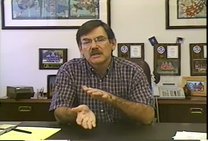
Video footage of the 2000 Chinese Peptide Symposium. This footage includes some of the symposium, but is mostly interviews with Chinese peptide chemists who worked on synthesizing insulin. Segments of this interview are used in the video Protein and Peptide Synthesis, produced by the American Peptide Society in 2000.
| Property | Value |
|---|---|
| Place of creation | |
| Format | |
| Genre | |
| Medium | |
| Extent |
|
| Language | |
| Inscription |
|
| Subject | |
| Rights | In Copyright - Rights-holder(s) Unlocatable or Unidentifiable |
| Credit line |
|
Institutional location
| Department | |
|---|---|
| Collection | |
| Physical container |
|
Related Items

Cite as
“6th Chinese Peptide Symposium Footage and Interviews.” Hi-8, July 2000. Papers of Robert Bruce Merrifield, Box 1. Science History Institute. Philadelphia. https://digital.sciencehistory.org/works/lbfksud.
This citation is automatically generated and may contain errors.